Look Past The Landing

Too many mothers have lost sons on the Flatirons. This morning we took our son to the accident site.

Friday, after my accident review, I was pretty p’d off with Andy.

Saturday, when I wrote about wanting to blame someone… it was because I spent the night before blaming Andy.

By Sunday, I was able to shift my focus to something useful. I asked…

How’d this happen?

Let’s start with that question.

The goes way back to something call the Turkey Problem.

The turkey is good every single day until just before Thanksgiving… then it gets chopped.

Most gamblers have something in common, early positive feedback with risk.

Andy had a lifetime of strongly positive feedback (aside from two knee surgeries, a broken ankle and waking up at the base of a tree with a separated shoulder). He saw his injuries as a cost of doing business and handled them with grace.

Andy was in fantastic shape, looked really good and enjoyed the outdoors. Andy’s life worked for Andy. I respected his right to live the way he wanted. In many ways, he was an ideal brother-in-law.

Like all of us, his attitude was influenced by feedback on his choices.

Lots of positive feedback.

A key difference between me and many around me… I’m OK with providing direct, negative feedback.


Something I tell my kids, people can get away with a lot of bad choices on snow. It’s a forgiving medium. I say this when we see people doing silly stuff in avalanche terrain. For all the wacky stuff we see… very few folks actually die.

Rock is much less forgiving and it’s RIGHT THERE in Boulder.

Walking out my door, I can see multiple accident sites by spinning my head 180-degrees. On foot, I can get to Andy’s accident site in half an hour.

My kids are going to have opportunity, and access, to the mountains.

So, as a parent, I need to look deeper.

I need to look to the root causes of faulty thinking.

What else does it take?


Tribe

To kill yourself you need peers who think unacceptable risks are acceptable.

This summer Andy (briefly) fell out with my wife when I forced her to choose between: (a) allowing our daughter to ride technical mountain biking terrain with him, and (b) following my wishes.

My wife never told her favorite person in the world it was my decision behind the scene. I’d spent enough time with Andy to be very uncomfortable with his definition of reasonable, especially for a kid.

I am smiling right now thinking about kid-Andy.

The vision I have in my head… he’s on a Big Wheel, sending a huge ramp with a massive smile on his face.

Hair flowing behind him, full of joy.

It’s a good way to remember him.

Joyful.


I absolutely respected Andy’s ability to make his own choices. It was his risk evangelism that bothered me, to the point of stepping in.

Andy would be happy he didn’t take anyone with him. I know he truly didn’t see the risks he was taking as unreasonable.

Andy would want me to apologize to the college kids (who gave CPR to a dead man) and first responders (who cleaned up his bloody accident scene).

Andy didn’t think past his landing – a lesson I’ve been teaching my son since we started skiing extreme terrain.

A teaching I pass to you right now => Think Past Your Landing
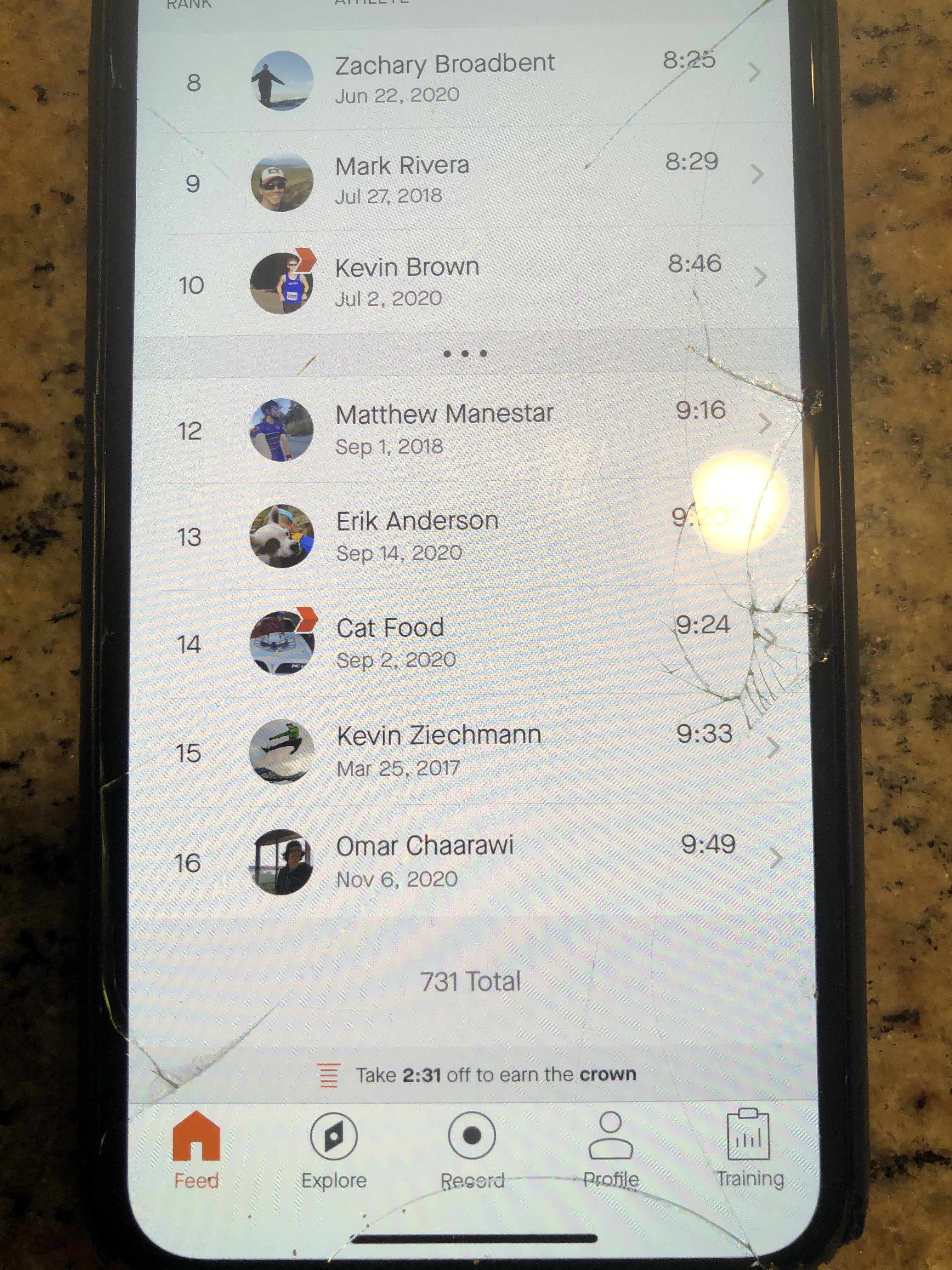

14th out of 731 athletes on the segment that killed him. “Cat Food” is deeply missed. The day he died was his second fastest time up the Flatirons Freeway. The app on Andy’s broken phone tells us, “Take 2:31 off to earn the crown.” There are some games you don’t want to play.

This year, Andy decided to add climbing to his routine.

Eight weeks after setting his speed record on the Second Flatiron, he fell and died.

Locked down due to COVID, then driving past the Flatirons on the way to work… I understand why he wanted to climb.

Heck, I want to climb too! ๐Ÿ™‚

But I don’t.

Tribe => I choose mine wisely. One of my kids is hysterically risk adverse – I love her for it and I need her in my life.

Turkey => I read about disasters constantly. 14er Disasters, SAR Biographies, Mountaineering Biographies (3rd link is a book that contains a story about a teenaged fatality on the Flatirons).

Same deal in finance and investing – I read about ruin. I write about ruin. I search for, and teach about, ruin!

I rarely watch video but, before each winter season, I watch clips of skiers being caught in avalanches. The goal is to scare myself and make a remote possibility seem more salient.

It’s a bit like watching Shark Week before a beach vacation.

These techniques work.


Like I said at the start, I reviewed the accident site.

Unfortunately, there’s not much to see up there. Andy climbed to a spot that was above his skill level and fell.

However, as a parent, there is a lot to consider.

How can we create an environment where our kids have the capacity to avoid needless death, while enjoying a life with meaning?

This morning, I started with my son.

At the base of Flatirons, I described Andy’s last climb (start to finish) and told him, “Andy did not need to die.”

Then we hiked up to the accident site while brainstorming factors that led to Andy’s death.

  • No partner
  • No rope
  • No traction
  • Unaware of conditions above him
  • Climbed past his bail out points
  • Lack of skill to down climb his route
  • Moving fast in consequential terrain

As we walked back down the trail, I planted a seed.

I’d really like you to join me at my 75th Birthday. We’ll hit the buffet then smash some bumps together.

We have so much left to do.

Give yourself a reason to look past the landing.

So much left to do.

Taking Stock

I visited the accident scene yesterday afternoon. I often react too strongly in the very short term. So I’m going to sit on my thoughts for a few days.

What a week.

I want you to know that your thoughts, cards, letters, emails, meals, flowers, errand assistance, childcare, socially-distant visits… all have helped. Much more than I would have expected.

So thank you.


Something I’ve been watching in myself. Watching and feeling.

When I’m under a lot of stress, there is always a background desire to blame someone, or something, for the situation.

This can be really unproductive.

My earlier question, “Is this my decision?” helps.

Also helpful, pause and consider, “What best serves the survivors?”

Finally, keeping myself on schedule, and occupied, helps. I raked leaves this morning and felt better, quickly.


Over the next month, the shock will clear and we will move back to normal living, our new normal being without Andy.

I know that many of you would like to help.

Here’s what I recommend, put a date in your calendar 30-45 days from now and reach out to someone in your own family, ideally living alone, who has lost someone close to them in the last year.

Reach out to them in their favorite manner: visit, call, text, email… and simply ask, “how’s it going?”

Let them know you’re looking forward to seeing them and set a date to get together.

When you get together, listen then say what needs to be said.

Thank you again for all of your support.

At Any Given Time

Andy’s family was able to learn more about his accident this morning.

On Wednesday evening, after my wife made five days of calls, I was sitting at my desk with Andy’s phone. On a whim, I opened his Strava App to see what he’d been doing over the last little while.

Strava is a web-based application that lets athletes share their training. You can upload from any GPS-enabled device. I use my watch, and my Peloton bike, to automatically share my stuff with anyone who’s interested.

As soon as I opened the app, I saw that Andy had been recording a workout when he fell. Quickly realizing what I had in my hand, I saved the workout and notified the Sheriff’s Office.

I pulled the workout up on Strava and opened satellite view. I saw Andy’s day start at the parking lot, head up the Flatirons Freeway and end up at the morgue. Ugh.

I think the Deputy must have closed Strava when he took possession of Andy’s phone, which didn’t have a passcode on it. Strava only records when you’re moving so this saved the battery life.

Seeing Andy’s day, visually, really hit me. I’m feeling it as I share with you.

Why am I sharing with you?

I am going to tell you why.


Since turning 30, I’ve been gradually whittling away at my acute risk exposure.

  • Mountaineering
  • Technical rock climbing
  • Bike racing
  • Avalanche terrain
  • Alcohol abuse
  • Small propellor-driven aircraft in mountainous terrain

I lost very little by eliminating these items from my life.

Why?

Because I was able to look deeply at the reasons I wanted to hang onto things that could ruin my life.

What’s the source of your risk-seeking behaviors?

For me it was a combination of factors: a lack of impulse control, a short-term high and a desire to do things other people couldn’t (or wouldn’t) do.

Elite sport forced me to address my impulse control issues.

I replaced short-term highs with the serenity that comes from having good judgement.

I refocused my desire to do difficult things… I focus on being a better person over time and have a set of habits that nudge me in this direction => my wife/son are my backcountry partners and I wake up very early each day.


If you are not ready to make a change then I understand. I’ve been working at this for 20 years.

I’ve kept areas of risk in my life.

  • Traveling alone in the backcountry
  • Winter driving on highways
  • Riding bikes on open roads
  • Skiing the toughest downhill terrain I can manage
  • Skiing trees

Here’s what I’d like you to do.

Minimize the impact of your choices on the people around you.

Pay attention when friends and associates die doing what you do. I haven’t had a friend die from bike racing but I can put a named-deceased on each of the other lines in my list.

Run a GPS-track in the backcountry and have it automatically ping to a satellite. Every ten minutes my location bounces off a satellite to a web page. Your family is going to want your body when you’re done with it.

Outside the backcountry? How about a Road-ID bracelet and a Garmin Watch.

Share your definition of late. Andy made this crystal clear and it saved us a lot of worry over the years. It also let us know immediately when he was in trouble.

Sure, it’s tough to watch his Strava file on Google Earth, but it’s a lot better than wondering what happened for the rest of our lives.

Those are the big three.

At the micro-level, I mitigate risk with fitness, snow tires, a big vehicle, knowledge, avoiding risk-seeking peers, not calling audibles, turning around and carrying everything I need for running into someone else’s emergency (because it’s never going to happen to me, right?). ๐Ÿ˜‰

Risk works both ways. Lots of little risks become material, yes.

But also, chopping your tail risk and combining with mitigating factors… can reduce your likely penalty over a lifetime of repeating the same choices.

And, just in case you get chopped, remember the Big Three => Pay Attention, Run GPS to a Satellite and Define Late for those who love you.


One last thing.

Here’s how I make key decisions in my life.

September of 2000: I was sitting in a very nice townhome in Hong Kong. At 31 years old, I had arrived at the top of socio-economic pyramid, exceeding my wildest childhood dreams.

I was doing work that I was good at, and I was well paid for that work. Outside of work, I was a top athlete in the local amateur community and had a great group of friends. Yet…

I felt empty when I looked ten years out. All I could see was an older, wealthier version of myself.

That’s not the life I wanted.

The filter I used…

You’re 50 years old and sitting in a doctor’s office. He tells you the tests came back and you have pancreatic cancer.

How do you feel?

Balance that against something I told my friend KP after he ticked past the age his father died…

What if you don’t die young?

Choose Wisely.

Aftermath

Yesterday, I showed M the route Andy was climbing when he had his accident. Tomorrow, a (very kind) first responder will be taking the family to the spot where he was found.

Andy’s death means I need to review my Estate Plan. These articles are going to be a guide for the survivors of my death.

I’m sharing because it’s worth taking the time to sort things out for the people you love. You don’t want them arguing (and feeling victimized by your lack of planning) when they should be focusing on strengthening a survivor mentality


Remember this mantra

Is this my decision to make?

Well, is it?

If it is your decision to make then (1) listen to others, (2) take your time, and (3) do your best.

If it is not your decision to make then, ideally, let go of outcome.


He would have wanted…

For my kids’ entire lives, they have heard me say… “if you don’t want it enough to change then you don’t really want it.”

The post-death equivalent… “if I didn’t care enough to write it down (and have it witnessed by two unconnected parties) then I didn’t care what happened.”

So don’t beat yourselves up trying to figure out what I would have done. If I didn’t specify then I clearly left it for the survivors to decide what’s best, based on the circumstances at the time.

But remember…

Is this my decision to make?


I am not my stuff.

You won’t find me in my stuff.

I am inside every cell of your body and you are going to hear me inside your head for the rest of your life.

So make peace with me.

That said, it’s human nature to want a physical memory of our loved ones. Some examples when the process of sorting personal effects has gone well.

Young death, happened quickly, not a lot of assets => everyone connected to the deceased got to pick one item from his stuff. No questions asked. First, his family took what they wanted, Second, friends took one thing to remember him.

Old death, happened gradually, plenty of assets => there was a gradual reduction in personal effects, over decades. Gradual gifting and relaxed discussions sorted who-gets-what at least a decade prior to death. She even went so far as to label the items in her home for which kid would receive.

Before you take anything…

  • Clear with the person who’s decision it is to make
  • Document their permission – memories don’t work (at all) under stress

That’s kind of fast…

If you are a young person, or someone who has been spared life changing grief, then acknowledge you know nothing about what the survivors are going through.

Loss of a child, loss of a parent, loss of a spouse => big life cycle events.

If you’ve never been there then resist the urge to offer your opinion => better to listen and accept.


Til death do us part.

When I die, my marriage is over.

I’ve been thanking my wife, frequently, for as long as I can remember. What a wonderful ride we are having!

I’d prefer my marriage not to continue after my death (but that won’t be my decision to make!).

Anyhow, I’m putting this out there for my kids.

Their role is to support each other and accept (especially, when it’s not their decision to make ๐Ÿ˜‰ ).


This ran longer than expected.

I’ll introduce the technical stuff in another post.

Andy Caplan

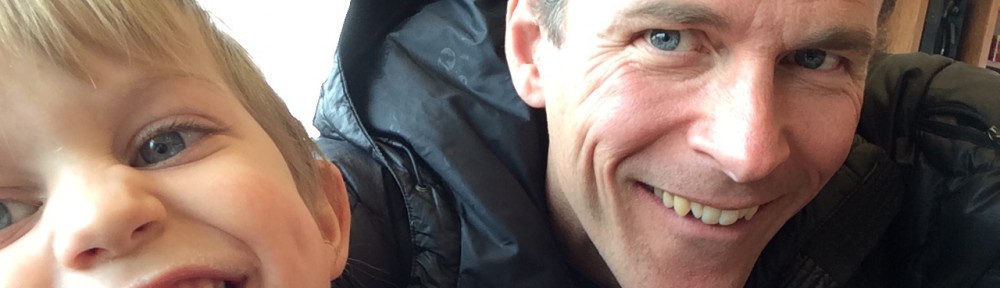
If you look closely at my daughter’s face then you can see the joy that Andy brought to thousands of children. Andy brought love into the world.

In my wife’s life, before memory begins, there was Andy.

He was the one constant that runs through her experience.

On Friday, near the top of Second Flatiron, he fell.


To encourage my kids to process Andy’s death, we’ve offered them the opportunity to make pictures, write letters and make crafts that will be put alongside his body.

Before my wife was my wife, there was Andy. I owe him for green lighting me into the family.

Andy had the softest hands of any person I’d ever met.

I’m not sure what that means but we all get a kick out of it.


Wedding Day, July 4th, 2005

Homeboy did a lot of good deeds in his life!

He taught my wife to ride a bike then offered my wife shelter when she shattered her wrist (riding her bike). ๐Ÿ™‚

He taught all my kids to swim – my son even got special treatment – he got to start before he was two.


Another good memory.

In our household there’s something called a “Caplan Pour.”

The Caplan Pour is when you grab a bottle of wine and casually dump 2/3rds into your glass.

If anyone notices then a smile and a boyish giggle will suffice.


Andy died on Friday and Halloween was Saturday.

So we had a bit of a wake – it was good to be together, remembering Andy and supporting each other.


Some will say Andy died doing what he loved. I think it is better to remember that he lived doing what he loved!

I have a request to make of you.

The way many of us are acting greatly increases the risk that one of Andy’s sisters will transmit COVID to his parents.

When someone is in the depths of profound grief, it is unreasonable to expect them to push you away.

So please mask up before you approach the survivors.

Let’s not multiply this tragedy.


Each time I look at Andy’s sister, I’m grateful he didn’t use his veto power with me!

OK, another story.

On Friday, I was sitting at my desk when Monica called from Chautauqua.

Andy’s car was in the lot and he was late for work.

This was not good.

Andy didn’t have many rules but he had two rules that helped OCD people (like me) deal with him.

1/ I’m not late until I’m three hours late.

2/ Never worry unless I’m late for work.

He wasn’t three hours late when I got the call but he was late for work and his sister/girlfriend were sitting with a ranger looking up at the Flatirons. They told me there was a rescue going on.

I felt empty.

From that point, I knew the only surprises were going to be good ones.

I headed up as I expected the ladies were about to fall into the abyss of grief.


The day Andy died was a stunner. Waiting for the Sherrif to tell me what I feared, I was struck by the beauty all around me.

Andy’s death was a shock, but it wasn’t a surprise.

He was operating well within his capabilities on a route he knew well.

I know my kids will come back to this piece so I want them to remember this… small risks, repeated, become significant.

Andy and I had very different views on risk, ruin and ethics.

Reading that he would have smiled and told me, “but bro, be sure to remember that’s just your opinion!”

…and he’d be right.

…and I was grateful my kids had an opportunity to be deeply influenced by him.

It’s important to remember that Andy lived exactly as he wanted to live.

…and he respected your ability to do the same.

His tolerance was amazing.

He was even tolerant of the intolerant.

I loved the guy.


Yesterday my son and I went to Chautauqua, I wanted to reclaim that space by laying down some good memories.

My kids have been watching me.

Wanting reassurance that their reaction is appropriate.

Am I too sad?

Am I not sad enough?

What should I do?

Sweetie, there’s no script for dealing with grief. Whatever you feel is OK and it’s normal to be all over the place, for a while.


Providing an outlet for grief before it appears as rage or anger.

Another story!

After we knew on Friday, I went back up to Andy’s car to check things out. My daughter tagged along.

Andy’s car was a reflection of Andy => planner, set of skis, bike, spare shoes, clean clothes and his lunch.

It was the lunch that got me. I came really close to falling to pieces.

Our kids, and spouses sometimes, don’t have the contextual framework to understand that falling to pieces doesn’t mean I’ve fallen to pieces.

In fact, giving yourself permission to absolutely fall apart is an excellent strategy for rebuilding, stronger than before.

Bro, not only did I marry your sister… …I ate your lunch.

I needed a laugh and Caplan’s do make the best PBJs.


There’s 20+ years of these stacked up in his personal effects.

About that planner.

Oh the planners…

My wife spent the last three days working through the planners.

She’s still working.

Many years ago, another Andy (Penfold) did the same thing for Stuart. Back then it was a paper phone book. A => Z. Andy P said it was healing. My wife is experiencing the same thing.

It takes exceptional courage to walk into those phone calls knowing you will be feeling, really feeling, grief.

I don’t want another mom walking into the pool, with her kids, and the receptionist having to tell her what happened.

The capacity to think of others, on your worst days, is a wonderful trait.

Don’t be afraid to feel.


I let the kids have their Halloween parties at school on Friday. After school, I walked them away from the crowd, sat down and started to explain. I went slowly and started by reassuring them that their mother, other sister and cat were OK. I kept it simple and we walked home. I put on the TV (new Mandalorian) and went back out to help the adults.

I didn’t make the call – we went over as a family.

What do you a tell a man who is dealing with your greatest fear?

The death of his son.

I didn’t tell him anything.

I sat with him and listened.

Later, just him and me, I completely fell apart and was grateful for his non-judgement.

The next day, I shared my experience with my daughter. She was relieved to find out I had fallen apart (and perhaps grateful that she didn’t have to listen to me suffer, which freaks her out).


We did a good job of keeping Poppy’s mask on until the conversation turned to death, consciousness and personal reality.

My son had questions.

Questions about death.

We happen to have an expert in the family. His grandfather had a near-death experience as a young man.

So we went over yesterday to see what we could learn.

Afterward, he wasn’t able to fully articulate what he learned.

…but he felt better

…and that was the main point of our visit.


So, when I’m gone, I want you to remember that I gave you my most precious thing.

I gave you exactly what Andy was always willing to give me.

Time.