Searching For My Inner Viking


Placing myself under quasi-house arrest after Andy died proved to be a disaster for my mood management. I find myself short-tempered with frequent unforced errors with my kids.

When it comes to darkness — both inner and outer — my Nordic pals embrace their annual trip to the Dark Side.

Historically, the challenges of the Winter Equinox have proven useful. Somewhere across the winter, I get so pissed off with my funk that I resolve to get-something-done. I’ve written books, started companies and thrown down outstanding base training.

This year, with schools closed, a recurring feeling is “leave me alone and let me do my time”.

  • <100 days away from having our teachers vaccinated
  • <20 weekly house cleanings
  • <5 months before I’m vaccinated

Grinding, the summit slog

There’s a desire to push everything away, seek silence and grind.

When I get pissed off, I think about my Nordic friends. At their best, they laugh at the Dark Side and let the energy build for their return in the Spring. I’ve been trying to follow their example.


Last week, my wife was going through the roughest patch I’d seen since she successfully managed some postpartum depression in 2012, I made a sign…

Don’t Control => Feelings

Do Control => Actions

She bounced back by lunchtime.

I’ll repeat from a few weeks ago. Resiliency is a resolve to carry on, despite how we are feeling.


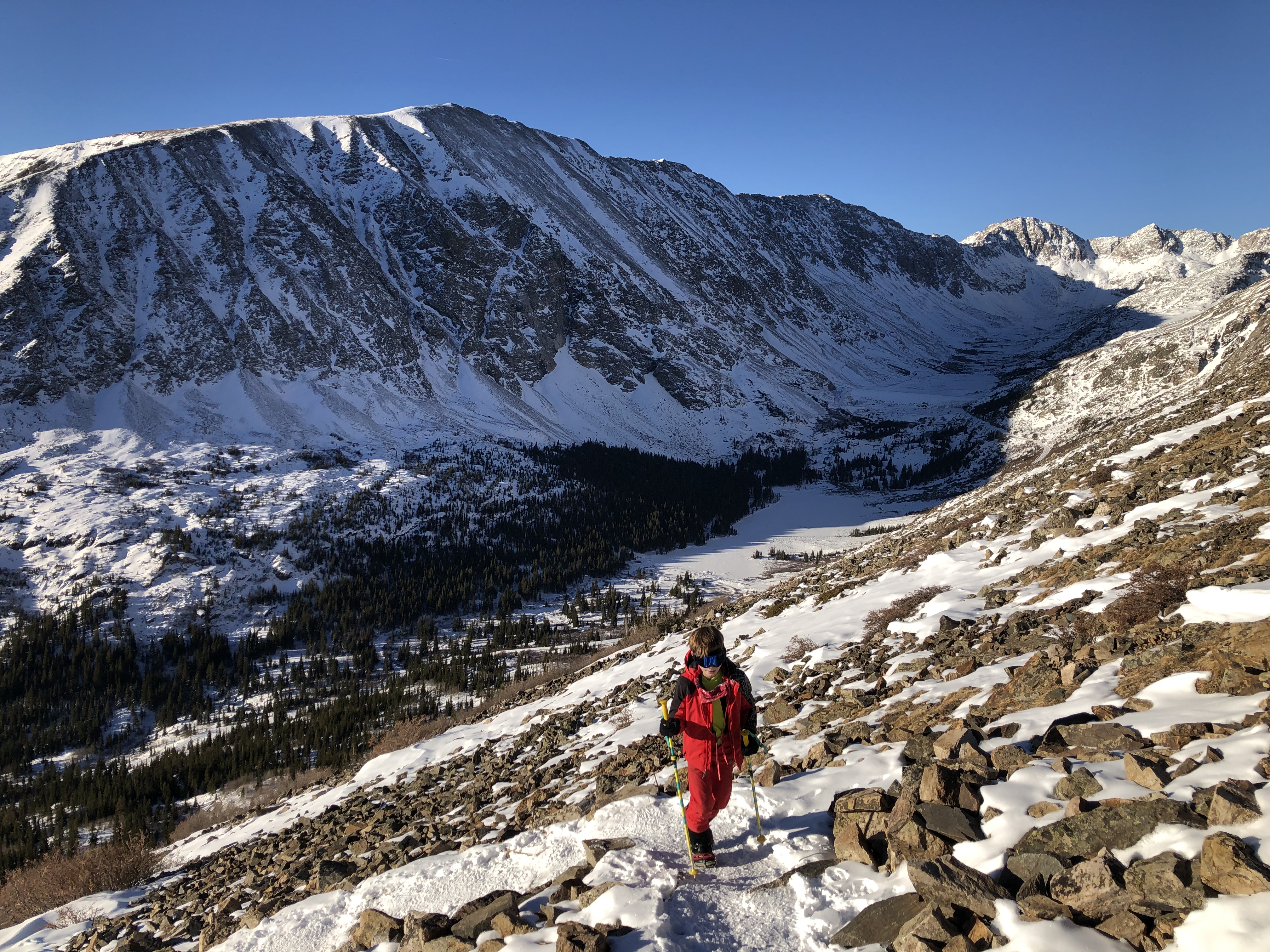
My son was shocked by the reality of winter hiking, but he stuck with it, to the summit.

The two most resilient people I know are the two kindest.

Rather than seeking to understand the connection between kindness and strength, I’ve started following their lead.

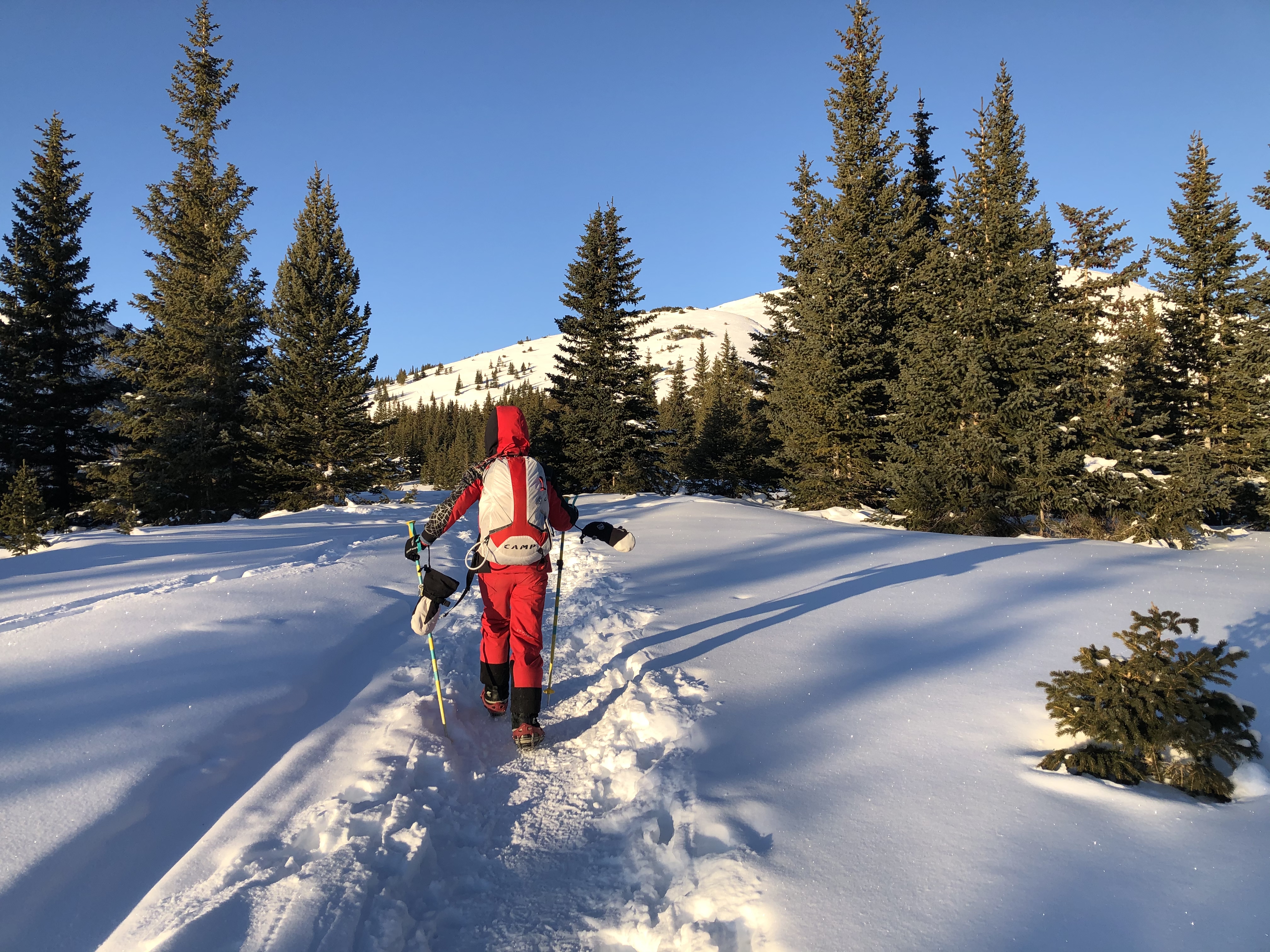
The pictures are from a hike we did on Saturday. My son ticked the box on his goal of a Winter 14er, before winter officially started. If I’m honest then I didn’t enjoy the experience at the time. That said, I’m very happy looking at the pictures, and even happier that I can share them with you.

I couldn’t control my hike feelings (oh so tired), but I overcame my feelings, got out of the house and my son was happy.

Another positive step => Our oldest is an online education master. I let her know it, in front of the rest of the family.

Step by step => controlling my actions, having faith in a better tomorrow.

Sharing positive vibes, patting myself on the back when I carry on (despite my feelings)… those are lessons from my wife and son.

Telling the world about the challenges I face and living an open life, that’s a technique that dates back to the 90s.

I feel better already.


I’m smiling now, probably wasn’t when this picture was taken!

An Education In Crazy

Due to normal teen-anxiety, some of my daughters friends are at the early stages of self-harm.

There’s nothing unusual here, these patterns have been in my family since before I was born.

To help my daughter understand, and navigate, irrational choices, I’ve been introducing her to the neurotic athlete archetype.

Allow me to introduce…

Neurotic means you’re afflicted by neurosis, a word that has been in use since the 1700s to describe mental, emotional, or physical reactions that are drastic and irrational. At its root, a neurotic behavior is an automatic, unconscious effort to manage deep anxiety.

The entire Web-MD entry might sound familiar – it applies to 90% of the champion athletes I know. A constant quest for high performance can be an effective management technique for anxiety, that never quite clears.

Normally, I exit deeply-neurotic people from my life. I do this because I have my hands full dealing with myself!

As an athlete, you need to watch out for three traits: (a) a willingness to hurt one’s self; (b) the desire to chronically under-feed yourself; and (c) an addiction to stress hormones (hooked on breakdown).

If you find yourself in a training group, or alongside a coach, who embraces self-harm for “performance” (or as a path towards his own sexual gratification) then you need to exit ASAP. As a young woman, my wife found herself in that position. It took a shattered wrist for her to listen to an inner voice that was telling her “this situation is not good for you.”

This situation is not good for me.

If you hear that voice then get out.

Get out.


Watch for “development” squads led by sketchy men. Their mode of operation is breaking down healthy people and they need a steady supply of young, healthy athletes to fund their operation.

Sports that embrace the “breakdown” of girls are constantly in the news for long-term sexual abuse of multiple athletes. Steer clear! You can not fix a sport where breakdown is a design feature.

These groups are very dangerous when run by a sexual predator. The leader will seek to isolate anxious, young and inexperienced athletes. For many of these young people, it will be their first time away from home and the leader will be the first authority figure who expresses confidence in them.

You don’t want that type of man to be the first person to believe in your daughters.

I tell my most anxious daughter, frequently, she is a star.

I do this in word, in writing and by reflecting her own good choices back to her.

My message…

You have the capacity for good judgement.

You know what’s good for you.


If you’re dealing with anxiety in yourself, to the point of driving the good out of your life, then get professional help. Get professional help, break the cycle of spin.

Feelings of anxiety are a universal part of human experience. These feelings are useful when successfully managed. A good chunk of my writing is about this topic. I don’t point it out because nobody likes hearing they are are headcase!

Here’s what works for me, the topics link back to the Web-MD article.

If your life is a shambles then I’m willing to bet you’ve inverted much of this advice.

I know I can make myself both irrational and miserable by doing the opposite of what follows:

Self => if you want to teach this to others then sort yourself first. The best education my kids receive is watching me manage myself.

Routine, routine, routine => change slowly, change later => if you are a parent to a highly anxious child (or a neurotic spouse) then do not call a lot of audibles!

Be Open, Connect, Do Not Self-Isolate => anxiety builds when not discussed, make time to let mentally healthy, objective people influence you. On the flip side, secrets are a huge part of the lives of the neurotic. You will not learn that everyone is feeling the same way if you keep everything to yourself.

Exercise every morning => it just seems to work => if you have a neurotic child then set a minimum for them and stick with it. I’m way over the minimum, but I’m a fairly extreme case.

Sleep => the time you get to sleep is just another thing to obsess about. Forget about it. Focus on waking up at the same time, every single day. Same deal for your kids.

If you’re wrecked then you can have a 20-minute nap before noon – that’s all you get. OK to go to bed early but wake up at the same time!

Stop doing too much and making yourself exhausted => wean yourself from chronic fatigue.

Nutrition => know your binge triggers, know the foods (usually highly-processed carbs and refined sugar) that screw up your neurochemistry.

Abstinence does not work for sex education – abstinence also doesn’t work for anyone’s nutrition.

Focus your attention on portion control of triggering foods, boosting the quality of your intake, making veggies easy to eat and getting the timing right on sugar/carbs.

For example, if I eat 3-6 squares of chocolate before a bike ride then I’m far less likely to eat an entire bag of Halloween candy before bed.

Positive Male Attention => call it “essential masculinity” => Fathers, if your kids (and spouse) don’t get it from you then they might get it from some creep.

In yourself, seek approval from individuals who bring out your best, rather than feed your intrinsic rage.


Best tip for the end.

These feelings will be with you for a long while. Make friends with them, they are a very useful aspect of your personality profile.

The most effective management technique is to replace your “worst” triggers with a habit of making better choices.

Transcendence comes but it takes years of persistent work.

Replacement works.

Don’t mess with a streak => be willing to say no (nicely, don’t freak out) to well-meaning people who tempt you away from a life structure that works.


Finally, teach your anxious kids, they are at a very high-risk for getting hooked on socially-acceptable depressants.

There’s a big chunk of our society self-medicating, most days, with wine, sleeping pills or marijuana. Athletes tend to replace the drugs with fatigue, to the point of breakdown.

It works, but only at a superficial level.

I encourage you to look deeper…

When I looked deeply into my own strategies, I realized that being sensible was no worse than being medicated/exhausted.

Being medicated is more pleasurable, I don’t dispute that reality.

Being exhausted also has a form of pleasure associated with it, the pleasure of being able to fall into a deep sleep, for example.

However, being sensible is far more useful, particularly to manage anxiety, get stuff done and avoid the risk of ruin from negative addictions.

If you’re an athlete, who is “hooked on hard”, then making better choices can feed directly into your deep desire to challenge yourself. It’s not easy for me to avoid becoming a headcase! 😉

Choose wisely.


I sincerely hope this helps someone. Winter is a really tough time for the anxious, even more so due to COVID isolation.

As I told my wife this week…

Hey! Pay attention. This is a topic I know well.

Sabotage

Burning off energy in the basement

My son loves to play the superpower game => we each get to choose one power.

As you can guess from the picture above, he’s a fan of super-strength.

I usually go for super-vision. I’m at the point where I need reading glasses and I miss the freedom of great vision.

When I think about improvement, it’s usually in the same mode as my son => Positive Action.

Gain a superpower.

My actual superpower isn’t vision, it’s persistence. Small actions, over long periods of time. For things I care about, it makes me very tough to beat.

However, there’s another way to approach it.

Pay attention to habits of self-sabotage and remove them. This one is a lot tougher because there is usually an unconscious payoff feeding our habits of self-sabotage.


Yesterday’s post about strong emotions was inspired by a moment from the middle of the toughest 24-hour block of last week.

I got so worked up that my best course of action was to stop talking and trust in a better tomorrow. I also reminded myself:

I promise to never knowingly hurt you.

Those seven words were my Friday night mantra and I fell asleep with the phrase silently going through my head.

Winning, even if it felt awful.

Sure enough, 48 hours along, I was feeling much better and there was no “clean up” required from blowing my stack.

Each time I don’t react, my habit of non-action strengthens.


So, if I could give my younger-self a superpower, it would be the ability to not-act, particularly when worked up.

It’s something I both learned from, and seek to pass to, my kids.

I learned non-action when my kids were preschoolers. Dealing with a three-year old requires the ability to constantly look past the moment, towards my ultimate goal (nap time). 🙂

A three-year old is similar to my negative emotions => both struggle to see past the moment.

As the kids grow up, I try to teach them non-action so they can get along better and I’m less stressed living in my own house. From yesterday, when one kids was (correctly) pointing out that the other was WRONG!

Sometimes it’s better to not-disagree so you can get through the moment, back to having fun with each other.

Let it go, let it go.

Tactical silence in situations where the relationship is more important than the issue of the moment.

If someone close to me is truly wrong then the world will do a good job at pointing that out to them => especially if they are heading towards their teen years, or have a lot of “detail-oriented” friends.

Sometimes the best course of action is non-action.

Start small, set a lot bar, practice daily.

Processing Strong Emotions

All the Christmas stuff has been dug out of storage.

Thanksgiving Week was most definitely an up and down experience for me. During the downs, I learned something very useful that I’d like to pass along.

Friday night I was driving my daughter to swimming and she was falling apart – lots of tears, on the verge of hysteria, babbling about some issue (that most definitely wasn’t THE issue).

I didn’t know what to do so I listened until she paused on her own accord.

At that point, I asked… “Tell me a favorite memory of you and me.”

At first that really rattled her – her mind went straight to remembering me when I’m gone. I reassured her with “I’m right here, Sweetie. I just want one example of a nice memory of you and me.”

She said skiing and thought about it a bit more… then she said “driving me to swimming,” which was exactly what we were doing right then.

Now, that was very interesting.

You see, my view of the world is through my own experience. If I was crying on the verge of hysteria, I would be in a very different place than my daughter.

In her own way, she was sharing that it’s possible for her to be both falling apart, and happy, at the same time.

She didn’t perk up on the drive but she did settle enough to get herself into the pool. After swimming, she was as happy as I ever see her. Radiant – I made a mental note.

Kids have a wonderful ability to leave stuff behind.


I’m sharing the story so we remember there are different ways to process strong emotions.

Sometimes there is something “there” with a big emotional response – other times, like with my daughter, she was moving through a situation, in her own way, and didn’t need anything other than someone to bear witness.

Particularly with my kids, I have a desire to cure their pain.

A useful option is to ride it out together.

Bearing witness with quiet presence.

Backcountry Travel

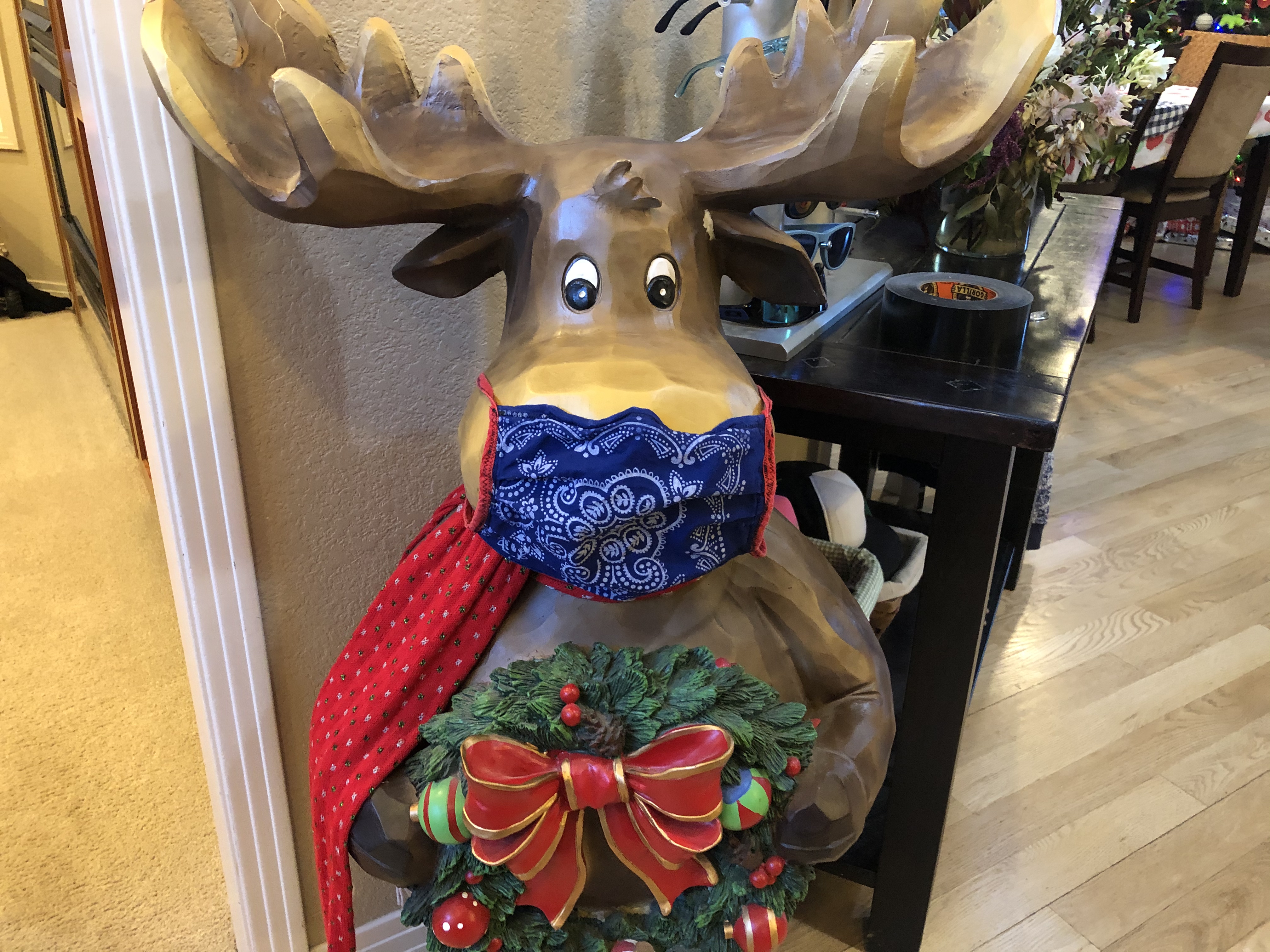
Christmas Moose, not taking chances this year.

Lots of articles about the pandemic nudging newbies into the backcountry. With that in mind, I thought I’d share a handful of thoughts that should be front and center of your mind.

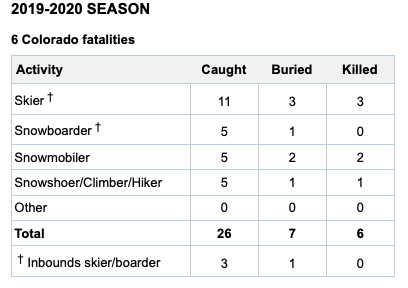
Here’s a weird stat – attending an avalanche safety course is correlated with avalanche fatalities. In Colorado, we even had a course get swept.

I have a theory – it may be because the techniques taught don’t work very well.

Avoidance is the only safe strategy for avalanche terrain – at my last avy class, we carefully dug four pits on the same slope. Each pit gave a different snapshot of the slope. None agreed – hands down the best lesson of the course.

Don’t trust a pit.

Do know your slope angle. Caltopo.Com is a great research tool => check “slope angle shading” as a “Map Overlay”.


The lake in the middle of this shot was the site of a fatal avalanche. Two guys dug a pit to see if conditions were OK. The slope went and one skier was killed when the debris broke the ice on top of the lake and he went in.

Even if you are not on a slope, you can get killed from above. I was reminded of that because I read every single accident report on the CAIC’s website.

Such a great site – it’s a shame we don’t see the lives saved and accidents avoided. The CAIC team do very good work.


Some of these reports are tough reading. Snowmobilers doing everything right last season near Vail. Two fathers killed while their wives/babies were waiting in a backcountry hut near Aspen. I read the reports and bear witness to the survivors.

A Better Place To Learn

One of the best developments of the last few years is resorts opening their terrain to uphill skiing. Lots of positive impact from this:

  • You can travel light and choose your effort => typically, with a backcountry setup and avy gear, the slope chooses your effort.
  • You benefit from the resort’s avy control and grooming.
  • There’s usually a parking lot below you and other skiers around you.
  • You can follow your uphill effort with a couple hours of lift-assisted turns – making turns after a long climb is a different type of fitness. It reminds me of running off the bike.

The last point is fundamental. It will take forever to learn your turns in the backcountry. There isn’t enough opportunity to make turns.

If you want to become proficient then 100 days on snow, split 50/50 between alpine/uphill, focus on tress/steeps/bumps on the resort. Two seasons of that protocol, with a year-round strength program, and you’ll be decent. Four seasons and you could be skiing like an instructor.

Maybe you don’t want to be a great skier. It does take a lot of time!

What follows will help you enjoy yourself and avoid unforced errors.


Gear

In the backcountry, if you get wet and lose your ability to move then you will find yourself in a survival situation.

My family thinks I’m an absolute nut about shelter from the wind and not getting damp. That’s because they’ve never found themselves in an unplanned survival situation!

Shovel, puffy in a dry bag, sil-tarp, headlamp, spare batteries => don’t die because you left a few pounds at home.

I once had to start a fire on top of my stove to keep myself from freezing. I was trying to ski from Silverthorne to Winter Park and found myself at the bottom of a snowy valley. Day light was running short and I came to a river swollen with spring run off. Running the risk of getting soaked, solo, seemed stupid so I went to Plan B. The ability to hunker down, light a fire and sleep turned a potential survival situation into a moderately entertaining adventure. I retraced my steps in the morning.

Don’t want to carry safety gear? Easy, skin at the resort.

Buy a middle of the road, lightweight touring setup then ski it at the resort. This was the best decision I made at the start of my backcountry career. My setup didn’t do anything “just right” but it let me figure things out.

Many resorts will allow you to practice in lower-stakes, but realistic, backcountry conditions by skinning up through the trees before the lifts start spinning.

Microspikes – I use them year-round on steep dirt and snow.


Navigation & Communication

iPhone, Garmin watch, inReach communicator, Earthmate app, OpenSnow app, OpenSummit app, CAIC app, googling trip reports, downloading photos/tracks in advance. All useful.

A skill that might save you a night out, or worse…

  • using GPS, find yourself on a map
  • figure out where you’d like to go
  • lay down a waypoint
  • navigate to the waypoint

Learn it before you need it because…

On a changing slope, in the trees, when the clouds roll in… it can be impossible to get your bearings and, if you’re like me, then you can burn a lot of energy resisting the reality that you’re lost!


The circle in the middle was my track before I stopped, relaxed, had something to eat/drink, got my Navi-gear out and decided to self-rescue (from a route I’d done a half dozen times before). I thought I was following another skier until I realized it was my own track! Humbling.

In Vail, we lost a well loved ski instructor because he decided to ski home via the side-country. A navigation app OR a shovel OR a set of skins probably would have saved his life.

He got lost, got cold, sat down and died => an easily avoidable tragedy.

It can happen to any of us.

Break Free

$1 well spent at Super Target

My kids have started asking me “what’s next” in terms of high school and college.

I told them to save those questions for a few years – what’s important right now is learning the basics and enjoying themselves.

They did, however, get me thinking.

This starts out as a letter to our youngest.


I’ve spent the last 20 years with ~2,000 hours (per annum) of self-directed time. When I reach “normal retirement age”, I will have had an extra ~70,000 hours versus what I was told to expect.

Consistently making choices as if time is more important than money has been a defining characteristic of my life after 30. Those choices, much more than my personal results, have been what gave me a 1-in-10,000 life, so far.

By the time you get to my age, you will have a series of stories you tell yourself about why you can’t do certain things. You’re also going to have the habit energy of 30+ years of choices.

The good news is many of our choices matter much less than we think, I got past a lot of bad choices.

Avoid ruin, build good habits, persist and you can achieve a very useful form of freedom.


My adult life, that you didn’t see, splits into three parts:

  • High school (to 18 yrs old)
  • Early adulthood (18 to 25 yrs old)
  • Adulthood (25 to 40 yrs old)

Along the way, people will be giving you never ending advice — to seek your attention, to get your money, to convince you to serve their ends…

Most of this advice is going to be tactical, short-term, single-action oriented // not particularly useful and a distraction. To blow through this (largely useless) advice I hope you to make a habit of asking yourself three questions:

  • Who is this person?
  • How do they know?
  • What are they selling me?

You’ll have to figure out your own purpose in life. Here’s what my choices say about what I did from 18-40 years old…

Free to choose…

…how, where and when…

…I allocate my time.

What I’m going to share is a strategy for getting yourself time.


What’s the role of high school?

Create options for further study. Science, mathematics, engineering, finance, accounting, technology… choose your courses so you can take any of the challenging majors in college. In 1986, I could have gone any direction at any major university in Canada.

If you can’t pull that off then learn a valuable trade, or skill, where you have a shot at becoming world-class.

The above is your “to do” list. There’s a wide range of successful outcomes possible, if you avoid early setbacks.

  • Pregnancy – avoid it in yourself and your friends – free contraception saves lives
  • Early habits of addiction and substance abuse – hook yourself on exercise
  • Suicide – keep an eye on your friends, and yourself – get help when you need it – everyone needs help

Pregnancy and addiction can be overcome. With regard to suicide, stay in the game – your future self will thank you.


Early Adulthood

Every year you take off before 25 is an extra seven years you will work later in your life.

You must have faith about the impact of long-term compounding – it’s why I started saving your allowance in Kindergarten. Our brains are not set up to comprehend exponents.

What’s the goal here?

The best technical education you can acquire without borrowing money.

But what if I could join the professional class?

If you can figure out how to do it debt-lite then fine. Otherwise, be wary of the time you’ll give away to get there — and — the habits you create from living a debt-funded aspirational lifestyle.

The professional class are just as enslaved by the system as most other people — they have nicer cars, bigger homes and beautiful wardrobes — they still lack time and cope with status-anxiety.

There are, however, certain professions that are ideal fits for a life with meaning.

For example, my friends who are docs/surgeons get a ton of satisfaction from helping their fellow citizens. They traded a lot of time to achieve their positions – a good trade, as they are valuable members of their local communities.

At 25, I was a well-trained financial technician. Globally, there are tens of thousands of people with similar training. What made the difference?

  • I was young – option value of youth!
  • I trained myself to live on half my income – I didn’t, and don’t, miss the spending
  • I was debt-free with four-years living expense saved – four years living expenses saved at 25

What mattered…

  • Valuable skills
  • Living below my means
  • Time for my net worth to compound
  • Time to follow my healthy passions (athletics, coaching, relationships)

Compare that to my smartest peers at 25 — better educated, negative net worths (due to college borrowing) and a higher baseline cost of living.

Like a lot of things, there’s no visible difference until you hit mid-life.


Adulthood

A favorite question of mine for friends who are over 60 – name something your grandparents could have done that would have positively impacted your life today.

It’s a tough question – we are talking 50-100 year timelines.

Many families settle on… core real estate holdings that enable shared experiences across generations and time — the mythical cabin on a lake, and similar (not always ideal) investments.

What might be required to achieve that vision…

  • Proximity – the family needs to live close to each other, but not too close
  • Time – the subject of this essay
  • Enjoyment – do we enjoy spending time with each other? What if we don’t? How much are we willing to compromise to get along with each other?
  • Realistic expectations – from 25 to 40 many folks will be busy seeking to free themselves from wage-slavery

When it comes to wealth, be focused on time, not money.

Gratitude

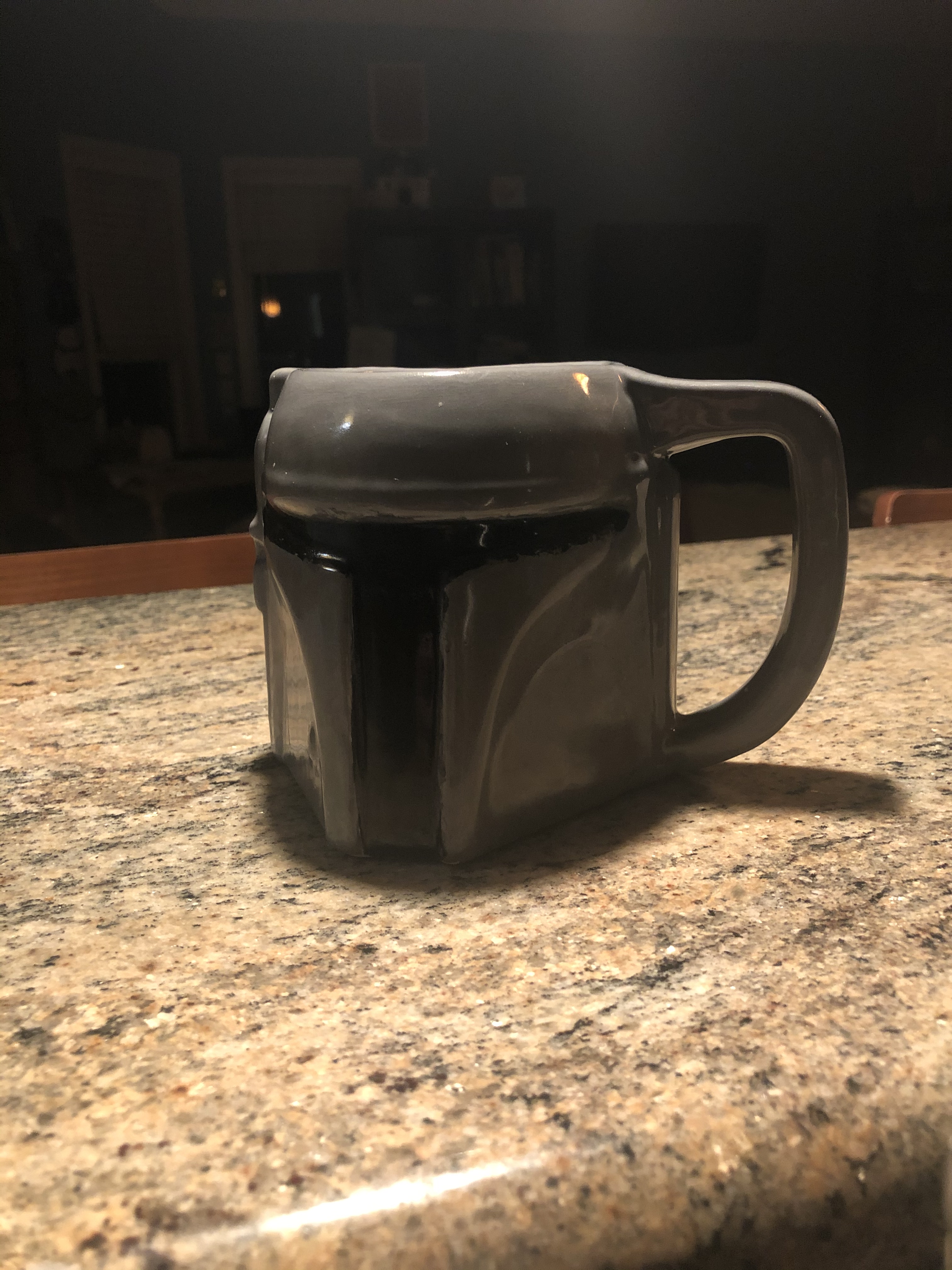
Paint-it-yourself project from our youngest, Mando Coffee Mug – a great start to any day

Sharing my gratitude list was derailed by Andy’s death.

Reviewing my list helped me get through the challenges of the last couple weeks.

Of course, I have to remember to do the right thing. There were a couple of days where I forgot to take stock of the goodness all around me.


When you force yourself to think about what you value, you have an opportunity to reevaluate how you are spending your time.

Time being our most valuable resource.

20-25 more weeks (of COVID) is a good chunk of time. Pretty much a full season, back when I was an elite athlete.


When I step outside the specifics of my list, certain themes pop out.

Authentic Connection => Two sides of this. The A-side is my marriage, exploring Colorado with my kids and time in nature. The B-side (my not-to-do list) is looking at a screen.

It takes effort to look away, and keep looking away.

Breaking free from social media is something my kids have watched us do, and gives us a lot of street cred when we talk about using technology.


Physical Experience => My training program has a few “moments” each week that are deeply uncomfortable, totally worth it.

2% of my week is unpleasant, 18% I’m tired, 80% I feel great. Excellent trade – I remind myself to be grateful, rather than greedy.

COVID may be the only time of my adult life where I get a no-excuses block of time. No travel, no races, no distractions from doing what it takes.

Likewise, as my buddy Jonser is fond of saying,

Being married to a smoking’ hot wife has its benefits.

If I want the benefits, then I need to be willing to: (a) do what it takes for myself; and (b) support someone else’s goals, sometimes in priority to things I might prefer to do. Useful lessons.

Across the year, I had a lot of “achievements” – 10,000+ feet vertical skinning days, 68,000 feet descending ski day, 14ers, strength PBs… achieving specific goals does not leave an enduring imprint.

The emptiness of striving is a reminder to focus on process and remember to back-off enough to enjoy the journey.

Do we strive because we feel anxious? Or do we feel anxious because we have a habit of striving?


Financial Stability => COVID took away most my luxury and discretionary spending. Two trades in March covered my cost of living for the entire year. Again, don’t be greedy.

I’ve been in no hurry to add spending back. Instead, I’ve been asking: (a) what’s missing and (b) what’s actually useful about financial wealth?

Stability => the absence of financial anxiety, the ability to choose, the ability to control my own schedule.

It’s tough to remember the value of the absence.

It takes far less money (and time) than you’d expect to achieve the full utility of money. The toughest parts are managing my own ego and keeping my household expectations in check. Humans have unending desires and we do a good job of nudging one-another along.

As for what’s missing => again, not much $$$ required. Circle back to authentic connection and make time to go to my pals, who might be a little too busy to visit me.


What’s missing? September 2016 => a campfire in the desert after riding mountain bikes. I can achieve a similar vibe with my son BUT he’s going to grow up and leave! COVID strengthened a fatherhood- tendency to lose touch with people outside my immediate circle.

Self-sufficiency – when we had a house full of babies and preschoolers, we used to live in fear of holidays. The longer breaks of Christmas and August were particularly tough. COVID forced us to figure it out and, sure enough, we did.

As the pandemic unwinds, the ability to take care of ourselves is something I’d like to retain. Personally, it costs me a couple hours a day (chores, cleaning, errands) but it’s better than having to manage (a process of avoiding what I can do myself).

The pandemic forced me to think deeply about how I want to educate my kids. Home school forced us to get involved in their education. My children are the most direct expression of my legacy in the world. So I’m thankful for the opportunity to pass along my values to them – they’re always watching!


I’ll end with a lesson from Mark Allen – AKA the greatest triathlete of all time.

Often, you need to recover, simply to see how tired you are.

Mark taught me the lesson in the context of end-of-season recovery but, like much of what I learned in sport, I found it applies more broadly.

Fatigue, grief, trauma… whatever you happen to be working with… think in terms of layers.

Often, we start to feel better then charge right back into the patterns that were causing our difficulties in the first place.

Eight months into COVID, a return to home school, several deaths close to me, kids running around the house all day… it’s reasonable to assume that I might be a little more tired than I realize… 🙂

In life, we reap the rewards during recovery, not beat down.

Don’t be in a hurry to add back.

Together

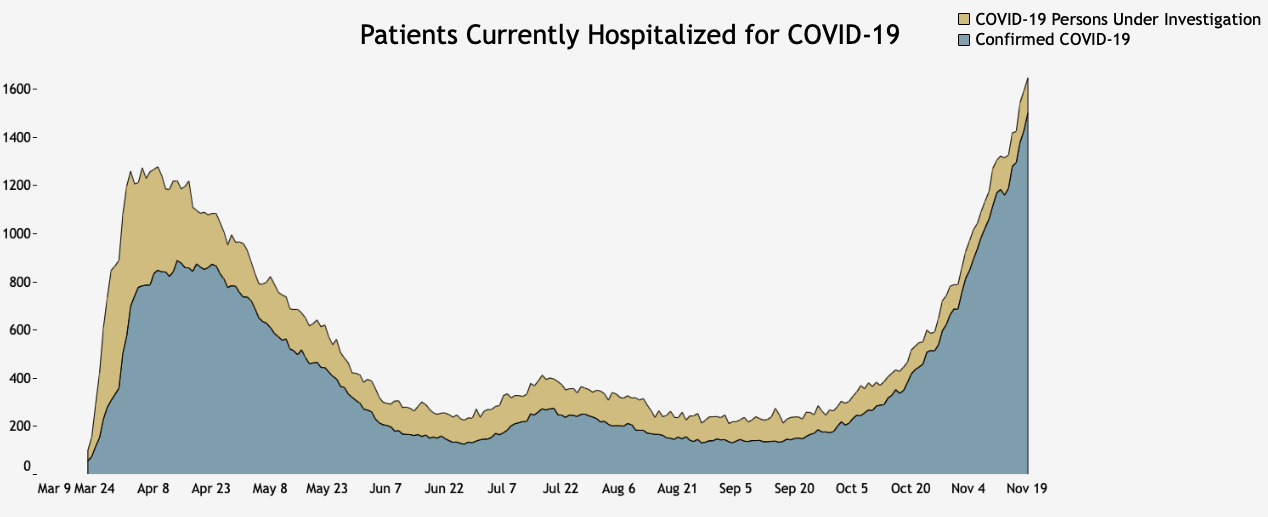
Quick note so I remember this moment – optimism with vaccine news balanced with concern as our hospitals fill up – schools closed again, and tempers strained due to grief and many days of kid bickering, which is normal but exhausting. As we see the light at the end of the tunnel, now is the time to recommit to modeling better behavior.

One other quick note: one of my wife’s friends sent us three picture frames. The idea is each kid gets to put a favorite Andy memory into their frame. Wonderful gift idea that I wanted to pass along. Our oldest added a note at the bottom of her frame, “Thank you Andy for being a great uncle.” Gratitude in the face of grief.


OK, now an idea about relationships for you.

When death, divorce or another life changing event takes place, we might have a feeling that we need to rebuild. Rebuilding, after everything fell apart.

Alternatively, we might get caught in a victim mentality. The shock of the event leaving us feeling angry, hurt or disoriented – feeling like the world, or a specific person, did us wrong.

We’ve been done wrong!

Two things I shared with my oldest daughter.

Yes, your uncle dying is the worst thing that has happened to you. However, it’s unlikely that this moment is going to be the worst thing that happens in your life. [I avoided the temptation for us to brainstorm future tragedies.]

No, we are not being singled out. Death is a natural and universal human experience. Everyone you meet will have their own story about death.


In terms of tough moments, I have a buddy who started 2020 with his spouse dying after a long journey with cancer. I followed them for many years. They packed a lot of living into those final years.

Roll forward into COVID, into grief and he shared an observation about a person he’d met.

We have an opportunity to build a life together.

Opportunity, Build, Together

I wanted to pass those words to you because they are very different from the way I saw relationships as a young man.

My ideas of the past, at best, were to find someone to share MY experience with ME.

Or perhaps, someone to follow MY instructions and serve ME.

Far more useful to be thankful for the opportunity to have loved, to have had the opportunity to raise kids and then focus on what’s next. Life after children, life after his spouse has died.


When I place myself in my friend’s mindset, certain things become clear.

Don’t seek to nudge others towards my view – share experiences and change together.

Know that shared experiences, particularly struggles, are what it’s all about. Embrace the opportunity to face life together, as those will be the moments that bring us together.


If my time allocation reflected my values, then what would it tell me?

Be grateful for an opportunity to build better together.

Fill In Your Blank


I’ve been handling my daughter’s swim transport since Andy died.

Being a Swim Dad turned out to be much less of an issue than I expected. I get to chat with my kids and read books.

While my daughter is swimming, I sit in a quiet car, put my phone in airplane mode and embrace the silence.

These are valuable moments.


Last week, between drop off and pick up, I was chilling in a Safeway parking lot.

I was reading the last book in Cixin Liu’s SciFi trilogy, The Three Body Problem was my favorite. Anyhow, I looked up and saw a guy heading back to his car with some beer.

The scene reminded me of something I want to share with you.

There was a period of time where I thought drinking most every night was helping me cope with reality. There was even a bit of fear that I might not be able to handle my reality.

We all have ways of avoiding reality. Thing is, the truth doesn’t care about my feelings.


The holidays can be a challenging time. Shortened days, cold/wet weather, increased interpersonal stress, reminders of childhood emotional injuries…

…throw in a strong dose of COVID-stress and you might find your bad habits knocking on the door of your consciousness.

For example:

1/. When KP died, anger made a strong return in my life. Fortunately, I have enough weightlifting to disperse the feelings that can manifest as anger. So long as I lift, and don’t hold my breath under stress, I’m good.

2/. Following Andy’s death, I’ve been having a desire to drink a beer. Actually, the feeling is a bit stronger than that. Allow me to describe… I would like to take all the alcohol in the world and pour it into a tiny black hole that’s located just above my heart.

It’s a strange sensation to say the least!

How do I deal with something like that? First up, I pay attention to what I’m feeling.

Am I sure? Is that really what I am feeling?

While I’m trying to figure out what’s really going on, I breathe. Breathing into an emotional hole helps, a lot. Laughter helps. Hugs help. Moderate exercise helps.

I know what works and I make time to do it, daily.

Then I start to look deeper, a friend once summed up his escape habit as follows…

When I used to feel like this, I would just XXXXX until I didn’t care anymore.

I’m not going to share my buddy’s “blank.”

Do you know your own blank?

Looking at the guy walking out of Safeway I laughed with a visual image of asking him if it would be OK if I borrowed his case of beer for a while.

I was also laughing because I’ve learned that I have the ability to choose how I fill in my blank.

  • wait, meditate, breathe, pray
  • exercise, persist, assist, clean
  • drink, use, rage, eat, smoke, yell, cry

My feelings come and go. I try not to get wrapped up in whether they are right or wrong. It’s better that way, I generate a lot of bad ideas.

Where I focus is reminding myself that I am free to decide how I’m going to fill my blank.

I also remember there were very good reasons to leave my poor choices behind.

They didn’t work!

Family Financial Structuring

Following on from my Estate Planning Docs post.

Trust vehicles can be useful to your family and I will illustrate with a couple of stories.

First thing to remember => trusts work best if you set them up long before you “need” them.


Grantor Trust

Part One: Around the time I turned 40, I found myself in a situation where I had joint & several liability with a business partner who’d made poor choices. As fate would have it, these choices were made inside an insolvent group with over $100 million of borrowings.

Now, the banks were not going to be getting their money back by suing me but (even the remote possibility of) being wiped out late in life was highly unattractive.

Part Two: Long time readers will remember that I used to do bike-focused training camps with top age-group athletes. I would ride, on open roads, with doctors and CEOs who were completely exhausted. If an athlete was killed, or permanently disabled, then it would be easy to prove a large financial cost to their family.

As a business, we dealt with this risk through waivers, event-specific insurance and a family-level umbrella insurance policy.

When I added up the cost/time/worry of this approach it was expensive, even more so once I had my own family to protect.


Take the two parts together => I was working in two fields. The first field was similar to being a director/fiduciary of a company. The second field is similar to being a professional exposed to allegations of malpractice.

One day, I was talking to a tax accountant about what was going on in my life, and the changes that were expected in Estate Taxation. He recommended I speak with a local trust attorney.

An initial meeting showed me that the cost to set up a new structure would be the same as one year’s insurance bill. Because I have the skills to run the fiduciary aspects, the ongoing cost would be a fraction of what I was paying my insurance company.

Step One was setting up something called an Intentionally Defective Grantor Trust. From a layman’s perspective, I put my share of my house and rental property into a trust that benefits my spouse and kids. I retain the tax liability for the trust, for my life.

From my point of view, the main asset I am left with is my earning capacity, balanced against future tax liabilities. I’m a much less attractive target to any potential litigant.

From my family’s point of view, the trust is similar to an annuity, tied to my life. When I die, they can sell assets and/or move into a small rental property, while living off the rental income produced by the larger rental property.

The specifics are technical, there’s a bunch of tax considerations and you should take expert local advice.

This change gave me a more secure feeling than the insurance policies.

Over time, I exited the disaster-prone aspects of my life and that helped too.


Irrevocable Family Trust

I’ll illustrate with a recent example – my brother-in-law died and his balance sheet will flow into my wife’s family.

What follows isn’t what is going to happen, but it could have => check with an expert in your jurisdiction if this seems useful.

Here’s a story… assume Andy had a brother called “Dude” (he didn’t).

Andy had planned ahead and wanted to leave assets to Dude. However, Dude didn’t need the money, or Andy didn’t like Dude’s wife, or any number of reasons Andy might not want to support Dude’s personal balance sheet.

So Andy set up an Irrevocable Trust. Let’s call it The Dude’s Trust => Dude, and Dude’s descendants are the beneficiaries.

Andy then drafted his will, or his Living Trust, to leave everything to Dude, but gave Dude a specific power of appointment to nominate The Dude’s Trust in his place.

Before Andy dies, he would also have the ability to make gifts to The Dude’s Trust.

Did you see what happened? Andy was able to achieve what he wanted => money to Dude. Dude is left with a choice to inherit directly, or into a family trust.

In a world with an unknowable future, this is a valuable option.


The current Estate Tax Threshold is $11.58 million per individual, double for married couples. I’m far, far below that threshold.

However, that limit sunsets in 2025 and who knows what tax regime will be in place when I turn 75 (some time after 2040), or beyond 2080 when my kids age up.

I can imagine we shift to a regime I’ve worked with outside the US => deemed sale at death, zero personal exemption, no step-up in basis, the estate pays capital gains tax and the net flows to the beneficiaries of the estate. It’s simple and I like tax simplification.

In that scenario, trusts that were established prior to the change in rules could be grandfathered, particularly if they already own assets. To get around assets sitting in a trust “forever,” the IRS might create a rule for the deemed sale of trust assets, this rule exists in jurisdictions outside the US.

Even if everything stays the same… given the asset protection benefits of a trust, and the ability to “finance” the structure through reduced insurance payments, it made sense for my family.


This is not legal, tax or accounting advice – seek local experts.

Combination article, with chart, from 2013 is here.