Getting Back To Cycling

From days gone by => Sunshine Beach, QLD, Australia. Married, no kids, scared of Queensland traffic!

Yesterday was 60 days in a row of riding and I wanted to jot down some notes.

The last time I got back in bike shape I was in my early-40s with only one kid and no lockdown restrictions.

Times have changed!


Another blast from the past => as an elite athlete, physiological testing helped me get the most out of my training. This one was during blood lactate testing in NZ.

At the start of May, I’d been locked down since March 13th and was injured from my run program. Early in our lockdown, my wife ordered a Peloton spin bike. I decided to try it out.

May 8th was my first ride. I immediately enjoyed the format – music with no cars. I also liked the fact that my public health authority couldn’t take away my ability to ride indoors!

It’s been a fun progression:

  • May 13th => 20-minute best effort ride (222w, 152 bpm)
  • June 25th, held 221w for 75 minutes at 137bpm
  • 1st week of July held 230w for an hour at 139bpm

I’m at ~3 watts per kilo in my “peppy aerobic zone” – that’s good enough. I’m pleased how it worked out.
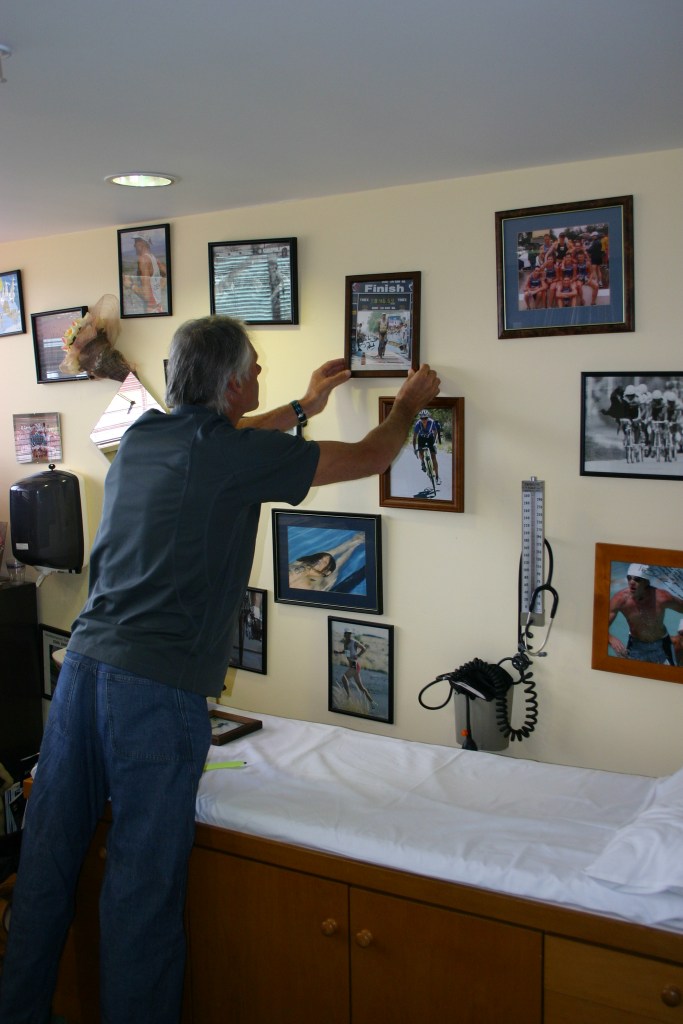

A proud moment from my athletic career. Being hung on the Wall of Fame in Dr John Hellemans office. There are a lot of VERY good athletes on that wall! John cared enough to teach an arrogant, but passionate, stranger about exercise physiology and coaching. I learned so much from him.

Here’s my training protocol, you don’t need a Peloton. You do need a bike, a trainer, a heart rate monitor and a power meter.

Ride twice most days, mainly endurance. First ride is done before my kids wake up. I enjoy a cup of coffee then get rolling.

Endurance ride => the basic Peloton format…

  • Three song warm-up
    • Song 1 just spin, build cadence and power into Zone 2/Steady
    • Song 2 insert 4×30 seconds, spin-ups (cadence ~110 rpm) with power not more than Zone 3/Mod-hard
    • Song 3 split in half – Zone 2, Zone 3
  • Endurance set, alternate by song Zone 3 / Zone 2 => 20-45 minutes based on time available.
  • Spin your HR under 100bpm when you’re done

That session is the bulk of my bike training, it works great and will continue to work great. Even more important, I’m having fun.

You can see everything I do on Strava => weights/strength/hills and a lot of “low” HR endurance.

If you go the Peloton route then they have an intro to power module (here’s their power FAQ).
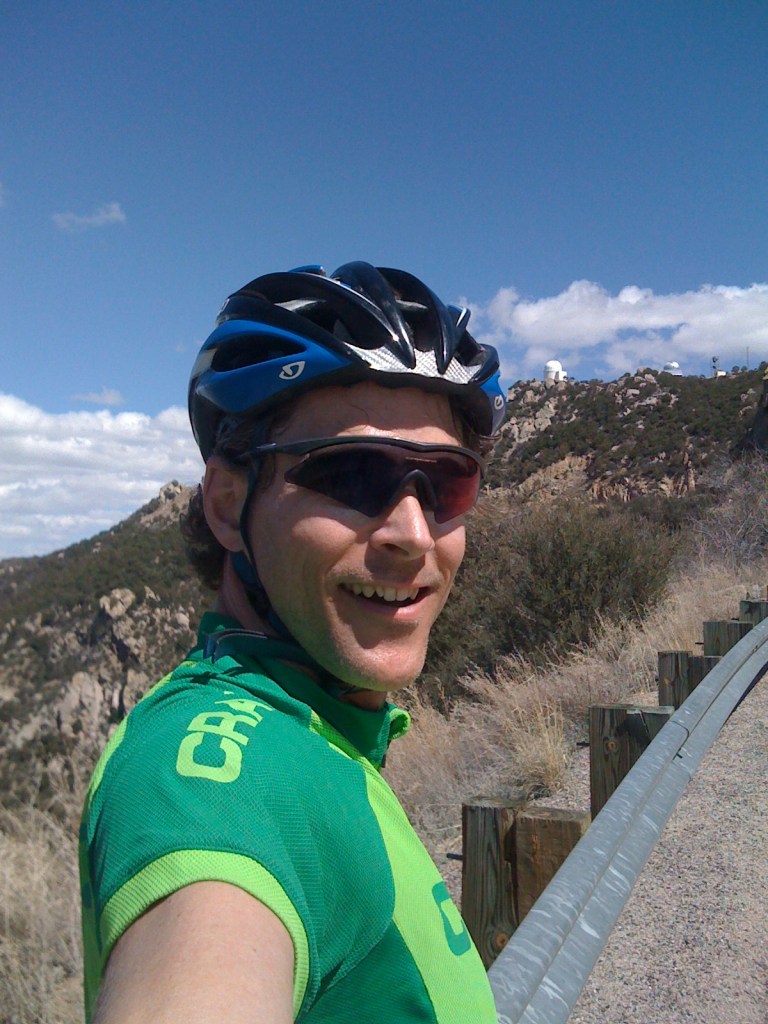

Friday the 13th, March 2009, Kitt Peak, Ajo Highway, Arizona => 40 years old, one of the first times I can remember stopping (mid climb) to take a picture!

Bonus tips:

  • The target power zone sets the MINIMUM for your workout target – put a floor on work – if you can’t hit your endurance zones, or if your HR pops, then your zones are set too high. Upward zone creep is common across all ability levels!
  • Heart rate zone sets the MAXIMUM for your workout – put a ceiling on stress – once warmed up, I give myself permission to push the watts up a bit, so long as my HR stays in my target zone. When I consistently generate higher level power, on lower level HR, I know it’s time to retest my zones.
  • Climbing/Big Gear workouts are a great way to rack up Threshold Watts (Z4) at Mod-Hard Heart Rates (Z3). Example here.
  • My toughest workouts are crisscross sessions – about an hour a week – warm-up and power is going over/under FTP with recoveries in Zone 3/Mod-Hard. Example here.
  • Traditional Spin Classes are done for variety, as a pep rally and to build quickness/cadence. Quickness is key as we age. This skill was tough when I started – it came back fast.
  • Being able to use Peloton to create a “proper” program was a surprise – I thought it was all spin classes and high intensity. Guess I am a bit out of date.
  • The 20-minute benchmarking test is a “nice” session in itself – kinda hurts at the end. You don’t need, or want, to be doing much truly tough stuff in 2020. There are many better places for you to put your energy.
  • Peloton has world class coaches – Alex Toussaint leaves me feeling cheerful every_single_time I do one of his classes. Throughout lockdown, I was laughing out loud with his classes. Laughter is good medicine.
  • Lift weights – moving your power zones up won’t improve your life. Getting stronger will improve your life.

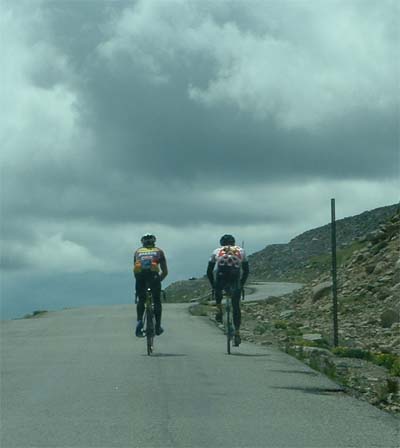
A fun memory => at the end of a 12-day training camp in the Rockies, we did a handicapped TT up Mt Evans (28-mile climb that tops out above 14,000 feet). We adjusted times based on rider/bike weight. Someone noticed I was pounding fluids at the back of the line and we had to redo the weigh-in! This is my buddy Clas, he was training for Zofingen Duathlon so running 2x per day as well as all the cycling we did (over 100,000 feet of vertical). Needless to say, his legs were less than snappy. It was the only time in my life when I could beat him in a sprint!

Clas and me, later, riding into the clouds! The top 14 miles of the climb are closed to traffic this summer. If you ride then pack top/bottom shell and a very warm jacket. Also beware of the dreaded downhill-bonk!

Some specific thoughts on intensity.

  • When you’re training with power, you can track total work measured in kilojoules (KJ). If you’re a time-limited athlete (running home school, working, cleaning your house…) then KJs are worth noting.
  • You’ll quickly see that highly intense workouts have a poor KJ-to-Fatigue ratio. You get a lot of fatigue without much work being done.
  • You might think intensity is a good deal. It’s not. It’s an awful deal because highly intense workouts are stressful and stress makes you eat / crave sugar. Bad deal all around => you can easily gain fat while exercising often and feeling tired. Lose-Lose.
  • The Win-Win is a cardio program that adds energy to your overall life and helps guide your body composition, an endurance-based program.
  • Once your endurance is well established 6-18 months, it only takes a bit of tough stuff to get your numbers to bounce.
  • Your overall program needs to keep you under your sugar threshold. Cravings, and bingeing, are signs of depletion and excess stress.

Aim for a protocol you can do every day for 15 weeks.

Challenge yourself to eliminate the habits that screw up tomorrow’s training.

Keep it simple and repeat the week.
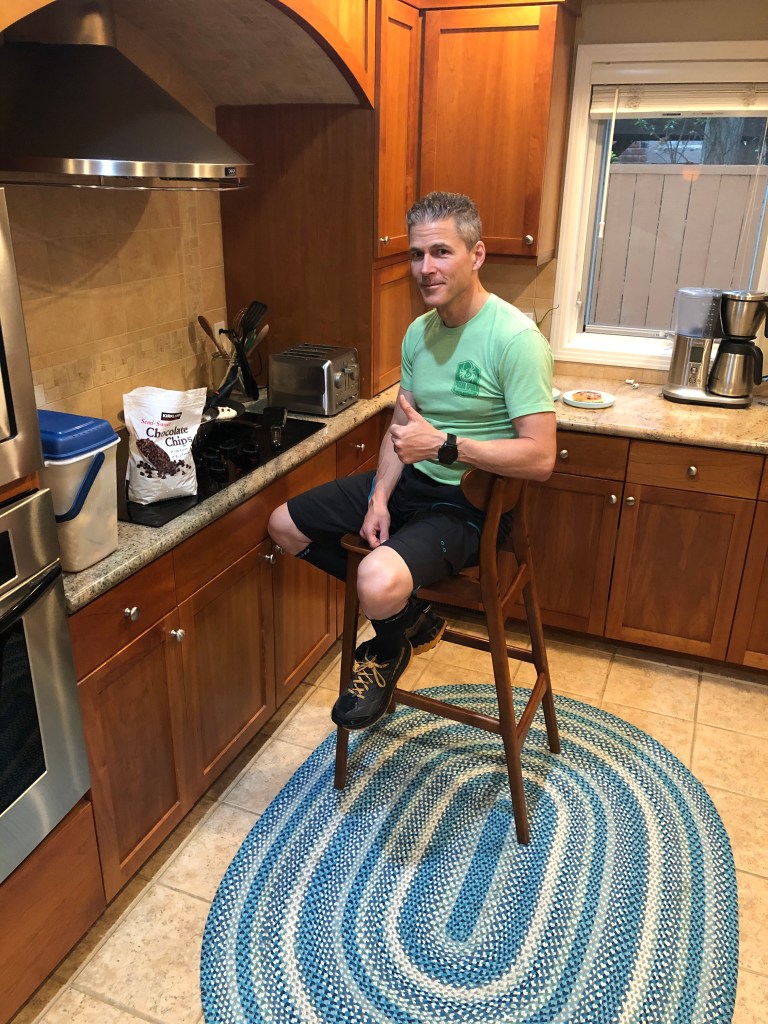
Embrace Small Failures

Yesterday, wasn’t a chair-in-the-shower workout but I did need a chair in the kitchen to cook breakfast.

It’s been over a year since I read Professor G’s book (The Algebra of Happiness). I’ve been working on his advice to Embrace Small Failures.

A reminder to reach for a better version of myself

Historically, my training has been where I expose myself to the risk of failure. As the kids have become more self-sufficient, I’ve had space to bring some athletic challenges back into my life.

Challenging myself at 51 is a whole lot different than going big in my 30s.

I’ve been using Mountain Tactical out of Jackson, WY.

I first came across MTI a decade ago when a friend used them. I remember thinking, “no way I could do that.”

For what it’s worth, I had the exact same reaction the first time I heard about Ultraman Hawaii, no way I could do that.”

I won Ultraman three years later.

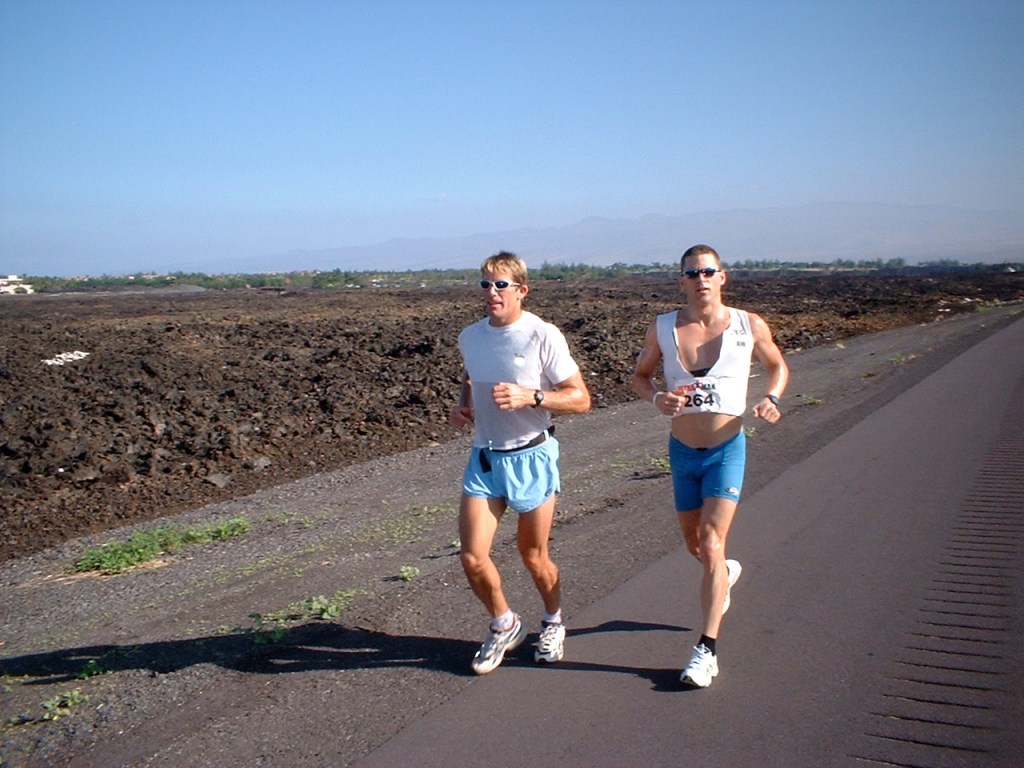
Day 3, Ultraman Hawaii, 52.4 miles in the lava fields

Each module from Mountain Tactical had me wondering, “am I going to be able to get through this?”

My latest was a 10-week training program with 5 workouts per week => 50 sessions total.

Lots has changed between the start of the block and the finish.

The biggest change had nothing to do with sport, it was a gradual shift from “temporary” shelter-in-place orders to an ongoing you-must-stay-in-your-home-to-be-a-good-person vibe. Depending on your peers & politics, your mileage may vary.

Back in March, I looked ahead to Session #50. I thought it was a type-o:

When I first used an 80-pound bag for the getups, I’d get pinned (for a while!) before figuring out how to get back up. There’s no prescribed way to get up, so I took relief in my struggles.

The plyometrics were more psychological than physical => a lot of post-workout soreness and a lurking fear of tearing tissue. Once I realized I could keep plugging along, it was a mental game of persisting.

If you’ve ever done step-ups then you probably noticed it is the “down” not the “up” that causes problems. Thousands of step-downs nearly gave me an overuse injury, but I never quite got there.

All in all, a perfectly set plan.

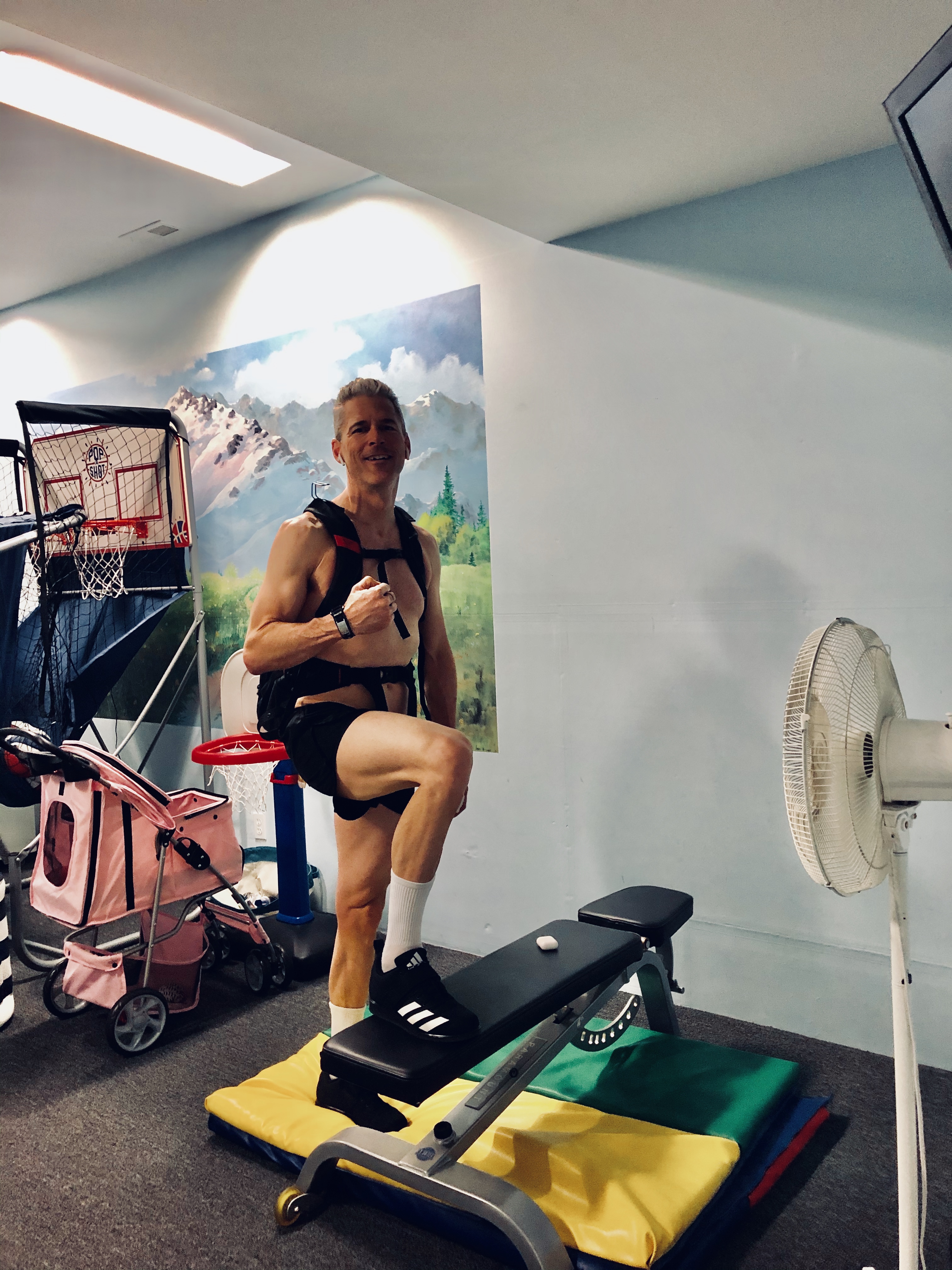
Cheap thrills with my fan pointing up for step-ups

There were a lot of small failures in the last ten weeks, not all athletic:

  • My psoas getting so tight I thought I was a hip replacement candidate!
  • My right calf blowing out
  • Losing patience with the kids

Overcoming the failures provides a deeper appreciation of the victories.

Find the win.


I did a Q&A with Andy on athletic transitions, lockdown and other topics.

Athletic Beyond 45

2020-02-02 13.12.35Middle age is going better than I expected.

Why?

Because choices that made sense when I was younger have been replaced by a lifestyle that’s a better fit for where I want to take myself.

Let’s run though the major adjustments.

+++

You might not want what you think you want: athletics is the best way I have found to keep myself engaged and apply energy. Look around and you can see plenty of examples of middle aged men getting themselves into trouble by not managing their energy.

So I will sign up for a race to keep myself out of trouble? Not so fast…

  • Engaging in athletic competition is different from being athletic.
  • Fit for competition is not fit for an engaged life with meaning.
  • To be the sort of father/husband I want to be, I need to avoid athletic competition.

The requirements of racing well, and my competitive peers, exert an inevitable pull on my life. A pull I enjoy but one that takes me away from where I want to be in 5-10 years time.

There are different ways to define excellence and the traits that ring most true to me don’t have a clock attached to them.


The most specific component of race fitness is the least valuable to my wife and kids. 

In your mid-40s you will notice a change in how you respond to training. Specifically, sustained tempo is a lot more fatiguing. This intensive-endurance pace is a core part of training for performance.

As a middle-aged athlete sustained tempo will gobble up your energy and leave you spent for other aspects of your life. If you are in the clutch of negative addictions then this can be a very good choice to make! However, you will have nothing left towards building a life that your future self will value.

This reality was tough for me to face. I know how valuable tempo training is to athletic performance. It was made easier by stopping racing, and reminding myself that I didn’t want the family lives, and marriages, of my competition.

Letting go of deep fatigue enabled me to re-establish consistency, which was being shot to pieces by minor injuries, slow recovery, illnesses and low motivation => all of which stemmed from giving myself more load than I could absorb.

+++

About those injuries… stop hurting yourself.

Somewhere in my recent past, I realized I was constantly managing low-grade calf injuries. At the time, I wasn’t training for a race, or even doing much mileage. There was no reason to endure the constant setbacks.

You’re likely to have similar moments and the performance gurus will encourage you to grind through. I’d encourage you to pause and ask yourself three questions:

  1. Where is this likely to take me? Elective orthopedic surgery?
  2. What is my goal here? Alienate my spouse and estrange myself from my kids?
  3. Is there a better way to achieve my goal? Or perhaps a better goal to achieve!

In my case, I replaced the running with hiking and functional strength training. I can do these before my family wakes up or alongside my family. My best athletic memories of my 50s are shared experiences, in nature, with my family.

With a young wife, and three kids, I’m slowly filling the state of Colorado with happy thoughts. When I’m 70, they can carry the backpack!

2020-02-06 19.03.33

Reality is enough for me. If you’re tempted to use drugs then something needs to change.

Shooting your knee up like an NFL lineman, boosting your hormonal profile to beat an athlete who’s spouse just walked out the door, taking health risks to train alongside college kids…

  1. Where is this likely to take me?
  2. What is my goal here?
  3. Is there a better way to achieve my goal?

A focus on athleticism puts me in a continual state of rehabilitation from the process of aging naturally => functional strength, quickness, range of motion and extensive endurance.

Being freed from external requirements lets me do the right thing for my health, year round.

  • Place a demand on yourself, then recover while working on a project that benefits your larger life.
  • While expanding your life beyond athletics, remove whatever screws up your sleep patterns. My 4:30am wake-up makes poor choices obvious, immediately.

This approach will enhance your biochemistry naturally and not mask errors.

To learn by iteration, it is essential to physically experience my mistakes.

+++

Victory and Vanity

How are you going to feed that part of your personality that craves recognition, thrives in adversity and wishes to dominate others?

Can you see your desires? Have you considered what is driving your desires?

You might simply be over-scheduled and seeking socially acceptable personal space.

It’s worth looking deeper.

When I looked deeply everything was there, positive and negative. There are many ways to spin our motivators.

Recognition can come from my children, who are hardwired to be impressed by me. I look pretty jacked to a seven-year old.

Personal growth through facing adversity can come from the final few reps of a set (or simply getting out of bed some mornings). My endurance mantra… many people would like the ability to do this right now.

Domination is a tricky one, especially when surrounded by women and children. At my best, I turn it inwards and seek to overcome my negative traits, specifically my urge to resort to force, rather than skillful engagement.

We often let each other off by saying things like.. “everyone is different”, or “you need to find your own way.” I disagree. We are very, very similar within our cultures and wired to follow social proof.

If you want to change your motivation then change your location.

I’m parked in the fittest zipcode in America, training in nature, with a young family, thinking daily about a handful of men who are presenting their best selves to the world.


Finally, remove the friction between your current habits and the life you want to lead.

I have a home gym, I wake up at 4:30am and there aren’t any email/social apps on my phone.

I created a situation where there was nothing for me to do between 5 and 6am in the morning.

So I write, or train => activities that leave me satisfied in hindsight and help my future self.

Making My Life Work Better

2019-11-27 16.58.34You’ll find a lot on my site about strength training. It’s a habit that’s served me well for 25+ years.

This year saw some changes. I went stale in my tried-and-tested program. I recognized my mojo was flat and wasn’t making much progress.

A few years back, a friend had done a backcountry ski program with Mountain Tactical. So I bought the latest version of that program, got to work and learned a few things. Currently, I’m using their in-season ski maintenance program. I’ll skip observations about the plans themselves and focus on general points that might apply to you.

How am I allocating my time and where is that likely to take me? Athletics, relationships, every single thing.

What is the purpose of your protocol? These days: (a) enough stress to get the benefits of exercise (cognitive & mood); (b) vanity; and (c) maintain my ability to ski & hike at a very high level.

With the MTI program, the sessions were so challenging that I needed to drop all other exercise. Dropping supplemental training probably seems obvious but, in my demographic, it’s common for people to do 1-2 extra sessions per day, and still think they are not doing enough!

The results were great. Even the nights with total exhaustion were “fun” => they made me feel like I was doing something.

Giving myself a full 24-hours to recover between sessions boosted my recovery AND reduced the mental stress of having to grind out a lower quality session when tired. It reminded me of my single-sport focus periods when I was an elite triathlete.

Within my training, I made a big demand on myself (for about an hour, 3-4x per week) then backed way off for the rest of the day. If you are finding, like I was, that all your sessions are blending into mediocre performance, with limited gains, then this tactic might help.

Seems obvious but it takes a lot of courage (for a compulsive exerciser) to back off. For example, I have a fear of weight gain and can use cardio to enable excessive eating.

Each one of us has blindspots. Mine are range of motion, quickness and coordination => fundamental components of high-level skiing. The program I bought contained box jumps, lateral jumps, side-to-side jumps, dynamic lunges, stretching and body-weight hip extension exercises. The act of seeking help gave me a nudge to do things I’d skip on my own. This works in our larger lives:

  1. Notice when your protocol stops working
  2. Seek expert advice
  3. Trim non-essential components

As an elite athlete, my “recovery” included 12-15 weekly hours of easy cardio. Easy cardio isn’t easy but that’s a different topic!

My easy-training hours have been replaced with walking, time with my wife and housework. This shift makes it easier (and more likely) to succeed within my larger life, which aims at a world-class marriage, thinking better and educating my kids.

What I value is reflected in where I allocate my time.

Attention Is Expensive

2019-10-18 07.31.22Let’s start with a story.

When I was younger, I never let a lack of knowledge prevent me from confidently sharing my theories about anything (this remains a weakness, BTW).

One day, I was holding forth and my buddy Jeff (board-certified orthopedic surgeon) chuckled and said, “I would call what you just said G-medicine.”

Later on, he took me aside and said, “Buddy, you know there’s a reason we go to med-school.”

He left it at that, which was a wise way to deal with an over-confident guy, who’s outside his field of competence.


I had some follow up questions about fasting and optimizing for one-rep max.

To address tactics, I need to step back and explain strategy.


Body, mind and spirit => What are you trying to achieve?

You need to know because attention, effort, willpower and thought are expensive.

So fasting, one-rep max, wherever you are focusing…

What is your payoff from your protocol?

Effort is expensive. Spend it wisely.


2019-11-02 06.03.09-1My philosophy is:

  1. Know your goal
  2. Keep the protocol simple
  3. Access believable people to tell you what’s required
  4. Use simple benchmarks
  5. Use habit energy to make life flow on autopilot

My protocol…

  1. No Zeros => remove days where I don’t train
  2. Get Outside the box and into nature => even if the box is a Gulfstream, or a boardroom, it remains a cubicle
  3. Seek Mastery => surfing, moguls, powder, swimming, sailing => moments of flow await!

Be honest with yourself. Is your physical life where you want it to be?

  • Work before work rate => Develop work-capacity before you do work-rate training. One-rep max is a “work-rate” benchmark that is certain to decline over time.
  • Don’t fool yourself => nobody fasts for health & longevity => we are either looking for an easy way to lose weight, or creating caloric “space” for binges.

Simple metrics let you create the habits that enable larger projects. Looking backwards over the last year:

  • < 10 zeros (days without exercise)
  • 15th year of stable body weight
  • 200+ days on trails or snow
  • 350+ days awake before 5am

I know I could be more, too much time is wasted on my smartphone.

I must remember that life is empty without connection. So be open to change based on painful feedback from my closest relationships => my wife and kids are brutally honest with me!


Higher Order Effects

I have empty space in my life so I can reflect on where my actions are likely to take me.

  • I have an addictive personality in a family tree with mental illness, addicts and eating disorders. Kinda indicates caution with self-starvation! Respect your history.
  • Be cautious with putting pressure on your spinal column, heavy lifts and explosive movements. Powerlifting injures can be for life. Respect reality.

Where are you likely to go with your protocol? You OK with that?

What’s the worst that can happen? You OK with that?


Fragilities

What is going to derail you?

My depression triggers are: poor nutrition, irregular sleep, alcohol, missed endorphins and excessive fatigue.

My entire life is a positive-feedback loop designed to keep me rolling.

Much of my “not do” advice is related to the risk of ruin. My depression triggers are defined as fun by my peers.

I need to be OK with saying “no” because… Depression isn’t fun.


Nature Has Useful Information, even if unpleasant

As you age it will be tempting to access Big Pharma to fool yourself, particularly if your self image is wrapped up in physical performance.

Before you act, consider…

What’s your competitive advantage? I think better, and choose slower, at 50 than 28. Taking myself to 11 with testosterone would GREATLY increase my error rate, across all domains. Not worth it.

My competitive advantage is taking the best ideas and integrating them via new habit creation. I can do this until I die.

Fatigue is information that guides me away from physical ruin => my mojo feels like it’s a tenth of where I was at 40, but my life is better because I am a better person.

Once again, overriding nature greatly increases my risk of injury. Injury can be the first step on a downward spiral towards depression/ruin. Not worth it.

Surprisingly, getting physically worse isn’t worse.


Anyhow, lots here.

When it comes to positive change: set a low bar, and do it daily.

I live near a cemetery, which helps me remember my expected value is negative infinity.

Death is an outstanding reason to be true to yourself.

Vision Sixty

2019-08-20 07.58.18Seven years ago, I asked my smartest pals to share their experiences with sabbaticals. It was a very useful exercise. Rather than a sharp, and sudden, sabbatical, I made a choice to change slowly. I gradually shrank my working life and replaced it with more family engagement.

Over the last year, I’ve been tapping my supervet buddies in a similar exercise. I am asking about their 50s => any lessons, any tips, how’d you find it?

2019-08-20 06.26.25The answers have been all over the map.
  • Everything gets easier
  • Worst decade of my life
  • Best years of my life

ZERO consistency in what people say, but clear themes when I look at what they actually do. They keep on, keeping on.

Despite what we tell ourselves, there is little practical decline through 60. Obviously, I’d be miles behind my 37-year old self in any sort of race. However, even in my sedentary pals, it’s more of a “slowing down” than a decline (in function). I saw this in the supervet athletes I coached. A clear, annual, decline didn’t start to happen until ~70 years old.

In comparing me-with-me, there’s very little lifestyle change forced upon us. The changes are more about coming to terms with “less.” Less vision, less skin tone, less aerobic capacity, less recovery capacity…

Middle age struggles tie back to seeking “more” => relationships, heart problems, injuries, dissatisfactions… the damage comes from the stresses of striving.

My happiest older pals have found a way to come to terms with what they have, and what they’re not going to have.

2019-08-20 08.53.10-1

If “more” is going to challenge you then it will be obvious (injuries, depression, a-fib, drama, binging, addiction).

I like to remind myself, “Reality is enough.”

My mind is ALWAYS spinning ideas for more. I pay close attention to how “more” makes me feel – exhausted, neglecting my family, worried I’m going to get caught out.

2019-08-17 09.20.59Get your winning done early and pay attention each time you taste a lack of satisfaction after striving.
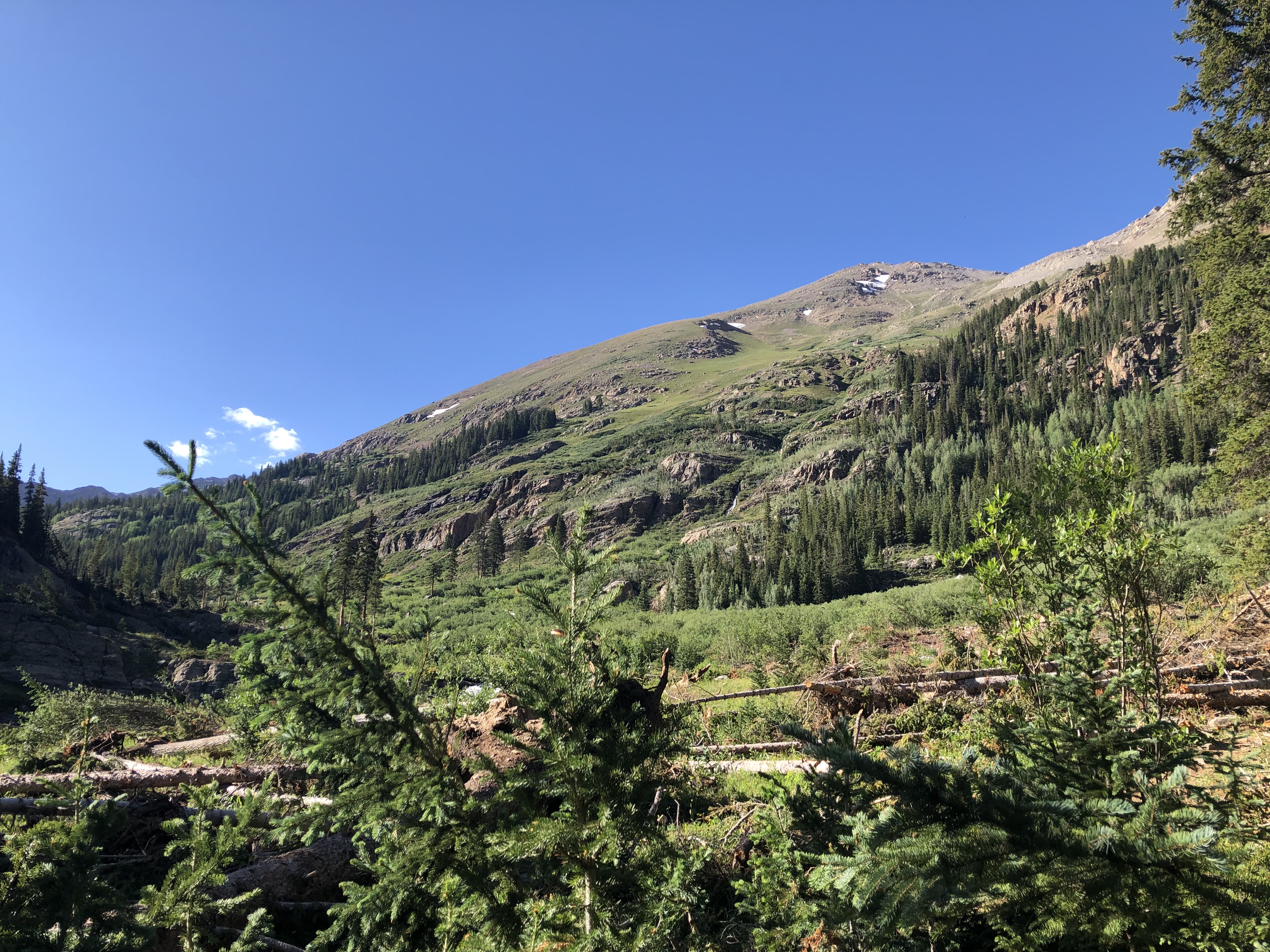
Look deeper into your drive, passions and interests => what lies beneath your compulsions?

For example, I like spending time in forests – my speed of movement through the forest is something I track, but has no impact on my satisfaction.

What’s your gig? My gig is sharing a connection to nature with people I love.

The “lack” is deeper than the “more” we seek. I had to back off to find out that satisfaction was behind me.

2019-08-15 17.22.14How would you describe your desired outcome over the next 5-10 years?

Active, polite, easy-going, positive. These are the traits of my older pals that I enjoy spending time alongside.

Strength & Training Strategy at 50

2019-07-07 09.01.30Strength gives me better choices.

Specifically:

  1. Maintain muscle mass
  2. Challenge my connective tissue
  3. Strengthen my shoulder complex (to survive my inevitable crashes)
  4. Get the bio-chemical benefits from working large muscle groups anaerobically

2019-07-07 08.45.03

My base period needs to be longer: I was very consistent with strength maintenance across the ski season. As a result, I lost less strength than prior years. However, I was WORKED at the end of the season and my mojo stayed flat for a long time when I returned to more focused strength training.

Two, maybe three, “good” sessions per week: At 50, I go flat quickly! I need to be humble with the load I put into myself.

I split upper and lower body days: in order to do quality exercises, and recover, I split my workouts across the week:

  • Monday/Thursday – lower body
  • Tuesday/Friday – upper body
  • Wednesday/Saturday – plyo (~7 minutes total per day)

Very little sustained intensity: I lose a lot when I get sick and can’t train. Put another way, my ability to go training is more important than my training ability. A calendar of events would certainly push me to do more (likely for less benefit).

I go to the gym to be around people (even if I don’t speak to them!): the core of my program has been the same for 20 years. It would be easy to set it up in my garage. However, part of my “feel better” seems to come from the gym process. The most time-efficient setup isn’t always best.

My aerobic goal is “about an hour, every day.” I’ll go longer when I can hike trails with my wife or son. I do a bunch of walking on top of the aerobic exercise.

Learning to navigate the physical decline of middle age is a benefit of middle age.

The days that start with training are clearly better.

Pay attention to better.

2019-07-07 08.54.56

Chronic Endurance

A friend’s question gave me a nudge to flesh this out.

My pal asked, “am I damaging my health by pursing my endurance dreams?”

The science seems clear => you are very, very unlikely to screw up your health by exercising. Most everyone could benefit from exercising a little more often.

+++

However…

My demographic is different than the general public.

Call us the “screw the limit” exercisers.

What about us?

+++

I’m fortunate to have a group of endurance mentors that are moving through their 60s, 70s and 80s with many, many, many (!) years of chronic endurance training under their belts. Some of their hearts, and joints, are coming off the rails.

It’s tempting to “blame” exercise for their issues but that ignores the problems they avoided through exercise (high blood pressure not received, depressions not experienced, diabetes not developed, harmful addictions successfully managed).

+++

That said, whenever I find myself asking a question about excess, the fact that I’m asking is, in itself, part of the answer.

If you’re already exercising daily then you’re not going to find any doctor to advise you that you need to ramp that up by a factor of 2-5x.

…and you may find yourself reaching out to someone like me to get comfort that it’s OK to do a little less.

In doing a little less, but continuing to exercise daily, you will reduce your risk of ruin.

“Ruin” being the loss of the benefits from daily exercise.

Risk of ruin is what encouraged me to do less.

Immune system failure, bike crashes, lower leg injuries, death by avalanche/car accident… each is extremely inconvenient.

In doing less, I discovered unexpected benefits of eliminating chronic endurance => improved sex drive, better cognitive ability, happier joints, less cravings and additional muscle mass.

If you’re under 50, or pre-menopausal, then my benefits list will make more sense in a few years!

+++

What about that Tour de France study about longevity? (abstract linked)

While extreme, I’m not writing about Tour athletes.

Chronic endurance is about chasing podiums for decades after your elite career.

It’s not surprising TdF athletes live longer than their peers. The constitution required to get to the start line creates a special cohort.

A better cohort to review is “masters age-group champions” across 10, 20, 30, 40 years and compare them to “daily exercisers”.

There’s not much money to be made studying healthy people so I wouldn’t hold your breath on seeing my alternative study!

Frankly, I wouldn’t expect there to be much difference in longevity. You’d be studying two healthy populations.

Our findings underpin the importance of exercising without the fear that becoming exhausted might be bad for one’s health.

Lifespan isn’t the point.

Being exhausted is horrible for our relationships.

Look around and you will see that relationships are what we lack in later life, particularly if our favorite hobbies involve being alone… 😉

Quality of life and keeping a lid on my risk of ruin… that’s what interests me these days.

None of these benefit from chronic endurance.

Being Fifty

2019-03-23 14.56.18I expected a lot more physical decline!

The decision to phase out athletic competition was one of my best.

So much chronic fatigue is gone and replaced with healthier pursuits (strength training, human relationships, being-a-better-man projects).

+++

2019-03-17 08.11.54If I could give you one thing to achieve for your 40s then it would be to write down, how you get in your own way.

That’s one of the best things about getting older. The repeated mistakes make it obvious what’s going on.

Three post-it notes are enough for me:

  1. Don’t act on anger.
  2. Are you sure?
  3. What do you want to have happen? What do you think will happen?

All three are stuck to my computer monitor.

That’s my “what not to do” list.

+++

2019-03-13 16.07.22What about my “to do more often” list?

My 40s happened to coincide with the Great Recession, preschoolers, the death of my last two grandparents, a massive corporate insolvency and periodic unemployment.

Some years were better than others.

It took a decade to arrive back where I started:

  • A feeling of control over my schedule
  • Daily exercise: ideally, in nature
  • Teaching: kids, instead of clients
  • Seeking Mastery: skiing, instead of triathlon
  • Learning: how to think, act and be better

The core structure of my days, my values and what I enjoy to do… all are unchanged from my 20s.

What remains undone?

Strength Training – Base One 2018

My ideal ski day is… skin 3,000 vertical feet, ski back down before the resort opens, second breakfast, alpine ski 20,000 ft of bumps, lunch with my wife, and finish with 10,000 feet of steeps in the afternoon.

Being able to enjoy this day is the goal of my training.

My program is focused on range of movement, strengthening connective tissues and slowing the loss of lean body mass.

Four things from 2017:

  1. The plan worked – radical change isn’t required.
  2. I can gain muscle in my late-40s — train, eat normally, get jacked — we have been conditioned to believe strength loss is inevitable. Signs of decay are evident in my skin and recovery but my strength is hanging on. I’m fueled on real food, coffee and water – that’s it. Don’t even bother with vitamins.
  3. Acute soft tissue injury is my greatest risk – therefore, compound lifts, with full range of motion, are more important than putting up big numbers.
  4. My strength peaked four months before I started skiing a lot. A longer base period fits for injury prevention and a target of being really strong in September/October.

To keep me honest, I’ll keep you posted.

+++

Base One (36 Workouts)

  • Twelve of each session
  • Twice a week for six weeks
  • Split across the week
  • Twelve hours of time invested (Huge Return on Investment)

Lower Body

  • 4×25 squat #95
  • 4×25 leg press #140 (sled #118)
  • 4×10 single leg press just the sled
  • Leg ext 4×25 each side #20 alt by side
  • Single hip bridge each side 4×10 alt by side
  • Calves 4×25 alt by straight/bent knee

Upper Body

  • 4×25 pull downs (front)
  • 4×25 assisted dips
  • 4×25 sit ups
  • 100 push ups (for the day)

Plyometric Half Blaster (x5 on 30s rest)

  • 10x Air Squats
  • 5x In-Place Lunges (5x each leg, 10x total)
  • 5x Jumping Lunges (5x each leg, 10x total)
  • 5x Jump Squats

+++

My Endurance Corner articles on strength are here – the links will go down eventually as it’s an old version of the site – good stuff that helped me when I was a high-performance athlete