When 99 is more than 100

As a young man, I spent my 20s focused on taking myself to the limit. In my 30s, I discovered triathlon and shifted my life towards a devotion to personal excellence. In both periods, I was unable to understand why anyone would bother “being average” at anything.

Whether your focus is academics, finance, wealth or sport — if you spend your time in a group that consists of the top 1% then you’ll be at risk for certain errors.

The first error is a skewed definition of “average.”

Athletics is a great field to see this in action as we’re much less likely offend anyone by telling the truth! Here’s a quote from a former coach…

He’s constantly disappointed in himself because he thinks that he should be able to roll out of bed and drop an 8:35 Ironman.

In other words, our friend has a baseline that requires him to outperform 99.99999715% of the planet.

That’s an extreme case but, if you listen to the dialogue surrounding your favorite sports team then, you can see this pattern repeating itself throughout our elite classes.

As an amateur triathlete, I could beat 98.5% of the field at any Ironman race in the world, yet my performance wouldn’t even register for the top 1% of performers, who benchmark themselves on their peers.

My point, isn’t to correct the attitudes of the elites – an extreme way of thinking is useful to drive extreme action.

My point, is to encourage you to stop and ask, “Is It True?”

When your peers lack diversity, your views are at risk from becoming detached from reality. You will see it most easily in your definition of average and decent.

  • What’s a decent athlete?
  • What’s a wealthy family?
  • What’s a successful child?

Outliers living in the 1% are unable to see the extreme nature of their lives and that can lead to ruin.

It’s not just about aging athletes ruining their joints.

I had a very close friend that ended up financially ruined because he was unable to be satisfied with being more wealthy than 98% of his peers.

Others ruin relationships with children, who are unable to measure up to an unreasonable standard.

+++

Another risk – the best are lazy.

Lazy?

  • …but I train 25 hours a week
  • …but I work 65 hours a week
  • …but I read 100 books a year
  • …but I add more value than anyone at this firm

My capacity for extreme workload requires me to drop everything in my life.

In fact, dropping everything is a “secret” of success.

However, it makes me very lazy outside my domain.

As the youngest partner in my private equity firm, I had staff to shop, to sort my CDs, to open my mail, to cook my meals, to take out my trash… the list went on and on. My approach was to throw other people’s time at any issue that prevented me from spending time on my goals.

Ultimately, behaving like a plutocrat wasn’t the main drawback.

By not placing “love” as a primary goal, I created a pattern of behavior that would have driven every relationship from my life.

It wasn’t until 15 years after my divorce that my family received the dividend of a man becoming a little less successful and far less lazy.

The Price of Admission

elsaI was reading The Meaning of Human Existence by Wilson and came across an excellent question:

What’s the price of admission to your tribe?

The question got me thinking about the ways that groups enforce conformity and create cohesion.

Here are two areas where my groups have led me astray…

Groups that push me to perform external actions that are different than my internal values — examples here would be the executive that complains that she has to lie as part of her job; or selling a product that hurts people; or working alongside people we don’t respect.

These situations lack integrity because we are choosing to ignore our internal reality in an effort to fit in externally. It’s a stressful situation and most of us adjust by changing our internal reality.

A gradual loss of integrity is how my criminal pals became crooks.

The second thing to watch is the temptation to trade health for money.

Despite having a long-term habit of good choices, I feel this temptation daily! It takes effort for me to protect my healthy living routine (sleep, exercise, stress, nutrition, positive connection to others). The sensation of hanging-on-by-a-thread is something that’s been with me for many years.

Parents, mentors, coaches, bosses, organizations, religions… when our leaders offer us money, fame or recognition for going against what feels right… start working on an exit strategy!

Two of my favorite questions for my kids…

  • What do you feel?
  • What do you think?

A life of integrity is built on harmony between our external actions and internal lives.

It takes effort to look inwards, rather than default to the external dogma of our tribe.

What are the values of the people closest to you?

What To Do, when you don’t know what to do

familyA couple weeks ago, I was flying Southwest and the passenger beside me was a bit unhinged. He didn’t seem dangerous, but kept inserting delusional rants into a well-informed discussion of current events.

The rest of the plane was avoiding eye-contact but, with him on the aisle and me in the middle, I didn’t have anywhere to go!

I figured that I’d put my hospice training to work and see what happened…

Six words that can profoundly change your interactions with the world, and through that, the reality that you experience with your day-to-day living.

When I think about my first response to stress, it’s the opposite of the tenets: I know you’re wrong, I want to flee you and I resist you.

My kids make my instincts obvious to me. If your kids are angels then you might have to look into other areas of your life:

  • A dying parent, or patient
  • A chatty stranger on the bus
  • A fellow citizen on the opposite side of an emotional issue
  • A kid yelling FART at my daughter’s birthday party
  • An angry family member

I get a physical signal, a tightening in my chest, before my mind kicks into high gear. The physical sensation is my chance to save myself from falling into past patterns.

These situations leave me feeling scared and unsure what to do. On the Southwest flight, I had to remind myself that the passenger had to get through security so probably didn’t have a gun, or knife, on him. Yes, I was worried that he was going to kill me!

In turn, my fear leads me to close off, or engage by digging into my existing beliefs. Classic flight or fight.

However, if I’m aware of my fears then, I can pause and try to help the other person. When I do this, I’m helping myself because I escape my cycle of fear/closing and/or fear/engaging.

Bearing witness – one of our deepest needs is to be seen, to be acknowledged. Watching how the rest of the world treats the aged, a difficult child or the crazy guy on the Southwest flight… I see that I can do the entire world (or at least my fellow passengers) a favor by acknowledging my seat mate for a little while.

Not knowing – listening to other people speak, particularly odd-ball cranks, there is another voice in my head. The inner voice is constantly disagreeing, challenging, explaining why the other person is wrong.

When I’m quiet enough to hear the other voice, I see it’s not rational. It takes the opposite side to whatever it’s hearing. Much like the initial reaction of my three-year old son!

In a situation that doesn’t matter (like talking to a stranger), play a game where you “don’t know.” You’ll find that it is relaxing to give yourself permission to not-know. In turn, a habit of not-knowing prevents needless conflict with kids, at work and in your marriage.

The “not knowing” exercise is a neat one because, when you see the power of change in areas that don’t matter, you’ll unlock an insight into how the only thing that matters is the little things!

Compassionate action – in the case of my eccentric seat mate, it was easy to see the best thing for everyone was for me to listen, with a mind that didn’t know. In fact, I’ve been doing more and more listening.

If you think about it then I’ll bet you can come up with situations where you had NO IDEA about the right course of action:

  • Friend with cancer
  • Friend who had parent die
  • Friend who had child die
  • Divorcing couple
  • Friend with child with developmental difficulties
  • Depressed friend
  • Friend with substance abuse issues
  • Bankrupt friend

When you don’t know what to do, I hope you remember Joan’s advice.

As for my pal on Southwest, he thanked me for my kindness and scurried off the plane.

He left me with a warm feeling of a job well done.

Be brave.

Micro Courage

axel_lionHow do I cultivate deep strength and resiliency?

We might describe resiliency as…

  • The capacity to continue despite life’s setbacks
  • The ability to become stronger due to stress (anti-fragility)
  • The strength to handle anything

They sound great, grand and completely unattainable!

I’m going to guide you through how I break it down into something that I can action in my daily living.

Start by flipping it on it’s head, what are the characteristics of the not-resilient? Think of the biggest head case you know…

  • Angry
  • Anxious
  • Depressed

When I think about anger and anxiety, they strike me as cultural expressions of fear. At some level, we see angry men and anxious women as normal. I feel both emotions all the time and they make me less effective.

What to do?

Over the last two years, I’ve been experimenting with micro-courage.

I started by printing up 50 life lessons and highlighting the ones that I wanted to focus on (11, 12, 18, 26, 27, 28, 37, 42, 49). If you come by my office, you’ll see they are taped near my printer…

lifelessonsReflecting on the lessons, I paid particular attention to three:

  • Let your children see you cry
  • Forgive everyone everything
  • Yield

I’d encourage you to find your own (triggers).

The game is to focus your actions on situations at the edge of what you can handle.

Here’s an example:

  • There are lots of homeless folks on the Boulder Creek Bike Path. Some of these folks are violent, others are mentally ill, still others are addicts. As a group, they scare the crap out of me.
  • While I have pals that work with the homeless, I don’t have any clue how to “fix” this problem and often wish the problem would go away (so I don’t have to deal with my inability to deal with it!).
  • Anyhow, there’s one guy that sits by the creek in the 28th St underpass and says good morning to everyone that runs, rides and walks past him. He’s a drinker and can get a little sloppy towards the end of the day.
  • I can’t fix the city’s homeless challenges but I can offer the guy a bit of human connection as I ride by. I look at him, smile and take a breath in. On the face of it, I’m smiling at him but, in reality, I’m staying open to the fear within myself. That’s micro-courage.

The story repeats itself in every part of my life that I want to close off.

I try to “stay open” as many times a day as I can.

The problem can be homelessness, litter, aggression, poor driving, manners, food quality… keep it small, remember to breathe in through your nose with a tiny smile.

Staying open to a small fear, a slight inconvenience, a little bit of sadness… I call it micro-courage.

The habit has been transformative in situations that I used to find overwhelming.

This is what I meant when I wrote that strength comes from staying open to little fears.

Courage is a powerful antidote to fear, anxiety and anger.

Be brave.

Free My Mind

monsyWhat’s the difference between knowledge and wisdom?

Time, perhaps.

My friend, and his father, are both surgeons. The older doctor shared that ‘half of everything I learned, turned out to be wrong.

When I think back to my formal education, a good chunk appears to have been wrong. Of course, studying economics in the 1980s gives one an edge in the search for academic humility.

Why does this matter?

Knowing that most my knowledge will prove meaningless helps me decide where to focus thought. Some questions that I ask myself when I’m wound up…

Could I be having this discussion 10, 100 or 1,000 years ago?

– Nutrition, exercise protocol, the body fat percentage of myself and friends… All are recent phenomena. Not worth devoting much share of mind towards.

– Living well, meaning, time allocation… These questions track back to the ancients.

How long has this problem persisted?

– I love this question with regard to young children. They have been a challenge for parents across thousands of years. My odds of transcendence are long!

Under what conditions is the opposite opinion correct?

– This one is a loaded question because, once you realize that there’s always a situation where the opposite applies, it’s easier to develop tolerance for those who oppose us.

Am I sure?

The benefit of experience is that I’m not sure about much. However, there is a small list of traits where I am quite sure.

It Wasn’t Good For Me

gnomeA number of my pals triathlon’ed from Vancouver to Calgary over the last two weeks. They did the journey as part of something called Epic Camp and I highly recommend Scott Molina’s blog about the trip. I’ve been chuckling along as the crew drill themselves daily across the Canadian Rockies.

In reading Molina’s diary of their adventure, I’ve been feeling three emotions…

Joy that Scott is able to keep on trucking. The guy’s 54 years old and he’s still able to love training at the edge of human endurance. Epic Camp is about the mental component of performance and Scott personifies joy from suffering.

Continuing amazement at what people can accomplish. It’s tempting to put ultra-athletes into a separate category as genetic freaks. The reality is most ultra-athletes are fairly normal physically. The differences arise in their capacity to embrace obsession and the way they experience fatigue & suffering.

Finally, I experience a deep sense of gratitude for my life in Boulder. When I was living my life of extreme athletic performance, I couldn’t see the cost of my status quo.

By the way, lots of people talk about the health risks of extreme exercise. I think that you are right but you’re missing the point. See the camp for what it is… a binge. I’ve always enjoyed a good binge. It’s something I need to watch. Also, so long as you don’t go banana’s with the running, the main short-term risk (to your kidneys) is limited.

Scott knows, and shares, the requirements for athletic success. He’s far more open than any other triathlon writer, myself included.

What’s yet to be published is the total reality of seeking our ultimate triathlon potential. Outside of triathlon, Sam Fussell gave it a shot with bodybuilding. His book, Muscle, is an entertaining account of the life of a full-time amateur (AKA a life similar to most tri-pros). Leaving the extreme drug use to one side, the parallels with my life are many.

I’ve often wanted to write the “whole truth” about my life. I’m most open with the non-racing spouses of my training pals. They know enough about my world to be entertained but aren’t so invested that I challenge their identities with my observations.

I looked deeper into my motivation and saw a desire to protect my children from my near misses. However, my children’s obsession is certainly going to be different than my own and they will resent being told what to do by their, ultimately, sixty-something father.

Here’s where Sam’s book comes into it’s own. The hero in Sam’s book is his mom. She keeps the lines of communication open, accepts Sam for who he his and frees him to change his mind on his own timetable.

As we ascend to the top, we can lose the goodness of our youth. It’s no accident that the highest-achievers had very difficult childhoods. It’s a rare person that becomes more kind under extreme stress – at Epic Camp, Bevan James Eyles is the best example that comes to mind. He was always part of the solution. The rest of us acted like wolves, or hyenas.

What helps everyone is encouragement to hold onto a piece of goodness and stay open when the little voice says, “this isn’t good for you.”

…and while I have no idea who is doing the talking… I know that following that voice has led me to a wonderful life.

Lex

Hometown Hero

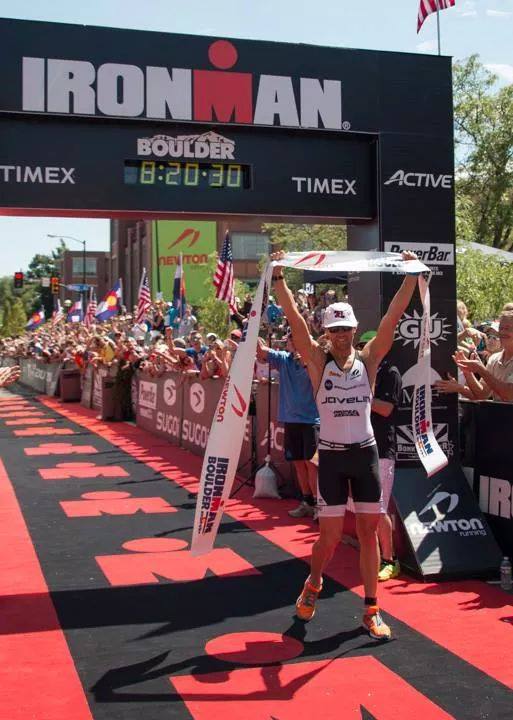
820My buddy, Justin Daerr, won Ironman Boulder this month. Even bigger, the ladies at my health club have started chatting about him!

He’s truly made it.

Not many people make the transition from average to champion. I was along for the ride.

epic_konaIn October of 2004, Justin came out to Hawaii for a camp that we were hosting. He had a big week of training and finished third in his age group in Kona. I didn’t know it at the time but October 2004 marked the high-water mark of my athletic career.

hawaii_run18 months before that camp, Scott Molina asked me, “What if that’s it?” At the time, I replied, “There’s always more.” Scott was a little early with his question but it was a good one.

What’s next?

After Justin became really good, he put in another 10,000 hours to become great. It’s the profile of a clean athlete, many years of plugging away. No quantum leaps.

runI like to focus athletes on 1,000 days of effort. After 1,000 days, of racing pro Justin was going far faster but didn’t have a whole lot to show for his efforts. He was a long way off the top athletes and, like me, only competitive over long distances.

The link in the paragraph above shows J’s results. He was speedy for a long time. Thing is, everyone else at his level is speedy too! Eight years of consistent sub-9 Ironman times. That’s really fast, for a very long time.

How do I measure my return on investment?

…is a question we should ask

…especially about time we will spend

Absent conscious effort, we will default to the values of our community. My athletic community values vanity and victory. These values rule what I see around me and lead to athletic errors.

As a champion, expectations and self-image change. My champion pals, closer to my age, experience pain with the inevitable transitions that life brings. Whenever that transition happens, I hope Justin keeps what’s best from the last decade.

  • He was willing to inconvenience himself to do the right thing.
  • He persisted in the face of evidence that he might not make it – a good lesson for me to re-learn!
  • He never mentioned the slings and arrows that were tossed at him. Justin’s non-response made me a better person.

These are the good old days.

Remember to enjoy them!

Scope Lock

It’s easy to let short-term news dominate our thinking.

  • Children killed in war
  • Lost airplanes
  • Destroyed airplanes
  • Crashed airplanes

With death, in particular, I was curious.

I asked Google, “How many people die, per day, in the world?”

Google replied, “about 150,000.”

Per DAY.

That helped me put my obsession into context.

++

Realizing that my thoughts are largely wasted can create cognitive dissonance.

…but it’s awful

…I need to care (to show I’m a kind person)

I ask myself, ‘is linking worry to goodness effective?’ In my life, worry makes me anxious, not compassionate.

++

Here’s what I’ve noticed in myself. There’s a hidden cost to obsession with others.

The more I focus on seeking to change others, the less energy I have to change myself.

What one thing, if it happened, would change everything?

In my case, kindness through daily action in my own house.

Beware of feeding what you want to leave behind. In my case, fear – anger – anxiety.

Talking About Dementia

The medical director of the hospice where I volunteer gave a lunchtime presentation on dementia.

An interesting stat she shared was 45% of people 85 or older will show symptoms of dementia. With longer life spans, we’re going to be dealing with more dementia.

The mechanisms for the various types of dementia are not well understood but she cited the following risk factors:

  • Heart disease
  • Stroke
  • Alcohol use
  • Diabetes
  • Family History of Dementia

Like most of us, I have all-of-the-above in my family tree. If I live long enough then it’s likely that I’m going to bump into dementia.

What to do?

  • Consistency and routine in daily living
  • Physical and mental stimulation – stay engaged in your family, in your community, consider part time work
  • Safety – ID bracelets, honest discussions about driving
  • Reminders & Cues – at 45 I have a system in place to manage my days – if you are used to subcontracting all your admin then consider bringing it back in-house before you become part of the elder elderly.

With my grandparents, we used atomic clocks (automatically set for time, day of week, date, month) to help them keep track. Towards the end, I ran my grandmother’s calendar and would handle arrangements for key appointments. They were both in assisted living and my grandmother commented that she would have moved in earlier if it wasn’t for her reluctance to ask for help.

There was an excellent question from the audience… Do my visits have any impact? The doc made the point that the impact of a visit might be not seen until later – when the patient is happier, more content. Don’t assume that low, or no, response means that you’re having no impact.

In my own family, the anticipation of a visit was very positive. I went as far as planning a series of rotating visits more than a year in advance. Each elder needs a champion to marshall caregiving resources.

Likewise, with demented patients, don’t assume that negative behaviors are disease related – the patient could be acting out in response to pain, lack of stimulation or excessive stimulation.

Interesting point for older athletes – the body’s thirst, and hunger, mechanisms dull with age (as well as due to dementia).

The doc shared that artificial feeding of demented patients doesn’t prolong life and changes the nature of death – this is due to complications associated with tube feeding.

++

The thought of losing one’s mind is terrifying and the topic of assisted suicide came up. We didn’t have time to explore that issue, but it’s going to be on the 2015 ballot in Colorado.

Given dementia rates in my family, it strikes me as more productive to create a care plan, rather than relying on a quick death, or euthanasia.

I was also left with the following:

Be sure to consider “who’s suffering?” 80% of hospice patients have cancer so my experience with the demented is limited. That said, be sure to look inward when you’re dealing with a family member with dementia. Our minds can torment us more than the disease torments our loved ones.

583My grandfather had advanced dementia and was fully capable of experiencing happiness and joy. He maintained his dignity, if not his memory, until the end of his life.

The death of an elder is an opportunity to make better decisions within the entire family. What did we get right? What would we change? What advance directives are needed for the next generation? for myself? Is my life structured appropriately if I start to experience symptoms of dementia?

IMG_0920Most personally, it strikes me that if I decide to kill myself then I deny my community the opportunity to learn from the end of my life.

As a society, we can learn to live better by taking care of people on the way out. My grandmother was moderately demented at death. She faced death with courage and caring for her was a gift, not a burden.

Watching a loved one unwind from Alzheimer’s is extremely difficult and I hope to have the ability to avoid judging opinions different than my own.

Real people, tough decisions.

Scoundrels and Rascals

When I lived in Asia, I was taught that desire is a necessary component of deception.

My desire to “be right” often leads me right back to another deception.

Some tactics follow that might help you avoid trouble with rascals that, truth be told, are often entertaining.

They Might Be Right – I get a guaranteed laugh when I tell my wife, “I might simply be different.” She smiles, “yes, babe. You’re different alright.”

When would the other person’s course of action be right?

If we live long enough then we are almost certain to find our present selves holding different opinions from our younger selves.

The Message Not The Messenger – we share a curious desire to bring down others and a glee in catching people being naughty. My opinion of a person can prevent me from learning from them.

What can I learn from this person? this situation?

Turn People into Adjectives – when I’m locked on a person, it’s far more useful to drill down to a description of what’s triggering me.

Think about a person that’s disappointed you and dig, dig, dig… until you move beyond the person and arrive at the behavior. There is always something inside of me that’s being touched by, what I believe is, an external trigger.

Let The Situation Move Away – hands down, the most useful thing I realized. Nearly all my “problems” move away if I stop feeding them. Usually the best course of action is to chill out and let my problems leave on their own.

This doesn’t mean that I support the injustice that I see. I means that I acknowledge that my most effective antidote is being just in my own actions.

Turn problem people into adjectives and correct their behavior in myself.

  • Honesty
  • Courtesy
  • Reliability
  • Kindness
  • Gentle
  • Loving