Where To Focus

2015-01-23 12.03.51-1My piece on What Can Go Right prompted Mark to comment that “Worry isn’t Work.” Lots in those few words — the link is an HBR article on the subject.

Mark’s comment reminded me of two aspects of a meaningful life.

#1 – sharing experiences that require an effort to overcome ourselves

#2 – enduring positive change happens via nudges at the edge of our control

++

In 1993, I nudged myself out the door for a walk. My walk was the first of many micro-choices that brought me to my current life.

As a result of decades of better choices, I was able to manage through the adverse events that hit my family => addiction, divorce, fraud, obesity, excessive spending, insolvency, infidelity, death.

Your family’s list may be similar, or different, to mine. Each family has its own set of risks that repeat through time.

Note, that we didn’t avoid the risks, we managed through them.

As Mark was pointing out, we waste valuable energy on remote risks => terrorism, air travel safety, ebola, child abductions, common core. This energy is better spend on useful “work.”

Where to focus?

Focus on small nudges away from the real risks facing your family. My nudges:

  • Choose: AM/PM exercise, shared experiences with people that love me
  • Moderate: booze, sugar, calories, spending
  • Avoid: leverage, drugs, binges, investment concentration

These ten nudges (all of which I control) will give the family the resilience to manage through the setbacks that will continue to arrive:

  • Addiction/Alcoholism
  • Excessive Spending
  • Leverage & Financial Recourse
  • Fraud
  • Abuse
  • Health
  • Mental Illness

It is a surprising challenge to maintain a focus on the little things!

It is much easier to give into the habit of fear and worry.

+++

SIDENOTE

Each year I like to try one, or two, new things.

I had a mindfulness streak going in 2013 and let that slide. Matthieu Ricard’s Jan 2015 TED talk on altruism discussed the benefits of mindfulness practices for preschoolers.

The results (for the preschoolers) kicked in after four weeks of 3×20 minutes per week.

February has 28 days so it’s a good opportunity to give it a shot.

With all the time I saved from better email management, I have the ability to try new nudges.

Today, am I spending time on the right things?

2015-01-22 08.52.26-1

Wins, Pain, Anticipation and Endings

grumpy_catLast Sunday, I was puttering around the house waiting for my daughter to wake up from her nap and caught myself in a thought-trap. I was thinking:

Well, here’s another ride that I’ll be missing

Note the connection I was making between a small loss (missed ride) and my daughter.

Not Good.

A habit of creating frequent mental losses is guaranteed to make us miserable.

+++

There are four areas I tweak to manage my mood.

Wins

Because bigger isn’t (much) better, spread ’em out.

  1. Each morning I wake up (win)
  2. Cup of coffee (win)
  3. Second cup of coffee, heck ya! (win)

Three wins before anyone is awake.

This morning, I tacked on a run. Four wins by 7AM.

Coffee, meals, workouts, articles, work assignments, chore completion => all of these make me happy, so I’ve made them smaller, and more frequent.

++

Pain

The opposite of winning isn’t losing. It’s pain.

  • A whining three-year old => pain
  • The cacophony of three overtired kids in my car => pain

painI have four tactics that I use with pain. I’ll give examples as a father but I use them everywhere (work, athletics, family).

Temporary – everything ends, maintain perspective

Meaning – my behavior is an example I set to prepare my children to care for my demented future self

Schedule Myself – every day has at least two slots for me – a slot might be as small as a 15-minute walk around the neighborhood – I free myself to serve others by acknowledging that I served myself already.

Wins – see my pain as another person’s win // I prefer to deal with kid insanity on my own, rather than with my spouse => makes me feel like a hero because I am enduring to spare another

++

Anticipation

  • Vacations
  • Bonuses
  • Performance reviews
  • Exams
  • Pitch meetings
  • Prospecting

The corporate world is filled with events where we can anticipate a win.

Anticipating a win feels good.

You can use this effectively within a marriage.

  • Step up to take a bunch of pain (send your spouse on vacation without the kids)
  • Sex dates
  • Date night
  • Couples retreats
  • Large purchases (works great even if you NEVER buy)

Remember that the win need not be large.

Anticipate small wins.

This is what makes Facebook such a powerful medium.

++

Endings

If you pay attention to your pain memories then you might find that the most painful are ones where peak pain happened at the end.

  • Sports (Packers, anyone?)
  • Divorces
  • Bankruptcies
  • Life, then Death

With parenting, I need to allow time to unwind after things go crazy.

Previously, I would be in a rush to get the kids to sleep so I could get to bed. When things didn’t go easily, which was often with my oldest, I would be ending every single day with peak pain. It was exhausting. My oldest grew up and that worked itself out.

However, our middle kid started having difficulty with his bedtime routine. Applying a little behavioral psychology, we shortened his nap, napped ourselves (when required), and made sure we had 90 minutes awake after putting him to sleep. It made the same situation, seem a lot less painful.

Move the pain away from the ending.

Ideally, take it early.

pancake


These tactics work well and you can find more info in Kahneman’s Thinking Fast & Slow

Navigating the Jockstrap Dilemma

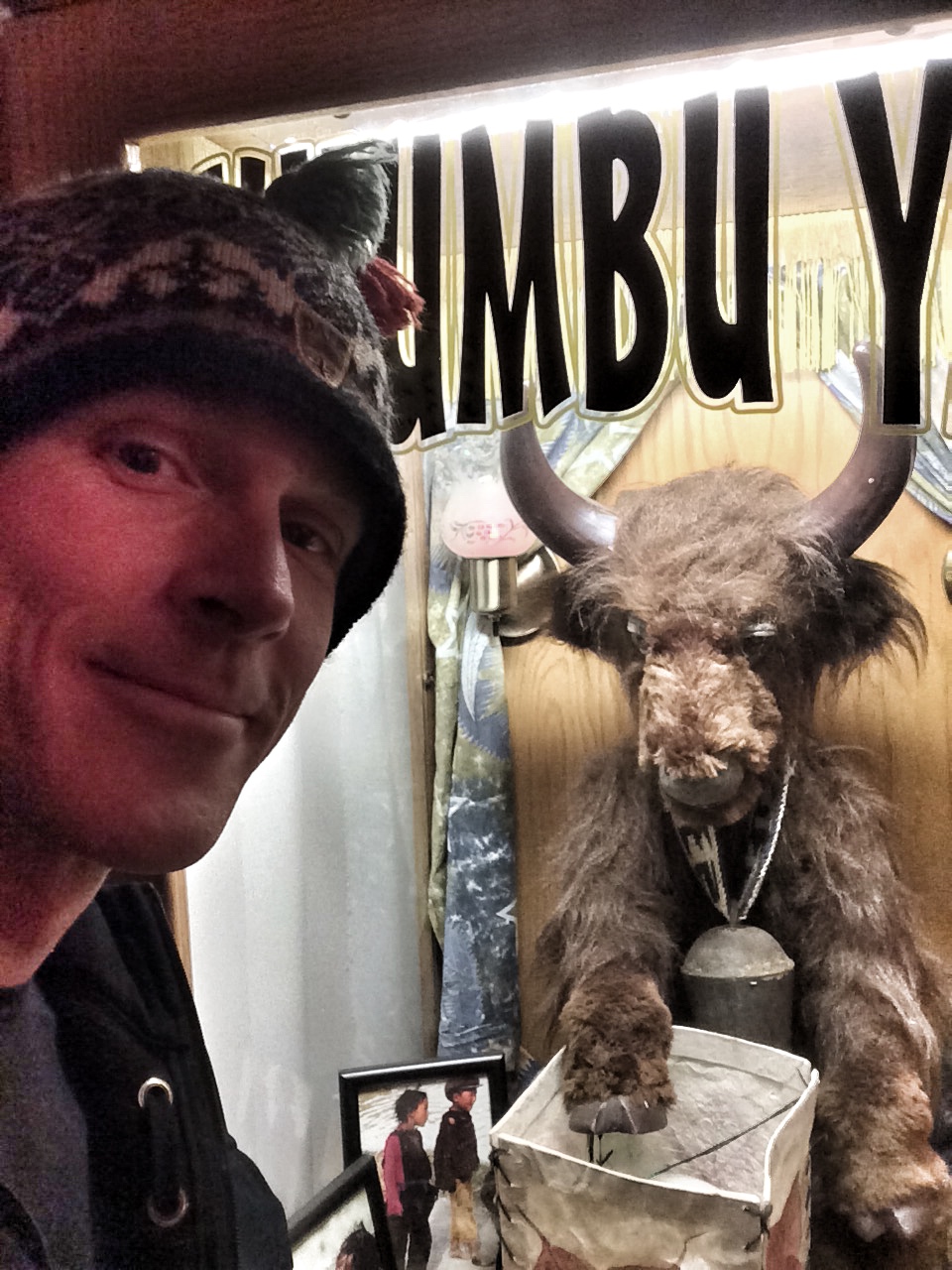
khumbu_yakA buddy has a magic jockstrap that he likes to wear ALL the time.

He claims it helps his performance and recovery.

Normally, his jockstrap would not be an issue for me. However, I’m one of his advisers and he asked me what I thought.

What to do?


We often find ourselves faced with a friend, client or family member that has beliefs we find ridiculous.

Here is what I do.

Pause

I know my first response with jockstraps is likely to offend my friend or, at least, create cognitive dissonance. So it’s better to wait and consider things carefully.

Give me a bit of time, I’ll need to do a bit of research on that… 

++

Context

Is the jockstrap on the critical path? Is it the difference between success and failure?

Magical clothing, and other superstitions, are rarely the difference between success and failure.

++

Action

What is the jockstrap’s impact on behavior?

My pal is motivated, thinks he’s performing better and not focused on something that might screw up his performance.

There can be adverse consequences from the effective treatment of superstitions!

++

Can I Prove The Opposite?

I happen to think that jockstraps don’t impact performance.

Can I prove my point of view? Am I sure?

The placebo effect is real, and proven.

++

One Thing

What’s the one thing, if addressed, will have a material positive impact on performance?

Focus on the “one thing” together.

Don’t spend time tweaking items that have no impact.

Use influence sparingly, then strongly.

The greatest influence on the world is via my own behavior.

My buddy can easily see that I don’t wear a jockstrap.

+++

Most importantly, after I didn’t call him out, I went for a walk and asked myself…

What’s MY jockstrap!!!

😉

Seeking Truth, Enduring Pain

SXMMy favorite quote on pain comes from a champion athlete, Dave Scott.

Dave was giving a talk the day before an Ironman triathlon and was asked, “How do you deal with the pain of racing?”

His reply…

First of all, it’s not pain, it’s managed discomfort

Along the same vein, I heard Dave’s rival (Mark Allen) share the advice that…

To achieve a result, you need to be willing to accept whatever is required to get to the result

Many people confuse pain, with the process.

Others, incorrectly, believe that they can achieve a meaningful life without having to endure discomfort.

Plan => Do Work => Recover & Evaluate

Plan => Do Work => Recover & Evaluate

Plan => Do Work => Recover & Evaluate

The discomfort comes within the process. Specifically, with identifying, and addressing, our shortcomings and beliefs that prevent success.

++

What’s the opposite of “seeking truth, enduring pain?”

Lies and pleasure?

I don’t think so.

Think about a situation where someone “can’t handle the truth.”

What do you receive from them when you probe the truth?

Fear and anger

These are “negative” emotions but useful to point the way towards truth.

++

The ability to see the world clearly requires a commitment towards radical honesty within our own lives.

If I can’t see the truth within myself, I’ll constantly be fooling myself with others.

So…

When I feel fear and anger, I know that I am on to something.

I might be close to an area that’s holding back clear thinking.

Seek the truth beyond the triggers.


Book Recommendation along these lines is Ray Dalio’s Principles – available as a free PDF.

The Season of Giving

3_kidsI’ve been reviewing next year’s family budget. There are four categories where I have a lot of discretion: donations, date nights, couple retreats and vacations.

Donations/Gifting: Halfway through year, it was looking like I would have to borrow to maintain my preferred gifting rate. I hate borrowing so I cut the budget in half.

Late in the year, we sold our house and I was able to hit our original goal.

It wasn’t until I played The Dollar Game that I started to understand the physiological and psychological benefits of being open to other people.

I like having a formal budget. I never have to consider if I can “afford” to be open to another person. I know that I can always help someone, at least a little bit. As well, when I feel that I’ve been ripped off, I tell myself that the money came out of my gifting allocation and I move on.

Vacations: For a long time, I’ve wanted to ride my bike to the top of Haleakala in Maui. At an elevation of 10,023 feet, the volcano is a biggie.

So I added a Maui vacation to my 2015 budget.

When I ran the numbers for airfare, childcare, condo rental… climbing the volcano was going to cost me close to $1 per vertical foot.

My Colorado price per vertical foot is a penny!

If my goal is satisfaction and a life with meaning… is the Maui trip the best use of the money?

Does short-term luxury lead to satisfaction across a year? Maybe if I take a lot of pictures!

I made a list of alternatives…

  • Get 2,000 $5 notes and play a massive $5 version of The Dollar Game – gets rid of my worry that a dollar isn’t enough to help – that’s a big stack of cash
  • Sponsor 100 people for The Dollar Game – I ruled that one out because the effect doesn’t seem to work with someone else’s money
  • Build 15 homes in the developing world
  • Overtip all year – feel like a big shot – own the fact that my desire to climb the volcano is the ego-picture from the summit
  • Sponsor a teaching assistant for my daughter’s kindergarten class so the little people learn more quickly – guaranteed kudos
  • Buy 30 iPads for the school – additional kudos, perhaps more if done anonymously, to appear humble
  • Increase my giving budget – open my heart more often, to more people

Once you start frequent, small gifts – it turns out that the person that you’re helping the most is yourself.

I don’t regret my inefficiencies. I’m sure that I’d love the trip to Maui.

Luxury spending doesn’t have the staying power of an open heart.

+++

My original article on The Dollar Game and a follow up one year later on giving.

More on Couples Retreats and my marriage – Article 1 and Article 2

The Second Stage of Aging

Barbie Movie NightMy post on The Middle-Aged Athlete was inspired by James Hillman’s book on The Force of Character – author discussing his book below.

The book has nuggets throughout that offer a insight into the experience of “getting old.” The central premise is aging will make us more of what we are. “What we are” being Hillman’s definition of character.

So I asked myself, “What are my central traits?” and, more usefully, “What traits work against the life I’d like to live?

If you’re like me then, at least initially, you’ll come up with a shopping list of admirable traits – things you like about yourself. So far, I haven’t had the courage to verify this list with my wife!

More useful is to reflect on the traits that might lead one’s self into trouble. Quickly, I came up with two…

  • A preference for isolation
  • A tendency for internal over-reaction

Combine those two, magnify them, accept them for another 20, 30 or 40 years and you’ve got one heck of a cranky Old G.

I suffer disproportionately from my negative traits – particularly the internal reactions, hidden from most people. Fortunately, there’s a well-known fix for training one’s mind.

To the traits above, my wife advised that I “should watch my tendency to let myself go.” So true, my love, so true.

As things inevitably unwind, our personal truth comes to the foreground.

Retiring To Paradise

ParadiseA friend sent me an article about “stress-free living on a tropical island paradise.” The article was a teaser for a subscription-based newsletter about retiring well, on modest means.

The article got me thinking…

  • Why do I find foreign utopias so appealing?
  • What are the components of living well, particularly as I age?
  • What limits my ability to shift towards rewarding, part-time work as soon as possible?

The first thing that I remind myself is satisfaction is never achieved “out-there” in the future. My job is to make a note about the structure of my satisfying days, right here, right now.

Noticing the satisfying parts of my current life lets me define paradise on my own terms.

I guarantee that you’ll find your truth is far different than the marketing brochure!

In my own case, I don’t like to tan, I like to ride my bike uphill and I sleep best in a cold, dry room. Worth reminding myself of these points!

The allure of the tropical paradise…

  • Simplicity
  • Stress-free
  • Natural beauty

What price will I pay for my ticket to paradise? I’ve found two habits that move me away from my definition of paradise – their antidote…

Radical simplification of my life and possessions – all the crap I have in my life provides an endless stream of admin, depreciation and cost of ownership.

Aside from a Sienna Van and high-quality bicycles, none of it is useful. I’ve been chipping away for years. I get a lot of resistance from my family, and I respect their views.

Beach cruiser, surf board, and board shorts…

…I get the allure – yet know that it is simplification, not the tropics, that appeals to me.

Constantly reduce my personal needs – if you are in a high-paying field then you’ll be tempted to delay freeing yourself from full-time work until you “have enough” (to live at a standard that fits your perceived station in society).

My heroes don’t have a lot of possessions but are rich with satisfaction. Choose wisely.

If you’re delaying following your heart so that you can maintain a high spending rate then be sure spending fits your definition of paradise.

Many of the wealthy don’t enjoy spending. It’s how they became wealthy.

If the points above aren’t clear then invert and be honest with yourself.

  • Having so much stuff that I need a team of people to manage my gear, or spend a significant percentage of my life on admin…
  • Constantly increasing my personal needs via the hedonistic treadmill…

This combination, anywhere on the socio-economic scale, is a recipe for misery.

Finally, humans are similar in how we define natural beauty… high view, overlooking park land, ideally with some water.

Think about the most valuable real estate in your local market. It’s likely to have those characteristics.

Most of us will never afford that real estate, which is just another asset to take care of, anyway.

A better solution is to live beside a mountain park and get to a high view as often as possible.

What’s your definition of paradise?

bear

When 99 is more than 100

As a young man, I spent my 20s focused on taking myself to the limit. In my 30s, I discovered triathlon and shifted my life towards a devotion to personal excellence. In both periods, I was unable to understand why anyone would bother “being average” at anything.

Whether your focus is academics, finance, wealth or sport — if you spend your time in a group that consists of the top 1% then you’ll be at risk for certain errors.

The first error is a skewed definition of “average.”

Athletics is a great field to see this in action as we’re much less likely offend anyone by telling the truth! Here’s a quote from a former coach…

He’s constantly disappointed in himself because he thinks that he should be able to roll out of bed and drop an 8:35 Ironman.

In other words, our friend has a baseline that requires him to outperform 99.99999715% of the planet.

That’s an extreme case but, if you listen to the dialogue surrounding your favorite sports team then, you can see this pattern repeating itself throughout our elite classes.

As an amateur triathlete, I could beat 98.5% of the field at any Ironman race in the world, yet my performance wouldn’t even register for the top 1% of performers, who benchmark themselves on their peers.

My point, isn’t to correct the attitudes of the elites – an extreme way of thinking is useful to drive extreme action.

My point, is to encourage you to stop and ask, “Is It True?”

When your peers lack diversity, your views are at risk from becoming detached from reality. You will see it most easily in your definition of average and decent.

  • What’s a decent athlete?
  • What’s a wealthy family?
  • What’s a successful child?

Outliers living in the 1% are unable to see the extreme nature of their lives and that can lead to ruin.

It’s not just about aging athletes ruining their joints.

I had a very close friend that ended up financially ruined because he was unable to be satisfied with being more wealthy than 98% of his peers.

Others ruin relationships with children, who are unable to measure up to an unreasonable standard.

+++

Another risk – the best are lazy.

Lazy?

  • …but I train 25 hours a week
  • …but I work 65 hours a week
  • …but I read 100 books a year
  • …but I add more value than anyone at this firm

My capacity for extreme workload requires me to drop everything in my life.

In fact, dropping everything is a “secret” of success.

However, it makes me very lazy outside my domain.

As the youngest partner in my private equity firm, I had staff to shop, to sort my CDs, to open my mail, to cook my meals, to take out my trash… the list went on and on. My approach was to throw other people’s time at any issue that prevented me from spending time on my goals.

Ultimately, behaving like a plutocrat wasn’t the main drawback.

By not placing “love” as a primary goal, I created a pattern of behavior that would have driven every relationship from my life.

It wasn’t until 15 years after my divorce that my family received the dividend of a man becoming a little less successful and far less lazy.

Renewing My Vows

ax_leavesHopefully, I’ll be around so my actions teach my children this post before their first kiss.

If not, then I leave it to point them in the right direction. Read it to them annually, at graduations and at their weddings.

++

Have you ever heard couples discussing their wedding vows? Perhaps wondering if they should include “honor and obey” in the words they exchange? That seems silly to me because it overlooks the essential components of EVERY long-term relationship.

What follows is how I try to live my marriage, and through my marriage interact with everybody. It wasn’t always this way – as a young man, my greatest weakness was a lack of compassion and an inability to see the second order consequences of my habit of hurting other people.

What are the most important ways that we honor each other?

First, and most importantly, is a commitment not to hurt other people.

Relationships fail when we get caught in a cycle of keeping score, tit-for-tat and not breaking the chain.

We don’t even need to be in the same room with each other to perpetuate this cycle. When I hear about marriages through third parties, I can feel the pain that the couple is creating for each other.

So I offer: I’ll do my best not to hurt you and ask that you forgive me for the many times that I’ll fall short.

Small children understand forgiveness instinctively. Each morning, I get a fresh start and, hopefully, I see each morning as a chance to get a little better than yesterday.

Now, my children will be like me in many ways. This means that they will arrive at adulthood with habits that will torpedo their relationships if not addressed. The most toxic of these habits is enjoying subtle retribution and justified anger.

So I offer: When I feel pain, I know it will be because I you have touched one of my many limitations. I vow to turn that knowledge inwards and try to make incremental progress.

I’ve been married for close to a decade. By chipping away a little bit each day, I make progress and, together, we strengthen our marriage.

It is my improvement, not my position, that makes me fit for leadership, and shows that I’m worthy of being honored.

Being honored for experience is great but being forgiven is much more valuable than being honored.

In a successful relationship, my errors are forgiven, rather than acting as triggers on top of 5, 10 or 15 years of repressed, mutually reinforced pain.

My dearest, I promise that I can handle the truth.

In life, we are tempted to protect others from the truth. This is a mistake and you will find that your strongest relationships are built on being open. In sharing our individual truths, we can work towards understanding what rings true as a couple.

The wisdom of these lessons becomes clear when you invert them.

Relationship failure is characterized by retribution, blame outside of myself and suppression of truth.

I failed many times before I learned a better way.

In order to shape my reality, I started by accepting it.

Chose wisely.

Sweet Emotion

A while back, I greatly expanded my twitter feed. I did this with an expectation that I’d be triggered. The world didn’t disappoint me and I was triggered by God ripping into someone…

Screenshot 2014-09-27 13.43.27

It’s been a while since I was triggered to the point of replying to a stranger so I looked inward at the nature, and source, of my reaction.

Here’s what I noticed:

The essence of powerful emotion is energy. Whether the emotion is anger, envy, grief, fear, love or joy… they are all just energy. It’s up to me to “tag” the energy and classify the emotion – my tagging is a function of culture, context and habit.

The energy has a clear physical signature in my body. I have an opportunity to “feel” an emotion before it overtakes my decision making.

When I experience these emotions they are triggered by something touching the raw nerve of personal weakness.

All strong emotion is an opportunity to discover something about myself, as creator of my emotional experience.

Once I understand the above, I can work at the margin of my emotional life to shape my understanding and experience.

Situations that prompt me to automatically respond are extremely valuable – those are my raw nerves. However, because I was emotionally out-of-control, I need time to process.

My response (to God) was how I settle myself down when I’m out of control. Each One A Holy Soul – is a reminder to myself that people that trigger me are about me, not them.

Those five words distract my mind long enough so I slow my reaction time. My internal life might be unpleasant but, hopefully, I react far less often. Not-reaction avoids the human tendency to pass along discomfort.

Later, I can think about my reaction and try to break-the-chain in my own emotional life, which improves my capacity to achieve serenity.

++

Some principles that I’ve found helpful:

  • Channel the energy of strong emotions into positive action – as a middle-aged man, I’m grateful for the extra energy. I need it!
  • Remember it is all about me, my mind is classifying my experiences into emotional states
  • Remember it is all about me, pain is triggered by my mind touching my own weaknesses. Own my weaknesses.
  • Change at the margin
  • Don’t act on anger

Be brave.