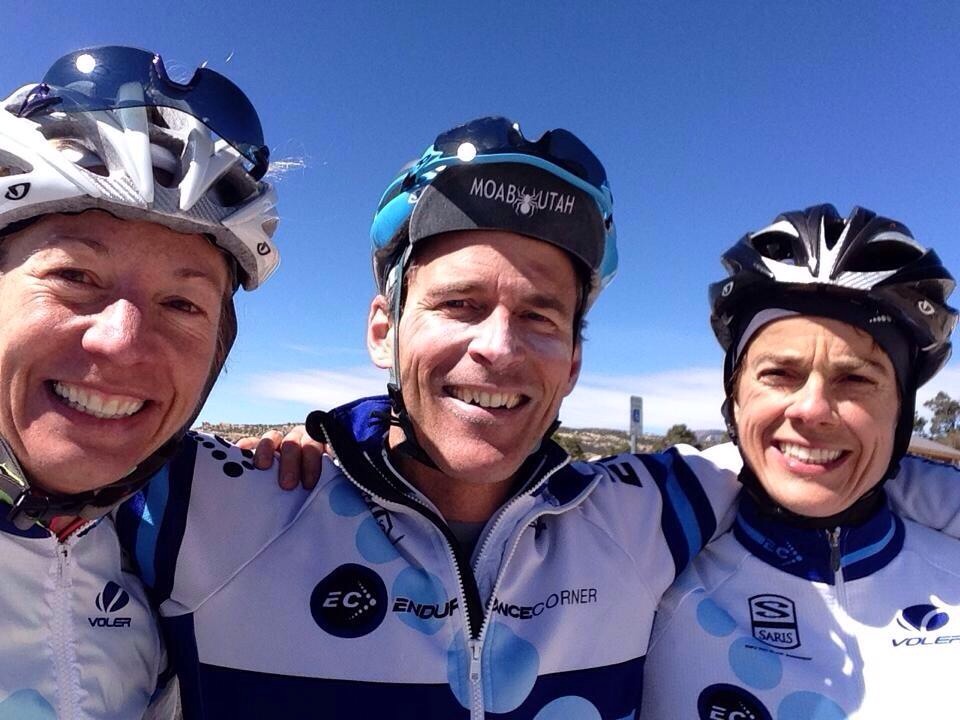
The Trap Of Fixing

Camping With My SweetieSome say hate is a sign that you’re having an impact.

I’m not sure.

I think it’s more accurate to say that hate is a reaction to what I’m sending out. It’s an opportunity to pause, consider and learn.

When I’m focused on helping people, my ratio of positive to negative interactions is 500:1.

I find being told to change extremely painful. It’s like I let the World down, which is a major trigger for me.

The best antidote that I’ve found for dealing with my own negative feelings is to pause, not react, and ask myself, I’ll be happy when…

  • all dopers are caught
  • all frauds are punished
  • you change, rather than me
  • you. stop. that. right. now.
  • you close your sport, business, site, magazine because it bothers me
  • everyone, like me, has equal justice, from bigots like you
  • you break those friendships off

Are you sure that you’ll be happy if they change?

I won’t be happy when you change. I’ll pat myself on the back and move on to the next target. It is a path that’s guaranteed to make ME miserable and strengthen whomever is happens to be “wrong.”

My reality is that I will either be happy now, or not at all.

I share this because the 500:1 ratio is a compelling case that we can have a much greater impact by helping, rather than correcting, each other.

The positive interactions are what make us happy.

Break the chain.

More Than Money – Sharing Time

It’s common to think of volunteering as giving time to a cause.

The most powerful lesson of hospice is the reality that, short of organ donation, I can’t give time to anyone.

What I can do is share time.

+++

In most of our roles, we can be swapped out. Absent someone to love, this can be a lonely reality. Family roles, particularly parenting children, is an area where it’s more difficult to replace us. Interestingly, these are roles where love dominates. Kids can survive just about anything if they are supported by the knowledge that they are loved.

My family is central to my life’s work. It’s the most direct way I can influence the world. Volunteering is most useful when it makes me a better member of my family. By “better” I mean wise.

Given that I’m married to a woman where “the tone is the message,” I want to spend time in situations that improve my soft skills. My family, and my marriage, doesn’t receive much benefit when I improve my technical knowledge.

Gordo and the Easter BunnyVolunteering puts me in situations where I am truly clueless. For at least a few hours a week, it’s good to realize that I’m clueless! Specific to hospice:

  • there’s no ability to fix anything
  • I’m not empowered to do anything other than serve
  • my best course of action is nearly always “quiet presence”
  • I create a habit of doing what needs to be done
  • I do my work without expectation of being thanked, or paid

If you have young kids, or elderly parents/grandparents, then you may find a lot of similarities with my list and your role.

Most of the friction that I observe in families is due to someone seeking to fix a situation that isn’t their domain, or doesn’t have a solution.

In terms of self-improvement:

  • Volunteering rewards me if I act in a manner completely different than my typical persona. Until I started volunteering, I had never received positive feedback for being a quiet, humble helper.
  • Caring for the sick has an unavoidable benefit of increasing tolerance. You can’t help but change your opinion of people when you’re serving them.
  • Making a habit of good deeds gives me ammunition to take on the voice in my head that tells me that I’m falling short.
  • Pushing my fear envelope is exciting and increases my ability to think clearly in situations that are emotionally charged.
  • Work that challenges the heart leaves me feeling grateful and gratitude is an effective antidote for most everything that ails me.

Whatever your field, when you hear the call, I urge you to follow it.

Goodness through action.

Moving Through A Depression

Tropic Coffee

50 is coming and I can feel that I’m spending my ‘middle’ worrying about money and getting yelled at by my kids.

The challenging thing about depression, or any of my other irrational feelings, is my inability to shake them via conscious thought.

Sharing my fears and concerns helps put them into a more rational context but my cure is always based around actions, rather than more thinking.

I smile when I re-read the paragraph above because (of course) thinking about “thinking too much” doesn’t work!

What does work?

Most helpful was the realization that I needed to make my life more difficult, while not adding stress.

I did this by purchasing a light alarm clock and changing my life so I get up two hours before my kids, who are thankfully good sleepers. By pulling the two hours from the end, to the beginning, of my day – I was able to write, exercise and sit without disruption. Writing, silence and exercise are the best antidote to the despair that I feel around kid noise.

In the heart of winter I reached out for help and attended a parenting workshop. The workshop gave me insight on how fantastic my kids are – nothing like listening to other parents to make me grateful for my own kids! However, despite my kids being normal (and desirable), I find their noise debilitating and draining.

What about the noise?

Some families cope by having constant background noise (TV and radio). For instance, the best parent that I know wears a radio walkman while she works in her house.

Other families ‘cope’ by yelling at the kids and emotionally beating them down. Effective, but not me.

I’ve been wearing earplugs to take the edge of the most intense moments, which rarely add up to more than 90 minutes a day.

People that cope well with noise will tend to find my choice of earplugs rude. Their reality is incapable of understanding what kid noise does to my internal life. I ask them for forgiveness and share the story of the great parent with the walkman.

+++

My son goes to school with the child of a social worker, who shared that her professional training hits a wall when she meets the reality of her own children. Her advice: stay two-steps back from the breaking point.

In applying this advice, I dropped lunch time workouts and replaced them with working in an absolutely quiet environment. This change took a lot of fatigue out of the back-end of my day. On Monday, Wednesday and Friday – I was swimming so intensely that I’d be mentally flat in the afternoons and exhausted by the evenings. Swapping my swim training into an early morning forest jog does nothing for my athletic fitness but it makes a huge impact on my overall mood.

Not swimming is complicated (in my head) because my swim coach is my wife and not spending time with her triggers my fear that my marriage will end and it will be my fault!

So…

The other bit of stress release is to tell my spouse the whole truth with how I am feeling, especially my fears (spending concerns, that I’ll act when I feel despair, that she will leave me, that I’m not a good man).

I have persistent themes that build internal stress – these all get shared with her (and pretty much everyone through my blog).

Most of this is article is to remind myself what to do – I had a tough 48 hours and started writing at 5am in a quiet house!

+++

What makes a difference?

Do something physical and spend a bit of quiet time in advance of the most stressful times of your day. For me that means short, solo, moderate workouts in nature done early morning and late afternoon. Each workout is short enough that the endurance coach in me wants to repeat the entire thing. Physical release and balancing the noise of my home life with quiet periods in my work life.

For the parents that deal with commutes and live in crowded cities – I don’t know how you do it. I’d be at risk for heavy self-medication and persistent deep sadness.

If you’re in that position then wait it out and don’t act on despair.

If I take responsibility for doing what I know works then I always move through a depression. When I’m really beat down it means that I’m very close to things improving.

See the beauty in the good moments.

+++

Serious athletes might find value in an article I wrote about athletic depression and training mania.
I’ll Be Happy When

Tucson Camp

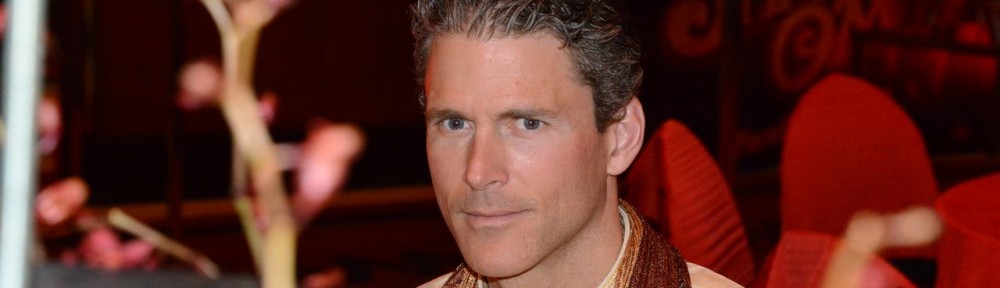
The article is not about my friends in the photo.

I put them in the article because we’re happy when we ride together. So… I will be happy when I ride with my friends.

That’s a start.

+++

A story about a friend that, like me, can struggle with happiness. In his case, extreme athletic success leaves him feeling empty. To top it off, he has a large public profile which leaves him exposed to the people that hate us for no reason.

We spent an evening talking and I shared the best things that I learned by leaving a career that paid me a lot of money.

If you’re not happy with your current success then you’re unlikely to be satisfied with more.

In a couple years, you will forget why you needed to change and trick yourself into coming back to something that wasn’t able to satisfy you in the first place.

Be sure to write it down.

All of these apply to my life. I’ll be happy when…

  • I graduate from school
  • I get into school
  • I’m promoted to partner
  • I run sub 60, 45, 40, 35 minutes for a 10K
  • I race sub-9 at an Ironman triathlon
  • I get my weight under 190, 180, 170, 160 pounds
  • I win a race
  • I win another race
  • I win a world championship
  • I pay off my loans
  • I borrow more loans
  • I save $1,000 / $10,000 / $100,000 / $250,000 / $1,000,000 or more
  • I find someone to love me
  • I buy a big house
  • I sell a big house
  • I own an Alfa Romeo Spider
  • I sell an Alfa Romeo Spider

Make it real, write it down, see how it makes you feel. This tip works like magic!

When you do it, PAY ATTENTION.

Did it work?

After 30 years of ticking off goals, I’ve come to see a pattern that amuses me.

  • I have to admit that achieving goals fails to provide lasting satisfaction
  • There seems to be chronic dissatisfaction stalking one side of my personality
  • But I tell myself that’s OK because dissatisfaction helps me strive towards my goals
  • And by achieving my goals…
  • I’m likely to continue to be dissatisfied

And, I watched my wife and kids – who are deeply happy.

And, I realized that the “things that make me unhappy” don’t happen all that often. Just like the happy things, they are temporary. What makes them linger is carting them around afterwards.

And I could see my internal voice constantly tempting me towards dissatisfaction by saying I need to get more and more stuff done.

Here’s what I know is likely to work most days – run in the morning, write, ride in the afternoon. Between those three things, do what needs to be done, ideally by helping others.

Zoo

Miniature train rides (above) also seem to work well – for us and the train conductor! I’m happy for that guy.

What’s your formula?

Losing Five To Ten

Undercover

Every athlete that I’ve ever coached has thought that their life would be better if they lost five to ten pounds. This belief flows through most of my friends, my coaches, my wife and myself.

Nothing in my life, requires me to be in a state of perpetually losing weight, yet I spend 95% of my year trying to whittle myself down. In case you’re wondering, the other 5% of the year sees rapid weight gain. My personal best is gaining more than 20 pounds in the two weeks after Ironman New Zealand 2004.

Similar to my athletic goals, my desire to be unnaturally lean has caused me to make poor decisions.

Where do my irrational desires come from?

Can I moderate the influence of irrational desire in my life?

As a recovering addict can tell you – if you want to make a change then you need to take a break from the sources of your addiction. The first step in freeing myself was changing my health club.

I used to train with the fastest group of triathletes on the planet. For an athlete with ample self-confidence, it is an ideal environment to motivate oneself to do whatever it takes to win races.

As my life shifted, I noticed the group was having an adverse effect on my self-esteem and I was being a dick to people. I listened to how we spoke about each other and what we valued in ourselves. I’d get a kick out of the most-skinny triathletes in America commenting about which one of us was “too skinny.” Of course, Mr. Too Skinny would head out the next weekend and crush the field – reaffirming our collective desire to get lighter and lighter. With my pals, losing weight is always the right answer.

Here’s the lesson – the neuroses of our peers will become our goals.

We can’t create self-esteem by changing to match the requirements of others. However, we can change the people with whom we spend our time, and let behavioral psychology do the work for us.

What do you need more of?

Spend time giving to people with less.

Say What Needs To Be Said

When I tell people that I volunteer at hospice, I get one of two replies:

  • I could never do that; or
  • It’s a good thing that you’re doing.

Most hospice patients are at home, so the majority of volunteers are working in the field. Of the 300 patients that might be on a current census, only 8-10 will be at the Care Center operated by the group.

My field work falls into the categories of respite, light housekeeping, day trips and errands. Volunteers also help with companionship, comfort touch, meal prep, massage and life review. The field work is usually easy – guidelines limit what a volunteer can do and we’re able to opt out at anytime.

As you’re working solo in the field, it can be a little lonely. The group recognizes that aspect and holds monthly volunteer connection meetings. I haven’t made it to any of these meetings. Being “alone” is a pleasure for me.

In addition to the field work, there’s a Care Center. Patients are admitted to the Care Center for family respite, to get medications sorted (usually pain/nausea/agitation) or, if they don’t want to die at home.

What surprised you? The biggest surprise is how little I’m working with dead people. Before I started, the team emphasized that a lot of living happens on hospice. They were right. 99% of my time is with living patients and I have the freedom to opt out of the 1%.

Are the dying in constant pain? At the bottom of my fear of death lies unknowable and uncontrollable pain. Working at the acute end of hospice care, I was surprised that there wasn’t more suffering. To be clear, I have seen true suffering but it is less than 5% of all patient interactions. Young people dying of cancer and patients dying after being on a feeding tube have been the most emotionally challenging.

Isn’t hospice about giving up? I sense that many families see hospice care as pushing a person towards death. With my grandmother, most of our family (myself included) wasn’t willing to consider hospice (so Nana died at a palliative care ward). Watching the team, what’s emphasized is:

  • Optimizing the time that remains
  • Putting the patient and family in control
  • Ensuring dignity & comfort.

As well, there is a strong network within the grief services team to help the survivors continue living.

Don’t postpone joy. I’ve shared laughter with people that are close to death. This has been a valuable lesson for my unnecessary attachment to being “miserable.” Always stay open to happiness.

Every generation needs a caregiver. Volunteering at a care center is free training in an environment that can be “scary.” It’s only taken three months for my boundaries to be reset. As a parent, there is (now) nothing that my kids can produce that will freak me out. My sick kids, and their diapers, have been put into a better perspective.

Tips to conquer fear. The group does an excellent job managing their volunteers. I noticed:

  • Everything is optional
  • Responsibility for outcome is removed – that lies with the professional team
  • Acceptance of mistakes – I don’t always say the right thing but that’s OK
  • However, clear boundaries are established to prevent serious mistakes (no medical care, no feeding, no giving of medicines).
  • The above show me the difference I can make by helping with “small” things. Listening to a spouse, taking out the trash, sorting laundry, refilling inventory… I’ve experienced deep gratitude from little acts of kindness.

If you feel the calling then follow it. There’s tremendous value to you and your community.

Within the constraint of “do no harm,” say what needs to be said.

+++

If you’re interested in more reading:

Letter To My Kids

Sitting here at 45 years old, I realize that my kids (5, 2.5 and 1.25 yrs old) will never know the man that I am today.

What can I pass along today that might be useful to them tomorrow?

+++

Choices

Don’t waste energy worrying about decisions. Most of the choices that you will face are win-win in nature.

  • The school you attend.
  • The major you choose.
  • The clothes you wear.
  • The company where you work.
  • The city where you live.

The above influence our lives but they aren’t mission critical.

What’s mission critical? Well, there are some choices that have life changing properties.

Choices that move us away from severely negative outcomes.

An obvious example is “stay out of prison” – drunk driving, chronic speeding and theft have a high risk of a felony conviction.

More subtlety, the best decision that I made in my 20s/30s was replacing drinking with exercise. At the time, I replaced one excess (drinking) with another (elite endurance sport). If you find that you’re obsessive (and many people in our family are) then replace your negative habit (promiscuity, alcohol, addiction, anger) with something less toxic (meditation, nutrition, exercise, yoga, work).

You’re unlikely to be able to transcend your drive. That’s OK. If you can get yourself into your 40s without too many mistakes then your body will naturally slow and you’ll find it much easier to live in your skin.

In our family, moving away from abuse, addition and promiscuity has been a way for us to improve life for everyone that follows us.

+++

Your Relationship With The Truth

I can catch myself wishing that you’ll be doctors, leaders and externally successful. To the extent that I lay any of that on you know that I’m projecting my own values.

What’s most important?

Remember that truth is relative and pay attention to:

  1. How do the people around you make you feel?
  2. Are you tempted to lie because of your actions, your friends or your work?

Who, and what, ever your become, I promise that you’ll see the world differently at 30, 45, 60, 75 and 90 years old.

So what endures across time?

  • Taking action for what you believe in.
  • The internal peace that comes from living truly, inside ourselves.

Be aware the certain fields have a high risk for poor decisions. I’ve worked in a couple (finance and elite sport).

How will you know if there are risks? Pay attention to the lies. You will see lies in others before you start telling them to yourself. Small lies matter because they can be a symptom of corruption that you’re unable to see.

It will be a huge hassle to change direction when you discover lies – it always was for me. However, it’s the right thing for you to do. Ask me for stories and I’ll share.

Move away from people and situations where you can’t speak openly about the truth.

+++

Exercise Is Medicine

You have a body that is a high-responder to exercise.

Do something active every day of your life and stop doing whatever prevents you from achieving a daily streak of exercise.

Taking my advice from the start of the letter… Don’t worry about what you do.

Remember that the benefit comes from the doing.

Values Game

I came across a free eBook from Tony Robbins. In the book, Tony asks the reader to rank pleasure values. His suggested list: love, success, freedom, intimacy, security, adventure, power, passion, comfort, health.

I took the bait and ranked things:

  • Freedom
  • Success
  • Adventure
  • Health
  • Love
  • Power
  • Passion
  • Security
  • Intimacy
  • Comfort

Tony then shared that we will do a lot more to avoid pain than to attract pleasure. So he asked the reader to rank aversions to: rejection, anger, frustration, loneliness, depression, failure, humiliation, and guilt.

Once again I mapped it out:

  • Failure
  • Anger
  • Frustration
  • Depression
  • Rejection
  • Humiliation
  • Guilt
  • Loneliness

In the book, he gave examples on how values conflicts can set up misery. For example, do we know our spouse’s rankings? Do our (more powerful) aversions operate to sabotage our desires. For example, see Success vs Failure in my lists.

Having done the work to rank my pleasure/pain values, Tony recommended writing down the rules associated with our top drivers. I didn’t think too hard and wrote quickly…

  • Freedom – when I control my day and have space in my schedule
  • Success – I am already successful
  • Adventure – when I have new experiences
  • Health – vanity, use my body for adventure
  • Failure – when my kids don’t behave or yell at me
  • Anger – when my kids don’t behave or yell at me
  • Frustration – when my kids don’t behave or yell at me
  • Depression – when my kids don’t behave or yell at me

Pretty clear how my rules are creating periods of parental misery! As well, my rules are completely impractical for living with young kids.

When my oldest was young, she could quickly bring me to tears by crying. I got past that pain by borrowing my mother-in-law’s rule that “babies need to cry.”

I also created my own rule, “when they’re crying, they are alive.” My rule addressing my fear that my kids might die (!) if I didn’t cater to their every whim.

Some mantras:

  • I am free when I breathe through the energy of strong emotions
  • I am successful when I let my actions be the lesson
  • The randomness of life is an adventure in itself
  • Let go of outcome, be the brand

All of the above are lessons that I taught myself in athletics and need to relearn inside my house!

I had a wry smile when I realized that I was closed to Tony’s teaching because of his happiness!

Living Young

As an elite athlete, I spent a lot of time grumpy, sore and tired. If you wanted to see me happy then you’d need to join me on a workout. The rest of the time, I was at home feeling oh-so-tired.

I took pride my grumpiness – it was a sign that I was doing what it takes, what others couldn’t do.

Yay me! 😉

I held onto elite athletic performance into my 40s and had success at it. Via coaching and participation, I was able to see under the hood of elite amateur racing and didn’t like that version of my future self. It seemed that I was destined to end up admired, yet grumpy and living a solitary life.

Grumpy and alone is how I saw old people when I was young. Serene and connected seem more attractive but will require a big change of attitude. You see, I trained a mental habit that it was OK for me to be grumpy because I was doing what it takes.

My “what it takes” was athletic performance but we can see the pattern with achievers in all areas – sales performance, work performance, academic performance…

++

At the end of December, I’ll be closer to 60 than 30 (yrs old). Knowing that too great a focus on performance might cause me to make mistakes, how can I help myself make good choices?

This picture, of Quality vs Time, shows one way to define success:

Quality of Time

The goal line shows a high quality of life for as long a possible.

  • How do I define quality?
  • How might I define quality 10, 20 and 30 years from now?
  • What am I willing to change to maintain quality?

In defining quality, a trap that I’ve fallen into is looking backwards to what I remember as high quality. Two problems with that:

  • I’m not great at remembering backwards in time – I forget the grumpy!
  • I’m optimizing for a younger self that no longer exists – even if I was happy, I can’t handle the protocol anymore!

What’s my definition of living young?

  • Lift my kids to my shoulders – Dad’s most functional strength move
  • Healthy and appropriate sex drive
  • Vanity
  • Orthopedic health – being hurt is horrible
  • Manage blood pressure, blood sugar and cardiovascular health
  • Avoid damaging addictions
  • Capacity of share outdoor activities with my wife and kids
  • Read, write, teach, learn, explore

Ideally, I’d like to manage all of the above without pharmaceutical assistance. Long before I started sports, I was adverse to drugs and I’ve had a lot of positive reinforcement with that decision. It will be interesting to see how, and if, my current views change. Nearly all my older friends (and fellow citizens) have different views on drug use than I do.

What’s your list?

How are the choices you made today impacting that list?

What I Learned This Year

My daughter and I have been dancing together all year. It seems we are on a six-week cycle that ranges from love to despair and back to love. During a week where I was heavy with anger and misery, I reached out to friends. Their best advice:

  • Love your children for who they are.
  • More than being right, or justified, remember that you must preserve the relationship.

Remember that you just might want your (adult) children to repay your kindness down the road. With three kids, I figure one will come through for us. I have a lot of advantages to help make that happen.

With that in mind… Being a great student, a successful investor, an elite athlete… all of these have NOTHING to do with being an effective parent. To live happily alongside young children requires new skills and different approaches.

What’s my source of education and new ideas? My best advice for you is to read – The Happiest Toddler on the Block by Karp. The book took me 90 minutes to read and removed half the meltdowns in my life. My son (2.5 years) and I have a fantastic relationship due to the application of Dr. Karp’s advice.

++

There is no denying the segments of deep misery that I have experienced this year. However, when I step outside my life, I can see how easy I have it. However, it’s near impossible to “will” a change in attitude. To change, most people need a crisis.

To help myself shift my attitude I’ve taken the lead with emotionally difficult situations. To date, I’ve had more success outside my house. However, I’m going to stick with my efforts through 2014. My misery could be a catalyst to let go of my desire to force change on my kids. It all comes back to being happy with the way things are (and if I can’t be happy then at least accept it).

++

A wealthy friend of mine has to deal with a lot of people that have massive egos. Some of these folks are extremely difficult to handle. I asked him for advice on dealing with fraud. His secret is to be grateful that he doesn’t have to be like others. By acknowledging his freedom to choose, he decides to be a good guy (and that makes him grateful). So I’m working on a good-guy at-home sabbatical for 2014.

On the gratitude side, working with the dying is effective. Some of the folks I work with would love the opportunity to swap into my “problems.”

++

Be a hero rather than a bystander. Remember that being part of the solution doesn’t require owning, or solving, the problem. In serious situations, it takes surprisingly little to make a difference.

++

Resist the urge to judge other people’s involvement with their families. There is an air of superiority between parents that spend a lot of time with their kids. We wear our involvement like a hair shirt. I need to remember that, often, less involvement is better for everyone. When I over-do-it (even by a couple hours per week), I set the kids off and make everyone miserable.

Too much parenting and I become the problem, rather than part of the solution.

++

I have a negative pattern of responding to noise with anger. Now that I can see it – I can work to respond to noise with calmness.

I will share a tactic…

In each of our lives we have moments where we transcend ourselves. For me, it might be the feeling of my son resting his head against me and giggling. A feeling of peaceful openness where the two of us are relaxed and together. If I am aware then these moments are easy to remember. I breathe into those moments and save them for later. When I feel the seed of anger, say tightness, I use the same breath-feeling to open the resistance that creates my anger. Sometimes it works, sometimes it doesn’t. Any reduction in suffering is a win.

By the way, the above is a technique that I used a lot in endurance training. I would breathe into my training “highs”, attach a word to the feeling, and save for later. I’d use my power words when racing became difficult.

++

I will be 45 at the end of the year. A lesson that stands out with achievement and success…

The years where I focused on self-improvement, and made progress, resonate more strongly than the years where I focused on beating others.

Excellence defined relative to peers brings resentment, especially when value systems aren’t shared.

In all areas, let go of the constant desire to be right.