Rent vs Buy in Vanity Markets

2019-12-07 09.28.44A vanity market is one where the main benefit you gain from ownership is telling your pals that you own.

Similar to my observation that I was wired to buy a “big” house, there are other purchases our ego gravitates towards: cottage at the lake, ski chalet, big-city pied-a-terre, beach house, farm…

Our ego’s weaknesses depend on our cultural background, childhood memories, current mood and social situation.

My ego can lead me far astray, particularly with non-yielding real estate, and depreciating assets.

I’ve been battling with myself since I first visited Vail, Colorado. I’ll illustrate with real figures from the neighborhood of East Vail. It is a niche market, which I’ve been following for 16 years.

The “buy” => $1 million buys you the opportunity to spend another $375,000 to renovate, and furnish, a property that was build in the 1970s. After your renovation is done you pay ~$25,000 per annum in taxes, insurance, HOA and running costs.

The “rent” => $25,000 to $40,000 all-in rental cost for the same property.

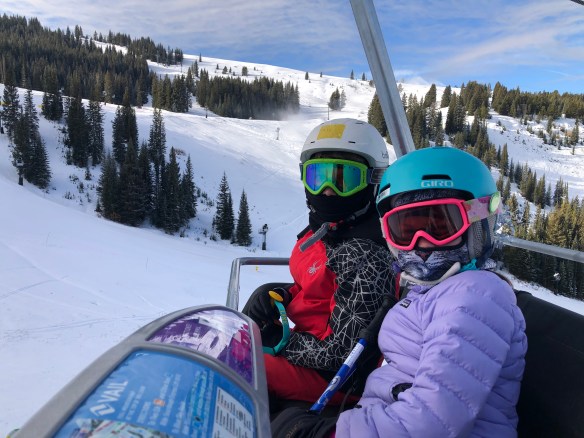
Something we noticed about skiing, most skiers don’t ski.

Put this observation another way… there’s a lot of empty real estate around.

I’m sure every empty place has a history of buyers, who were certain they’d use the property more often than they do.

A useful rule of thumb is to assume that every $1 million, in a vanity property, costs your family $50,000 per annum. Renting makes (some of the) opportunity cost real, and allows you to calculate the cost-per-night of what you’re using.

Above is what you can see and calculate.

What about what you don’t see?

#1 => the option to change your mind, without cost or hassle. This is a powerful argument when framed correctly.

Honey, the kids are going to grow up and leave. When that happens, our life will change in ways that are impossible to predict. We should maintain the flexibility to change our minds.

#2 => the option to buy in a downturn. About once a decade, property values snap downward. Waiting does not feel like a valuable option but it is. I’ve seen brief, 50% markdowns numerous times.

#3 => what I think I will like does not match what I actually like. I am a master at fooling myself. Fooling myself with regard to location, views, amenities, garages, layouts… you name it.

Renting “forces” me into different types of properties. Because mistakes are so expensive, I write down the lessons from every new property.

Here’s the best lesson of all…

Assets don’t create the life you want to lead.

Focus on shared experiences with the people you love.

2019-12-07 13.11.17

Family Real Estate 2019

2019-12-01 17.07.49I like investing in residential real estate for several reasons:

  • The market is dominated by unsophisticated buyers/sellers, who are often driven by external events and emotions;
  • The availability of long-term fixed-rate non-recourse finance; and
  • Favorable tax treatment.

There are some drawbacks:

  • It is extremely expensive to buy and sell => a mistake will cost me 10% (gross), if I am lucky. If borrowing, even conservatively, then I can lose 35-50% of my equity in a year.
  • It is lumpy => if you need the money back then it is very difficult to gradually drawdown your investment.
  • It is illiquid => if we _really_ need to cash out then we won’t be able to cash out
  • Humans are hardwired to over-buy => as soon as I could afford a huge home, I bought one. It took me years to get my capital back. I was very lucky => I purchased with a large margin of safety (no leverage, big site, big building, prime neighborhood).

Taking the above, together, real estate is a useful core holding for money that won’t be needed for 10+ years.

2019-11-14 14.33.15

I follow two types of markets:

Markets where growth in prices is driving by “wealth feelings” in the top 0.01% of society => Vail mountainside homes, Boulder view properties. These properties have done well, appreciating to levels where implied yields are -2% to 2%.

I prefer to invest in traditional markets => markets where price growth is backed by a combination of real-economic growth (ability to pay), construction inflation (replacement cost) and discounted cash flow (net yields above my cost of capital).

Both markets are influenced by the availability of credit. Both markets benefit from scarcity and desirability in location selection.

Remember that even a “cash buyer” is influenced by easy credit. Credit conditions influence the value of ALL assets => wealth effects. These wealth effects cut both ways => highly wealthy people can feel “poor” when their balance sheets are shrinking.

2019-12-02 06.29.25

When I buy, I create a margin of safety by seeking:

  • Land for cheap => is there extra land I could sell off or am I buying in a very desirable location.
  • A lot of square footage for cheap => ideally, I’d like to get the land for “free” by paying less than the replacement cost for the building. Even if you never build, it helps to know building costs.
  • Distressed seller => life happens, often at inconvenient times.
  • Closed credit markets => by ensuring I have the ability to hold through tough times, I can use unallocated capital to buy during down markets.

I’ve been preparing for my next deal by improving my credit worthiness:

  • Building up a capital reserve.
  • Improving my credit rating – paying credit cards early, taking advantage of a 60-month 0% car loan offer, always paying my mortgage on time => taken together these strategies added 80 points to my credit score from 2012 to 2019.
  • Reducing leverage => paying down my mortgage and car loan. Closing out my second mortgage.

2019-11-21 08.02.40

We’ve seen significant house price inflation in Boulder => supported by: (a) rising construction costs, (b) local economic growth, (c) inward migration of wealthy coastal buyers, and (d) easy credit terms.

In 2019, I looked at deals to increase investment in Boulder (buying apartments and renovating houses). In the end, we decided to decrease investment in real estate through a sale-and-leaseback of our home. 

The leaseback costs me some tax (today) and positions me to borrow long at favorable terms. The option also costs me the future capital appreciation of my home, which won’t be mine any more. We retain exposure to the Boulder market through rental properties we own.

I’ve structured the deal with vendor finance, allowing a gradual drawdown of the proceeds. The net monthly cash flow covers our cost of living through my youngest daughter’s high school graduation. Having our cost of living covered protects my ability to control my schedule => highly valuable to my family in a way that’s difficult to quantify.

This is the cheapest way for me to sell real estate and positions us to buy when conditions swing in our favor.

Raise money before you need it.


Making My Life Work Better

2019-11-27 16.58.34You’ll find a lot on my site about strength training. It’s a habit that’s served me well for 25+ years.

This year saw some changes. I went stale in my tried-and-tested program. I recognized my mojo was flat and wasn’t making much progress.

A few years back, a friend had done a backcountry ski program with Mountain Tactical. So I bought the latest version of that program, got to work and learned a few things. Currently, I’m using their in-season ski maintenance program. I’ll skip observations about the plans themselves and focus on general points that might apply to you.

How am I allocating my time and where is that likely to take me? Athletics, relationships, every single thing.

What is the purpose of your protocol? These days: (a) enough stress to get the benefits of exercise (cognitive & mood); (b) vanity; and (c) maintain my ability to ski & hike at a very high level.

With the MTI program, the sessions were so challenging that I needed to drop all other exercise. Dropping supplemental training probably seems obvious but, in my demographic, it’s common for people to do 1-2 extra sessions per day, and still think they are not doing enough!

The results were great. Even the nights with total exhaustion were “fun” => they made me feel like I was doing something.

Giving myself a full 24-hours to recover between sessions boosted my recovery AND reduced the mental stress of having to grind out a lower quality session when tired. It reminded me of my single-sport focus periods when I was an elite triathlete.

Within my training, I made a big demand on myself (for about an hour, 3-4x per week) then backed way off for the rest of the day. If you are finding, like I was, that all your sessions are blending into mediocre performance, with limited gains, then this tactic might help.

Seems obvious but it takes a lot of courage (for a compulsive exerciser) to back off. For example, I have a fear of weight gain and can use cardio to enable excessive eating.

Each one of us has blindspots. Mine are range of motion, quickness and coordination => fundamental components of high-level skiing. The program I bought contained box jumps, lateral jumps, side-to-side jumps, dynamic lunges, stretching and body-weight hip extension exercises. The act of seeking help gave me a nudge to do things I’d skip on my own. This works in our larger lives:

  1. Notice when your protocol stops working
  2. Seek expert advice
  3. Trim non-essential components

As an elite athlete, my “recovery” included 12-15 weekly hours of easy cardio. Easy cardio isn’t easy but that’s a different topic!

My easy-training hours have been replaced with walking, time with my wife and housework. This shift makes it easier (and more likely) to succeed within my larger life, which aims at a world-class marriage, thinking better and educating my kids.

What I value is reflected in where I allocate my time.

Fathers and Sons – Mountain Leadership

2019-10-26 12.13.28

An unfortunate reality…

Most educators spend more time with other people’s children than their own.

As a student, and parent, this has worked out very well for me. I’m grateful for our teachers, mentors and coaches.

2019-09-13 14.44.34

Last season, I spent a lot of time in Vail and noticed a gap between Vail Resort’s youtube clips and my actual experience with their first responders. I’ve been considering, “What are the qualities required to lead in the mountains?”

This season, there’s a new boss for Vail. She’s done fantastic work at Beaver Creek and I’m sure her team will sort it out. Everyone looked super-peppy during opening week. Maybe the grumpy guys retired?!

I spent months mentally rehashing my letter to the new boss. Gradually, I turned my “you could be so much more” mojo inwards, towards making myself a better father.

2015-03-18 07.31.56

Since my son could stand up, he’s been passionate about heading uphill. I figured it would take me a decade to get him up to speed. I underestimated the guy and we’ve had a lot of fun over the last year, skiing, camping and hiking.

My son has been eating up The Way of the Warrior Kid. There’s an unexpected overlap between the Code of The Warrior Kid and what he learned at his Buddhist preschool. The code fits with what I’m seeking to achieve in my own life.

2016-09-18-18-01-09

So that got me thinking… rather than figuring out how to fix grumpy ski-patrollers, why don’t we train ourselves to be the change.

  • The best memories of my life (and my son’s) are in the mountains
  • It’s a project we can enjoy for many years
  • It’s a beautiful legacy to leave him
  • It’s local
  • There’s no judges, tournaments, competitions or rankings
  • It provides huge motivation for me to stay in the game

2019-07-16 08.01.59

What would our code look like? Here’s a draft and we can make it our own over the next few years.

  • Fit For Purpose => strong, durable, resilient
  • Skilled => able to get where we need to be, in any conditions
  • Peer, Teacher & Student => learn from the experienced, share our knowledge and work with others
  • Prudent => pause and consider consequences
  • Prepared => we carry extra so we can help others
  • Calm, Humble and Patient => Knowing I need much more of this at home, I will practice it in my favorite environment. These traits are also on my (hotshot) son’s “to do” list.

The lesson here isn’t about the mountains.

The mountains are our story.

The lesson is to pay attention to passion and use childhood interests to create a value system for navigating the world.

Let’s fill the world with positive memories for our children.

Removing Things That Make Me Stupid

2019-11-17 09.12.07

Sometimes the key to thinking better is getting rid of habits that tilt me towards stupidity.

+++

When I say “learning to think better”, what comes to mind?

I get a vision of learning new things (derivatives, higher level mathematics, stochastic modeling and probability).

For me, that’s not the answer.

I could spend 10,000 hours learning advanced techniques and be no further along than a decent graduate student. I’ve been reading The Alchemy of Finance => humbling!

The return on those hours would be low. A better bet is to get rid of the hours in my existing life that have a negative value.

2019_rip

Where might less effort, generate far better results?

Make a habit of removing negative information

Hands down, my biggest source of noise is my phone. I tell myself that my smartphone makes me dumb but is that true?

Why don’t you put it away? I tell myself…

Key relationships value quick feedback.

OK, what can you change with zero impact on your key relationships?

Delete:

  1. Chrome
  2. Google News
  3. WSJ App
  4. Instagram (I reinstall for 10 minutes each time I publish)
  5. gMail

Push the above into my office hours, get off my phone and do something useful.

Noise is both addicting, and draining.

The first time I read a warning about noise was 2005. Back then, my noise was newspapers and online chat forums. I did a good job of getting rid of newspapers and forums. I miss newspapers, it’s a useful reminder to read more books.

Gradually, I replaced the space I created with social media and apps. Facebook is the ultimate forum for creating noise and distraction. It is personal, visual and uniquely tailored to my biases.

2019-11-16 09.12.40

Removing noise is a form of continuing education.

I needed to take action with my phone to capture the opportunity for self-improvement when I’m at my kids’ sports practices.

What to read? Older writers, classic books, biographies, stories that help me remember how I fool myself: Taleb, Munger, Marks, Cialdini and Buffett.

Mistakes flourish in an environment when I’m surrounded by noise, feeling rushed and dealing with frustration.

Be less stupid.

Ownership Within A Marriage

2019-10-30 06.41.45Here’s a parenting challenge we’ve been dealing with for a few years.

If we don’t get her out of the house, 90-minutes after she wakes up, then our daughter gradually becomes anti-social. She doesn’t like to putter around. We’ve been muddling through for years. and it is why I used a ton of sitters => to get her engaged and into her day.

As I’ve phased out help we’ve been forced to deal with things we’ve been avoiding (article here).


I’m certain every marriage has repeating conflicts not between spouses => conflicts that give rise to frustration between spouses.

The conflict is never all that big.

Easy to endure for a little while.

But it repeats.

As it repeats, frustration morphs into bitterness towards the other spouse.

There is a simple fix.

Make it crystal clear who owns the situation.

  • Saturday mornings => down to me
  • Organize a swim meet => down to my wife
  • Get the kids to gymnastics, ski team or water polo => down to me
  • Sunday mornings => down to my wife

So when conflict arises, I know who’s in charge.

This helps me:

  • let go from outcome when I don’t own; and
  • own my frustration within my domain => instead of sliding into blaming… fix it, or grind it out.


With ownership assigned, we need a process for assessing if the job is getting done.

This can be tricky!

With babies and toddlers in the house, I could not reconcile my leadership principles with my marriage principles.

#1 being => I will never ask my spouse to do something I am not willing to do myself.

I do not like spending time with toddlers. So I used a lot of childcare, preschool and after school activities (~50,000 hours). It was a difficult, but temporary, time.

These days, I chuckle and remind my wife that the kids will start moving out “soon.”

Soon being eight years.


Increasing My Capacity To Own

Over the last two years, I have put the key elements of “my life” into the time before my family wakes up, or when the kids are in school.

Going back five years, I made my daily schedule visible to my spouse.

These two changes created the capacity to own more of my family life.

I also changed my attitude. I am willing to take on, or eliminate, anything. I’ll either do it, or eliminate it.

Own the predawn, live an open life and fix repeating pain points.

In this case, better is better.

How I Watch Sport

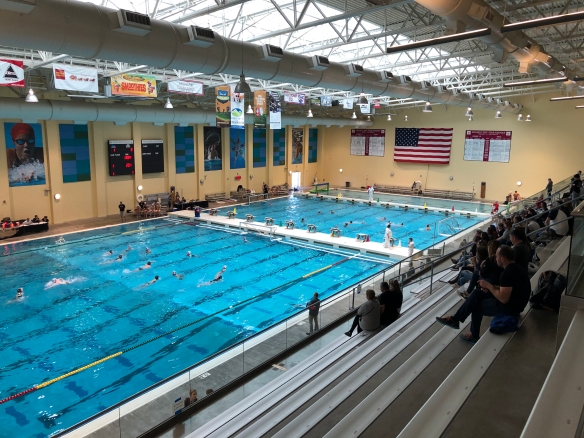
2019-11-08 16.19.44It was the family’s first water polo tournament this past weekend.
2019-11-08 12.46.22It’s worth spending time to understand what YOU want from sport. This will let you see if your desires line up with the reality of your sport-of-choice.

I’ve seen enough to decide it’s best if I focus primarily on my kids’ sport.

I have one overriding goal for my kids.

Create an enduring positive association with exercise.

Former athletes, bitter athletes, non-athletes… they can lack the positive association and it costs them.

It is easy to get distracted by winning, skill development, playing time, parent board politics…

Create the positive association!

ax_poloSo, when I watch:

  • Sit passively and try to learn what’s going on => my kids don’t do “my” sports
  • Very little feedback => only positive, given 1-on-1, after they’ve slowed down from the event
  • Be seen in the last third of practice (it’s the only part they remember) => use the first 2/3rds of practice to do something useful => I buy groceries then read a book
  • Phone put away (ideally in airplane mode – warn your spouse you won’t be taking pictures or answering questions)
  • Listen to, and work through, coaches => reinforce a consistent message => you need a team (and school) culture that matches what you teach at home => if your teen tracks into a single sport then her team becomes a key reference point, at an important transitional point in her life
  • Ample healthy snacks afterwards => do not train the “exercise-sugar-reward” cycle, as it will haunt them forever!
  • Drive them with no music, no electronics => create a forum to ask about life issues => no taboo topics, everyone gets to speak (or not speak)

If you’d predicted that I would enjoy doing the above, even three years ago, then I would have said you were high.

The fact that I look forward to these times shows I am incapable of predicting where life will take me!

2019-11-08 17.39.27Take the above together:

  1. Dad is there
  2. Dad’s not on his phone
  3. Dad talks about anything
  4. Food rewards are healthy snacks => strong food
  5. Dad is always happy to see me afterwards

Building these habits was a major pain in the rear.

The phone habit is a tough one!


ax_g_poloI’ll end with a story.

My son is the youngest on the team and he has a concern, he might drown.

Bro, there’s no way you’re going to drown. You’re going to pass out and that’s no big deal.

I’ll Superman into the pool, we’ll pull you out and I’ll stay with you until you wake up.

You can even go back in, if you want.

Thanks Dad.

2019-11-09 16.01.23

Mood Management 2019

2019-11-02 14.02.09

One of Taleb’s best insights:

It’s better to make the system robust to reality, rather than seeking to change the way people are.

He applies the advice to financial greed but you can extend the idea across domains. For example, I consume less sport because…

It’s better to make your mood robust to reality, rather than rail against cheating. 

Outrage is a distraction from the work I need to do. So is fear, and I found myself feeling fearful in a meeting last week.


I spent most of my working life in a job where there is a financial incentive to mislead me. Recently, I was sitting in a meeting and the CEO lit up my spidey sense:

  1. He showed over-reaction to small stimuli
  2. He told me he was honest
  3. He showed a lack of impulse control

I pay attention to the trifecta because it usually means there is a secret around me.

It could be innocuous => I can be insufferable when hyped and nervous. Anyhow, the lesson here is not about the CEO. I looked inside:

  • Repulsion => the feeling that I might get ripped off is unpleasant.
  • Hubris => I caught myself thinking, “if only this guy was more like me. He could be so much more…”
  • Catastrophizing => my mind jumped to the worst case scenario => he’s a crook and I’m going to lose my investment!

Fortunately, I didn’t act on any of these feelings. Merely watched them come & go.

I reminded myself that I can only be deceived when I want something.

  1. What do I want to have happen?
  2. Why am I in this meeting?

I was in the meeting to avoid making a mistake in my life.

Someone else’s life is beside the point.


2019-11-02 14.23.47

But what was I seeking? What was causing the uneasiness?

This summer, I felt a push to start writing again. I had been reading books and listening to author interviews. There was something, essential, missing from their dialogue.

The humility to see that the optimal plan is rarely optimal.

I studied world-class experts, sharing world-class advice. Advice they could not implement in their own lives.

I wanted to shout, “If you are right but you can’t get it done then you are not right!”

Then I came across this Goggins post on Instagram

When you don’t know yourself nor do you care to know yourself, you end up spending the majority of your time trying to please other people. People who like you when it’s convenient for them, when you are doing something for them, when you are making them feel better about themselves, etc.

The entire post is gold. Wildly excessive fatigue strips everything away and leaves you with the truth, your truth. DG is lucky he’s writing it down. We are lucky he’s sharing.

You see, what I was feeling was a conflict between knowing the author’s advice works and seeing him not being able to implement. It was what drove the question in last week’s blog… Who gets the benefit of your best advice? Frankly, who cares. And more importantly, who am I to care?

Repulsion, hubris, catastrophizing => replaced with gratitude, for access to world-best advice, and an opportunity to improve myself.

Sport, finance, relationships… absent desire, we can never be deceived.

Attention Is Expensive

2019-10-18 07.31.22Let’s start with a story.

When I was younger, I never let a lack of knowledge prevent me from confidently sharing my theories about anything (this remains a weakness, BTW).

One day, I was holding forth and my buddy Jeff (board-certified orthopedic surgeon) chuckled and said, “I would call what you just said G-medicine.”

Later on, he took me aside and said, “Buddy, you know there’s a reason we go to med-school.”

He left it at that, which was a wise way to deal with an over-confident guy, who’s outside his field of competence.


I had some follow up questions about fasting and optimizing for one-rep max.

To address tactics, I need to step back and explain strategy.


Body, mind and spirit => What are you trying to achieve?

You need to know because attention, effort, willpower and thought are expensive.

So fasting, one-rep max, wherever you are focusing…

What is your payoff from your protocol?

Effort is expensive. Spend it wisely.


2019-11-02 06.03.09-1My philosophy is:

  1. Know your goal
  2. Keep the protocol simple
  3. Access believable people to tell you what’s required
  4. Use simple benchmarks
  5. Use habit energy to make life flow on autopilot

My protocol…

  1. No Zeros => remove days where I don’t train
  2. Get Outside the box and into nature => even if the box is a Gulfstream, or a boardroom, it remains a cubicle
  3. Seek Mastery => surfing, moguls, powder, swimming, sailing => moments of flow await!

Be honest with yourself. Is your physical life where you want it to be?

  • Work before work rate => Develop work-capacity before you do work-rate training. One-rep max is a “work-rate” benchmark that is certain to decline over time.
  • Don’t fool yourself => nobody fasts for health & longevity => we are either looking for an easy way to lose weight, or creating caloric “space” for binges.

Simple metrics let you create the habits that enable larger projects. Looking backwards over the last year:

  • < 10 zeros (days without exercise)
  • 15th year of stable body weight
  • 200+ days on trails or snow
  • 350+ days awake before 5am

I know I could be more, too much time is wasted on my smartphone.

I must remember that life is empty without connection. So be open to change based on painful feedback from my closest relationships => my wife and kids are brutally honest with me!


Higher Order Effects

I have empty space in my life so I can reflect on where my actions are likely to take me.

  • I have an addictive personality in a family tree with mental illness, addicts and eating disorders. Kinda indicates caution with self-starvation! Respect your history.
  • Be cautious with putting pressure on your spinal column, heavy lifts and explosive movements. Powerlifting injures can be for life. Respect reality.

Where are you likely to go with your protocol? You OK with that?

What’s the worst that can happen? You OK with that?


Fragilities

What is going to derail you?

My depression triggers are: poor nutrition, irregular sleep, alcohol, missed endorphins and excessive fatigue.

My entire life is a positive-feedback loop designed to keep me rolling.

Much of my “not do” advice is related to the risk of ruin. My depression triggers are defined as fun by my peers.

I need to be OK with saying “no” because… Depression isn’t fun.


Nature Has Useful Information, even if unpleasant

As you age it will be tempting to access Big Pharma to fool yourself, particularly if your self image is wrapped up in physical performance.

Before you act, consider…

What’s your competitive advantage? I think better, and choose slower, at 50 than 28. Taking myself to 11 with testosterone would GREATLY increase my error rate, across all domains. Not worth it.

My competitive advantage is taking the best ideas and integrating them via new habit creation. I can do this until I die.

Fatigue is information that guides me away from physical ruin => my mojo feels like it’s a tenth of where I was at 40, but my life is better because I am a better person.

Once again, overriding nature greatly increases my risk of injury. Injury can be the first step on a downward spiral towards depression/ruin. Not worth it.

Surprisingly, getting physically worse isn’t worse.


Anyhow, lots here.

When it comes to positive change: set a low bar, and do it daily.

I live near a cemetery, which helps me remember my expected value is negative infinity.

Death is an outstanding reason to be true to yourself.

#RWRI Thoughts on the business model and cleaned up notes

RWRI has a fantastic business model.

  1. Make the faculty your friends and investment committee
  2. Get paid to meet for a week each trimester // you have a no-cost central office, you are getting paid to bring your international (virtual) business together for a week
  3. Record your talks to capture new ideas, spontaneous content
  4. Train the students who will take your work forward when you are gone
  5. Receive feedback about how your work is being used in the world
  6. Up-sell your most passionate (book) customers => Robbins model
  7. Create an environment where you expand your network with people likely to engage and help you => HUGE self-selection bias in student population
  8. Invite world-class speakers in areas where you’d like to learn

This business works well for its owners and they are (more than) smart enough to see that.

Keep it small, sell out each meeting, avoid the temptation to expand and remember why you started.

I cleaned up my handwritten notes via the creation of a Google Doc.

Mistakes remain my own.