Midlife Fitness

I found this in my drafts folder. I wrote it four years ago and it’s a great summary of my late-40s approach to fitness.

Looking back, I had forgotten how many times I recovered from severe injury – three times in my 40s, each one a doozy! That’s about 65 weeks of rehab in the last decade.

Each time, I wondered “is this it?” Each time, I came back, eventually.

Avoid long gaps, rehab your injuries, keep it simple and persist.

Your future self will thank you.

What follows is from Sept 2016…

2016-09-16-12-31-17I finished summer by spending a week riding from Telluride to Moab.
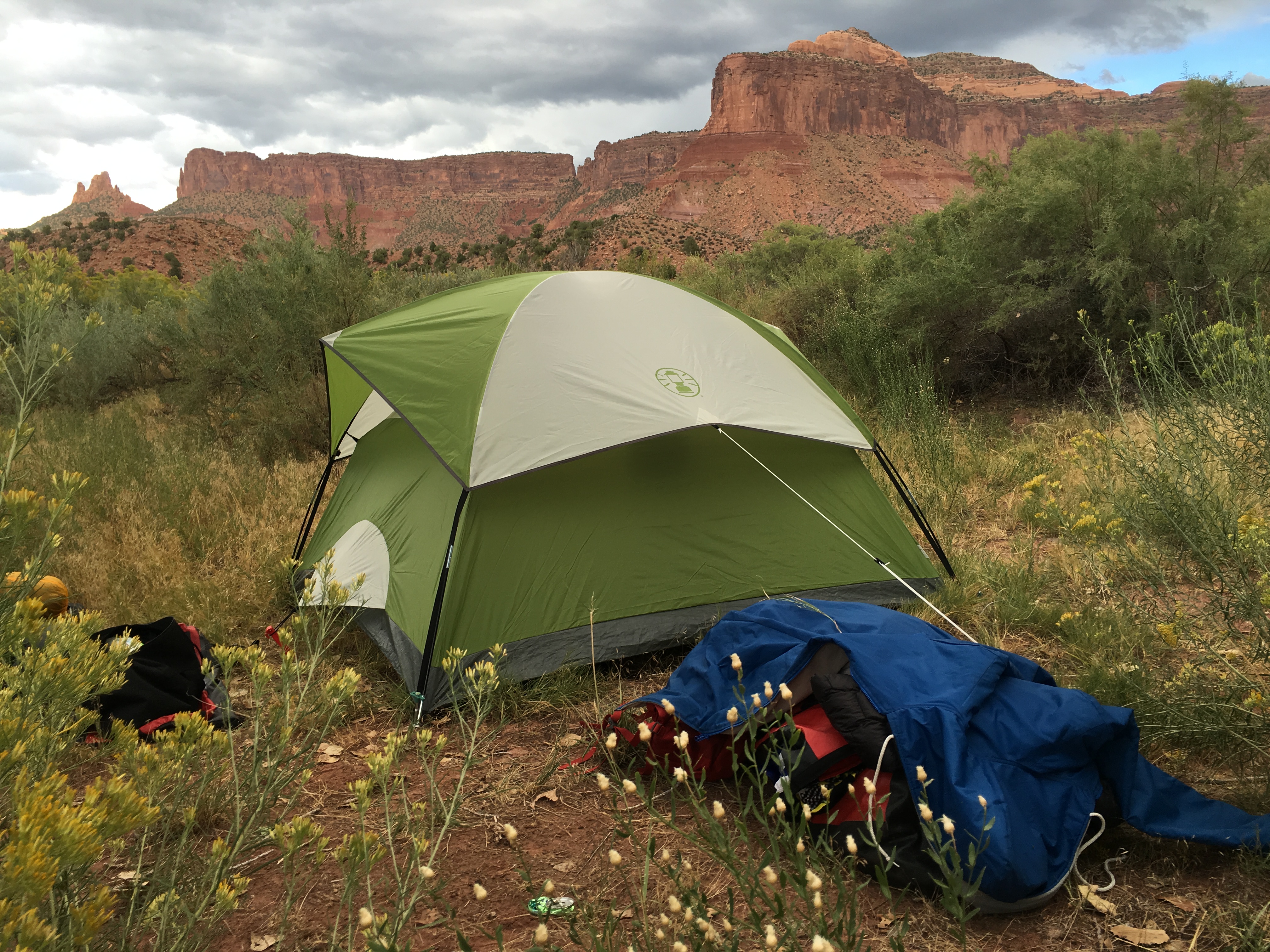
2016-09-14-18-29-55

I was coming off the most severe bike crash of the last five years and a summer of unstructured training. As such, I was pleasantly surprised by my fitness.

My current regime is simple…

  • get out the door twice a day
  • move in nature
  • strength train twice a week

2016-09-14-18-43-59

The crash had me thinking about why orthopedic intervention often fails my friends.

#1 – Many athletes come to their doctor seeking relief so they can make a rapid return to the lifestyle that injured them in the first place.

#2 – How may of us are willing to undergo a sustained plan to strengthen the area that was hurt?

In my case, I landed hard on my left shoulder. Eight weeks after the crash, and six weeks into rehab, things have settled back to normal. By “normal,” I am a pain-free, slightly weaker, version of my prior self.

I find the lack of pain is reducing my motivation to strengthen myself.

====

Real taboos are evidenced by what we don’t talk about. As such, the topic of personal hormone supplementation rarely comes up in a group setting.

But I am asked in private and I share…

#1 – it takes a tremendous amount of effort, time and money to safely override Mother Nature. There are numerous examples of large-scale medical harms being caused with good intentions (interesting read linked). Steer clear of elective medication.

#2 – Separate from the risk of screwing up your health, my friends are at a place where judgement at work, and kindness at home, is a priority. Giving yourself the blood chemistry of a teenager greatly increases the likelihood of a massive unforced error.

Whether it’s sleeping pills, hormones or some other additive. Consider phasing it out.

As I age, what I truly value is time with good friends in nature.

2016-09-14-19-38-35

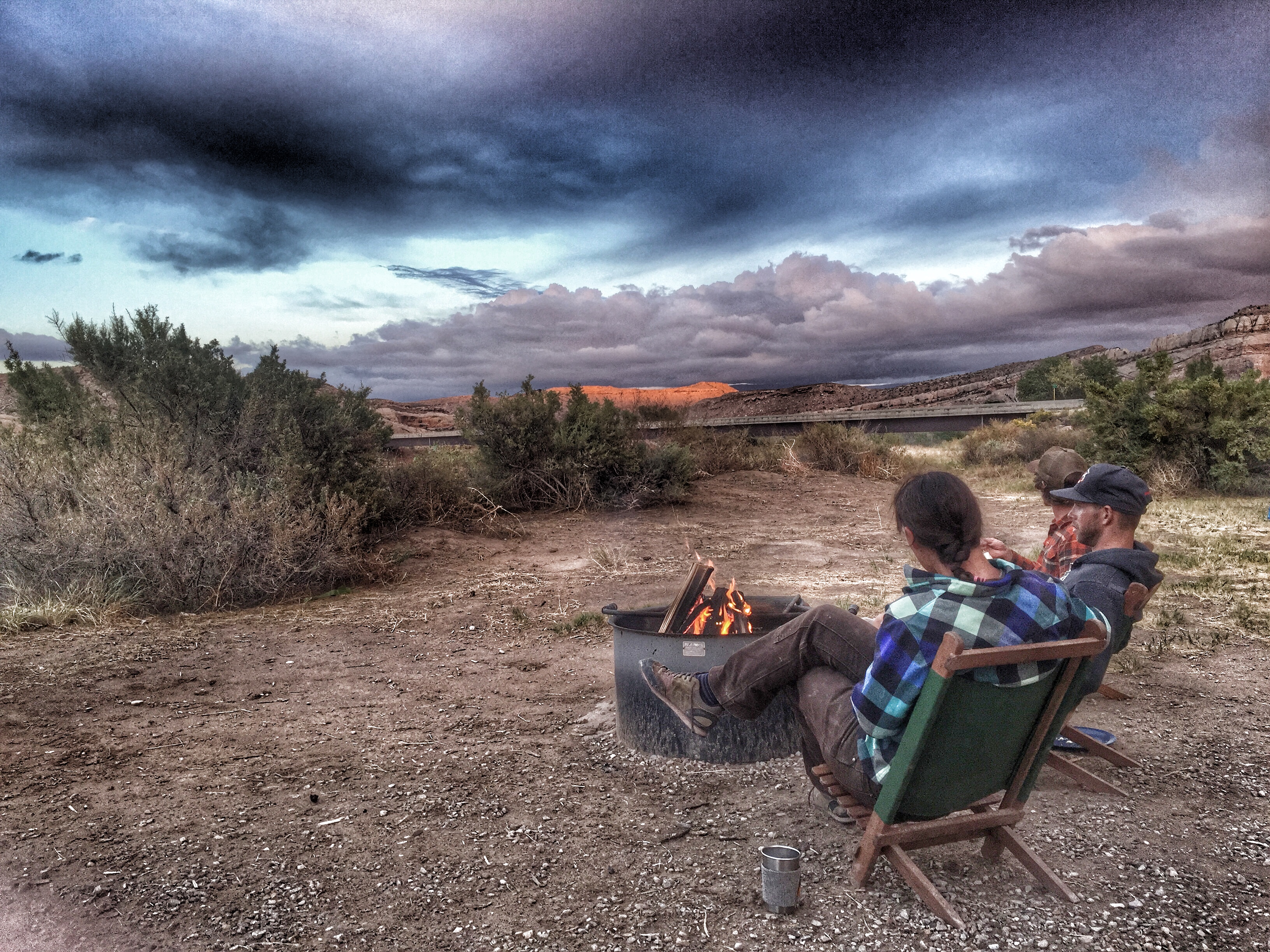
We ended the trip with a nice dinner halfway between Moab and Boulder.

A buddy, in his early 30s, was celebrating his birthday. He’d been listening to the “nearly-50s” all week and asked what all this meant for his racing. Was he wasting his time?

When I was your age, the ONLY thing I cared about was training all day, every day. It cost me a few relationships but I had a blast. You’re doing great and there’s no rush to live like a middle aged man. Just keep your eyes open if things stop working so well.

I then launched into my spiel, which was my article on passion.

My Silver Year

2015-12-27 13.50.08It was my 47th birthday last week.

Borrowing from the late Oliver Sachs, I decided to look up 47 on the periodic table. I was happy to discover it’s the element Silver (47Ag). So the next 12 months will represent my Silver Year.

When I’m going through a tough patch, I tell myself to live-every-phase.

I have two tendencies that distract from a goal of living every phase of my life.

The first is wishing backwards – mourning the loss of peak physical power.

The second is wishing forwards – feeling like I am trapped in a perpetual holding pattern with my preschoolers. Wishing for freedom that, I believe, will come later.

The above thinking is not useful.

A useful antidote is to reflect on the advantages of my Silver Year.

My life is straightforward, surrounded by wonderful people, close to nature and simple.

While I’m past my athletic sell-by date, nearly all my physical changes so far have been positive.

Staying healthy is easier, and requires much less time, than I expected. As a former ultra-endurance athlete, the toughest part has been changing my belief system to reflect what I’ve seen with my body.

With that in mind, I’ll offer this observation about my younger self.

  • If you have the capacity to convince yourself that total focus towards your goal is “necessary”
  • If you have the capacity to commit significant, sustained attention towards a narrow field of interest
  • If you have the capacity to recover from high workloads
  • then you have what it takes to succeed.

Yay!

However…

You also have the capacity for sustained, extremely poor judgement.

+++

Success in a narrow niche is about getting a lot of work done, shedding non-core and motivating others to help you achieve.

However…

As we age, we’re likely to value connection more than success.

…and connection is about being good enough across a wide-network of relationships.

…and my relationships benefit from what I don’t do, don’t say, don’t indulge

+++

Now, at this stage of my life, there is a growing realization that the people around me don’t care about my personal productivity. They want to see me happy and serene.

However, I notice that time is passing and the window for getting-stuff-done is closing.

But what stuff will “I” value having gotten done if I arrive at my Golden Year (79Au)?!

I deal with this tension by pausing and paying attention whenever I feel happy, content and serene.

+++

The motto “live every day” always makes me feel like I should be enjoying myself.

For my Silver Year, I prefer “live every phase” — giving myself permission to experience my difficulties as they come and vowing to keep moving forward despite knowing how the story will end.


Food, Sex and Money

IMG_1573This week, I am holding down the fort (with a lot of help) and my wife’s away on a retreat.

She’s spending time with a bunch of smart ladies, most of whom are slightly older than herself. It’s an environment similar to the camping trip that I wrote about.

Before she headed off, I made the following observation…

If you listen closely then you’ll hear most minds focusing on food, sex and money.

Taken together, they are an influence strategy that you’ll see reflected in most scandals.

This coming week, you have a unique opportunity to tap into the life experience of older women, who understand the life heading your way.

Why don’t you ask them what to expect, what they learned and how best to cope with the inevitable changes of the next 15 years.

Love you, babe.

cheers

Aging Athletes on the Kokopelli Trail

FullSizeRender 2I spent early October riding the Kokopelli Trail in Utah.

I enjoyed the trip more than I expected and want to share ideas to increase your athletic satisfaction as you move into, and beyond, middle age.

High performance is not about health, but long-term athletic satisfaction is most certainly correlated to health, strength and mobility.

As a cohort, our group of 40 to 60 year olds was the healthiest population that I have ever trained alongside. I am using health in a classical context – body, mind and spirit.

+++

Here in Boulder, I see many friends “age-down” their training partners, seeking younger and younger peers. Heck, we even race our kids as soon as they are fast enough to give us a push.

If you feel compelled to hang onto your youthful performances then be sure to try the opposite, at least some of the time. Age up your pals, teach children and be kind to beginners. Pay close attention to how this makes you feel.

As one of the the “youngsters” on the trip, I learned a lot from listening to the veteran athletes talk about their lives.

+++

Usually, a training camp involves a 5:30am alarm, wolfing down a breakfast, training all day, eating two massive dinners and sweating myself to sleep. Repeat for six to ten days.

Dropping into a guiding company that was celebrating 25 years of trips, I realized how little I knew about what (normal) people want.

On the first morning, the guides had a chuckle when I arrived in the lobby with my helmet, shoes and full riding kit. It was POURING rain and they gently broke it to me that we weren’t riding for a while.

2015-10-05 11.32.21This pattern, of gently breaking it to me, would continue for the week. Eventually, I capitulated and decided to (attempt to) be a model guest.

+++

I was surprised by the aspects of the trip that I enjoyed the most — the relaxed mornings and evenings.

I commented to a friend, “This trip is a good workout spread across a great day.”

2015-10-09 08.18.50Bottomless coffee and massive fruit salads in the mornings. As Wes-the-guide can attest, there is something truly satisfying about eating out of a mixing bowl.

FullSizeRender 3Casual dinners and beers around the campfire in the evenings. Our guides taking a well-earned break after a 13-hour day taking care of us.

FullSizeRender 5Stunning camping venues. Wine and cheese at a remote desert campsite.

+++

I should remember that the health, strength and mobility required to enjoy unique experiences in nature is FAR less than what’s required to train alongside high-performance athletes that are half my age.

FullSizeRender 6

Old habits die hard.

I’m changing slowly.

A Young 46

boatingSomewhere beyond your 30th birthday the world might begin to tell you that you look young for your age.

If you say this to me, I might smile and reply, “This is what 46 looks like.”

Likewise, many people say… “but I don’t feel my age.” To them I note, that’s what your age feels like.

They might follow that up with… “I wonder what 50, or even 75, is going to feel like?”

It’s going to feel like right now.

+++

The practice of accepting my age helps me accept all phases of life…

  • The overtired toddler
  • The anxious teen
  • The sociopathic 20-something
  • The fearful cancer patient
  • The crabby elder
  • The grieving spouse

If we are fortunate to live a long life then we will move through most these phases of experience. At midlife, they surround me.

If we happen to be “young for our age” then it might take a few more years for us to arrive at the phase where we “look old.” But it’s coming.

So I will try to enjoy this day and I will try to accept whatever day you are going through.

And when I am scared, or angry, or tired…

I’ll pause, try not to pass it on and remember to live as best I can.


Less Little Lies

bear2A friend asked what it has been like to step back from athletic competition. Much of what follows applied when I left jobs, peers or habits – any of which might not have fit my life anymore.

The immediate impact is usually relief and a realization of the unnecessary cost my choices where imposing. Quite often, the relief is followed by sadness at leaving old habits, even negative ones.

In terms of “what’s it like” to compete less – it’s exactly the same, just less fatigue and soreness. All my “issues” follow me wherever I go!

What is available is an opportunity to look at the impact of a competitive, or corporate, lifestyle.

I often cloak a selfish reality with talk of benefits outside myself. Shareholder value, national prestige, competing on an international stage, earning money for my children… these little lies are repeated until they become my reality.

Fooling myself isn’t necessarily a problem. I spent my teens and twenties solely focused on my personal outcome. It worked at the time.

In my 30s, I broadened my circle to help other people assist with achieving my personal outcome. It still worked for me.

That lifestyle was a form of greed – more more more.

With a spouse and kids, the lies have to increase to justify continuing the choices of my youth.

Long-term competition isn’t a problem. The problem is the thinking that results from turning away from my spouse, my kids, my family and my community.

We tell ourselves that we will change when we have X, or achieve Y, or become Z.

What I’ve done is tell myself…

I’m going to look directly at my flaws, a diseased friend, a homeless beggar, a hysterical child or a demented hospice patient.

Whatever it is that scares me. I’ll look at it.

I’m going to acknowledge that I can’t fix the situation but I’ll try to do something small to make life better.

Working towards overcoming the difficulties of my inner life is similar to the pleasure of overcoming others through competition.

The reward is just as sweet and others do not pay a price for my success.


Time Enough For Love

loveA conversation that I’ve had with a few friends.

A friend shared that he noticed that he hates being rushed and he also aims to be early for every appointment. His solution is to compromise sleep so that he’s able to arrive early for every appointment.

When I look closely, I find that it is impossible to enjoy anything when I hurry. I was surprised by how little I need to slow down to increase enjoyment.

Later in our conversation, he shared that his doc simultaneously recommended that he reduce his stress load and start testosterone supplementation.

I advised against because, you’ll simply cram more into your life and not address the underlying cause of your fatigue.

+++

Later I shared my own story…

Rather than focusing on what’s important, I have been asking, Who is important? Who are the people on my list?

My list is spouse, kids, family and a couple friends. That’s who I’m truly working for.

I then asked myself, “Am I willing to change to be truly available to those people?”

I’ve decided to start small.

Write a list of five people (the important) and drop the urgent when you have the chance to be with them.

Dropping everything sounds severe but, in reality, it consists of looking away from a book or computer screen.

In the evening, it can be as simple as sitting between my daughters on the couch and doing housework after they go to bed.

+++

What does being available to the people that love us have to do with being rushed, high stress and testosterone supplementation?

Put another way, why am I rushed, stressed and exhausted?

If you look deeply then you may find a core belief that you have to cram MORE into your life to serve your family and win the respect of others.

However, this will never satisfy because what your family truly needs is YOU, your presence, your love, your time.

Beyond Positive Addiction

rainbowPopular culture is filled with inspirational stories about people leaving the darkness of negative habits by shifting towards a positive addiction.

If you make the change, and awaken the giant within, then you may find a huge source of energy.

With this burst of energy, you will start to attract people as well as “what you think you need.”

This isn’t wishy-washy philosophy. It’s how the world works – positive results flow from positive actions.

Consider a charismatic leader, especially those with a dark backstory, and note their ability to attract what they want.

Students, wealthy clients, groupies, money, notoriety… all of these flowed (on a small scale, thankfully) as I tapped into my positive addictions.

At this point, there is a trap waiting for us.

The trap is thinking that embracing a positive addiction is The Way.

A more accurate description is embracing a positive addiction can be an effective way to shift self-destructive habits.

But what next?

If we’re not careful then we might become a guru of positive addiction!

Which might work, until it doesn’t work.

When life starts to fray, our addiction will remind us that we run the risk of returning to our old life. It might say… you must continue along the path of positive addiction or you’ll slide back towards obesity, sloth and alcoholism!

After 20 years of better choices, I’m starting to realize that my fears don’t fit the facts.

What to do?

Continue the path of self-improvement by releasing the grip of my positive addictions:

  • Competition
  • Vanity
  • Greed
  • External Validation
  • Emotional Pain

Allow myself to consider the alternative of gently letting go of habits that don’t seem to be working any more.

When more ceases to work, consider trying less.

Managing My Endurance Passion

G-BoraRecent media reports have linked “extreme” exercise to shortened lifespan (versus moderate exercisers). There is not an agreed definition of what constitutes extreme but, even at my current noncompetitive level of activity, I qualify.

My endurance pals have responded like Charlton Heston at an NRA rally.

If you want me to change then you can pry my fitbit from my cold, dead hands…

Ultradistance athletes are the true believers of endurance sport (links to classic book).

Many of us have replaced a previous passion, sometimes a negative addiction, with endurance sport.

Some of us are managing our “bad habits” via exercise.

All of us are terrified about the implications of change. Listen to our thoughts about anyone with a normal BMI.

Having watched friends revert to previous lifestyles, and having no desire to make a return myself (!), I thought I’d offer some practical ideas for managing our passion.

As always, I start by asking myself questions:

  • Where can things go wrong?
  • Is a multi-decade strategy to continually rip the legs of my aging competition wise?
  • What’s the minimum change required for maximum harm reduction?

Hands down, the worst thing that can happen to any aging athlete is losing the ability to train. Physically, strength losses are slow to return. Mentally, we are prone to depression via inactivity.

I’d be willing to compromise quite a bit to protect my ability to keep on trucking!

You are not going to get a lot of lifestyle modification by telling me that “strenuous” exercise isn’t good for me.

Not going to happen!

You see, I know how I was living without exercise in my life.

You might get me to change a little by pointing out the risk of:

  1. Dying via bike crash
  2. Orthopedic damage
  3. Concussion risk
  4. General malaise from soreness and fatigue

In fact, you didn’t have to bring it up. I see it all around me and have modified my lifestyle to take the above into account.

  • Highway riding avoidance
  • Adding front/rear lights for improved visibility
  • Rarely train in a group
  • No more bike racing
  • Main bike is full-suspension mountain bike

These small changes have improved my risk profile but I have ignored them when training for an event that required them, and when spending time with friends that could care less.

So, like any behavioral modification, my changes are only as sticky as my ability to choose wisely with peers and events.

I’ve written about low standard deviation training HERE and HERE.

Here’s what I’ve been doing:

  • Aim to train every AM and PM
  • Workout defined as leaving my house
  • Focus on frequency (AM/PM), not duration, not load
  • Wide variation in effort, from walking to max
  • Lots of hills
  • Don’t measure (other than a weekly weight check)

I end up with 11-14 doses per week and remain inside the “extreme” segment of recent physiological studies.

I’d estimate my current plan at 30% less hours, 60% less load and 90% less fatigue/soreness.

I exercise a lot, but less than I used to. I suspect the taper will continue as I age.

The small changes have improved my risk profile and increased the non-competitive benefits I receive from exercise (mood, motivation, creativity, sex drive).

++

I don’t expect you to change…

…but this is an alternative that reduces the chance you might have to shut down your endurance passion

…or end up replacing it with a prior negative addiction!

In times of injury, stress, divorce, despair… I hope you will remember this article.

Exercise has been a very good friend to my family.

Maintaining Function and Independence

Here’s an effective way to use a few of the hours I saved you with my email tips. It takes less than half an hour a week.

The session takes 12 minutes and will help you maintain your ability to:

  • get out of a chair
  • recover from a fall
  • pull yourself up from the floor
  • cope with your carry on luggage

The above are HIGH on my priority list for maintaining independence and dignity as I age.

Alternate between a lower body exercises and an upper body exercise. Aim for 12 sets total – 6-15 reps per set – I take a minute per set including rest.

  • Lower
    • Squat
    • Leg Press
  • Upper
    • Pull up
    • Dip

Back and forth (upper/lower), rest as you need but if you need more than a minute then reduce weight.

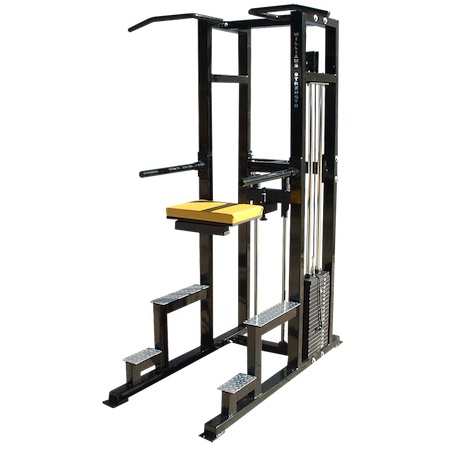
You’ll probably need an assist on the pull-ups and the dips – there’s a machine (below) in most gyms that will help you get going.

Use a wide range of motion – better to go lighter, and slower, with a full range.

dip

Goblet squat is great way to learn how to do the squat exercise. It’s a lot like sitting into, and getting up from, a chair.

The routine is simple but takes effort to do twice a week, every week, forever.

This routine is an effective way to reduce the speed that I will become frail. I’ve been doing some version of it since high school, over 30 years and counting!

When I travel, it can seem silly to pay drop-in fees for 12-20 minutes of exercise.

What gets the wallet out is understanding what I might lose if I take a bad fall late in life.

I also get really sore if I go more than a week without strength training.

So start light and have an expert teach you proper form.

+++

As an alternative, here is the NY Times’ seven-minute workout.