Beyond Positive Addiction

rainbowPopular culture is filled with inspirational stories about people leaving the darkness of negative habits by shifting towards a positive addiction.

If you make the change, and awaken the giant within, then you may find a huge source of energy.

With this burst of energy, you will start to attract people as well as “what you think you need.”

This isn’t wishy-washy philosophy. It’s how the world works – positive results flow from positive actions.

Consider a charismatic leader, especially those with a dark backstory, and note their ability to attract what they want.

Students, wealthy clients, groupies, money, notoriety… all of these flowed (on a small scale, thankfully) as I tapped into my positive addictions.

At this point, there is a trap waiting for us.

The trap is thinking that embracing a positive addiction is The Way.

A more accurate description is embracing a positive addiction can be an effective way to shift self-destructive habits.

But what next?

If we’re not careful then we might become a guru of positive addiction!

Which might work, until it doesn’t work.

When life starts to fray, our addiction will remind us that we run the risk of returning to our old life. It might say… you must continue along the path of positive addiction or you’ll slide back towards obesity, sloth and alcoholism!

After 20 years of better choices, I’m starting to realize that my fears don’t fit the facts.

What to do?

Continue the path of self-improvement by releasing the grip of my positive addictions:

  • Competition
  • Vanity
  • Greed
  • External Validation
  • Emotional Pain

Allow myself to consider the alternative of gently letting go of habits that don’t seem to be working any more.

When more ceases to work, consider trying less.

Managing My Endurance Passion

G-BoraRecent media reports have linked “extreme” exercise to shortened lifespan (versus moderate exercisers). There is not an agreed definition of what constitutes extreme but, even at my current noncompetitive level of activity, I qualify.

My endurance pals have responded like Charlton Heston at an NRA rally.

If you want me to change then you can pry my fitbit from my cold, dead hands…

Ultradistance athletes are the true believers of endurance sport (links to classic book).

Many of us have replaced a previous passion, sometimes a negative addiction, with endurance sport.

Some of us are managing our “bad habits” via exercise.

All of us are terrified about the implications of change. Listen to our thoughts about anyone with a normal BMI.

Having watched friends revert to previous lifestyles, and having no desire to make a return myself (!), I thought I’d offer some practical ideas for managing our passion.

As always, I start by asking myself questions:

  • Where can things go wrong?
  • Is a multi-decade strategy to continually rip the legs of my aging competition wise?
  • What’s the minimum change required for maximum harm reduction?

Hands down, the worst thing that can happen to any aging athlete is losing the ability to train. Physically, strength losses are slow to return. Mentally, we are prone to depression via inactivity.

I’d be willing to compromise quite a bit to protect my ability to keep on trucking!

You are not going to get a lot of lifestyle modification by telling me that “strenuous” exercise isn’t good for me.

Not going to happen!

You see, I know how I was living without exercise in my life.

You might get me to change a little by pointing out the risk of:

  1. Dying via bike crash
  2. Orthopedic damage
  3. Concussion risk
  4. General malaise from soreness and fatigue

In fact, you didn’t have to bring it up. I see it all around me and have modified my lifestyle to take the above into account.

  • Highway riding avoidance
  • Adding front/rear lights for improved visibility
  • Rarely train in a group
  • No more bike racing
  • Main bike is full-suspension mountain bike

These small changes have improved my risk profile but I have ignored them when training for an event that required them, and when spending time with friends that could care less.

So, like any behavioral modification, my changes are only as sticky as my ability to choose wisely with peers and events.

I’ve written about low standard deviation training HERE and HERE.

Here’s what I’ve been doing:

  • Aim to train every AM and PM
  • Workout defined as leaving my house
  • Focus on frequency (AM/PM), not duration, not load
  • Wide variation in effort, from walking to max
  • Lots of hills
  • Don’t measure (other than a weekly weight check)

I end up with 11-14 doses per week and remain inside the “extreme” segment of recent physiological studies.

I’d estimate my current plan at 30% less hours, 60% less load and 90% less fatigue/soreness.

I exercise a lot, but less than I used to. I suspect the taper will continue as I age.

The small changes have improved my risk profile and increased the non-competitive benefits I receive from exercise (mood, motivation, creativity, sex drive).

++

I don’t expect you to change…

…but this is an alternative that reduces the chance you might have to shut down your endurance passion

…or end up replacing it with a prior negative addiction!

In times of injury, stress, divorce, despair… I hope you will remember this article.

Exercise has been a very good friend to my family.
Better Than Expected

tea_partyLast week, a speedy age-group athlete asked me why I hadn’t been racing much.

I’ve been thinking about my answer. What was said, and what was unsaid.

Here’s what I said,

“You have to remember that I was far better than I expected to be.”

The peace I feel with regard to sport is something that I didn’t expect.

Part of the serenity comes from the experience of giving my absolute best for many years.

Another part is understanding what was required to exceed my expectations, and realizing that’s not advisable.

I have been thinking about my attitude of “better than expected” for YEARS.

I’ve noticed it is spreading into other areas of my life.

  • My marriage… better than expected
  • My kids… better than expected
  • My day… better than expected
  • My life situation… better than expected
  • My health… better than expected

Some of my serenity can be traced to a long-term campaign to jettison anything that stresses me. However, living with preschoolers is stressful and they don’t seem to be spilling into the rest of my experience anymore.

++

What was unsaid was the insanity of spending time, and a lot of money, reinforcing the worst aspects of my personality.

What do I mean?

At the edge, I discovered narcissism, sociopathy, isolation and a disregard for long-term health.

In addition to endurance competition, I have the potential to be very good at all of the above!

These attributes are everywhere in society. However, they are easily seen in people at the pinnacle of their fields (even narrow niches). Indeed, many champion athletes would see these traits as necessary, and desirable.

As a true believer, it was extremely valuable to lock onto athletics. It strengthened much of what’s good in me. It’s one of many paradoxes in my life.

I’ll end by paraphrasing a coach of mine…

Sometimes, the best thing you can do for someone is to give them the confidence to leave.

…and life has been far better than expected!

🙂

When 99 is more than 100

As a young man, I spent my 20s focused on taking myself to the limit. In my 30s, I discovered triathlon and shifted my life towards a devotion to personal excellence. In both periods, I was unable to understand why anyone would bother “being average” at anything.

Whether your focus is academics, finance, wealth or sport — if you spend your time in a group that consists of the top 1% then you’ll be at risk for certain errors.

The first error is a skewed definition of “average.”

Athletics is a great field to see this in action as we’re much less likely offend anyone by telling the truth! Here’s a quote from a former coach…

He’s constantly disappointed in himself because he thinks that he should be able to roll out of bed and drop an 8:35 Ironman.

In other words, our friend has a baseline that requires him to outperform 99.99999715% of the planet.

That’s an extreme case but, if you listen to the dialogue surrounding your favorite sports team then, you can see this pattern repeating itself throughout our elite classes.

As an amateur triathlete, I could beat 98.5% of the field at any Ironman race in the world, yet my performance wouldn’t even register for the top 1% of performers, who benchmark themselves on their peers.

My point, isn’t to correct the attitudes of the elites – an extreme way of thinking is useful to drive extreme action.

My point, is to encourage you to stop and ask, “Is It True?”

When your peers lack diversity, your views are at risk from becoming detached from reality. You will see it most easily in your definition of average and decent.

  • What’s a decent athlete?
  • What’s a wealthy family?
  • What’s a successful child?

Outliers living in the 1% are unable to see the extreme nature of their lives and that can lead to ruin.

It’s not just about aging athletes ruining their joints.

I had a very close friend that ended up financially ruined because he was unable to be satisfied with being more wealthy than 98% of his peers.

Others ruin relationships with children, who are unable to measure up to an unreasonable standard.

+++

Another risk – the best are lazy.

Lazy?

  • …but I train 25 hours a week
  • …but I work 65 hours a week
  • …but I read 100 books a year
  • …but I add more value than anyone at this firm

My capacity for extreme workload requires me to drop everything in my life.

In fact, dropping everything is a “secret” of success.

However, it makes me very lazy outside my domain.

As the youngest partner in my private equity firm, I had staff to shop, to sort my CDs, to open my mail, to cook my meals, to take out my trash… the list went on and on. My approach was to throw other people’s time at any issue that prevented me from spending time on my goals.

Ultimately, behaving like a plutocrat wasn’t the main drawback.

By not placing “love” as a primary goal, I created a pattern of behavior that would have driven every relationship from my life.

It wasn’t until 15 years after my divorce that my family received the dividend of a man becoming a little less successful and far less lazy.

True Strength

g_aqua

One of my coaches, Mark Allen, made the observation that to get our race in order, we need to get our lives in order. Racing, like any other form of stress, can strip away our filters.

Mark’s advice is an example of an athletic lesson with a wide application into everyday living.

We share a desire to be strong. This desire is expressed by building up and adding to one’s self.

  • Adding size through muscles, bulk, heels, boots
  • Adding tension from taking on obligations
  • Adding palmares from victories
  • Adding possessions and external signs of power

I’ve done it all: cowboy boots; academic honors; powerlifting; fancy cars; big houses; jewelry for my wife…

Adding, adding, adding.

The list above is about our external life. Building up is a projection of strength, but it isn’t true strength. I think Mark is pointing us towards something that might become resiliency. An integrated life where we are in harmony with our external projection and OK with all aspects of our experience (strong/weak, happy/sad). This harmony lets us cope with the tests of our races (and lives).

Perhaps you’ve had a situation where you tell yourself to be “strong” but a more accurate description is a fear that our inner storm might show through. Having completely fallen apart a few times, isn’t that big of a deal. I don’t want to make a habit of it but I also don’t want to spend my life holding tight and letting the pressure build within me.

When tired, when grieving, when sick, when stressed… life has a way of stripping our filters away.

But how can we process our inner life?

  • Exercise works well for me – moderate effort, repeated movements
  • Others prefer meditation – cultivating stillness and observing one’s mind
  • Many find the combination of breathing and movement in yoga to be effective
  • Thrill seekers tend towards extreme risk and peak experience – works for them but doesn’t work for the larger goals of my family

If we keep peeling away our layers then we might find that the joke is on us.

Why?

Ultimately, every individual unravels.

It can be terrifying when we bump into this reality. You may have experienced this fear through the death of friends, parents and grandparents.

Ultimately, we might find comfort in defining resiliency in terms of something larger than ourselves – family, legacy, lineage, tradition.

Cultivate courage by staying open towards little fears.

It Wasn’t Good For Me

gnomeA number of my pals triathlon’ed from Vancouver to Calgary over the last two weeks. They did the journey as part of something called Epic Camp and I highly recommend Scott Molina’s blog about the trip. I’ve been chuckling along as the crew drill themselves daily across the Canadian Rockies.

In reading Molina’s diary of their adventure, I’ve been feeling three emotions…

Joy that Scott is able to keep on trucking. The guy’s 54 years old and he’s still able to love training at the edge of human endurance. Epic Camp is about the mental component of performance and Scott personifies joy from suffering.

Continuing amazement at what people can accomplish. It’s tempting to put ultra-athletes into a separate category as genetic freaks. The reality is most ultra-athletes are fairly normal physically. The differences arise in their capacity to embrace obsession and the way they experience fatigue & suffering.

Finally, I experience a deep sense of gratitude for my life in Boulder. When I was living my life of extreme athletic performance, I couldn’t see the cost of my status quo.

By the way, lots of people talk about the health risks of extreme exercise. I think that you are right but you’re missing the point. See the camp for what it is… a binge. I’ve always enjoyed a good binge. It’s something I need to watch. Also, so long as you don’t go banana’s with the running, the main short-term risk (to your kidneys) is limited.

Scott knows, and shares, the requirements for athletic success. He’s far more open than any other triathlon writer, myself included.

What’s yet to be published is the total reality of seeking our ultimate triathlon potential. Outside of triathlon, Sam Fussell gave it a shot with bodybuilding. His book, Muscle, is an entertaining account of the life of a full-time amateur (AKA a life similar to most tri-pros). Leaving the extreme drug use to one side, the parallels with my life are many.

I’ve often wanted to write the “whole truth” about my life. I’m most open with the non-racing spouses of my training pals. They know enough about my world to be entertained but aren’t so invested that I challenge their identities with my observations.

I looked deeper into my motivation and saw a desire to protect my children from my near misses. However, my children’s obsession is certainly going to be different than my own and they will resent being told what to do by their, ultimately, sixty-something father.

Here’s where Sam’s book comes into it’s own. The hero in Sam’s book is his mom. She keeps the lines of communication open, accepts Sam for who he his and frees him to change his mind on his own timetable.

As we ascend to the top, we can lose the goodness of our youth. It’s no accident that the highest-achievers had very difficult childhoods. It’s a rare person that becomes more kind under extreme stress – at Epic Camp, Bevan James Eyles is the best example that comes to mind. He was always part of the solution. The rest of us acted like wolves, or hyenas.

What helps everyone is encouragement to hold onto a piece of goodness and stay open when the little voice says, “this isn’t good for you.”

…and while I have no idea who is doing the talking… I know that following that voice has led me to a wonderful life.

Lex

If I Owned Ironman – 2014

mongoIn a recent interview, the WTC noted that they didn’t know what would happen if they concentrated prize money and couldn’t figure out why athletes would want to be pros.

Why race pro?

In a word, STATUS.

Being a professional athlete is a high-status occupation. It is certainly better than saying you earn less than minimum wage and train all day.

The WTC noted that they have ~1,100 professionals in their ranks.

Here’s an idea:

  • Self-sanction your races
  • Harmonize the rules across your events
  • Take over elite accreditation (use a points/performance system based on WTC events)
  • Charge the pros $1,500 per annum for their “pro card”
  • Role 90% of those proceeds into The Race For Kona => $1.5 million bonus pool
  • Allocate points to the events that you want to promote => have the host cities bid?
  • Pay the bonus pool 50 deep (100 total) => no net cost to you, or your best athletes

What to do about Kona?

You only need 25 men and women (50 total) to have a great race.

How about:

  • Last year’s winner (1)
  • Regional winners (4)
  • Top 15 out of the Race To Kona Competition (pulling the pre-qualified 5 out for qualification, but not for cash bonuses!)
  • Five wild cards (once you are self- sanctioning, you can invite anyone you want – past tour winners, decathlon Gold medalists, up and comers, Olympic medalists) => every year there will be a ton of fan interest, debate and complaining. Great for the brand.
  • Every pro that finishes gets a check for $5,000, minimum.

Concentration of money

You said you don’t know what’s going to happen when you concentrate $5 million worth of prize money into a reduced number of events.

I’ll give it a shot.

  • Say there are ~20 top women world-wide => $125,000 per athlete
  • Say the number increases to ~50 for the men => $50,000 per athlete

Most of those folks should be able to set up a bonus deal to double their winnings – so $100,000 to 250,000 per top athlete. The male / female money dynamic is an interesting one. Top women earn more in WTC-triathlon.

A decent wage for exercising all day and the best-of-the-best will be on close to $500,000 per annum.

Sounds a lot like cycling.

++

As for what happens when we concentrate large sums of money on young people… that story has been playing out since the 1960s.

I’ll honor the first rule of Fight Club and leave what I know unsaid.

+++

You can find my Ironman thoughts from April 2011 here.

Hometown Hero

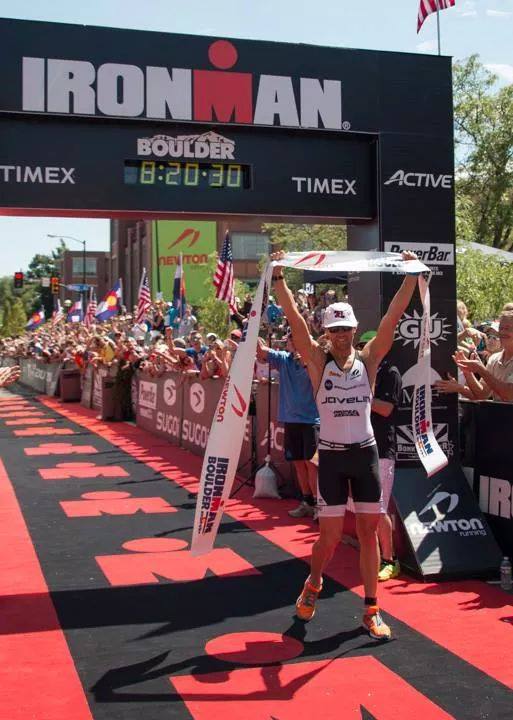
820My buddy, Justin Daerr, won Ironman Boulder this month. Even bigger, the ladies at my health club have started chatting about him!

He’s truly made it.

Not many people make the transition from average to champion. I was along for the ride.

epic_konaIn October of 2004, Justin came out to Hawaii for a camp that we were hosting. He had a big week of training and finished third in his age group in Kona. I didn’t know it at the time but October 2004 marked the high-water mark of my athletic career.

hawaii_run18 months before that camp, Scott Molina asked me, “What if that’s it?” At the time, I replied, “There’s always more.” Scott was a little early with his question but it was a good one.

What’s next?

After Justin became really good, he put in another 10,000 hours to become great. It’s the profile of a clean athlete, many years of plugging away. No quantum leaps.

runI like to focus athletes on 1,000 days of effort. After 1,000 days, of racing pro Justin was going far faster but didn’t have a whole lot to show for his efforts. He was a long way off the top athletes and, like me, only competitive over long distances.

The link in the paragraph above shows J’s results. He was speedy for a long time. Thing is, everyone else at his level is speedy too! Eight years of consistent sub-9 Ironman times. That’s really fast, for a very long time.

How do I measure my return on investment?

…is a question we should ask

…especially about time we will spend

Absent conscious effort, we will default to the values of our community. My athletic community values vanity and victory. These values rule what I see around me and lead to athletic errors.

As a champion, expectations and self-image change. My champion pals, closer to my age, experience pain with the inevitable transitions that life brings. Whenever that transition happens, I hope Justin keeps what’s best from the last decade.

  • He was willing to inconvenience himself to do the right thing.
  • He persisted in the face of evidence that he might not make it – a good lesson for me to re-learn!
  • He never mentioned the slings and arrows that were tossed at him. Justin’s non-response made me a better person.

These are the good old days.

Remember to enjoy them!

Four Hidden Hazards – for aging athletes

Ron KonaBecause the big money lies in helping sick folks, athlete health is likely to remain a poorly understood niche. Here are three hazards that most people miss.

Lifestyle & Nutrition Stress

As an elite athlete, my blood markers would indicate kidney stress. I coached a kidney doc and did a consult to rule out kidney disease. Where we ended up was acknowledging the stress of the athletic lifestyle:

  • High calorie diet
  • High protein diet
  • High sugar diet
  • Constant muscle breakdown

Now, there are many ways that my athletic lifestyle reduces stress (body composition, blood pressure). However, a high-performance lifestyle increases stress, when compared to an active lifestyle.

From 2001 to 2008, I was “fast” but I carried around an immune system that was chronically suppressed.

Around 2010, I cut my training in half, and my blood markers went from good to outstanding.

My kidney function cleared up, my immune system strengthened and my HDL/LDL cholesterol improved. (82/84 mg/dL).

I put this out there because I had a fear that I would “lose everything” if I backed off.

The reality => Moderation improved my health and my marriage.

Passing Out & Crashing

I’ve been exercising daily for ~20 years and it’s the best investment I’ve made.

If you want to slow the aging process:

  • Get enough sleep
  • Don’t smoke
  • Take it easy on the booze
  • Eat real food
  • Move daily

The flip side of being a long-term exerciser is I can go a long, long way on nothing. It’s a trait that can get an older athlete into trouble.

When tired, depleted or “open” from exercise, my blood pressure can dip suddenly. So far, I have never passed out but I’ve felt lightheaded on many occasions.

Passing out is a serious medical condition – Part One and Part Two on the Athlete’s Heart Blog will tell you more.

If you share my profile then be aware that falls and crashes are different as we age. A key part of aging well is avoiding the strength and muscle losses that come from extended breaks.

I have changed my approach to improve my risk profile.

The Scalpel of Eternal Youth

Here’s how I categorize WEEKLY run mileage:

  • 20 miles = “not running”
  • 30 miles = “light week”
  • 40 miles = “basic maintenance”
  • 50 miles = “good week”
  • 60 miles = “enough to run a decent marathon”
  • 75 miles or more = “stretch week”

Follow this running protocol long enough and you’re likely to deal with orthopedic issues.

The most effective treatment for chronic injury is lifestyle modification.

Your orthopedic surgeon makes NO money from this truth!

A surprising thing about middle age => moderation turned out of be healthy and enjoyable.

Who Knew?

Too Painful To Care

Monday I wrote about driving energy inwards to improve myself, my marriage, my family.

Related to this lesson, I’ve noticed a habit of avoiding knowledge that conflicts with my core beliefs. This isn’t anything new – human misjudgment is an ever present topic. However, spotting my own misjudgments can make me far more effective.

Being effective, and making better choices, is a more important to me than avoiding change.

A story.

The Tour de France just finished and I didn’t watch any of it. My lack of motivation was unusual and I wondered why.

The legacy of cheating has been to make it too painful to care. In my case, that manifests in a lack of interest in elite sport. In the case of the wider public, there is an element of truth-fatigue. It’s too painful to discover the reality that underlies an obsession with winning.

I’m using sport as an analogy – it’s an easy one for us to feel, and see in others. Choose your favorite sport and you’ll find a tendency to overlook it’s short-comings. If you can’t see it then ask a foreign friend their thoughts (or simply a pal that likes a rival franchise).

The lesson for daily living is deeper.

  • A friend with Alzheimer’s
  • An elder with dementia
  • A sexually abused child
  • A partner that defrauds the community

In these cases, we will feel a strong urge to “give the benefit of the doubt” to whatever causes the least pain. We will default towards inaction and strongly avoid information that compels us to face pain. I feel avoidance strongly in myself – it’s taken many setbacks for me to overcome.

One of the best lessons of hospice is that freedom lies on the other side of fear. Hospice lets me “be with” my fear of death/disease and feel grateful for today. Gratitude is powerful medicine to carry around inside.

Hospice is “easy” – it’s quiet and I’m not expected to solve anything. My home on the other hand… is often loud and I’m in charge. Maintaining serenity in my own house would be transformative for me, my wife and my kids.

So I look for small, daily, opportunities to practice equanimity:

  • Reading a conflicting viewpoint
  • Avoiding “justified” disappointment in a friend
  • Letting a commute unfold without battling my fellow drivers
  • Not playing into a negative emotional pattern with a spouse, child or myself (!)

Overcoming the smallest things, closest to us, can be powerful.

It takes courage to face pain.

Be brave.