True Strength

g_aqua

One of my coaches, Mark Allen, made the observation that to get our race in order, we need to get our lives in order. Racing, like any other form of stress, can strip away our filters.

Mark’s advice is an example of an athletic lesson with a wide application into everyday living.

We share a desire to be strong. This desire is expressed by building up and adding to one’s self.

  • Adding size through muscles, bulk, heels, boots
  • Adding tension from taking on obligations
  • Adding palmares from victories
  • Adding possessions and external signs of power

I’ve done it all: cowboy boots; academic honors; powerlifting; fancy cars; big houses; jewelry for my wife…

Adding, adding, adding.

The list above is about our external life. Building up is a projection of strength, but it isn’t true strength. I think Mark is pointing us towards something that might become resiliency. An integrated life where we are in harmony with our external projection and OK with all aspects of our experience (strong/weak, happy/sad). This harmony lets us cope with the tests of our races (and lives).

Perhaps you’ve had a situation where you tell yourself to be “strong” but a more accurate description is a fear that our inner storm might show through. Having completely fallen apart a few times, isn’t that big of a deal. I don’t want to make a habit of it but I also don’t want to spend my life holding tight and letting the pressure build within me.

When tired, when grieving, when sick, when stressed… life has a way of stripping our filters away.

But how can we process our inner life?

  • Exercise works well for me – moderate effort, repeated movements
  • Others prefer meditation – cultivating stillness and observing one’s mind
  • Many find the combination of breathing and movement in yoga to be effective
  • Thrill seekers tend towards extreme risk and peak experience – works for them but doesn’t work for the larger goals of my family

If we keep peeling away our layers then we might find that the joke is on us.

Why?

Ultimately, every individual unravels.

It can be terrifying when we bump into this reality. You may have experienced this fear through the death of friends, parents and grandparents.

Ultimately, we might find comfort in defining resiliency in terms of something larger than ourselves – family, legacy, lineage, tradition.

Cultivate courage by staying open towards little fears.

Breaking The Chain

Today’s title is the name of a book that was given to me by my coach. The book is about the impact of 100 years of choices in the sport of cycling. The stories will blow your mind.

The concept, of a continuous chain, is also a teaching in Eastern Philosophy. One aspect is that we can do good works when we DON’T pass along the pain we receive from another person. The gift of “not passing” is something that I practice at home.

FlagstaffA few years back, I made a decision to leave a group of friends rather than engage them over their cruelty of their language to each other.

I thought it would be more productive for me to change everyone’s names and write blog posts instead…

I’m laughing as I type that because it’s true. We all dig in when confronted directly.

Tips that help me be part of the solution for friends and family.

Statute of Emotional Limitations – I got this from Gordon Livingston. He recommends deciding on a statute of limitations for our childhoods. When we turn 25, 35, 45, 65 or 75… …we decide that we’ve grown up and we’re leaving it behind. it’s never too late to decide that you’ve grown beyond the slights of the past.

Young kids are fantastic teachers of this point. A baby holds nothing from her past. Even my three-year old, doesn’t retain emotion for more than a couple minutes. It’s a wonderful way to be and somewhat confusing to a father (me) that’s prone to holding a grudge.

Making time is a useful coping strategy if you’re prone to self-pity.

A favorite book is Tuesday’s With Morrie – Morrie is living with ALS and one of his coping strategies is to really experience his sadness each morning. Being completely sad for a few minutes enables him to live the rest of his day.

Recognizing Limits – there’s some stuff from my past that I might never get past. Some relationships that might never get sorted. Some episodes that will tag along for what remains of my life. I have a choice to own that reality.

Going further, in cases of abuse and trauma, the magnitude of the stress might have permanently rewired how we respond to certain situations. In my own case, just-the-right-mix can knock me off kilter.

As a result, I need to forgive myself for falling short of the idealized image in my head. Take fatherhood, at the end of a challenging shift with my kids, I might never be Christ-like, or tap my Buddha-nature, or whatever I happen to be shooting for at the time.

To deal with my shortcomings, it helps to think about the chain that led to me and understand that I’m going to leave a few loose ends when my time is done.

Lexi_PilotTaking a longer term perspective, my role is to move things along a little bit, not screw up and let my kids take the controls.

Some things take more than one generation to work through – that’s ok.

Be gentle with your short comings – simply try to do a little better.

Five True Friends

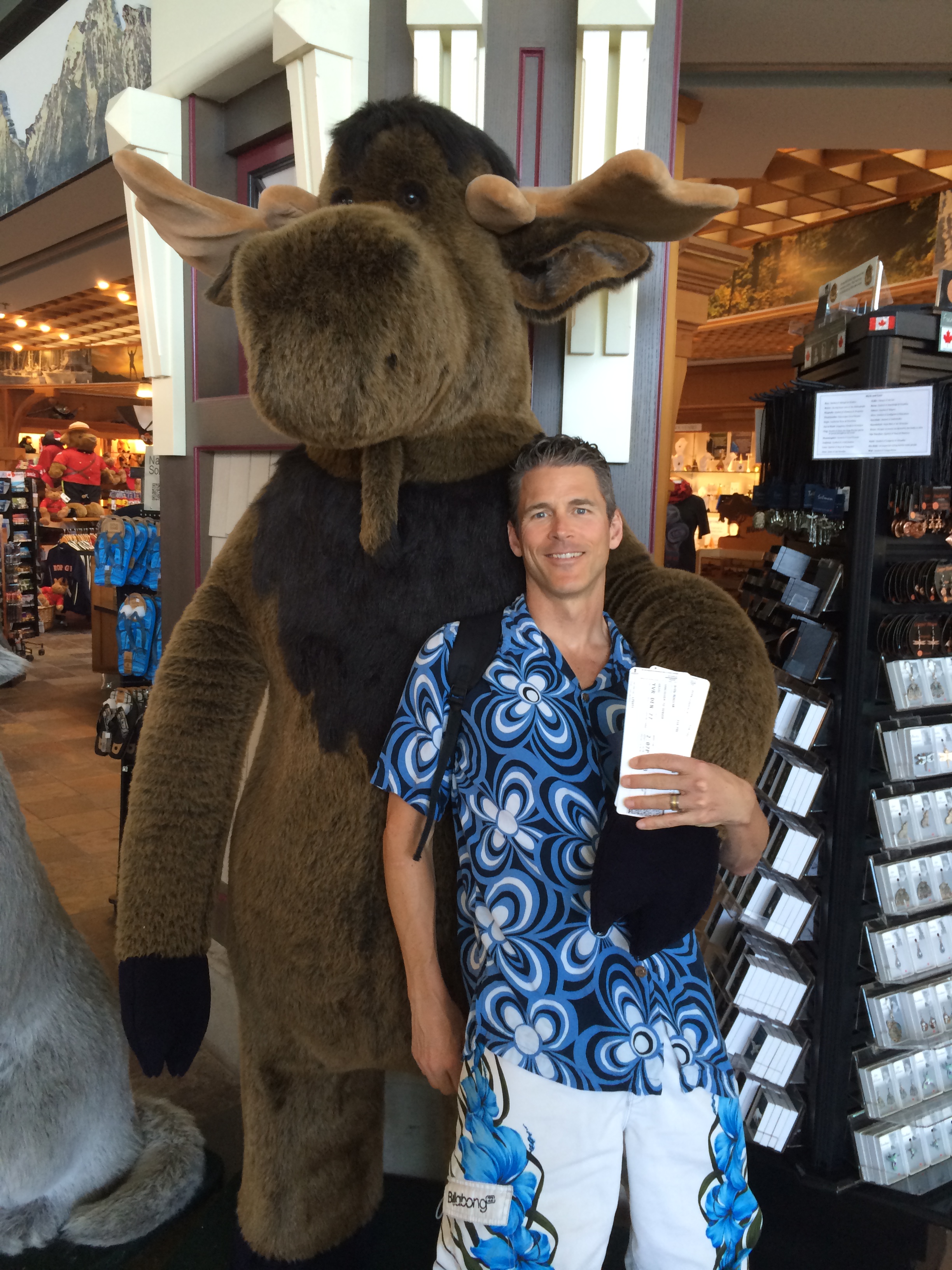
mooseThe Philosopher’s Mail is one of my favorite sites on the web. Happiness is a recurring theme in their writing, as is social connection. As your doctor can confirm, there is a link between social connection and health.

The good people at Philosopher’s Mail shared Epicurus’ recipe for a good life. The link is to a lovely article with snazzy pics of Paris Hilton. The article is worth your time – it describes an antidote if you find that external success fails to lead to lasting satisfaction.

The philosopher’s antidote

  • Five true friends, that reinforce inner values (not the external values of city living)
  • Self-determination by escaping the tyranny of corporate serfdom, regardless of financial cost
  • Daily time for quiet reflection, ideally with low-intensity exercise in nature

It’s an interesting list because most of us will lack one aspect of the troika. In my case, it takes effort to say “yes” to social interaction.

As well, we are usually attracted to people that have external traits that we wish to emulate. This can be a good thing…

  • A politically-connected friend making us feel gratitude that we don’t have the duties that come with being a very important person.
  • A healthy friend inspiring us to start a streak of daily activity.
  • A champion friend inspiring us to persist a little longer at a difficult task.

I have different pals with all of the above and, when I’m at my best, they reinforce good traits in me.

However… I’ve also noticed that my most human, and occasionally screwed up pals, can leave me feeling grateful, useful and valued – three traits that have a strong link to personal happiness.

So while the need for pals is well known, I can lead myself astray. So it’s worth using my daily time to quietly consider…

  • Do I have five people to whom I can speak plainly?
  • Separately, who are the five people with whom I spend the most time?
  • How do those people make me feel?

Once I have insight, it’s up to me to have the courage to change.

Be brave.

Too Painful To Care

Monday I wrote about driving energy inwards to improve myself, my marriage, my family.

Related to this lesson, I’ve noticed a habit of avoiding knowledge that conflicts with my core beliefs. This isn’t anything new – human misjudgment is an ever present topic. However, spotting my own misjudgments can make me far more effective.

Being effective, and making better choices, is a more important to me than avoiding change.

A story.

The Tour de France just finished and I didn’t watch any of it. My lack of motivation was unusual and I wondered why.

The legacy of cheating has been to make it too painful to care. In my case, that manifests in a lack of interest in elite sport. In the case of the wider public, there is an element of truth-fatigue. It’s too painful to discover the reality that underlies an obsession with winning.

I’m using sport as an analogy – it’s an easy one for us to feel, and see in others. Choose your favorite sport and you’ll find a tendency to overlook it’s short-comings. If you can’t see it then ask a foreign friend their thoughts (or simply a pal that likes a rival franchise).

The lesson for daily living is deeper.

  • A friend with Alzheimer’s
  • An elder with dementia
  • A sexually abused child
  • A partner that defrauds the community

In these cases, we will feel a strong urge to “give the benefit of the doubt” to whatever causes the least pain. We will default towards inaction and strongly avoid information that compels us to face pain. I feel avoidance strongly in myself – it’s taken many setbacks for me to overcome.

One of the best lessons of hospice is that freedom lies on the other side of fear. Hospice lets me “be with” my fear of death/disease and feel grateful for today. Gratitude is powerful medicine to carry around inside.

Hospice is “easy” – it’s quiet and I’m not expected to solve anything. My home on the other hand… is often loud and I’m in charge. Maintaining serenity in my own house would be transformative for me, my wife and my kids.

So I look for small, daily, opportunities to practice equanimity:

  • Reading a conflicting viewpoint
  • Avoiding “justified” disappointment in a friend
  • Letting a commute unfold without battling my fellow drivers
  • Not playing into a negative emotional pattern with a spouse, child or myself (!)

Overcoming the smallest things, closest to us, can be powerful.

It takes courage to face pain.

Be brave.

Talking About Dementia

The medical director of the hospice where I volunteer gave a lunchtime presentation on dementia.

An interesting stat she shared was 45% of people 85 or older will show symptoms of dementia. With longer life spans, we’re going to be dealing with more dementia.

The mechanisms for the various types of dementia are not well understood but she cited the following risk factors:

  • Heart disease
  • Stroke
  • Alcohol use
  • Diabetes
  • Family History of Dementia

Like most of us, I have all-of-the-above in my family tree. If I live long enough then it’s likely that I’m going to bump into dementia.

What to do?

  • Consistency and routine in daily living
  • Physical and mental stimulation – stay engaged in your family, in your community, consider part time work
  • Safety – ID bracelets, honest discussions about driving
  • Reminders & Cues – at 45 I have a system in place to manage my days – if you are used to subcontracting all your admin then consider bringing it back in-house before you become part of the elder elderly.

With my grandparents, we used atomic clocks (automatically set for time, day of week, date, month) to help them keep track. Towards the end, I ran my grandmother’s calendar and would handle arrangements for key appointments. They were both in assisted living and my grandmother commented that she would have moved in earlier if it wasn’t for her reluctance to ask for help.

There was an excellent question from the audience… Do my visits have any impact? The doc made the point that the impact of a visit might be not seen until later – when the patient is happier, more content. Don’t assume that low, or no, response means that you’re having no impact.

In my own family, the anticipation of a visit was very positive. I went as far as planning a series of rotating visits more than a year in advance. Each elder needs a champion to marshall caregiving resources.

Likewise, with demented patients, don’t assume that negative behaviors are disease related – the patient could be acting out in response to pain, lack of stimulation or excessive stimulation.

Interesting point for older athletes – the body’s thirst, and hunger, mechanisms dull with age (as well as due to dementia).

The doc shared that artificial feeding of demented patients doesn’t prolong life and changes the nature of death – this is due to complications associated with tube feeding.

++

The thought of losing one’s mind is terrifying and the topic of assisted suicide came up. We didn’t have time to explore that issue, but it’s going to be on the 2015 ballot in Colorado.

Given dementia rates in my family, it strikes me as more productive to create a care plan, rather than relying on a quick death, or euthanasia.

I was also left with the following:

Be sure to consider “who’s suffering?” 80% of hospice patients have cancer so my experience with the demented is limited. That said, be sure to look inward when you’re dealing with a family member with dementia. Our minds can torment us more than the disease torments our loved ones.

583My grandfather had advanced dementia and was fully capable of experiencing happiness and joy. He maintained his dignity, if not his memory, until the end of his life.

The death of an elder is an opportunity to make better decisions within the entire family. What did we get right? What would we change? What advance directives are needed for the next generation? for myself? Is my life structured appropriately if I start to experience symptoms of dementia?

IMG_0920Most personally, it strikes me that if I decide to kill myself then I deny my community the opportunity to learn from the end of my life.

As a society, we can learn to live better by taking care of people on the way out. My grandmother was moderately demented at death. She faced death with courage and caring for her was a gift, not a burden.

Watching a loved one unwind from Alzheimer’s is extremely difficult and I hope to have the ability to avoid judging opinions different than my own.

Real people, tough decisions.

Scoundrels and Rascals

When I lived in Asia, I was taught that desire is a necessary component of deception.

My desire to “be right” often leads me right back to another deception.

Some tactics follow that might help you avoid trouble with rascals that, truth be told, are often entertaining.

They Might Be Right – I get a guaranteed laugh when I tell my wife, “I might simply be different.” She smiles, “yes, babe. You’re different alright.”

When would the other person’s course of action be right?

If we live long enough then we are almost certain to find our present selves holding different opinions from our younger selves.

The Message Not The Messenger – we share a curious desire to bring down others and a glee in catching people being naughty. My opinion of a person can prevent me from learning from them.

What can I learn from this person? this situation?

Turn People into Adjectives – when I’m locked on a person, it’s far more useful to drill down to a description of what’s triggering me.

Think about a person that’s disappointed you and dig, dig, dig… until you move beyond the person and arrive at the behavior. There is always something inside of me that’s being touched by, what I believe is, an external trigger.

Let The Situation Move Away – hands down, the most useful thing I realized. Nearly all my “problems” move away if I stop feeding them. Usually the best course of action is to chill out and let my problems leave on their own.

This doesn’t mean that I support the injustice that I see. I means that I acknowledge that my most effective antidote is being just in my own actions.

Turn problem people into adjectives and correct their behavior in myself.

  • Honesty
  • Courtesy
  • Reliability
  • Kindness
  • Gentle
  • Loving

My Financial Domain and Legacy

You can find my Part One here and Paul’s thoughts on Part One here.

#3 – What are the other things in life that are critically important to me, and for which I will be financially responsible?

This is a great question.

Be sure to run your answer by your therapist.

Why?

Because people that are high-achievers and good savers tend to take on responsibilities outside of their domain. I’ve watched families make themselves miserable by taking ownership of the financial wellbeing of adult relatives.

What’s my financial domain? Myself, my spouse and my minor children.

Watching people that I love struggle is no fun at all. However, I respect the people that had the courage to let me suffer as a result of my own choices.

#4 – What are the risks in the universe which may prevent me from fulfilling my responsibilities to myself and to others, and how might I defend against them or at least mitigate their impact?

Another great question!

Humans are lousy at assessing risk and statistics. An excellent investment you can make is reading Taleb’s Antifragile – please don’t use the book as motivation to set up a personal derivatives strategy!

Pro Tip: use insurance products to insure an identifiable risk, not make investments.

#5 – If I have accumulated wealth that exceeds all of the above requirements, how might I best utilize that wealth to derive the most personal satisfaction available from life?

It’s a shame that it takes so much money for people to realize they had won before they even started.

Value your time, more than your money.

Diversify your time towards helping people that have less of what you think you need. Specifically, teach what you’ve learned.

Improve your family’s human capital, starting with your health, your manners and your gratitude to the society that enabled your success. Start with small, simple changes:

  • Physical movement AM and PM
  • Get strong
  • Eat real food
  • Be a little more kind
  • Be a little more fun
  • Optimize your health markers via diet and exercise (blood pressure, cholesterol, blood glucose, body composition)

If you are a self-made person then love the people closest to you by ensuring that they have the opportunity to prove their self-worth via their own initiative and through their own passions. Tell your kids when they impress you.

Be willing to constrain yourself to create harmony within your family and community.

Laugh out loud.

Don’t Know, Don’t Care

Lexi's Pink BootsA story that runs far beyond your portfolio.

Like most of us, I tend to shun painful thoughts, people, experiences…

However, in reading a book on finance, Your Money & Your Brain, I discovered a better way to think, and live.

Don’t Know, Don’t Care

Rather than getting rid of whatever seems to be bothering me. Why don’t I move my life towards a position where I’m OK either way.

In the finance book, the author was making the case for passive investing.

  • What’s going to happen to… ?
  • Should I sell?
  • Should I buy?
  • Where will interest rates be next year?
  • Corporate profit margins, availability of bank credit, tax policy, insolvency risk, terrorism, politics….

There is no end of worries available to you.

If you’re following a passive strategy with a fixed monthly investment then none of the above matter.

Another benefit is I don’t have to follow the noise that’s constantly pouring out of the media.

Once I saw the logic of changing one area of my life, I started to consider the other areas where I trade happiness, for worry.

Step into the mind of young woman:

  • Will they like me?
  • What will they think about my shorts?
  • Do my shoes match my outfit?

Sweetie, I don’t know but I think you’re terrific.

The “don’t know” strategy doesn’t make me immune to the opinions of others, but it gives me a mantra to occupy my mind on something more useful than worry.

Life is none of my business.

How I Met Your Mother

Gordo and MonicaWhen I lived in Asia, I made some money, had my best friend die and blew up my marriage.

A wise friend observed that it was fortunate that the marriage exploded because I was better off waiting until I was able to offer something to a relationship. My buddy, who would spend the next decade dealing with her breast cancer, captured an essential aspect of successful relationships – that they are best avoided until you are prepared to continually offer yourself.

I look back at my writing from that time and smile at how hostile I was to relationships. Ten weeks before I met my wife, I rode across the United States with a Swedish buddy. He gave comfort that, indeed, there were “at least three women in the world” for me. When I asked, “why three and not one?” He smiled and told me, “the world’s a big place, Gordo.”

Squash Court

[This is the squash court where I met your mother]

In the middle of 2004, I conquered my fears and walked into a room of (mostly) female, triathletes. They were training under the instruction of a six-time world champion, Dave Scott. Dave personifies the old coaching adage “challenge your men and love your ladies.” He didn’t cut me any slack!

It was a complicated situation as my wife-to-be was going out with my landlord’s brother and neither of us were aware that we should be together. I played a long game, got her out of the country and we were engaged before she returned to Boulder.

Nelson, NZ in 2005

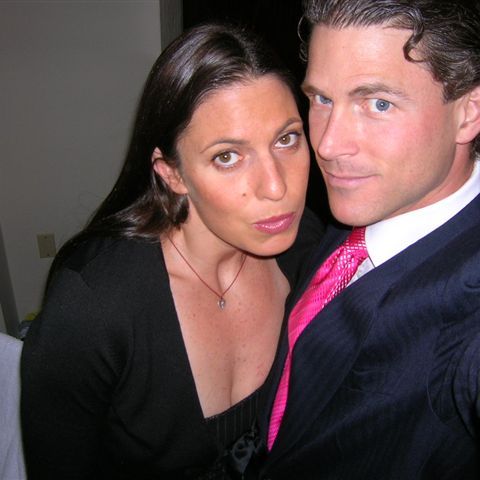
[Here’s your mother as a young woman in New Zealand. She was working as my extra-special soigneur at a stage race.]

We were lucky. We grew into each other.

+++

The journey that led to a wonderful life partner began years before I met Monica. I started by cultivating independent self-love, which sounds like something you’d hear in yoga class.

In the language of business…

To do a good deal, you have to be willing to do no deal, a fundamental component of success.

Divorce caused me enough pain to make me hostile to any form of intimacy. First a childhood divorce, then my own as an adult. There were deep feelings of failure associated with marriage. I had not learned how to strengthen a marriage and was preoccupied with the illusion of failure.

After my divorce, I made myself a better person. This was not my goal. Becoming a better person happened because I stopped living the values of other people – back then I was misled by money and assets. Later I was misled by victory and vanity. At the end, I hope to end up with kindness, good humor and service!

My introversion, and pride, fed a desire to prove that I could be happy alone. Truth be told, I was never alone – I wrote frequently and had two very close friendships. One of these was with Scott Molina and he joked that I had ’embarked on the longest dry streak known to man.’ Scott’s observation still makes me smile!

To make myself relationship worthy, I needed to create a life where I was happy without an intimate relationship. In order to have something to give, I needed to develop a source of energy outside of the relationship. I found my source in athletics and nature.

The great spiritual traditions write about love being the source. I have a long way to go there. My love for my children is a sign explaining that everything I need is within myself.

As an introvert, the teaching that I’m my own source feels natural because I’m happy when I’m alone. However, I need to be careful that I’m not alone too much. First, because there is a deep human need for intimacy. Second, because a life with meaning requires us to do good work in the world.

After five years of working on myself, I met my wife. In Monica, I discovered that I enjoyed spending time with her more than I enjoyed being alone. I’m not sure if that will make sense to an extroverted reader, who might find solitude draining. However, for the sociopathic hermit in me, it was a revelation.

To create an intention for success, I tell my wife, frequently:

  • There’s no way I am going to improve my situation through any pathway other than our marriage.
  • I’m grateful for all you do – family life is a challenge but I know that family life alone would be far, far more challenging.
  • While I accept that it only takes one person to crater a relationship, I will never speak about failure on my side. If we hit hard times then I’ll stay close and wait for you to come to your senses.
  • I hold the trust between us as sacred.

All thoughts to the contrary, of what I state above, are a sign of temporary insanity!

Ironman New Zealand 2004

[As a couple, Ironman New Zealand 2004 was our best ever. Your mother swam 2.4 miles in 46 minutes and finished 2nd overall. Living in love makes you powerful!]

Today is the 10th anniversary of the day I met your mother and I’m so grateful.

Love you, Babe!

Eighty Years of Family History

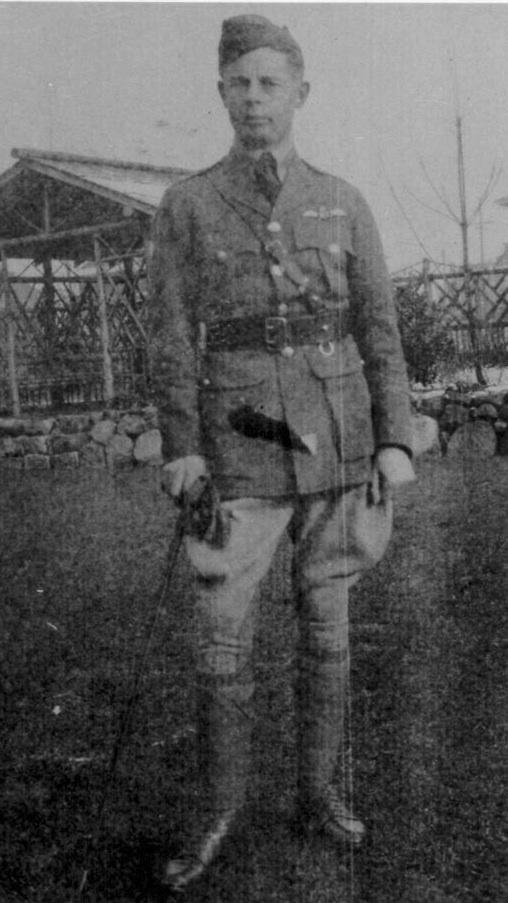
Bea-bopAbove you can see my great-grandmother (Beatrice). Bea was born in the late-1800s. In knowing five-generations of my family, I am the link from the 1800s through to the 2100s.

My family was involved in the early days of the province of British Columbia (forestry and shipping). Shipping sounds glamorous but the reality was barges, booms and tugs. I love being near water and trees.

ElphinstoneI never worked in the resource-focused businesses but I did work on the water at YMCA Camp Elphinstone – the photo is plaque that’s still in the Longhouse. I loved my time working in Howe Sound and summer camp. Below is where I spent many happy summers.

WaterfrontThere were successful businesses up both sides of the family tree and some very, very good business people. None of the financial capital from my elder’s success will make it through to my kids generation but the human capital of the family has remained strong.

If my great-grandparents could survey the scene today, they would likely observe that, once sold, a family business is very difficult to replace. I think they would also realize that their financial success had many unintended consequences.

Over the years we’ve been caught out by bank guaranties and leverage. It’s important to remember that one mistake, particularly when combined with bank borrowings, can blow a generation’s worth of hard work.

Indeed, in my own case, I was saved from personal bankruptcy by getting spooked by the boom of 2003-2005. I spook easily (!) but it served me well as I got through the Great Recession of 2008/2009 intact.

Always consider a bank guaranty to be the equivalent of an immediate equity investment, without operational control. Also, remember to ask, “Can I hold this investment, for up to ten years, assuming I lose my job?” Every generation has been hit by unexpected unemployment.

RAFMy elders would tell you that appearances matter, especially when you’re the little guy (in business or stature). The picture above is my great-grandfather, lone survivor of a mid-air plane collision. His son, my grandfather, made a habit of being kind and fair to everyone around him. This habit stuck with him, even as his mind unwound. Lacking kindness was my greatest weakness as a young man.

One of my earliest financial memories was being taught to never have more than 10% of my net worth in something I don’t directly control. Ignoring this advice proved costly, financially, but didn’t damage my quality of life. So pay attention to that tip, it saved the hard work of my generation of the family and you hear it repeated over-and-over by elders that have lived through severe recessions.

I’ve been an outlier with how I’ve chosen to live my life and can waste a lot of energy trying to make the world more like me. The best advice that I’ve received about living with other people is to optimize your life for the way things are, not the way you wish them to be.

There’s plenty of compulsive people in the family tree and we have a bias towards action. This trait helps you get things done. However, remember that if it won’t make a difference then you’re best to wait.

Daily, I remind myself that kindness makes a difference.

Seeing choices flow through 80 years, I hope my children develop a sense of personal success, then shift their emphasis towards loving their families, connecting with friends and improving their communities.