What To Do

2019-09-23 08.07.06-1Between summer day camp and the school year starting mid-August, I’ve had two months of a relatively quiet household.

I used this time to re-read Taleb and Munger. You can find my full notes here.

My initial purpose of re-reading was to figure out “what to do.”

It is far easier to be certain about what NOT to do.

Do you know what can ruin your family’s life?

I do.

  • Racing, especially high speed downhill => physical ruin leading to a downward mental spiral.
  • Alcohol use => historically, my average daily consumption is either: (a) zero; or (b) slowly trending upwards.
  • Anger => if I am going to screw up a key relationship then it will be when I act on anger.
  • Death by Accident or Avalanche

What is your list?


Assets and spending do not create a life with meaning.

My true job is keeping our cost of living down so we maintain the ability to control our schedules.

  1. Be wary of adopting the preferences of others. It’s easy to sign yourself up for millions of lifetime spending that won’t mean a thing to you late in life. Worse yet, you will pass these values to your kids and they blow whatever you leave behind.
  2. Pay attention when you notice “better” doesn’t make a difference. “Wasn’t worth it” happens to me a lot.
  3. Pay attention to the cost you pay in time and emotion => it costs me a lot of worry and stress to get more money. Way easier to spend less.
  4. Once you are beholden to a third-party, you’ve lost.
  5. A lot of times “worse isn’t worse.” We adapt very quickly to setbacks.

We discuss case studies at home. Housing, vacations, cars, the endless “needs” my kids and I dream up.


So while I’m removing things that can ruin me, and beating down my hedonistic tendencies… What to do?

Wait for the fat pitch.

A key benefit of a good position is being able to wait until the credit cycle swings in your favor.

The longer we have to wait, the better the opportunities. Cutting rates, running trillion-dollar deficits at the top of the economic cycle… there will be great deals eventually.

I’m not excited about any asset class right now.

  • The bond market is telling me that we’ve pulled 5-10 years of returns forward.
  • Net yields are under 1% for real estate that I’d like to buy.
  • The rest of my balance sheet feels like “enough” exposure.

I’ve decided to make no material new investments. We are going to periodically rebalance and I am going to reduce my cost of living.

What to do?

Enjoy nature with my family and pass my value system to my kids (by living the life I wish for them).

Years, Leverage, Time and Ruin

2019-09-10 07.55.51The benefit of creating a good position is you can choose not to leave it.

Each time I change strategy, I open the door for error.

2019-09-10 06.08.38A quick review, I calculate financial wealth as:

Net Family Assets [divided by] Annual Cost of Living

The formula spits out an answer in years, not dollars.

To figure out if an idea is “worth it,” I convert to years.

I also consider:

  • Leverage: do I have to borrow, what’s the total dollar value of my exposure, how large/far can things move against me?
  • Time: I have control of my schedule – might this idea change my ability to control my schedule?
  • Ruin: reputation, relationships, finances, health… how does this idea change my exposure to ruin?

I have a lot of (bad) ideas. Thankfully, most don’t get through my filters.

These filters work with EVERYTHING… alcohol & drug use, mistresses, felonies, off-balance sheet financing, sleeping late, losing emotional control, binges…

2019-09-07 06.15.45

How can I put “years” into family wealth without increasing my risk of ruin?

In 2009, we executed a four-year plan that put us in a better position.

A key part of that plan was downsizing, borrowing (30-years fixed at 3.25%) and pulling 65% of the equity out of our primary residence.

It was highly inconvenient to change and we expected the smaller place to be a step down. However, our minds adjusted and we love our existing place. The move paid off in “years”:

  • Our current place runs at half the cost of our old house.
  • The capital we withdrew, earns enough to cover the cost of our current place.

I looked at moving again but there wasn’t any benefit to us after taxes, commissions and hassle. So we’re going to wait and watch.

Remember, “doing nothing” maintains an option to (make a better) change later.

2019-09-05 19.33.32The Elephant(s) in The Room

Childcare and school fees have been a fixture of the last six years. It has been a big number – about double what we pay in housing costs.

Our youngest is in Grade One (yay!) and we just lost our favorite sitter (not so yay). The result is a big slice of the family budget gone.

My first thought was to replace help with even more help. I have a habit of throwing money and other people’s time at my problems. It’s a carryover from my days in finance – where I aimed for maximum subcontracting in my personal life.

Then I had a thought…

  • Consolidate the kids’ schedules (we often have three in three different places)
  • Help out in the afternoons (I’ve done nothing for a few years)
  • Take over the cleaning (ditto on my lack of input)

It’s ~20 hours out of my week => prior thoughts on money and time.

The other elephant in the room is my cash flow deficit. It’s been rolling at 4% of assets for years. I’ve ignored it because our assets have been appreciating at a faster rate. My comfort with deficit spending reminds me of 2004-2008.

So I could “buy” the family a shift from a cash flow deficit to a surplus. Worse case, I crack a bit and hire local kids to help me out. I’ll still cut my cash burn by ~80%.

When I explained my plan to my wife she asked if my plan would make me happy. I said,

“I don’t expect to be happier but I noticed that being a better man never made things worse.”

Thinking through consequences

2019-07-16 08.01.59A friend confided in me that his FOMO (fear of missing out) is running hot. Stories of easy money have got to him and he wants to get in on the action!

This reminded me of 2005 – a year when I was planning a future life of luxury. I had a road map for how I would spend my paper profits… a house in Santa Barbara, a flat in Paris, summers in the high-country. The constant focus on acquiring more should have tipped me off, but I didn’t notice.

For Christmas 2005, I bought myself a copy of Fooled By Randomness.

It humbled, and deeply concerned, me. You should (re)read it.

In my business life, I had a personal guaranty outstanding. The guaranty was a modest amount of my “paper” assets but more than 100% of my liquid assets.

In my personal life, I had established a line of credit to pay my living expenses.

I realized I could be wiped out.

2019-07-16 08.21.00Taleb’s teaching…

There are some games you don’t want to play.

Some risks we should never take.

Across 2006/2007/2008, I secured my financial life. This decision saved me from ruin.

I had NO idea about what was going to happen (still don’t).

I had a clear idea of the scenario that would wipe me out. Approaching 40, with a new wife, I didn’t want to get wiped out.

I addressed what I controlled: my cash flows, my debts and my obligations.

Do you know what could wipe you out? Look to your borrowings, your obligations and your cash flows.

2019-07-16 07.57.56

Do you notice triggers that could create a shock to the system? In what ways is the recent past skewing our vision of the future?

  • Debt-fueled political stability in Asia
  • Negative yielding sovereign/corporate debt in Europe
  • Easy money at a time of multigenerational employment highs in the US
  • Global debt double 2008 levels

Across all markets, a low-interest rate policy:

  • Delaying the consequences of poor decisions
  • Pulling forward future returns
  • Reducing interest service obligations => while global debt has doubled the price of debt has more than halved

It impossible to predict when the credit cycle will play itself out.

It is possible, and advisable, to understand how you are exposed to ruin.

  1. Cash flows compared to fixed commitments (taxes, debt service, core cost of living)
  2. Asset purchases via debt finance => particularly negative yielding luxury purchases
  3. Credit quality => Who can go bust and hurt you?

Things go wrong when people build assets, and debts, to the top of the credit cycle.

===

The photos were taken on the Twin Sisters in Rocky Mtn National Park – mountains provide an opportunity to teach about consequences.

Winning The Loser’s Game – personal finance book, Charles Ellis

2019-06-16 08.44.50This one sat on my shelf for a while, probably due to a concern that I might have to change my mind on something if I read it!

Well, just because something is unpleasant to consider, doesn’t mean it’s wrong.

Besides, I can handle bad news.

+++

Fortunately, there wasn’t much bad news inside this book and it was an excellent read.

Takeaways…

Nearly everyone will be working into their 70s, at least part time. This is a result of success, not failure.

  1. Success in following a healthy lifestyle and benefitting from modern medicine => much longer lifespans.
  2. Success in financial well being => implies our baseline spending at 50, 60, 70… is higher than anticipated.

A working life of 50+ years implies:

  • We will be technically out-of-date before we’re halfway done!
  • Multiple careers, unexpected transitions, continuous technical education
  • Start with something the enables you to get paid well on an hourly basis and become world-class in a niche market
  • If you spent your early career not doing a whole lot then you still have many decades left in your working life. Hit the reset button and get yourself educated without borrowing a ton of money.

Despite “retiring” 3x (!) since my 30th birthday, I’m still working part-time. I had been expecting this to end at some stage. This is not going to happen, and I shouldn’t wish for it to happen.

I should be on-the-lookout for attractive part-time employment and training myself for my next career(s).

+++

As you’d expect from a bestselling personal finance book in its 7th edition, there are excellent sections:

  • Six self-assessment questions (p 80-81)
  • Living under your means as a form of savings (p 161)
  • Annual personal review questions (p 197-198)
  • Contributing time, talent and money to your community (p 227)

I was also reminded of my personal weaknesses as an investor by the author’s advice to “give compounding time to work.”

Across a 50-year working life, that is a lot of time!

A Little Economic History

2018-10-31 07.52.14It is much easier to position your life before, rather than during, an economic crisis.
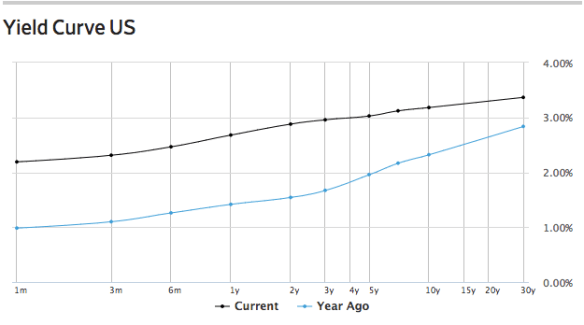
It’s also truly amazing how fast a credit crunch can sweep across markets.

This month, a decade ago, was the mid-point for the toughest 90-day stretch of my financial life. Taking it back to October to December 2008…

  • My prospective earned income went to zero at a time when…
  • My Business/Personal cash burn rate was $10,000 a week. Simultaneously…
  • My net worth dropped by 67% and…
  • I was facing a potential claim 20x in excess of what remained. The one bright spot was my family life…
  • Our first child was born and we were very happy within our marriage.

The only reason I didn’t follow a friend into bankruptcy was a pre-crash restructuring. I had been scared by four events :

  1. The US was offering loans without income verification.
  2. The UK was offering loans without bank covenants.
  3. Down in New Zealand, I used both of the above and borrowed to pay my living expenses at a time when…
  4. I had a personal guarantee outstanding that covered most my assets, and all my net worth.

There is a line in Fooled By Randomness about Russian Roulette. It goes something like…

Even if the gun has a million chambers, there are some games you don’t want to play.

I was enjoying my life and didn’t want external circumstances to force a financial reboot at 40-years old. So… 2005-2007 was a time of significant change.

The restructuring took three years (2005-2007). It prevented ruin, but still resulted in a lot of pain when credit markets slammed shut in 2008.

At the time I was working in the UK. The entire chain of my business life went from Great-to-Insolvent in 180-days (bank, joint venture partner, developer, general contractor, sub-contractors, employer, CEO).

Just like that.

Gone.

2009-2012 were spent clawing back.

Key steps:

  • Downsized family home, spending and aspirations. Embrace Your Hubris!
  • Invested the downsized capital into a Downtown Boulder rental property. Two units, where the little unit’s rental income would enable us to live for “free” in the larger unit.
  • Invested our remaining funds in a redevelopment opportunity that I could hold FOREVER, because it was debt-free and cash flow positive.
  • Turned a loss making triathlon hobby (draining $75k annually) into a cash generating consulting business ($4,000 per month).

By 2013, we achieved cash flow break even. We were so blasted from our young family (up to three kids) that I don’t remember appreciating the significance of what we achieved.

Within my financial peer group, our story is not unique. Lots of people had a similar ride. However, they don’t necessarily blog about it.

Financial memories are short.

Remember.

You don’t get killed by prices falling — price volatility is emotionally painful but not financially fatal.

Companies, Your Personal Ethics, Friends and Families… All can get crushed by running out of cash in a banking crisis.

Where’s your cash flow statement?

Real Estate Review 2018

Screenshot 2018-10-19 10.14.26

A starter home in Boulder is about $1 million => if you can find one.

How do I look at rent vs buy?

Because it is so expensive to sell real estate, I consider a minimum five-year block. I ignore inflation and future predictions.

For our starter home, I assume that five-year rent is $180,000

My alternative uses of the funds, with five-year income shown:

  • Five-year treasury bond $150,000
  • Yield on Investment Real Estate $100,000
  • Yield on Vanguard Portfolio (using my 40/20/40 mix) $100,000

If I buy then I don’t get the income (from the alternatives) and my cost of ownership is $75,000 across the period (maintenance, taxes, insurance).

To keep things simple, I haven’t assumed a mortgage. I didn’t buy my first house until I could pay cash. I earned a premium on my career by being able to easily change cities.

What does the above say to you?

Here’s what it says to me… if you think there is a good chance you will be able to buy during a market decline then rent.

+++

The last time I bought a house (winter 2012/2013), the rental map was bare. Here it is this week…

Screenshot 2018-10-21 09.09.55

Real estate and equity investments have the potential for capital appreciation/depreciation. Real-economic growth drives long-term asset values. I’m bullish for Boulder, Boulder County, Colorado and the US.

With real estate, my capital is locked in and it will cost me ~$55,000 to get out (exit costs are about 5.5% of sales price).

With real estate, you can get priced-out of a market. Relative to what I can afford in Boulder, I am priced out of London, Hong Kong and San Francisco (three cities where my skills are highly marketable). This “pricing out” happened within a five-year window.

Beware of FOMO (fear of missing out), after three years of rapidly rising prices, our minds will extrapolate never-ending appreciation into the future. It won’t happen. Your goal should be financial independence, not real estate ownership.

Inflation, future asset prices, vacancy risk, insurance hazards… can’t be known. Sometimes they can be hedged, insured or mitigated.

I don’t seek to predict an unknowable future. I ask myself, “Is this a good price, today?”

+++

I have a few friends that sell real estate. I watch their their high-end sales to understand the mood of the market.

Nobody needs a 5, 10 or 20-million dollar property. So…

When the ultra-luxury deals start closing with regularity we can assume that we are on the upswing. The last 18 months has been a great time to be selling high-end real estate in Colorado.

+++

I force myself to review: (a) annually, (b) prior to making any new investment decision and (c) prior to changing strategy.

For now, I’m not sure what to do.

My rule-of-thumb, when unsure, is rebalance, watch and wait.

A cash buyer in a credit crunch can count on a 10-20% discount from pre-crunch prices. Given the magnitude of the last downturn, deals were available at 25-40% discounts.

fredgraph

Geographic Reappraisal – Real Estate October 2017

This business insider article about an SF Bay Area house that sold $1 million over asking caught my eye.

Here in Boulder, we’re up 100% over the last seven years. Most of the increase has happened in the last 2.5 years.

Notwithstanding our big local increase, the “coasts” and luxury vacation markets look expensive from here.

The coasts look even more expensive when I factor in…

Schooling – Can I use the local schools? If not then my cost of living jumps by $25,000 per kid, per annum, after tax see the linked article – public, in-state education will save my family $1 million per kid.

Tax Base vs Legacy Liabilities – How heavily taxed is the location? How large are the legacy liabilities (health care and pension) from former city, county and state employees? The large cities of the oldest parts of the US look awful in this regard.

Other costs of living – Cali always surprises me when I run the numbers. I suspect it’s similar in places like New York and Seattle. Costs are 50% more expensive for the rest of my budget.

I am not recommending that you sell. I’ve made a decision to hold through the next recession.

However, the relative trade into “states with great lifestyles” strikes me as attractive — North Carolina, Montana, Idaho and Colorado.

If you are considering taking-the-leap…

Live where you don’t need to leave — can I create a long-term, year-round, local life here?

When I worked in international finance the “top guys” had homes in three or four countries. That kind of overhead has two negative impacts on your life: (1) your ethics are easier to purchase; and (2) you’ll need (at least) an extra decade of full-time office work.

Kill your commute — can I live within an easy walk, or a short ride, of where I spend my time?

When I was thinking about moving to Cali, I plotted my life in Google Maps. I did the same thing for my prospective life in Palo Alto. That gave me two geographic “triangles” and I calculated real estate and family costs inside the triangles.

Finally, surround yourself with people that live a life you’d like to follow. I do best with an active, outdoor life in a location with abundant sunshine.

This last point is important — know what you want — know where you do best.

Applying Wealth Wisely

A reader recommended a book about Living with a Seal. The book is an entertaining read, but I did find myself swearing far more than usual afterwards (burpee test!).

The book is about a marathoner who spends a month training with David Goggins (former seal). Having done extreme training, I think it’s safe to assume the rest of the guy’s life was on hold during his month with Goggins!

Complete control of your schedule and the ability to focus on one thing for an extended period of time.

Whether you want to train with a seal, start a business, write a book or simply get really, really good at something… the ability to control your schedule is the starting point for your journey.

Can you take a month “off” to focus on “one thing”?

A month is a good unit because it’s about what it takes for me to start a new business, write a book or bump my level up in anything.

As an elite athlete, I’d spend 13-week blocks focusing on my sport. By that time, I was already good, and seeking to become the absolute best I could be.

You need time because a second use of wealth is accessing, then following, the ACTIONS of world-class teachers.

Advice without action is entertainment.

I’ve been guilty of throwing money and other people’s time at anything I found unpleasant. It can be a winning strategy but it was a band-aid for unnecessary complexity in my life choices.

If you’re a do’er then work towards control of your schedule so you can learn-by-doing alongside the best.

Parenting is similar to learning to swim — we’re not going to become world class on a couple hours per week!

Make sure your mentors have the sort of lives, and character, that you’d like to emulate.

Chose wisely!

What Makes Real Estate Assets Cheap – Tame Your FOMO

Because we are hard-wired to be poor investors, your family’s best bet is dollar-cost averaging in low-cost index funds. Consistent investing, over your working life, it’s as close to a sure thing as you can get.

Despite, and because of, the above truth, many people are going to dive into the real estate market.

When the masses get into trouble, you can do very well by applying this post.

===

Wait for…

FINANCIAL DURESS — Once a decade, debt markets rapidly contract and everyone has a freak out.

DIVORCE — Corporate, professional or personal — vendors will hurt themselves to damage former partners

MOMENTUM — Collectively, our long-term memory is about three years long. The Great recession ran from December 2007 to June 2009. It took three years years for us to “forget” the asset price run up of 2005-2007.

If you don’t have two-out-of-three then wait. Discounts are coming!

Do work…

INFORMATION — I assume the vendor knows far more than me, and probably you

How can we improve our knowledge?

Wait & study — while waiting for the next crisis… live in the location where you’re thinking about buying. The cost of the rental will pay for itself through better information.

Fundamental Value — do this with every large investment (or purchase)…

A./ What is the net cash flow the asset can generate after current taxes, all operating costs and the investment required to keep it producing cash?

B./ What is the total capital required to purchase? Include every_single_dollar.

C./ How does the implied yield (A/B) compare to the yield on 30-year US Treasuries (currently ~3%)?

Example… across 2014 and 2015, I was unsure if I should sell, or hold. The common wisdom was long-term rates were going to rise and prices would stagnate. Tempting to switch asset classes…

I calculated my cash yield was roughly equal to the, then, 30-year rate.

I considered…

1./ My sites were exposed to the upside from Boulder County economic growth

2./ My alternative investments had lower yields than my existing investments

3./ I would crystalize significant deferred tax liabilities

4./ My existing position was good enough to meet my goals

I decided to sell a negative-yielding asset and hold the cash generators.

NOBODY predicted what happened next, long rates fell by a third, and local real estate values rose by 50%.

FWIW, long rates are back up but fear of missing out (FOMO) is driving the market upwards.

===

When is our margin of safety highest?

  1. Let prices, and transaction volume, fall for two years
  2. Look for a distressed seller
  3. Look for a deal where the cost to own is less than the cost to rent
  4. Confirm your taxed, net cash yield is greater than the 30-year treasury rate

Your FOMO will tell you that the above will NEVER happen.

WRONG!

Since I graduated university (1990), very favorable conditions have happened FIVE different times where I was living.

It takes a long time to build capital and two great deals (in 50 years) will let you meet your goals.

Tame your FOMO and choose wisely!

Effective Real Estate Ownership

When you buy real estate, what’s your goal?

We want to live in a fabulous place, while getting rich on asset appreciation.

It sounds great but the choice of moving into an affluent community increases expectations, and cost of living.

“So what?”, you say.

The hidden cost can be time for our kids and marriage.

In the Great Recession, I changed course…

We aim to create a portfolio of assets enabling us to live for free in an effective public school system that’s close to nature.

In your teens, you will start to make investment decisions… how much to work, spend, save, donate and borrow. You have 50 years to create your portfolio!

Live for free:

  1. In high-school: with your parents
  2. As a young adult: a place where your roommates subsidize your cost of living
  3. Next: a house with many bedrooms — the first place I owned had the capacity to support me via roommates
  4. As soon as I “could afford it” — I made a mistake with a large, expensive to own, flash property!
  5. …but I found myself unexpectedly unemployed and we couldn’t afford it
  6. Eventually, we wised-up, downsized our home, and bought rental properties that covered our mortgage and healthcare.

When my wife is 65, the mortgage will be paid off, the kids will be educated and her retirement self-funded by the residual real estate portfolio.

How much of our cost of living can be permanently covered, or hedged, by this decision?

Most people aspire towards material goods, appearances and spending.

I urge you to patiently buy time, personal freedom and shared experiences.

Most of effective investing is learning, saving and waiting.