Educating A Beautiful Girl

Lexi in MoabAn enduring benefit from working across cultures, races, sexual orientation, body mass indices and beauty is an increased capacity to see myself in other people.

If you look closely then you’ll see that power-seekers have a tendency to focus on the wickedness of “them.” It’s an effective argument employed by the media, politicians and our leaders.

Pointing out “their wickedness” is so common that I search for teachers that are careful to avoid an appeal to wickedness.

A story…

My daughter and I were heading into the supermarket in Moab. People in the desert look different than people in Boulder.

Dad, dad… that homeless guy is stealing all the food.

Sweetie, look carefully, he’s taking his groceries to his car.

With her filters off, my daughter reminded me that I have some work to do.

Another example…

The wealth effect of excessive living is obvious. However, if you look deeply then you’ll discover another, far more subtle, effect. You’ll be able to feel a separation between yourself and other people.

As you separate yourself, you will be prone to seeing “their wickedness.”

The physical separation is in plain sight – education policy, gated communities, exclusive clubs, athletic ability…

In Boulder, we don’t need gates, the price of real estate makes an effective barrier to entry, especially when combined with private school fees (so our children are protected from their children).

If you sit quietly then you will feel a deeper separation. It makes us miserable and allows us to be manipulated.

An antidote…

  • Humility in my own needs
  • Spending time outside my “tribe”
  • Looking inwards at my tendency to hold myself separate

Later in the trip I asked my daughter…

Who gets hurt when you’re scared or angry?

PJs

An Unexpected Teacher – The End of The Little

ax_fro_yoThe early years of parenting are a blur but two memories persist from the first time I was living with a three-year old.

One memory is hiring a full-time nanny and explaining her job description as “get our oldest out of the house.”

The second memory is trying to generate compassion for our daughter by thinking about how sad I would be if something happened to her.

Now that our middle kid is three, we’re in familiar territory. However, this time it feels different.

I wasn’t able to see what follows until I was taught to look for it.

++

We have a mixing bowl that has each of the kids’ names in it.

We draw a name from the bowl and the kid that wins is Kid-of-the-Day.

Kid-of-the-day gets to choose where s/he sits in the car and what shows we watch.

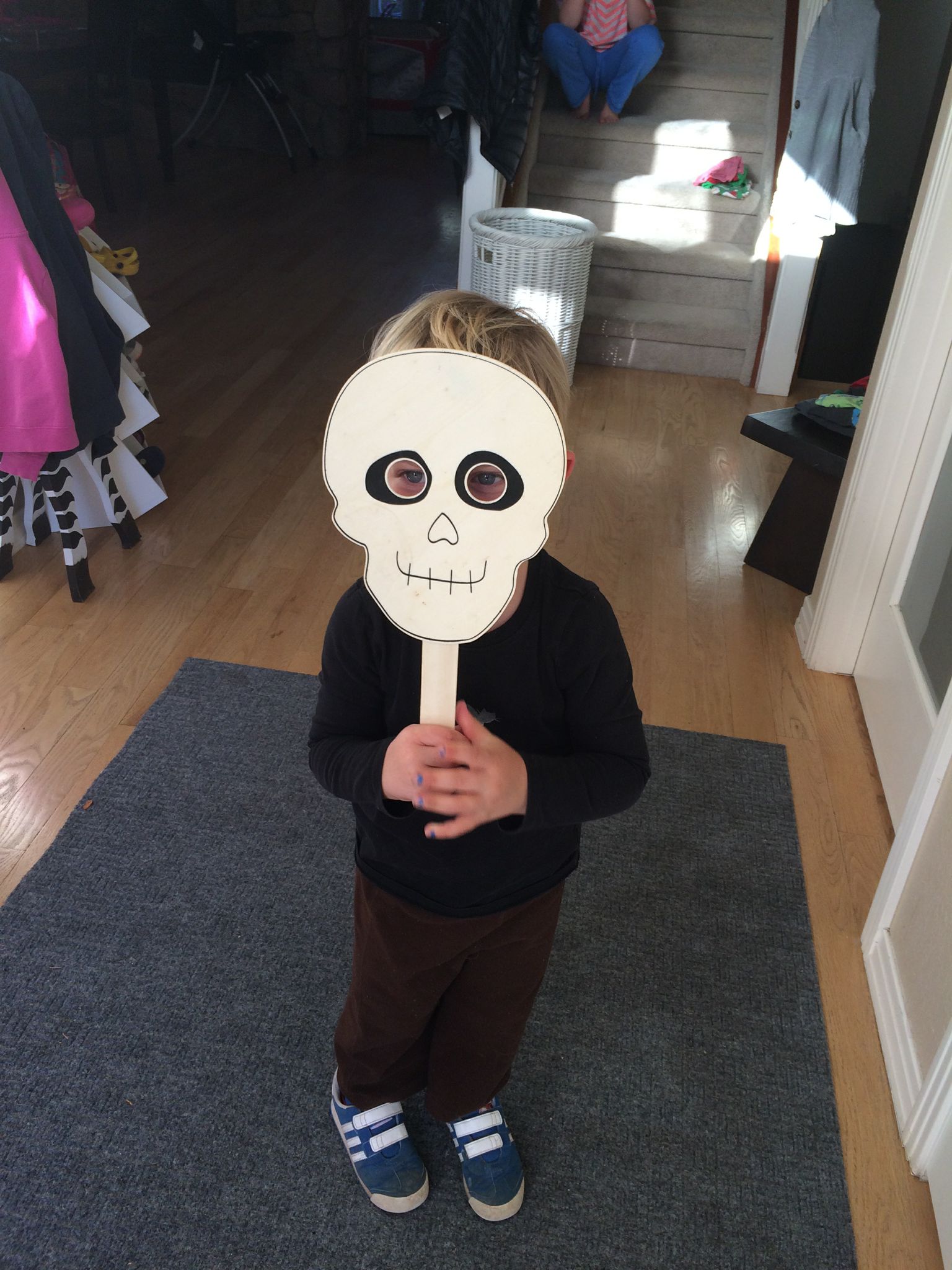
When we drew Bella’s name out of the bowl, my three-year old (Axel) was jumping for joy because it was his sister’s “day”.

The capacity to experience joy for another person’s good fortune.

I’m grateful to be able to see that in my house.

++

I don’t meditate about my kids dying anymore but I often think about my own death.

Through my contemplation, I can see the transient nature of my little boy. He’s arrived at the end of being little. The “little” phase is nearly done.

It was awesome.

I miss him before he’s gone.

I’ve been working with that feeling to get a better appreciation of life.

As the bumper sticker says, these are the good-old days.

++

When things were very difficult with my eldest, I would assign motive and intent to her behavior.

…she knows what she is doing to me…

In speaking with child development experts, they assured me that it was impossible for a little kid to have intent. Possibly, the kids are picking up on my internal struggles and reflecting them right back at me.

Most likely, my experience is dictated by the turmoil in my own mind.

++

One of the most amazing things about three-year olds is their capacity to switch between emotional states (tears – to joy – to tears – to laughter – to tears),

I remember one time my son had me on the edge. It was the second hour of putting him to sleep, I was exhausted and he was making request after request after request…

I was spending considerable energy not acting on my frustration, and feeling like crying, he says… Daddy, I love you.

…and reminded me that we will never regret not acting on our anger.

What I Wish I Knew Four Years Ago About Fatherhood

Lexi_2011I’m told that 2010-2013 were often awful. I wouldn’t know for sure because I have ZERO memory. It’s amazing. Aside from the photos, the early years of my kids are gone.

My wife carries emotional trauma from these years and will flashback when something triggers her. She tells me it’s a really unpleasant sensation.

The memory I have is wondering why I couldn’t transcend my daughter. I used to carry around the difficulties of parenthood. Even when I was away from her, I would hold the difficulties in my mind.

My wife’s the same way – both with her 2010-2013 experience of our daughter as well as with her own childhood memories.

I suspect we’re all prone to carrying around the past.

This might help.

The first step in letting go of an image isn’t letting go, snapping out of it, or moving on…

…my mind doesn’t work that way.

Lexi_CuteWhether you’re coping with an unpleasant emotion, an addiction or a compulsion…

…far better to give your mind something to grab on to.

Lexi_surfDecide on a series of images that you can feel in your body. The feeling you’re looking for is one that mimics joy and love – in my case the sensation in an opening of my heart.

Lexi_FlowerI walk in the forest and contemplate my favorite images.

When I started, I struggled to generate the feelings with the images of my daughter. I kept coming back to the pain image at the top of the page.

Ax_HippoSo I would start with images of my son and transfer the feelings over to my daughter.

It didn’t work well at first but I stuck with it.

I also spent a lot of time with the source of my discomfort.

Lexi_boom

…and my daughter grew up

…and I got better at it

Lexi_science

…and I realized that what I was doing was training my mind to be able to conjure up a sensation, a feeling, an emotion

…that was different to my prior habits of anger and frustration

Ax_scary

The difficult moments remained challenging but I was no longer carrying them around with me.

It was a form of freedom.

I found myself laughing more often and I had a bit more patience, which can be VERY useful when dealing with a cranky three-year old!

Anyhow, if you find seeking dominance to be an ineffective strategy then I hope you remember this post.

Replace your suffering by thinking about things that make you smile.

Bonus points for making the effort while walking in nature!

Lexi_Elsa

When 99 is more than 100

As a young man, I spent my 20s focused on taking myself to the limit. In my 30s, I discovered triathlon and shifted my life towards a devotion to personal excellence. In both periods, I was unable to understand why anyone would bother “being average” at anything.

Whether your focus is academics, finance, wealth or sport — if you spend your time in a group that consists of the top 1% then you’ll be at risk for certain errors.

The first error is a skewed definition of “average.”

Athletics is a great field to see this in action as we’re much less likely offend anyone by telling the truth! Here’s a quote from a former coach…

He’s constantly disappointed in himself because he thinks that he should be able to roll out of bed and drop an 8:35 Ironman.

In other words, our friend has a baseline that requires him to outperform 99.99999715% of the planet.

That’s an extreme case but, if you listen to the dialogue surrounding your favorite sports team then, you can see this pattern repeating itself throughout our elite classes.

As an amateur triathlete, I could beat 98.5% of the field at any Ironman race in the world, yet my performance wouldn’t even register for the top 1% of performers, who benchmark themselves on their peers.

My point, isn’t to correct the attitudes of the elites – an extreme way of thinking is useful to drive extreme action.

My point, is to encourage you to stop and ask, “Is It True?”

When your peers lack diversity, your views are at risk from becoming detached from reality. You will see it most easily in your definition of average and decent.

  • What’s a decent athlete?
  • What’s a wealthy family?
  • What’s a successful child?

Outliers living in the 1% are unable to see the extreme nature of their lives and that can lead to ruin.

It’s not just about aging athletes ruining their joints.

I had a very close friend that ended up financially ruined because he was unable to be satisfied with being more wealthy than 98% of his peers.

Others ruin relationships with children, who are unable to measure up to an unreasonable standard.

+++

Another risk – the best are lazy.

Lazy?

  • …but I train 25 hours a week
  • …but I work 65 hours a week
  • …but I read 100 books a year
  • …but I add more value than anyone at this firm

My capacity for extreme workload requires me to drop everything in my life.

In fact, dropping everything is a “secret” of success.

However, it makes me very lazy outside my domain.

As the youngest partner in my private equity firm, I had staff to shop, to sort my CDs, to open my mail, to cook my meals, to take out my trash… the list went on and on. My approach was to throw other people’s time at any issue that prevented me from spending time on my goals.

Ultimately, behaving like a plutocrat wasn’t the main drawback.

By not placing “love” as a primary goal, I created a pattern of behavior that would have driven every relationship from my life.

It wasn’t until 15 years after my divorce that my family received the dividend of a man becoming a little less successful and far less lazy.

Sweet Emotion

A while back, I greatly expanded my twitter feed. I did this with an expectation that I’d be triggered. The world didn’t disappoint me and I was triggered by God ripping into someone…

Screenshot 2014-09-27 13.43.27

It’s been a while since I was triggered to the point of replying to a stranger so I looked inward at the nature, and source, of my reaction.

Here’s what I noticed:

The essence of powerful emotion is energy. Whether the emotion is anger, envy, grief, fear, love or joy… they are all just energy. It’s up to me to “tag” the energy and classify the emotion – my tagging is a function of culture, context and habit.

The energy has a clear physical signature in my body. I have an opportunity to “feel” an emotion before it overtakes my decision making.

When I experience these emotions they are triggered by something touching the raw nerve of personal weakness.

All strong emotion is an opportunity to discover something about myself, as creator of my emotional experience.

Once I understand the above, I can work at the margin of my emotional life to shape my understanding and experience.

Situations that prompt me to automatically respond are extremely valuable – those are my raw nerves. However, because I was emotionally out-of-control, I need time to process.

My response (to God) was how I settle myself down when I’m out of control. Each One A Holy Soul – is a reminder to myself that people that trigger me are about me, not them.

Those five words distract my mind long enough so I slow my reaction time. My internal life might be unpleasant but, hopefully, I react far less often. Not-reaction avoids the human tendency to pass along discomfort.

Later, I can think about my reaction and try to break-the-chain in my own emotional life, which improves my capacity to achieve serenity.

++

Some principles that I’ve found helpful:

  • Channel the energy of strong emotions into positive action – as a middle-aged man, I’m grateful for the extra energy. I need it!
  • Remember it is all about me, my mind is classifying my experiences into emotional states
  • Remember it is all about me, pain is triggered by my mind touching my own weaknesses. Own my weaknesses.
  • Change at the margin
  • Don’t act on anger

Be brave.

What To Do, when you don’t know what to do

familyA couple weeks ago, I was flying Southwest and the passenger beside me was a bit unhinged. He didn’t seem dangerous, but kept inserting delusional rants into a well-informed discussion of current events.

The rest of the plane was avoiding eye-contact but, with him on the aisle and me in the middle, I didn’t have anywhere to go!

I figured that I’d put my hospice training to work and see what happened…

Six words that can profoundly change your interactions with the world, and through that, the reality that you experience with your day-to-day living.

When I think about my first response to stress, it’s the opposite of the tenets: I know you’re wrong, I want to flee you and I resist you.

My kids make my instincts obvious to me. If your kids are angels then you might have to look into other areas of your life:

  • A dying parent, or patient
  • A chatty stranger on the bus
  • A fellow citizen on the opposite side of an emotional issue
  • A kid yelling FART at my daughter’s birthday party
  • An angry family member

I get a physical signal, a tightening in my chest, before my mind kicks into high gear. The physical sensation is my chance to save myself from falling into past patterns.

These situations leave me feeling scared and unsure what to do. On the Southwest flight, I had to remind myself that the passenger had to get through security so probably didn’t have a gun, or knife, on him. Yes, I was worried that he was going to kill me!

In turn, my fear leads me to close off, or engage by digging into my existing beliefs. Classic flight or fight.

However, if I’m aware of my fears then, I can pause and try to help the other person. When I do this, I’m helping myself because I escape my cycle of fear/closing and/or fear/engaging.

Bearing witness – one of our deepest needs is to be seen, to be acknowledged. Watching how the rest of the world treats the aged, a difficult child or the crazy guy on the Southwest flight… I see that I can do the entire world (or at least my fellow passengers) a favor by acknowledging my seat mate for a little while.

Not knowing – listening to other people speak, particularly odd-ball cranks, there is another voice in my head. The inner voice is constantly disagreeing, challenging, explaining why the other person is wrong.

When I’m quiet enough to hear the other voice, I see it’s not rational. It takes the opposite side to whatever it’s hearing. Much like the initial reaction of my three-year old son!

In a situation that doesn’t matter (like talking to a stranger), play a game where you “don’t know.” You’ll find that it is relaxing to give yourself permission to not-know. In turn, a habit of not-knowing prevents needless conflict with kids, at work and in your marriage.

The “not knowing” exercise is a neat one because, when you see the power of change in areas that don’t matter, you’ll unlock an insight into how the only thing that matters is the little things!

Compassionate action – in the case of my eccentric seat mate, it was easy to see the best thing for everyone was for me to listen, with a mind that didn’t know. In fact, I’ve been doing more and more listening.

If you think about it then I’ll bet you can come up with situations where you had NO IDEA about the right course of action:

  • Friend with cancer
  • Friend who had parent die
  • Friend who had child die
  • Divorcing couple
  • Friend with child with developmental difficulties
  • Depressed friend
  • Friend with substance abuse issues
  • Bankrupt friend

When you don’t know what to do, I hope you remember Joan’s advice.

As for my pal on Southwest, he thanked me for my kindness and scurried off the plane.

He left me with a warm feeling of a job well done.

Be brave.

Micro Courage

axel_lionHow do I cultivate deep strength and resiliency?

We might describe resiliency as…

  • The capacity to continue despite life’s setbacks
  • The ability to become stronger due to stress (anti-fragility)
  • The strength to handle anything

They sound great, grand and completely unattainable!

I’m going to guide you through how I break it down into something that I can action in my daily living.

Start by flipping it on it’s head, what are the characteristics of the not-resilient? Think of the biggest head case you know…

  • Angry
  • Anxious
  • Depressed

When I think about anger and anxiety, they strike me as cultural expressions of fear. At some level, we see angry men and anxious women as normal. I feel both emotions all the time and they make me less effective.

What to do?

Over the last two years, I’ve been experimenting with micro-courage.

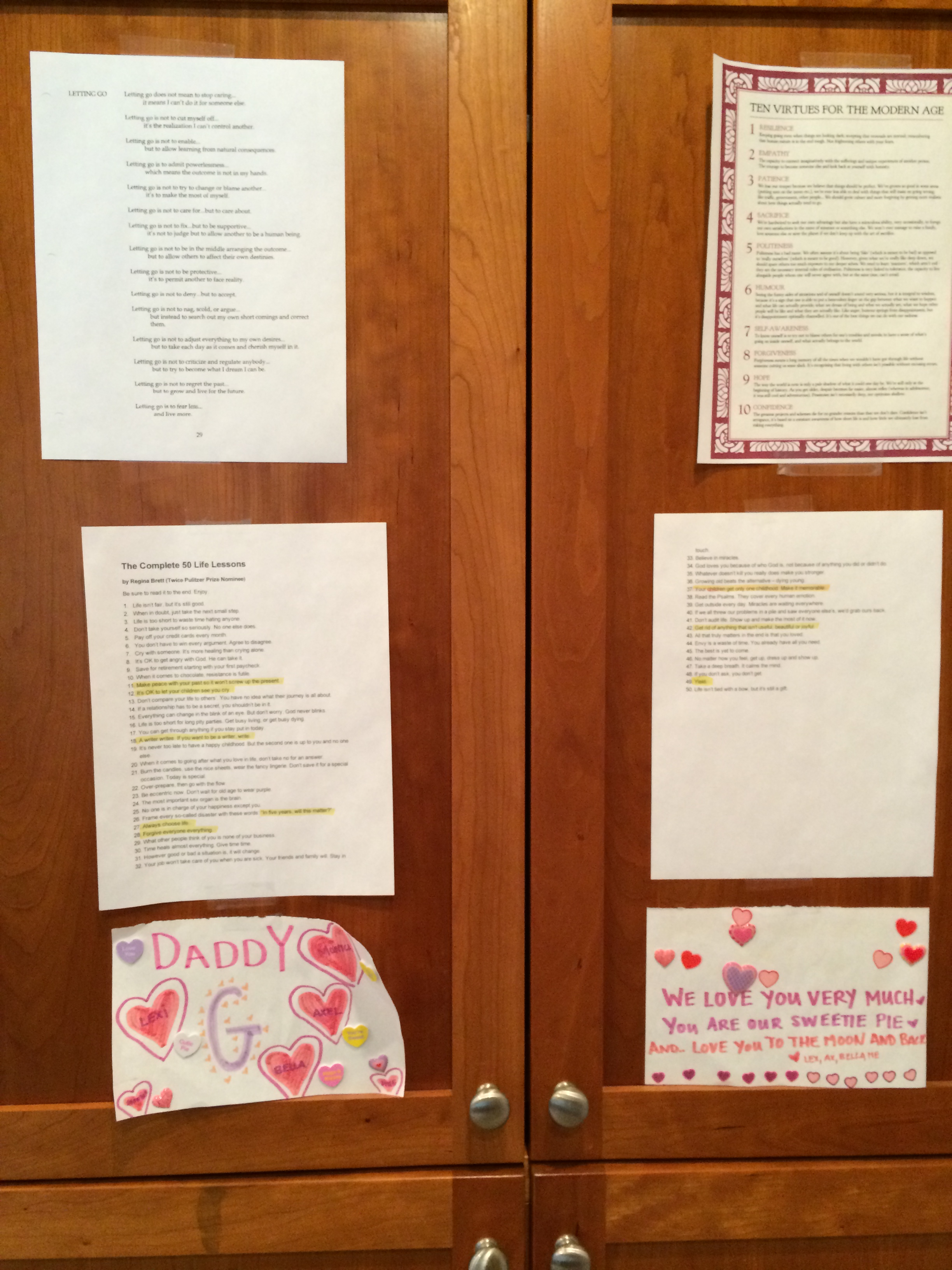
I started by printing up 50 life lessons and highlighting the ones that I wanted to focus on (11, 12, 18, 26, 27, 28, 37, 42, 49). If you come by my office, you’ll see they are taped near my printer…

lifelessonsReflecting on the lessons, I paid particular attention to three:

  • Let your children see you cry
  • Forgive everyone everything
  • Yield

I’d encourage you to find your own (triggers).

The game is to focus your actions on situations at the edge of what you can handle.

Here’s an example:

  • There are lots of homeless folks on the Boulder Creek Bike Path. Some of these folks are violent, others are mentally ill, still others are addicts. As a group, they scare the crap out of me.
  • While I have pals that work with the homeless, I don’t have any clue how to “fix” this problem and often wish the problem would go away (so I don’t have to deal with my inability to deal with it!).
  • Anyhow, there’s one guy that sits by the creek in the 28th St underpass and says good morning to everyone that runs, rides and walks past him. He’s a drinker and can get a little sloppy towards the end of the day.
  • I can’t fix the city’s homeless challenges but I can offer the guy a bit of human connection as I ride by. I look at him, smile and take a breath in. On the face of it, I’m smiling at him but, in reality, I’m staying open to the fear within myself. That’s micro-courage.

The story repeats itself in every part of my life that I want to close off.

I try to “stay open” as many times a day as I can.

The problem can be homelessness, litter, aggression, poor driving, manners, food quality… keep it small, remember to breathe in through your nose with a tiny smile.

Staying open to a small fear, a slight inconvenience, a little bit of sadness… I call it micro-courage.

The habit has been transformative in situations that I used to find overwhelming.

This is what I meant when I wrote that strength comes from staying open to little fears.

Courage is a powerful antidote to fear, anxiety and anger.

Be brave.

Five True Friends

mooseThe Philosopher’s Mail is one of my favorite sites on the web. Happiness is a recurring theme in their writing, as is social connection. As your doctor can confirm, there is a link between social connection and health.

The good people at Philosopher’s Mail shared Epicurus’ recipe for a good life. The link is to a lovely article with snazzy pics of Paris Hilton. The article is worth your time – it describes an antidote if you find that external success fails to lead to lasting satisfaction.

The philosopher’s antidote

  • Five true friends, that reinforce inner values (not the external values of city living)
  • Self-determination by escaping the tyranny of corporate serfdom, regardless of financial cost
  • Daily time for quiet reflection, ideally with low-intensity exercise in nature

It’s an interesting list because most of us will lack one aspect of the troika. In my case, it takes effort to say “yes” to social interaction.

As well, we are usually attracted to people that have external traits that we wish to emulate. This can be a good thing…

  • A politically-connected friend making us feel gratitude that we don’t have the duties that come with being a very important person.
  • A healthy friend inspiring us to start a streak of daily activity.
  • A champion friend inspiring us to persist a little longer at a difficult task.

I have different pals with all of the above and, when I’m at my best, they reinforce good traits in me.

However… I’ve also noticed that my most human, and occasionally screwed up pals, can leave me feeling grateful, useful and valued – three traits that have a strong link to personal happiness.

So while the need for pals is well known, I can lead myself astray. So it’s worth using my daily time to quietly consider…

  • Do I have five people to whom I can speak plainly?
  • Separately, who are the five people with whom I spend the most time?
  • How do those people make me feel?

Once I have insight, it’s up to me to have the courage to change.

Be brave.

Too Painful To Care

Monday I wrote about driving energy inwards to improve myself, my marriage, my family.

Related to this lesson, I’ve noticed a habit of avoiding knowledge that conflicts with my core beliefs. This isn’t anything new – human misjudgment is an ever present topic. However, spotting my own misjudgments can make me far more effective.

Being effective, and making better choices, is a more important to me than avoiding change.

A story.

The Tour de France just finished and I didn’t watch any of it. My lack of motivation was unusual and I wondered why.

The legacy of cheating has been to make it too painful to care. In my case, that manifests in a lack of interest in elite sport. In the case of the wider public, there is an element of truth-fatigue. It’s too painful to discover the reality that underlies an obsession with winning.

I’m using sport as an analogy – it’s an easy one for us to feel, and see in others. Choose your favorite sport and you’ll find a tendency to overlook it’s short-comings. If you can’t see it then ask a foreign friend their thoughts (or simply a pal that likes a rival franchise).

The lesson for daily living is deeper.

  • A friend with Alzheimer’s
  • An elder with dementia
  • A sexually abused child
  • A partner that defrauds the community

In these cases, we will feel a strong urge to “give the benefit of the doubt” to whatever causes the least pain. We will default towards inaction and strongly avoid information that compels us to face pain. I feel avoidance strongly in myself – it’s taken many setbacks for me to overcome.

One of the best lessons of hospice is that freedom lies on the other side of fear. Hospice lets me “be with” my fear of death/disease and feel grateful for today. Gratitude is powerful medicine to carry around inside.

Hospice is “easy” – it’s quiet and I’m not expected to solve anything. My home on the other hand… is often loud and I’m in charge. Maintaining serenity in my own house would be transformative for me, my wife and my kids.

So I look for small, daily, opportunities to practice equanimity:

  • Reading a conflicting viewpoint
  • Avoiding “justified” disappointment in a friend
  • Letting a commute unfold without battling my fellow drivers
  • Not playing into a negative emotional pattern with a spouse, child or myself (!)

Overcoming the smallest things, closest to us, can be powerful.

It takes courage to face pain.

Be brave.

Scoundrels and Rascals

When I lived in Asia, I was taught that desire is a necessary component of deception.

My desire to “be right” often leads me right back to another deception.

Some tactics follow that might help you avoid trouble with rascals that, truth be told, are often entertaining.

They Might Be Right – I get a guaranteed laugh when I tell my wife, “I might simply be different.” She smiles, “yes, babe. You’re different alright.”

When would the other person’s course of action be right?

If we live long enough then we are almost certain to find our present selves holding different opinions from our younger selves.

The Message Not The Messenger – we share a curious desire to bring down others and a glee in catching people being naughty. My opinion of a person can prevent me from learning from them.

What can I learn from this person? this situation?

Turn People into Adjectives – when I’m locked on a person, it’s far more useful to drill down to a description of what’s triggering me.

Think about a person that’s disappointed you and dig, dig, dig… until you move beyond the person and arrive at the behavior. There is always something inside of me that’s being touched by, what I believe is, an external trigger.

Let The Situation Move Away – hands down, the most useful thing I realized. Nearly all my “problems” move away if I stop feeding them. Usually the best course of action is to chill out and let my problems leave on their own.

This doesn’t mean that I support the injustice that I see. I means that I acknowledge that my most effective antidote is being just in my own actions.

Turn problem people into adjectives and correct their behavior in myself.

  • Honesty
  • Courtesy
  • Reliability
  • Kindness
  • Gentle
  • Loving