
An Enduring Source of Happiness

2020-01-28 09.37.55

Clayton Christensen died last week and he left us this article, which was written ten years before his death. His questions…

First, how can I be sure that I’ll be happy in my career? Second, how can I be sure that my relationships with my spouse and my family become an enduring source of happiness? Third, how can I be sure I’ll stay out of jail?

Articles, like Clay’s, encourage us to take positive actions to guide our life path. However, particularly when I was young, I had no idea about my future self.

Frankly, it was tough for me to understand myself in the present => ruled by passions and an energy I could neither understand nor control.

I had radically changed my life when I came across Clay’s article. These changes were heavily influenced by another HBR article, Managing Oneself, which I read annually. Combining the articles will give you more than applying them separately.

For me, it remains a whole lot easier to see “what not to do.” To see where I don’t belong and to consider where my repeated mistakes are likely to take me.

Every mistake, not addressed, will repeat and strengthen.

Via Negativa – defining a life with meaning by knowing what it is not => from 15 to 30 years old… my life was a case study of what not to do.

2020-01-26 16.46.55

Clay makes the point that you need to get going with creating your ethical anchor because, otherwise, you’ll get too “busy” to address the stuff that’s likely to wreck your life!

Career, family and self => here is a question I asked myself for 1,000 days around my 30th birthday…

If this behavior continues then where is it likely to take my career, my life and myself?

Initially, I was focused on other people’s shortcomings. What they were doing to me, and around me. Eventually, I started to look inward, at my own role.

2020-01-28 11.50.00

I was very fortunate to start my career in finance, a field where you can build capital in a relatively short time => 3-7 years learning the ropes => 3-7 years saving money, keeping my personal burn rate down and building the courage to leave.

In finance, winning is defined by making money and, looking back, the people that stand out were the ones unwilling to bend their ethics to make money. My first team was led by these sorts of people and I loved it.

What wasn’t working for me at the time was my personal life, which was filled with periodic alcohol abuse and consistent overeating.

I lacked a central anchor around which to make myself a better person => sport, religion, family, ethical work… there are many ways to “solve” this core need.

My firm, and friends, tolerated my personal shortcomings and tried to nudge me towards better behavior.

I smile remembering their nudges.

If you’ve tried to reason with a belligerent, and aggressive, person then you’ve probably discovered that polite nudging is ineffective.

What works better is time, and the inevitable smackdowns that life delivers to us all.

You might get fired, you might get really sick or injured, your firm might go bust, a close friend might die…

These painful episodes can provide an opportunity to reflect and ask, “Where are my choices likely to take me?”

By 31, the path ahead was becoming clear and it was likely to be filled with regret.

2020-01-28 10.39.11

In my early-30s I decided to spend a lot of time in places filled with people living in a way I wanted for myself => an outdoor life with friends.

I also found a central anchor, endurance sport, which provided a framework to address (some of) my personal shortcomings => binges were pushed into my offseason…

Turns out my “career” after finance wasn’t going to be elite sport. Two problems there. First, I wasn’t able to make much money! Second, another values misalignment with the concept of winning => we excuse awful behavior in our athletic champions.

My central pillar was going to become family, but not because it is fun. Rather because it is extremely difficult in a way that provides meaning and satisfaction.

My problems are an ideal fit for molding me into the person I want to be, forcing me to connect with others and providing me with an enduring source of satisfaction.

Getting yourself to the “right” set of problems can be more useful than solving everything coming across your plate. In my 20s, I was highly productive but not getting anything meaningful done!

Print the two articles out, make notes and take one positive action each day.

Where are my actions likely to take me?


Marriage Mindset

Ax_Dad

I’ve found these helpful.

+++

At its core, what’s marriage?

Marriage is an agreement to never intentionally harm each other.

2020-01-19 13.25.31

I have a strange, and recurring, expectation => a desire to see my spouse happy doing things that I find difficult.

It is unreasonable to expect my spouse to be happy doing things I find difficult.

2020-01-20 10.27.15

Early in our relationship, I made a wise decision.

I gave up trying to teach my wife anything about nutrition.

I should have extended this attitude across a wider range of topics.

I didn’t marry for the opportunity to teach competency to my spouse.

I married for the opportunity to serve.

2020-01-20 13.52.58

Our children have two habits that cause problems in our house: (1) “accidentally” physically hurting each other; and (2) the use of biting “humor” to tweak each other.

Make a habit of avoiding unnecessary conflict.

Start by noticing, there is a lot of it, particularly internally.

2020-01-19 06.48.00

Winners want the ball.

To be fit for leadership, I need to figure out how to deal with this.

“This” being whatever happens to be upsetting me at the minute.

2020-01-20 13.30.57

I don’t need to “figure out” everything.

What I need to figure out is my reaction to the normal ups and downs of life!

I am absolutely certain, my future self will say I could have chilled out more.

Make a habit of yielding as much as possible.

Positive Change

IMG_8697

My inkling for change starts with a feeling that I should take a break from doing something, or seeing someone.

The “someone” breaks happen because I notice that my inner life becomes unpleasant. I don’t like my thoughts when I’m around the person. So I take a break and pay attention.

The “something” breaks happen because I ask myself the question… “where is this choice, repeated, likely to take me?” Eating habits and a couple daily beers would be examples from my life.

Anger, self pity, inaction in the face of adversity, getting really upset about external reality… other areas where “I should take a break”.

Politics, ethical lapses of others, the drama in your media feed… do you need more? So nice to dial it down.

Unfortunately, by the time I notice something is damaging me it’s already become a negative habit.

+++

Do It Now => If take-a-break thoughts stick around then I don’t wait for lent, don’t wait for New Years, don’t wait until later.

I make a change for a month and pay attention.

A month will not create a habit but it is enough time to see if it might be worth the long-term effort that’s going to be required to change.

The sooner I start, the sooner it will get easier to live with the change.

After 500-days, my habits roll along, mostly on autopilot. My job (on the far side of change) is to not screw up the streak, and reduce life stress when old habits start to tempt me.

+++

The Drain of Self-Justification => resist the urge to justify yourself with others. You are going to need that mojo for something useful!

Don’t say goodbye, don’t give a huge explanation, don’t burn bridges… Because…

First, and most importantly, I need all my energy to sort my own life out.

Second, I’m going to feel differently about this situation (and every situation!) later and don’t want to go on-the-record in my mind.

Finally, do what you need to do and be low-key about it.

+++

Peers => pretty clear that you don’t want to hang around your dealer, anger-buddies or gluttony-appreciation crew. The “not do” is a whole lot easier to see.

As a guy who enjoys periodic isolation, it can be easy to think that the answer is walling myself off. Lasting change needs to happen in a way than enables me to live in the world, to connect with others.

What do I want more of?

More of the person who makes me want to improve => I married her.

More of the people who motivate me to set a better example => my kids.

More of the wisdom to see the difficulties I experience are coming from the pain of change NOT from anything to do with other people.

It is not about what we think it is about. All of my difficulties are arising inside of me.

+++

Stress => as an elite athlete, the spring and summer would be spent with a focus on “doing.” Training stress would be high as I prepared for a race. Fall was a time for racing, then assessing. Winter was when I dropped stress down and addressed issues that had arisen during the high-stress period of the summer (or tried to put my life back together after six-months of ignoring most non-sport items).

Unfortunately, the lifecycle of a family doesn’t work on an annual basis!

As a father, I couldn’t just hold on until November…

Being newlyweds was an amazing time and I had my life dialed.

As we added, babies and financial stress => 2008-2015 => my “bad” habits started to return. Financial stress and toddlers are a potent combination if you’re prone to escapism.

I’m not sure if I realized what was happening but I noticed moments when I said to myself “I should probably take a break from this.”

In times of high-stress, keep it together as best you can. It’s going to be tough, for a while. I had a buddy advise, “just don’t get fat.” He’d gotten fat.

Once our youngest started kindergarten, I had the capacity to start making progress (back towards where I was in 2004!).

  • 500 days to make a new habit.
  • Don’t mess with a streak.
  • Pay attention to your triggers => people, places, situations.

So if you are thinking about change… choose one thing, with a low bar and do it daily for 500 days.

Difficult games can be fun to play.

+++

PS – As my friend, Doc Hellemans, says… “exercise is medicine” – picture above is from my 51st birthday lunch.

Fathers and Sons – Mountain Leadership

2019-10-26 12.13.28

An unfortunate reality…

Most educators spend more time with other people’s children than their own.

As a student, and parent, this has worked out very well for me. I’m grateful for our teachers, mentors and coaches.

2019-09-13 14.44.34

Last season, I spent a lot of time in Vail and noticed a gap between Vail Resort’s youtube clips and my actual experience with their first responders. I’ve been considering, “What are the qualities required to lead in the mountains?”

This season, there’s a new boss for Vail. She’s done fantastic work at Beaver Creek and I’m sure her team will sort it out. Everyone looked super-peppy during opening week. Maybe the grumpy guys retired?!

I spent months mentally rehashing my letter to the new boss. Gradually, I turned my “you could be so much more” mojo inwards, towards making myself a better father.

2015-03-18 07.31.56

Since my son could stand up, he’s been passionate about heading uphill. I figured it would take me a decade to get him up to speed. I underestimated the guy and we’ve had a lot of fun over the last year, skiing, camping and hiking.

My son has been eating up The Way of the Warrior Kid. There’s an unexpected overlap between the Code of The Warrior Kid and what he learned at his Buddhist preschool. The code fits with what I’m seeking to achieve in my own life.

2016-09-18-18-01-09

So that got me thinking… rather than figuring out how to fix grumpy ski-patrollers, why don’t we train ourselves to be the change.

  • The best memories of my life (and my son’s) are in the mountains
  • It’s a project we can enjoy for many years
  • It’s a beautiful legacy to leave him
  • It’s local
  • There’s no judges, tournaments, competitions or rankings
  • It provides huge motivation for me to stay in the game

2019-07-16 08.01.59

What would our code look like? Here’s a draft and we can make it our own over the next few years.

  • Fit For Purpose => strong, durable, resilient
  • Skilled => able to get where we need to be, in any conditions
  • Peer, Teacher & Student => learn from the experienced, share our knowledge and work with others
  • Prudent => pause and consider consequences
  • Prepared => we carry extra so we can help others
  • Calm, Humble and Patient => Knowing I need much more of this at home, I will practice it in my favorite environment. These traits are also on my (hotshot) son’s “to do” list.

The lesson here isn’t about the mountains.

The mountains are our story.

The lesson is to pay attention to passion and use childhood interests to create a value system for navigating the world.

Let’s fill the world with positive memories for our children.

How I Watch Sport

2019-11-08 16.19.44It was the family’s first water polo tournament this past weekend.

2019-11-08 12.46.22It’s worth spending time to understand what YOU want from sport. This will let you see if your desires line up with the reality of your sport-of-choice.

I’ve seen enough to decide it’s best if I focus primarily on my kids’ sport.

I have one overriding goal for my kids.

Create an enduring positive association with exercise.

Former athletes, bitter athletes, non-athletes… they can lack the positive association and it costs them.

It is easy to get distracted by winning, skill development, playing time, parent board politics…

Create the positive association!

ax_poloSo, when I watch:

  • Sit passively and try to learn what’s going on => my kids don’t do “my” sports
  • Very little feedback => only positive, given 1-on-1, after they’ve slowed down from the event
  • Be seen in the last third of practice (it’s the only part they remember) => use the first 2/3rds of practice to do something useful => I buy groceries then read a book
  • Phone put away (ideally in airplane mode – warn your spouse you won’t be taking pictures or answering questions)
  • Listen to, and work through, coaches => reinforce a consistent message => you need a team (and school) culture that matches what you teach at home => if your teen tracks into a single sport then her team becomes a key reference point, at an important transitional point in her life
  • Ample healthy snacks afterwards => do not train the “exercise-sugar-reward” cycle, as it will haunt them forever!
  • Drive them with no music, no electronics => create a forum to ask about life issues => no taboo topics, everyone gets to speak (or not speak)

If you’d predicted that I would enjoy doing the above, even three years ago, then I would have said you were high.

The fact that I look forward to these times shows I am incapable of predicting where life will take me!

2019-11-08 17.39.27Take the above together:

  1. Dad is there
  2. Dad’s not on his phone
  3. Dad talks about anything
  4. Food rewards are healthy snacks => strong food
  5. Dad is always happy to see me afterwards

Building these habits was a major pain in the rear.

The phone habit is a tough one!


ax_g_poloI’ll end with a story.

My son is the youngest on the team and he has a concern, he might drown.

Bro, there’s no way you’re going to drown. You’re going to pass out and that’s no big deal.

I’ll Superman into the pool, we’ll pull you out and I’ll stay with you until you wake up.

You can even go back in, if you want.

Thanks Dad.

2019-11-09 16.01.23

Considering Wealth at the Real World Risk Institute

2019_HalloweenTo shake up my thinking and expose myself to highly-believable people, I attended the two-day program at Nassim Taleb’s – Real World Risk Institute.

You can find my daily notes here. Cleaned up digital version of my notes here.

What follows is my thinking on wealth inspired by what was presented. Mistakes are my own. I can hear things differently than what was actually spoken, so don’t assume my attributions are strictly accurate.

To prepare for the clinic, I re-read the Incerto and I’m glad I did it. Each pass through Taleb’s work provides additional insight. You can find his lectures and lessons on YouTube => well worth your time!

We live in a world where a single bad decision can have massive costs => a few thousand dollars and four days of my time is a small price to (try to) think better.


One of the aspects of my job is guiding the transition of wealth between generations. This sounds sophisticated but it’s a role played by elders and parents in every family system.

My personal greed makes me too focused on financial wealth. It takes effort to step back to see wealth as including:

  • The ability to say “no” to others
  • The ability to keep promises to myself
  • Control of my schedule
  • Health, athletic functionality and contentment within my body
  • Love and companionship – the ability to share experiences
  • Engagement via teaching (my kids, my students, anyone who’s open to implementing what I’ve learned)

What I’m shooting for is creating a strategy, so effective, so straightforward, that an idiot could execute it and preserve wealth access generations.

This is what Taleb calls “Zero Intelligence Investing” but we are focusing on a broad definition of family wealth, across generations, through time.


The impossibility of prediction

Joe did an excellent job of demonstrating how complex systems (even those built on very simple rules, defined by the observer) can be impossible to predict. More specifically, certain systems can only be understood, defined, by running them forward in time. He laid out a host of reasons, any one of which could prove the folly of prediction.

Consider your own life. Cut your age in half, how would you have defined wealth at that age? In my case (25 years ago) the list might have looked like:

  • Wine, women and song
  • A ton of work that pays well
  • Watching my personal balance sheet grow
  • Being very strong in the gym
  • Travel to new places

There was no way to predict my values (today) without living through the 25 years from then to now (the divorces, the insolvencies, the setbacks, the pain of toddlers, the post-traumatic growth).

Because of the role of time in life, we can not predict the future.

However, we can have useful ideas about what not to do. We can get a handle on what might ruin our families.


So if my goal is to preserve, ideally grow, the collective wealth of my family system what can I do.

  • Be vigilant about ruin (in fat tailed environments)
  • Spot, discuss and remove fragilities
  • Position the family to benefit from positive optionality

One of the things Taleb does best is consider his best ideas across domains, gain insight then translate his insight to the reader via real-world examples. It is the secret sauce of his success.

BUT, reading great ideas doesn’t improve my life! I need to go the next step and tinker with a limited number of outstanding ideas.

Who gets the benefit of your best ideas?

Taleb’s best ideas…

Ruin via the fat tail hitting my fragilities => fancy way of saying don’t blow yourself up! I’ve written about this a lot: Taleb’s written about Russian Roulette => his 1,000,000 chamber gun story in Fooled by Randomness changed the direction of my life.

In the seminar we talked about the non-zero risk of a “zero-risk first cigarette.”  Why does a (near) zero-risk choice have a non-zero risk in our lives?

“In life, you must assume that you’re going to take the risk again, and again, and again.”

This completely changes the calculation with regard to the “first” taste of risks that might ruin you: alcohol, rage, opiates, cocaine, sleeping pills, infidelity, felonies, roulette, recourse leverage, luxury spending, unnecessary capital projects… things with the potential for large and unpredictable downsides. Bad habits are always trying to seep into my life!

So, to preserve wealth, you need a process to remove your fragilities, because these are what’s going to ruin you. My family history has persistent, recurring fragilities that hit us hard.

The first step is to gain control of your schedule and create space so that you’re able to think more clearly about what can ruin you. Simplify.

Another great insight – life is not about avoiding risk…

“Take chances, lots of them, and focus on areas where volatility works for you.”

In an uncertain world, one of the best sources of optionality is non-recourse finance.

My first career (Private Equity) could be described as getting overpaid to hold a call option over other people’s work, using other people’s money, without recourse.

Negative action is powerful medicine, with low side effects.

It’s tempting to ask Taleb “what to do.” I did, twice, and he didn’t seem keen on advising positive action with regard to an unknowable future. That’s probably good, as I’m not equipped to implement, or even understand, his technical advice. However, his negative advice (on what to remove) generated huge wealth for me => my total cost was the price of buying Fooled by Randomness on Amazon ($10.17 in December 2005 – my Christmas 2005 reading list, you can skip the flat earth book, the rest were great).

There are many sources of optionality:

  • where I have limited competition
  • where I understand the domain as well as anyone
  • where the cost to enter is small

A few ideas:

Get married, have kids, then take excellent care of everyone (!) => dementia is in my family tree => doing well by my family is the “cost” of a call option for times of future stress => an option that has a constant payoff in companionship, personal growth and a semi-captive audience for teaching.

Technical education in a robust field => look back in time for Lindy professions => spend time and effort for continuous education

But be careful, the “honors” part of my college education (1st class honors Econ/Fin) proved to be technically useless. However, it helped get me a seat at the table in Private Equity. The overall degree taught me valuable skills with regard to financial accounting, programming, mathematical finance and calculus.

Knowing how to count, and being exposed to the way people seek to cheat you, these are useful life skills to prevent ruin. – quote mine

Other sources of optionality => tinker within your social network, attend conferences (and force your introverted self to speak to people), write (then publish), talk to believable people that disagree with you, donate time to people who might benefit from your technical skills (especially within your local community)…

Your body can be a call option on: future mates, future physical experiences, the ability to lift your carry-on overhead as you age…


So the “how do I stay wealthy” answer is about removing fragilities => cutting back a high cost of living, habits with large potential downsides, physical weakness…

The “how do we best grow wealth” answer is about exposure to opportunities that open up the possibility of growing True Wealth (connection, experience, engagement) => each generation can, and should be encouraged) to, contribute based on their current, unpredictable and changing definition of wealth.

Together the family creates its own definition of wealth.

Each generation re-defines wealth based on its collective values.

I would have learned more if I stayed for the entire week but it’s Halloween tomorrow and I got more than enough from the experience.

Growing Up

11_Lexi.jpg

Our oldest turned 11 this month.

We are past the fog of the early years and moving away from a moment-to-moment focus.

The way things have played out:

  • 0-6 years old => learn to get along with others
  • 6-12 years old => learn how to learn
  • 12 years old onwards => learn how to live independently

With a desire to prepare the kids for Phase Three, I ask myself, “How do my kids see me act?”

I find myself lacking at this transitional point.


My kids’ teen years will not be well served by listening to me complain. Complaining is endemic in my demographic, usually about the shortcomings of others.

Most my complaining is internal.

Likewise, they won’t be served well by watching me manage a team of staff to cater to their every whim. You see, my strong marriage (today) is a function of a decade of outside assistance around our home. Creeping ever-upwards, this outside help had a side-effect of my kids getting used to being waited on (and me doing less at home).

Beware of the double-whammy => complaining about the staffing required to take care of things you’re unwilling to do.

So I need to change, but what should I change?

My situation or my attitude?


Start by considering what you know is true. In my case…

We have stable finances, a loving family and good health

I’m thinking that this indicates that I need to adjust my attitude rather than my situation.

That block quote is a worth considering in your own life.

Are your problems your problem?

My problems aren’t my problem. I have great problems. I’ve done a good job of improving them.

But it is more than my attitude that needs adjusting.

An improved attitude will correct the faulty thinking inside me but it will not prepare my kids to live in the world.


My kids have _really_ short memories => they are completely dominated by the recent past.

With this in mind, I’ve been playing a new game => introducing my family to TINA (there is no alternative).

The game is cutting outside assistance (nannies, sitters, au pairs and cleaners) and consolidating our schedules. It’s a test if outside help really helps.

We are three-quarters of the way through a reduction of ~4,000 hours of annual assistance. TINA forces us to “work it out” and gives us an incentive to train the kids.

Now, being pointman on cleaning our toilets has not improved my life.

However, and this is an essential insight, my_life_is_no_worse after I have removed the outside assistance.

This lack of negative impact makes me wonder, “Did the decade-long upward creep of spending actually made my life better?”

In the heat of the preschool years, it most certainly did.

However, my kids aren’t the only ones growing up.

Helping Kids

lexi_11I’ve been playing a game where I greet “challenging” kids by name and try to chat with them.

I am leaning against an urge to avoid them.

I aim for a kind word because it is tough to go into an environment, daily, where you’re not fitting in.

An environment where you could be forgiven for thinking that you are being told that “you” are unacceptable (rather than your behavior).

Some of these kids have no safe haven.


I was asked,

If he was your kid then what would you do?

I’ve been thinking about it => Kindness and Mastery.

I would teach kindness by improving the way I interact with everyone around me => his lack of kindness is likely taught at home.

I would find a way for the kid to demonstrate mastery to someone.


Consistent Role Models => I’m in my kids’ lives and I am modeling the behavior I expect from them.

I’m showing my daughters the sort of husband I would like for them. I’m showing my son how I’d like him to act in the world.

The role model doesn’t need to be you.

In certain domains, it is better if I act through peers & coaches.


Where’s The Win? => for yourself, and your kid

  • Where is the “win” in your life?
  • What are you projecting on to your family?
  • What can your kid excel at?
  • If he’s disengaged then are you fully engaged?
  • Might he be mirroring your relationship?

If I see a challenging kid do something well (sport, kindness, reading) then I go out of my way to give them props.

Around my house, I am quick to point out when my kids do something better than me and I acknowledge my mistakes.


Sports => If you find yourself with an aggressive kid then give them a socially acceptable physical outlet.

Moguls, cliffs, chutes, mountains, camping, water polo, medley swimming, jujitsu, BMX, skateboarding…

…activity is superior to modeling anti-social behavior on electronics.

The activities my kids most enjoy don’t have a scoreboard and we don’t go near judged sports.


For lollapalooza effects, combine the above => demonstrating mastery to a male role model will reduce anti-social behavior in boys.

Our children will get the attention they crave one way, or another.

What I Talk About When I Talk About Building Wealth

SuperGirl

When people ask me about asset allocation, I guide them towards family wealth.


Over your life, you will see things blow up.

  • Jobs will be lost
  • Divorces will happen
  • Guarantees will be called
  • Companies will fail
  • Investments will go to zero

Certain habits make us more prone to blowing up:

Debt – fixed obligations can ruin you in bad times.

Lack of emotional control – this runs deeper than, say, anger management.

People who make a habit of rationalizing a lack of control in one domain (elite sport, closing a sale, acting in a client’s best interest) rarely have the capacity to control themselves across domains. If you might get caught, then you’re fragile.

Substance Abuse – it’s more than the cost of sorting yourself out – it is the lost opportunity of a life well lived and the impact on the rest of your family, especially your kids.

Spending vs Cash Flow – personal spending, burn rate and fixed costs => the more spending you have relative to cash flow, the more fragile your finances.

The above is a long way of asking, “What aspects of your life might blow up?

Which is a polite way of saying, “I’m not sure asset allocation is the most pressing issue in your life.

If you work in an ethically-challenged field, have a lot of borrowings, have a high burn rate or are surrounded by peers with issues…

…then tweaking portfolio construction is a lower priority item than immediately removing what might ruin your life.

I’ve done it. You can do it. It’s better on the other side.


How large is your current portfolio when compared to your lifetime portfolio? – AKA you might have more wealth available in your career than your portfolio.

Investing is different at 25, 40 and 55 years old.

The nature of “different” depends on your personal circumstances.

#1 => Consider your Core Capital. The single best thing I did out of college was save four years of personal living expenses, $100,000 in the mid-1990s. It sat in a bank account, while I worked my ass off at my career.

Having that money enabled me to choose better and choosing better became a habit.


Very, very, very (!) few people can be professional investors – AKA can I get rich by beating the market?

Take an honest look at the people that you know in finance. How many of them “got rich” from their own money? Remember these are the experts.

In finance, most people get rich due to the rules of their game and collecting pools of other people’s money (your money, by the way).

With your portfolio, keep it safe, simple and low-cost. A target-date fund makes a nice core holding.

Having my Core Capital enabled me to take more risks in my career path, and life experience => not with my Core Capital.


Once-in-a-lifetime opportunities happen once a decade – AKA great deals happen when credit markets are shut

Here are the assets I own and why I own them:

  1. Index funds => long-term, diversified, not linked to my home real estate market
  2. US Treasuries/Core Capital => 5 to 10 years family expenses
  3. Boulder real estate => A relative value play against California, a cost-effective way to raise a family and a fantastic outdoor life. Think very carefully before locking yourself into any location. As a young man, my lack of ties enabled me to jump at great opportunities.
  4. Cash => my early retirement was funded by three deals I did coming out of the last credit crisis. Once you have your Core Capital (say, five years living expenses) then building up a pool for “great opportunities” is a consideration.

Starting out? Read this PDF.

Be wary of home bias => you can see it in my portfolio => even more risky is having your balance sheet, retirement and job reliant on the success of your employer.


Switching Costs – AKA think carefully before you sell good assets

I have assets in my portfolio that I would not buy at today’s prices. Financial theory tells me I should sell these assets.

  • I have zero confidence in my ability to predict the future.
  • If I sell assets then I pay taxes and commissions.
  • After selling, I have to figure out where to put the capital.
  • I doubt any “new” plan will be better than my current plan, which is simple and low-cost.

Release yourself from constant optimization => good enough is good enough.

Put your efforts into being a better version of yourself.


Where Markets Fail

2019-10-06 15.14.46A decade ago, I tried to assemble a group of investors to build an aquatics facility in Boulder. The project was getting its land for “free,” yet we struggled to get the economics to make sense.
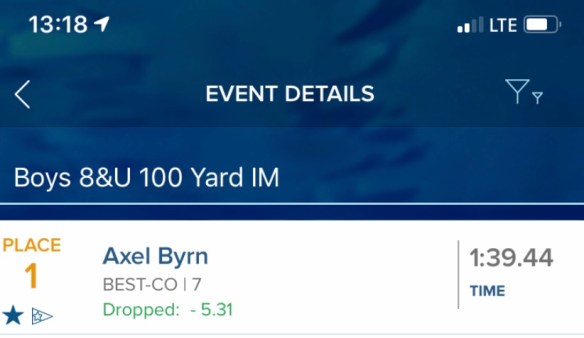
Fortunately for my family, the taxpayers of a neighboring county approved a school bond issue that financed a world-class aquatic facility.

My kids have some of the best memories of their life associated with this building.

Ax_IM


I’m reminded of a few things each time I visit.

It’s impossible to capture the value given, and problems avoided, by making athletics available to all the young people of your community.

The picture below shows what I mean: 8-18 year olds improving themselves, daily.

2019-10-02 18.41.13.jpg

I’m grateful to the taxpayers, school district and people who made it happen. People I’ll never know.


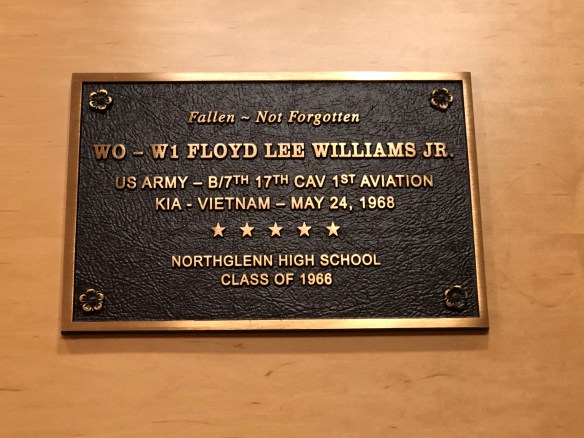
The facility is dedicated to our veterans and there are plenty of memorials around the property to spark conversations.

2019-10-02 19.02.51.jpg

#1 for me is the plaques remembering the district’s graduates, who died in foreign wars. Most were just out of high school, not far off the age of my kids’ favorite cousin.

Tom was CJ’s age when he was killed in Vietnam.

2019-10-02 19.02.56.jpg

That’s a lot of living given up, by people I’ll never know.

The older I get, the more I feel their sacrifice.

When people talk about the challenges facing our country, they’re correct.

However, the challenges are not unprecedented. I will never know what it’s like to go to war out of high school and watch my buddies die in a foreign country.

My kids might not understand for a while.