Athletic and Business Humility

kona27

When I think about success, I experience the human quirk of self-attribution bias.

In other words, I believe that my failures are due to external circumstances (those damn flat tires) and success is due to my own efforts (my life today).


parade

In athletics, I played the game of Ironman Triathlon (swim 2.4 miles, bike 112 miles and run 26.2 miles). Two observations about the game, at the time I played it:

  1. Very few people were willing to subject themselves to “proper” training
  2. Most winning times (today, any venue) would have been world-records when I raced

Two ideas flow from these observations.

First, if “winning” is important then find a narrow niche where you enjoy working your a$$ off.

Second, in a field where not many people are willing to do-what-it-takes, be cautious with your self-assessment.

World class is a lot easier when you’re not competing against the world!


thegirls

I was able to play triathlon, because I spent a decade playing Private Equity, in Europe and in Asia.

The only way you can lose this game is by going bust:

  • Gather money every five years => each fundraising created a stand-alone “fund”
  • Split each fund into a dozen deals, invested over 3-5 years
  • Use borrowed money as well as equity
  • Wait 4-6 years then sell the deals and keep 20% of the profits

What makes this game interesting is the “house” received an annual commission (2% of equity).

Over the last fifty years the sector went from ZERO to over $500,000,000,000 annual volume => generating a lot of fee income and creating a buyer’s circle where your competition bid up the assets you already own.

If you think you missed out because you weren’t in finance then you might be mistaken. Similar dynamics have been in play in your real estate market (and sectors touched by venture capital).

From 1980 onwards, rapidly increasing assets under management wasn’t the only tail wind.

There was the long term debt cycle (10-year treasury rate from 1/1/1979).

fredgraph_10.png

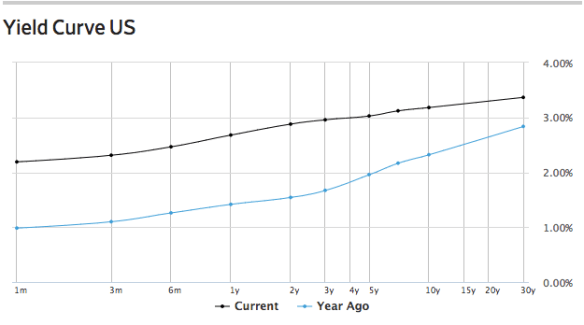
Chart looks similar if you use 30-year treasury rate…
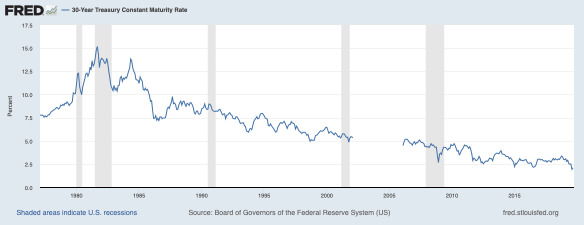
fredgraph_30.png

…the debt cycle fed into the stock market (y-axis log scale, SP500 from 1/1/1979).
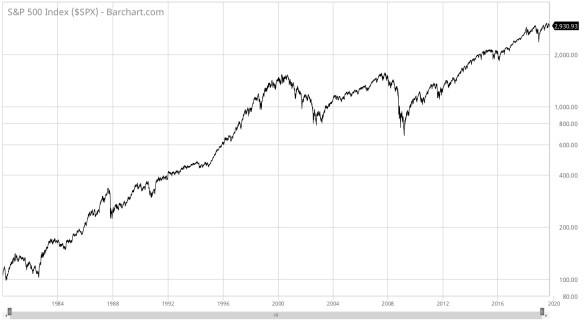
SP500_40.jpg

I started high school (37 years ago) in the bottom left-hand corner of the stock chart. Is it any wonder that I expect things to always work out?

It is human nature to associate my effort with my results. Some will say this association is obvious!

I am not sure. I know that I ignore external factors and hidden evidence:

  • of people who worked hard and didn’t succeed
  • of crooks and bozos that have done very well

My mantra, “Let’s be careful and remember we are far less talented than we think we are.”

What To Do

2019-09-23 08.07.06-1Between summer day camp and the school year starting mid-August, I’ve had two months of a relatively quiet household.

I used this time to re-read Taleb and Munger. You can find my full notes here.

My initial purpose of re-reading was to figure out “what to do.”

It is far easier to be certain about what NOT to do.

Do you know what can ruin your family’s life?

I do.

  • Racing, especially high speed downhill => physical ruin leading to a downward mental spiral.
  • Alcohol use => historically, my average daily consumption is either: (a) zero; or (b) slowly trending upwards.
  • Anger => if I am going to screw up a key relationship then it will be when I act on anger.
  • Death by Accident or Avalanche

What is your list?


Assets and spending do not create a life with meaning.

My true job is keeping our cost of living down so we maintain the ability to control our schedules.

  1. Be wary of adopting the preferences of others. It’s easy to sign yourself up for millions of lifetime spending that won’t mean a thing to you late in life. Worse yet, you will pass these values to your kids and they blow whatever you leave behind.
  2. Pay attention when you notice “better” doesn’t make a difference. “Wasn’t worth it” happens to me a lot.
  3. Pay attention to the cost you pay in time and emotion => it costs me a lot of worry and stress to get more money. Way easier to spend less.
  4. Once you are beholden to a third-party, you’ve lost.
  5. A lot of times “worse isn’t worse.” We adapt very quickly to setbacks.

We discuss case studies at home. Housing, vacations, cars, the endless “needs” my kids and I dream up.


So while I’m removing things that can ruin me, and beating down my hedonistic tendencies… What to do?

Wait for the fat pitch.

A key benefit of a good position is being able to wait until the credit cycle swings in your favor.

The longer we have to wait, the better the opportunities. Cutting rates, running trillion-dollar deficits at the top of the economic cycle… there will be great deals eventually.

I’m not excited about any asset class right now.

  • The bond market is telling me that we’ve pulled 5-10 years of returns forward.
  • Net yields are under 1% for real estate that I’d like to buy.
  • The rest of my balance sheet feels like “enough” exposure.

I’ve decided to make no material new investments. We are going to periodically rebalance and I am going to reduce my cost of living.

What to do?

Enjoy nature with my family and pass my value system to my kids (by living the life I wish for them).

Years, Leverage, Time and Ruin

2019-09-10 07.55.51The benefit of creating a good position is you can choose not to leave it.

Each time I change strategy, I open the door for error.

2019-09-10 06.08.38A quick review, I calculate financial wealth as:

Net Family Assets [divided by] Annual Cost of Living

The formula spits out an answer in years, not dollars.

To figure out if an idea is “worth it,” I convert to years.

I also consider:

  • Leverage: do I have to borrow, what’s the total dollar value of my exposure, how large/far can things move against me?
  • Time: I have control of my schedule – might this idea change my ability to control my schedule?
  • Ruin: reputation, relationships, finances, health… how does this idea change my exposure to ruin?

I have a lot of (bad) ideas. Thankfully, most don’t get through my filters.

These filters work with EVERYTHING… alcohol & drug use, mistresses, felonies, off-balance sheet financing, sleeping late, losing emotional control, binges…

2019-09-07 06.15.45

How can I put “years” into family wealth without increasing my risk of ruin?

In 2009, we executed a four-year plan that put us in a better position.

A key part of that plan was downsizing, borrowing (30-years fixed at 3.25%) and pulling 65% of the equity out of our primary residence.

It was highly inconvenient to change and we expected the smaller place to be a step down. However, our minds adjusted and we love our existing place. The move paid off in “years”:

  • Our current place runs at half the cost of our old house.
  • The capital we withdrew, earns enough to cover the cost of our current place.

I looked at moving again but there wasn’t any benefit to us after taxes, commissions and hassle. So we’re going to wait and watch.

Remember, “doing nothing” maintains an option to (make a better) change later.

2019-09-05 19.33.32The Elephant(s) in The Room

Childcare and school fees have been a fixture of the last six years. It has been a big number – about double what we pay in housing costs.

Our youngest is in Grade One (yay!) and we just lost our favorite sitter (not so yay). The result is a big slice of the family budget gone.

My first thought was to replace help with even more help. I have a habit of throwing money and other people’s time at my problems. It’s a carryover from my days in finance – where I aimed for maximum subcontracting in my personal life.

Then I had a thought…

  • Consolidate the kids’ schedules (we often have three in three different places)
  • Help out in the afternoons (I’ve done nothing for a few years)
  • Take over the cleaning (ditto on my lack of input)

It’s ~20 hours out of my week => prior thoughts on money and time.

The other elephant in the room is my cash flow deficit. It’s been rolling at 4% of assets for years. I’ve ignored it because our assets have been appreciating at a faster rate. My comfort with deficit spending reminds me of 2004-2008.

So I could “buy” the family a shift from a cash flow deficit to a surplus. Worse case, I crack a bit and hire local kids to help me out. I’ll still cut my cash burn by ~80%.

When I explained my plan to my wife she asked if my plan would make me happy. I said,

“I don’t expect to be happier but I noticed that being a better man never made things worse.”

Cash Holdings in Context

2019-06-09 07.03.52The Algebra of Happiness is a great read. Professor Galloway has a hit on his hands.

In the book (page 83), Professor G says “I’m 80% in cash.”

I am used to hearing about wealthy guys’ portfolio allocations, I didn’t give it much thought.

However, his statement caught my wife’s attention (Big Time) and I spent a while explaining why I’d give the Professor an “incomplete” on this short section (of an excellent book).

Here’s what I said…

Start by laying out your sources of income:

  • Social security
  • Day job
  • Consulting gigs
  • University professorships
  • Unearned portfolio income
  • Rental property income
  • Tech fund consulting
  • Royalties from bestsellers
  • Spouse’s income

The segments, and the total, are useful to review.

These are figures you should know, roughly, off the top of your head.

Now, consider the information against your core cost of living.

I guess Professor G’s core cost of living is well covered by his sources of income. I’d further guess that his balance sheet has his family’s living expenses covered for the next hundred years. He is unlikely to be hurt by any investment strategy he selects.

The spread of your income sources will show concentration and diversification. Concentration can ruin life as you know it. You are likely to have skin in this game.

Addressing concentration can save you from ruin. Tweaking asset allocation, less so.

+++

Next, consider the areas of your life that hold option value:

  • Youth
  • Education
  • Ownership (bi-coastal real estate, start-ups, portfolio investments)
  • Wealthy relatives
  • Carried interest in tech firm general partnerships
  • Fame
  • Bestsellers
  • The ability to spend less
  • Equity stakes people toss you for being an entertaining non-executive director
  • World-class skills in well paying, niche specialties

When successful people talk about holding a lot of cash, they rarely mention the MASSIVE option value in the rest of their lives.

+++

What is cash?

As I write this I have six weeks’ living expenses in cash.

Seems really low!

  1. What if I add my US government bond portfolio?
  2. What if I net my unearned income sources from my core cost of living?
  3. What if I take a part-time job in one of my niche specialities?
  4. What if I downsize my house by moving?

In that case, my six weeks of cash should see me through to my 75th birthday.

Incidentally, I did all of the above 2009-2012 after my professional life was crushed.

Thankfully, I had a large cash holding at the time! 😉

+++

What should you hold in cash?

When allocating capital, most people want to receive a forecast of the unknowable.

Avoid pundits, forecasters and the predictions of others. They are worse than useless.

Each time I make an important decision, I write a file note to myself. Sometimes I publish these notes! Do this for 30 years and you’ll have a written record of your strengths and blindspots.

I use my limited attention to consider the implications of being wrong.

Overweight in cash and I am right:

  • Rich already => no implication, if you’re not satisfied with what you have today then you will not be satisfied with more tomorrow
  • Rest of us => Need to decide when to invest
  • Rest of us => Need to decide what to invest

The track record of “rest of us” is clear. We do an awful job at market timing and dynamic asset allocation.

Overweight in cash and I am wrong:

  • Rich already => no implication, my unborn grandchildren inherit less unearned capital
  • Rest of us => my widowed wife runs out of money in her 80s
  • Rest of us => I become a financial burden on my adult children

Some games you don’t want to play.


Memories of a credit crunch

2019-05-28 06.43.39I’ve been offline for a bit.

Spending time with my family in Mexico.

+++

I’m fond of reminding myself that the cost of the status quo is hidden.

I like to take breaks from my “status quo” and pay attention to what I have been missing.

+++

Since last July, I’ve been pulling the plug on the internet for 5-7 days at a time and writing notes in a memo pad.

Via my breaks, I am able to see the cost of constant connectivity…

….reduced creativity, clarity and cognitive ability!

+++

It’s tempting to think great opportunities will never come again.

It’s also human nature to forget anything that is further back than about three years.

So I’d like to share memories of what happened coming out of the 2008/2009 credit crisis.

Ancient history in the collective memory!

2019-05-28 13.59.14

In 2010-2012…

  • I bought two buildable lots, one with an older house, for under $300 per sq ft.
  • I then bought a two-unit downtown site for $375 per (very, very old) square foot. This seemed like a stretch. I didn’t expect the deal to show much progress for a long time.
  • I was able to buy Tucson condos at $49 per sq ft. Shouldn’t have furnished these! Sold them early as I was running tight on cash (due to living in a big house with no yield).
  • My last decision was NOT to buy a 5,000 sq ft house in Gunbarrel (City of Boulder) because I was concerned about the “hassle” of cleaning it up. This deal could have been had at $99 per sq ft! What was I thinking! Instead I put everything I had into a well-constructed home at $244 per sq. ft.

Cost to build (excluding land) is now around $400 per sq ft.

The figures above included land and building.

In hindsight, for three years, Mr. Market was giving land away in the City of Boulder.

Are you ready for the next tightening of the credit cycle?

Real Estate Review 2018

Screenshot 2018-10-19 10.14.26

A starter home in Boulder is about $1 million => if you can find one.

How do I look at rent vs buy?

Because it is so expensive to sell real estate, I consider a minimum five-year block. I ignore inflation and future predictions.

For our starter home, I assume that five-year rent is $180,000

My alternative uses of the funds, with five-year income shown:

  • Five-year treasury bond $150,000
  • Yield on Investment Real Estate $100,000
  • Yield on Vanguard Portfolio (using my 40/20/40 mix) $100,000

If I buy then I don’t get the income (from the alternatives) and my cost of ownership is $75,000 across the period (maintenance, taxes, insurance).

To keep things simple, I haven’t assumed a mortgage. I didn’t buy my first house until I could pay cash. I earned a premium on my career by being able to easily change cities.

What does the above say to you?

Here’s what it says to me… if you think there is a good chance you will be able to buy during a market decline then rent.

+++

The last time I bought a house (winter 2012/2013), the rental map was bare. Here it is this week…

Screenshot 2018-10-21 09.09.55

Real estate and equity investments have the potential for capital appreciation/depreciation. Real-economic growth drives long-term asset values. I’m bullish for Boulder, Boulder County, Colorado and the US.

With real estate, my capital is locked in and it will cost me ~$55,000 to get out (exit costs are about 5.5% of sales price).

With real estate, you can get priced-out of a market. Relative to what I can afford in Boulder, I am priced out of London, Hong Kong and San Francisco (three cities where my skills are highly marketable). This “pricing out” happened within a five-year window.

Beware of FOMO (fear of missing out), after three years of rapidly rising prices, our minds will extrapolate never-ending appreciation into the future. It won’t happen. Your goal should be financial independence, not real estate ownership.

Inflation, future asset prices, vacancy risk, insurance hazards… can’t be known. Sometimes they can be hedged, insured or mitigated.

I don’t seek to predict an unknowable future. I ask myself, “Is this a good price, today?”

+++

I have a few friends that sell real estate. I watch their their high-end sales to understand the mood of the market.

Nobody needs a 5, 10 or 20-million dollar property. So…

When the ultra-luxury deals start closing with regularity we can assume that we are on the upswing. The last 18 months has been a great time to be selling high-end real estate in Colorado.

+++

I force myself to review: (a) annually, (b) prior to making any new investment decision and (c) prior to changing strategy.

For now, I’m not sure what to do.

My rule-of-thumb, when unsure, is rebalance, watch and wait.

A cash buyer in a credit crunch can count on a 10-20% discount from pre-crunch prices. Given the magnitude of the last downturn, deals were available at 25-40% discounts.

fredgraph

What were we thinking?

IMG_0501Late-cycle is when we tend to make unforced errors in our financial life. My spidey-senses have been tingling due to a series of macro-events that I’ve noticed.
  • Wars of choice (trade, diplomatic and conventional) on multiple fronts
  • Tax cuts and borrowing increases into a strong economy
  • Rising interest rate environment — across all durations
  • Blockchain implosions
  • A study noting 76% of newly-minted IPO companies were loss-making at listing

I last felt like this in 2005. Then, and now, the party can continue for a long time.

What to do?

Rebalance – once a quarter, reset to my target weightings.

Consider leverage – don’t borrow to buy stuff you don’t need. Pay cash, or wait.

Stay invested – Stay the course. Each time you make a change, you introduce an opportunity for error to enter your life.

Do you remember 2009-2012? It probably seems like ancient history to many. There will be great times for new investments in all of our futures.

Supporting Public Education

In my community, many families opt out of the public school system. Public schools are better with all our kids attending. We’d love to have you opt back and join us.

Three kids imply $100,000 per annum, pre tax, in the private system. Three million dollars of future value when my wife reaches retirement age.

For a whole lot less, consider…

Volunteer in the district — I started by helping in the classroom but realized my skill set was most useful at the district level. Monica rotates between our kids’ classrooms on a weekly basis. If you want better treatment then give.

Hire public school teachers to tutor – the single best investment you can make for your kid – you will be amazed at the benefit one session per week brings to your child.

Join education.com // it’s a no-brainer and gives you access to worksheets you can do with your kids.

Smarter application of family finances:

  • childcare to support your marriage and the young adults that work for you
  • after school activities because fit kids have greater capacity to learn
  • swap money for time and use the time to make yourself a better person
  • live walking distance to a great public school, kill your kids’ commute and be a hub of goodness in your community

I often catch myself fixating on external problems that distract me from taking action on what I control.

Choose wisely where you invest time, money and emotion.

Geographic Reappraisal – Real Estate October 2017

This business insider article about an SF Bay Area house that sold $1 million over asking caught my eye.

Here in Boulder, we’re up 100% over the last seven years. Most of the increase has happened in the last 2.5 years.

Notwithstanding our big local increase, the “coasts” and luxury vacation markets look expensive from here.

The coasts look even more expensive when I factor in…

Schooling – Can I use the local schools? If not then my cost of living jumps by $25,000 per kid, per annum, after tax see the linked article – public, in-state education will save my family $1 million per kid.

Tax Base vs Legacy Liabilities – How heavily taxed is the location? How large are the legacy liabilities (health care and pension) from former city, county and state employees? The large cities of the oldest parts of the US look awful in this regard.

Other costs of living – Cali always surprises me when I run the numbers. I suspect it’s similar in places like New York and Seattle. Costs are 50% more expensive for the rest of my budget.

I am not recommending that you sell. I’ve made a decision to hold through the next recession.

However, the relative trade into “states with great lifestyles” strikes me as attractive — North Carolina, Montana, Idaho and Colorado.

If you are considering taking-the-leap…

Live where you don’t need to leave — can I create a long-term, year-round, local life here?

When I worked in international finance the “top guys” had homes in three or four countries. That kind of overhead has two negative impacts on your life: (1) your ethics are easier to purchase; and (2) you’ll need (at least) an extra decade of full-time office work.

Kill your commute — can I live within an easy walk, or a short ride, of where I spend my time?

When I was thinking about moving to Cali, I plotted my life in Google Maps. I did the same thing for my prospective life in Palo Alto. That gave me two geographic “triangles” and I calculated real estate and family costs inside the triangles.

Finally, surround yourself with people that live a life you’d like to follow. I do best with an active, outdoor life in a location with abundant sunshine.

This last point is important — know what you want — know where you do best.

What Makes Real Estate Assets Cheap – Tame Your FOMO

Because we are hard-wired to be poor investors, your family’s best bet is dollar-cost averaging in low-cost index funds. Consistent investing, over your working life, it’s as close to a sure thing as you can get.

Despite, and because of, the above truth, many people are going to dive into the real estate market.

When the masses get into trouble, you can do very well by applying this post.

===

Wait for…

FINANCIAL DURESS — Once a decade, debt markets rapidly contract and everyone has a freak out.

DIVORCE — Corporate, professional or personal — vendors will hurt themselves to damage former partners

MOMENTUM — Collectively, our long-term memory is about three years long. The Great recession ran from December 2007 to June 2009. It took three years years for us to “forget” the asset price run up of 2005-2007.

If you don’t have two-out-of-three then wait. Discounts are coming!

Do work…

INFORMATION — I assume the vendor knows far more than me, and probably you

How can we improve our knowledge?

Wait & study — while waiting for the next crisis… live in the location where you’re thinking about buying. The cost of the rental will pay for itself through better information.

Fundamental Value — do this with every large investment (or purchase)…

A./ What is the net cash flow the asset can generate after current taxes, all operating costs and the investment required to keep it producing cash?

B./ What is the total capital required to purchase? Include every_single_dollar.

C./ How does the implied yield (A/B) compare to the yield on 30-year US Treasuries (currently ~3%)?

Example… across 2014 and 2015, I was unsure if I should sell, or hold. The common wisdom was long-term rates were going to rise and prices would stagnate. Tempting to switch asset classes…

I calculated my cash yield was roughly equal to the, then, 30-year rate.

I considered…

1./ My sites were exposed to the upside from Boulder County economic growth

2./ My alternative investments had lower yields than my existing investments

3./ I would crystalize significant deferred tax liabilities

4./ My existing position was good enough to meet my goals

I decided to sell a negative-yielding asset and hold the cash generators.

NOBODY predicted what happened next, long rates fell by a third, and local real estate values rose by 50%.

FWIW, long rates are back up but fear of missing out (FOMO) is driving the market upwards.

===

When is our margin of safety highest?

  1. Let prices, and transaction volume, fall for two years
  2. Look for a distressed seller
  3. Look for a deal where the cost to own is less than the cost to rent
  4. Confirm your taxed, net cash yield is greater than the 30-year treasury rate

Your FOMO will tell you that the above will NEVER happen.

WRONG!

Since I graduated university (1990), very favorable conditions have happened FIVE different times where I was living.

It takes a long time to build capital and two great deals (in 50 years) will let you meet your goals.

Tame your FOMO and choose wisely!