Sweet Emotion

A while back, I greatly expanded my twitter feed. I did this with an expectation that I’d be triggered. The world didn’t disappoint me and I was triggered by God ripping into someone…

Screenshot 2014-09-27 13.43.27

It’s been a while since I was triggered to the point of replying to a stranger so I looked inward at the nature, and source, of my reaction.

Here’s what I noticed:

The essence of powerful emotion is energy. Whether the emotion is anger, envy, grief, fear, love or joy… they are all just energy. It’s up to me to “tag” the energy and classify the emotion – my tagging is a function of culture, context and habit.

The energy has a clear physical signature in my body. I have an opportunity to “feel” an emotion before it overtakes my decision making.

When I experience these emotions they are triggered by something touching the raw nerve of personal weakness.

All strong emotion is an opportunity to discover something about myself, as creator of my emotional experience.

Once I understand the above, I can work at the margin of my emotional life to shape my understanding and experience.

Situations that prompt me to automatically respond are extremely valuable – those are my raw nerves. However, because I was emotionally out-of-control, I need time to process.

My response (to God) was how I settle myself down when I’m out of control. Each One A Holy Soul – is a reminder to myself that people that trigger me are about me, not them.

Those five words distract my mind long enough so I slow my reaction time. My internal life might be unpleasant but, hopefully, I react far less often. Not-reaction avoids the human tendency to pass along discomfort.

Later, I can think about my reaction and try to break-the-chain in my own emotional life, which improves my capacity to achieve serenity.

++

Some principles that I’ve found helpful:

  • Channel the energy of strong emotions into positive action – as a middle-aged man, I’m grateful for the extra energy. I need it!
  • Remember it is all about me, my mind is classifying my experiences into emotional states
  • Remember it is all about me, pain is triggered by my mind touching my own weaknesses. Own my weaknesses.
  • Change at the margin
  • Don’t act on anger

Be brave.

What To Do, when you don’t know what to do

familyA couple weeks ago, I was flying Southwest and the passenger beside me was a bit unhinged. He didn’t seem dangerous, but kept inserting delusional rants into a well-informed discussion of current events.

The rest of the plane was avoiding eye-contact but, with him on the aisle and me in the middle, I didn’t have anywhere to go!

I figured that I’d put my hospice training to work and see what happened…

Six words that can profoundly change your interactions with the world, and through that, the reality that you experience with your day-to-day living.

When I think about my first response to stress, it’s the opposite of the tenets: I know you’re wrong, I want to flee you and I resist you.

My kids make my instincts obvious to me. If your kids are angels then you might have to look into other areas of your life:

  • A dying parent, or patient
  • A chatty stranger on the bus
  • A fellow citizen on the opposite side of an emotional issue
  • A kid yelling FART at my daughter’s birthday party
  • An angry family member

I get a physical signal, a tightening in my chest, before my mind kicks into high gear. The physical sensation is my chance to save myself from falling into past patterns.

These situations leave me feeling scared and unsure what to do. On the Southwest flight, I had to remind myself that the passenger had to get through security so probably didn’t have a gun, or knife, on him. Yes, I was worried that he was going to kill me!

In turn, my fear leads me to close off, or engage by digging into my existing beliefs. Classic flight or fight.

However, if I’m aware of my fears then, I can pause and try to help the other person. When I do this, I’m helping myself because I escape my cycle of fear/closing and/or fear/engaging.

Bearing witness – one of our deepest needs is to be seen, to be acknowledged. Watching how the rest of the world treats the aged, a difficult child or the crazy guy on the Southwest flight… I see that I can do the entire world (or at least my fellow passengers) a favor by acknowledging my seat mate for a little while.

Not knowing – listening to other people speak, particularly odd-ball cranks, there is another voice in my head. The inner voice is constantly disagreeing, challenging, explaining why the other person is wrong.

When I’m quiet enough to hear the other voice, I see it’s not rational. It takes the opposite side to whatever it’s hearing. Much like the initial reaction of my three-year old son!

In a situation that doesn’t matter (like talking to a stranger), play a game where you “don’t know.” You’ll find that it is relaxing to give yourself permission to not-know. In turn, a habit of not-knowing prevents needless conflict with kids, at work and in your marriage.

The “not knowing” exercise is a neat one because, when you see the power of change in areas that don’t matter, you’ll unlock an insight into how the only thing that matters is the little things!

Compassionate action – in the case of my eccentric seat mate, it was easy to see the best thing for everyone was for me to listen, with a mind that didn’t know. In fact, I’ve been doing more and more listening.

If you think about it then I’ll bet you can come up with situations where you had NO IDEA about the right course of action:

  • Friend with cancer
  • Friend who had parent die
  • Friend who had child die
  • Divorcing couple
  • Friend with child with developmental difficulties
  • Depressed friend
  • Friend with substance abuse issues
  • Bankrupt friend

When you don’t know what to do, I hope you remember Joan’s advice.

As for my pal on Southwest, he thanked me for my kindness and scurried off the plane.

He left me with a warm feeling of a job well done.

Be brave.

The Middle-Aged Athlete

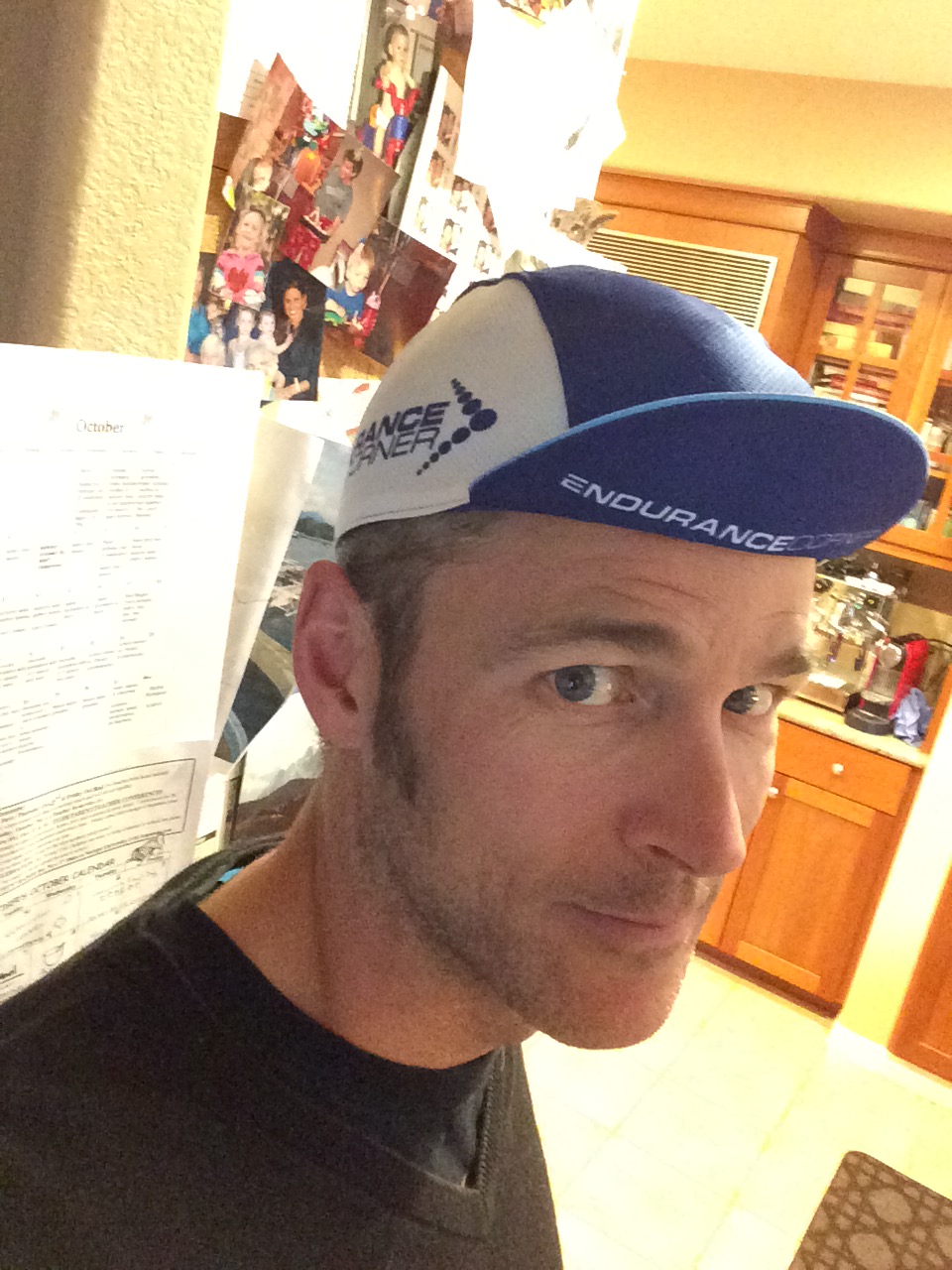
ec_hatLast weekend, a bunch of my pals were in Hawaii for Ironman. Watching from a distance, Ironman is a reminder that the human body can do some incredible things. While the race is neat, what’s most impressive is the training load that the competitors put themselves through. The physical output, over many years, is impressive – sitting here, I can’t believe I was able to do it!

I’ve had success coaching men between 40 and 75 years old (as well as women from 40 to 55 years old). Interestingly, it’s the guys who are most prone to saying, “I wonder if I’m getting old.” Top amateur women just keep on rolling, about the only thing that slows them down is injury and illness.

On the other hand, guys get really tired. I like to joke with my wife that I get Man-Fatigue – like man flu – it’s a whole different level of fatigue from what she experiences.

What follows isn’t for my pals, who are still crushing it. Keep doing what you love for as long as it makes sense. I miss those days, and you will too! It’s for the rest of you – particularly, if you were a top athlete in your 20s and 30s.

When it comes to aging, I hear this a lot…

  • Age is just a number
  • You’re only old when your age is an excuse
  • 40 is the new 30

These sayings are linked to the first phase of aging – holding on against the natural progression of time. I’m more fond of saying, “this is what 45 looks like and it’s not so bad!”

In my peer group, characterized by exceptional will, a few can extend the “holding on” phase into their 50s and, extremely rarely, their 60s. You can find examples of these special humans (!) on the Big Island each October. I know a few and they are amazing people.

What lies hidden is the psychological, and physical cost, from living an unnatural life. When we put ourselves together in a peer group, that consists of much younger 1%’ers, we’re left wondering… what’s wrong with me? Why can’t I be like XXXX? Am I getting old?

I used to think that I’d be hanging on. Now, I’m not so sure. At first, I thought it was my kids making me tired but there seems to be something deeper at work. Time will tell. Maybe I’ll get a second wind in my 50s! 🙂

When I catch myself thinking that a return to my 20s/30s will improve my life – I say…

  • It’s amazing how much exercise I was able to do
  • I’m grateful to have had the opportunity to compete at a high level

Wonder and gratitude are effective antidotes to mourning the past.

Another thing that I’ve noticed is I get an excellent mood response from small doses of exercise. I have to remind myself of this A LOT so I don’t fry myself.

With exercise, generosity, novelty…happiness links better to frequency than intensity, or dosage.

How do you know if you’re holding on too tight?

  • Ask the people closest to you
  • Pay attention to frequent orthopedic injury
  • Pay attention to frequent depression, or anger

If you aspire to performances that were extreme when you were 10-25 years younger then be sure to spend time with people your own age, as you age.

Trying to be the 1% of the 1% can lead to a rough ride as the years roll on.

Choose wisely.

Money, Marriage, Kids, Family

Back in July, I caught myself fantasizing about my life in the year 2030, when my youngest graduates from high school.

Longing for a better life in the future is a sure sign that I need to make changes in the present!

My dream, of 2030, was an example of the main excuses that I give myself:

  1. Money – If only I had more…
  2. Marriage – I can’t do that, I’ll damage my…
  3. Kids – The trap of giving to the point of self-neglect and external resentment…

To the list above, I’ll add “Family” – I hear others say that they can’t do XYZ because of family considerations.

While it helps our own happiness to serve another, resentment happens when we feel bound to serve.

I know from my own experience that a resentful grandson, son, father or husband isn’t much help at all. I’m awful to live with when filled with resentment.

My antidote with relationships is straightforward.

  1. Empower each other to say “no”
  2. Always be part of the solution – much better than seeking to be THE solution!
  3. Respect other people and let them solve their own situations
  4. Consider every interaction a gift, rather than an obligation – point #1 is essential for this mindset

Now, with money, the antidote is more complicated. My best advice: start by ditching people, situations and things that makes you feel envy.

Envy distracts me from my true needs.

Recently, I spent six years working myself out of financial squeeze and wanted to share the process. When I’m not sure what to do, I start with a clean sheet of paper.

Blank Sheet Living…

Based on where I am today, where would I like to be in five years and what’s it going to take to get there?

Six years ago, I decided that it was important to reduce my family’s net cost of living. I looked at moving to where I could earn more money (Silicon Valley) and where I could live far more cheaply (Boulder County).

In the end, the US Federal Reserve drove mortgage rates to the point where I moved across town, downsized 50% and achieved my goal.

It took a surprisingly large amount of effort to take the path of least resistance!

So now I’m “there” – I achieved my plan and have the ability to reset my life again.

Additionally, I have a wonderful spouse that empowers me to do ANYTHING.

There is deep wisdom in empowering another to choose to love, and serve, us.

I’ve lost all my excuses.

It can be terrifying to lose my excuses!

+++

Goal: Strategy, Tactics

Serenity: Time Alone, Weekly overnights to the high country to explore in solitude

Connection: More Monsy, Share experiences with my spouse and strengthen my marriage, which is my best asset

Long-term Health: Use My Drive For Fitness, Exercise twice a day, watch the booze and carbs

+++

Serenity, Connection and Long-term Health => What’s Your List?

Ten Lessons From The Great Recession

pawneeFor my family, September 2014 marked the the end of the Great Recession, which (for us) had started in October 2008. Navigating the recession took a year longer than my worst case assumption of five years.

I wanted to share my lessons as I can feel the temptation to ignore them returning!

#1 – You can’t know your partners – I’ve lived with friends for up to six months at a time and had no idea about their personal situation – my favorite quote here is one about knowing your marriage… “if you’re lucky then you might know 50% of your marriage, YOUR half.”

#2 – Burn rate kills – Between October 2008 and March 2009, I lost 100% of my net income. Without significant changes, I knew the loss of income would screw up our family finances. I would have really freaked if I knew that interest rates were going to zero! Staying variable enabled us to cut 90% of business expenses and 50% of household expenses – these were gone by April 2009. The lesson here is to be very careful of building up long-term financial commitments.

#3 – Real Estate, even prime, is only liquid in a bull market – there is an urban myth that real estate is a low volatility asset class. Until 2009, there were many national markets that had NEVER gone down! I will not be able to time the market – I should always be willing to sell early – future purchases should only be made for assets that the family is willing to hold for more than 25 years.

#4 – For my core capital, my benchmark return is zero – there is a portion of my family balance sheet that would be very painful to lose. Don’t risk capital for tiny yield – examples here are constantly pedaled by brokers (foreign currency deposits, derivative-linked investments, highly-leveraged investment schemes, alternative assets, growth stocks).

#5 – I’m a better man when I’m constrained – This applies in all areas of my life. At the peak of the boom there was tremendous ego and waste in my life. I’m very fortunate that life gave me a kick in the butt and I had to make choices. I don’t have the emotional maturity to be unconstrained in action, maybe someday!

#6 – Create plans B, C and D – ring fence different aspects of your life, and finances – NEVER guarantee another person’s obligations (see #1 above). In 2014, my life has a series of fallback plans to deal with potential setbacks – I spent the recession taking steps to protect myself, my wife, my kids, and my family.

#7 – Investment properties should avoid furnished rentals, anything with a material housing association payment, and anything with a cost to hold (vacant) that’s greater than long term interest rates – I made good money by investing in real estate through the bottom but would have done better by focusing on properties with a lower cost to hold.

#8low-cost passive index investing gives me what I need. The best gamblers I know take a profit-share on other people’s money and use non-recourse leverage.

#9 – stop trying to win – I misallocate energy, money and time when I forget that a simple life is a good life. Reaching for external success and excessive financial wealth leads to poor decisions and choices. I make my best choices when I measure wealth in terms of health, controlling my schedule and sharing time with people I love.

#10 – don’t capitalize luxury expenditure – particularly, second homes and depreciable assets – stay variable!

My errors and misjudgments persist across cultures and generations!

Choose Wisely


Micro Courage

axel_lionHow do I cultivate deep strength and resiliency?

We might describe resiliency as…

  • The capacity to continue despite life’s setbacks
  • The ability to become stronger due to stress (anti-fragility)
  • The strength to handle anything

They sound great, grand and completely unattainable!

I’m going to guide you through how I break it down into something that I can action in my daily living.

Start by flipping it on it’s head, what are the characteristics of the not-resilient? Think of the biggest head case you know…

  • Angry
  • Anxious
  • Depressed

When I think about anger and anxiety, they strike me as cultural expressions of fear. At some level, we see angry men and anxious women as normal. I feel both emotions all the time and they make me less effective.

What to do?

Over the last two years, I’ve been experimenting with micro-courage.

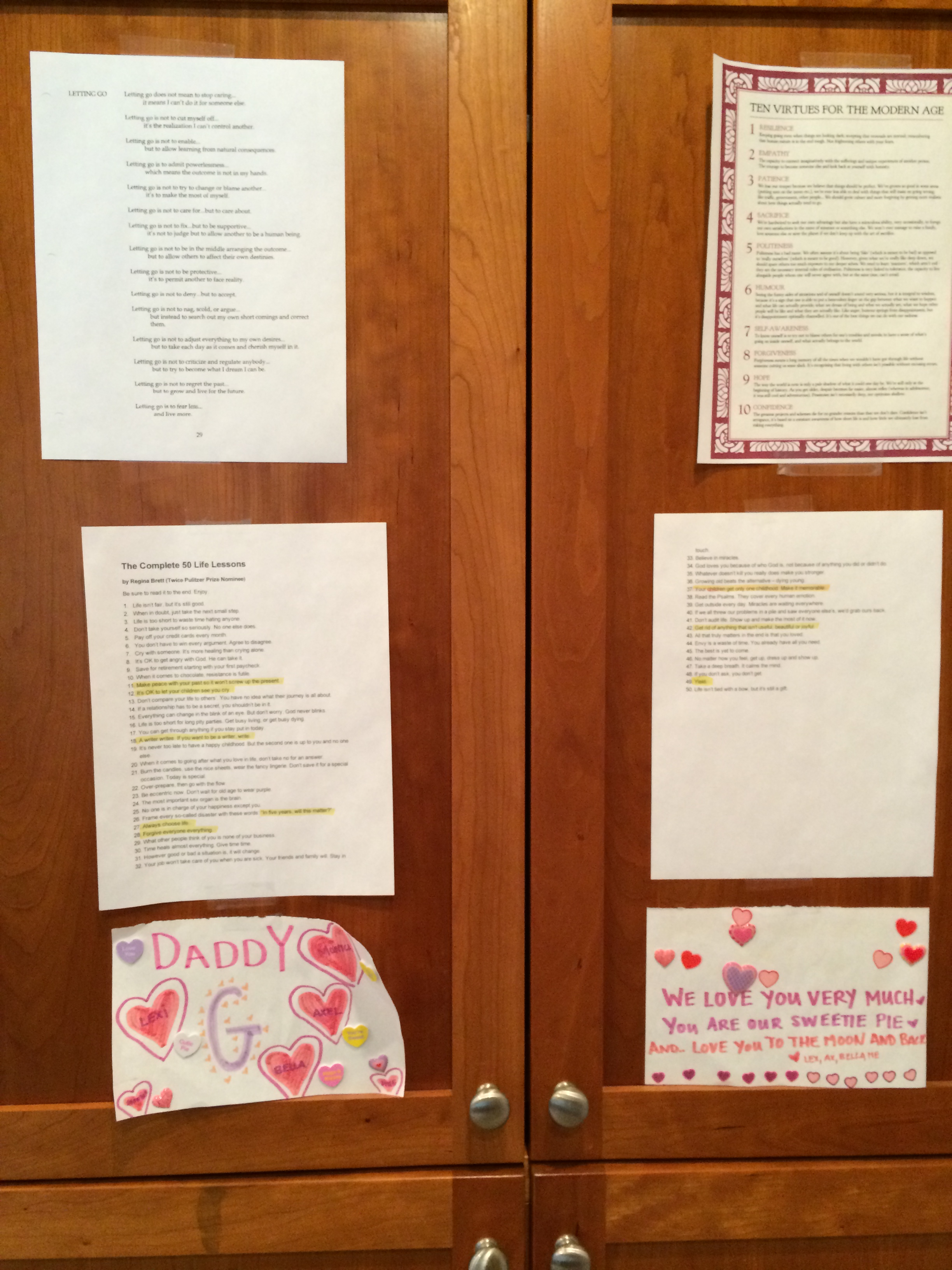
I started by printing up 50 life lessons and highlighting the ones that I wanted to focus on (11, 12, 18, 26, 27, 28, 37, 42, 49). If you come by my office, you’ll see they are taped near my printer…

lifelessonsReflecting on the lessons, I paid particular attention to three:

  • Let your children see you cry
  • Forgive everyone everything
  • Yield

I’d encourage you to find your own (triggers).

The game is to focus your actions on situations at the edge of what you can handle.

Here’s an example:

  • There are lots of homeless folks on the Boulder Creek Bike Path. Some of these folks are violent, others are mentally ill, still others are addicts. As a group, they scare the crap out of me.
  • While I have pals that work with the homeless, I don’t have any clue how to “fix” this problem and often wish the problem would go away (so I don’t have to deal with my inability to deal with it!).
  • Anyhow, there’s one guy that sits by the creek in the 28th St underpass and says good morning to everyone that runs, rides and walks past him. He’s a drinker and can get a little sloppy towards the end of the day.
  • I can’t fix the city’s homeless challenges but I can offer the guy a bit of human connection as I ride by. I look at him, smile and take a breath in. On the face of it, I’m smiling at him but, in reality, I’m staying open to the fear within myself. That’s micro-courage.

The story repeats itself in every part of my life that I want to close off.

I try to “stay open” as many times a day as I can.

The problem can be homelessness, litter, aggression, poor driving, manners, food quality… keep it small, remember to breathe in through your nose with a tiny smile.

Staying open to a small fear, a slight inconvenience, a little bit of sadness… I call it micro-courage.

The habit has been transformative in situations that I used to find overwhelming.

This is what I meant when I wrote that strength comes from staying open to little fears.

Courage is a powerful antidote to fear, anxiety and anger.

Be brave.

True Strength

g_aqua

One of my coaches, Mark Allen, made the observation that to get our race in order, we need to get our lives in order. Racing, like any other form of stress, can strip away our filters.

Mark’s advice is an example of an athletic lesson with a wide application into everyday living.

We share a desire to be strong. This desire is expressed by building up and adding to one’s self.

  • Adding size through muscles, bulk, heels, boots
  • Adding tension from taking on obligations
  • Adding palmares from victories
  • Adding possessions and external signs of power

I’ve done it all: cowboy boots; academic honors; powerlifting; fancy cars; big houses; jewelry for my wife…

Adding, adding, adding.

The list above is about our external life. Building up is a projection of strength, but it isn’t true strength. I think Mark is pointing us towards something that might become resiliency. An integrated life where we are in harmony with our external projection and OK with all aspects of our experience (strong/weak, happy/sad). This harmony lets us cope with the tests of our races (and lives).

Perhaps you’ve had a situation where you tell yourself to be “strong” but a more accurate description is a fear that our inner storm might show through. Having completely fallen apart a few times, isn’t that big of a deal. I don’t want to make a habit of it but I also don’t want to spend my life holding tight and letting the pressure build within me.

When tired, when grieving, when sick, when stressed… life has a way of stripping our filters away.

But how can we process our inner life?

  • Exercise works well for me – moderate effort, repeated movements
  • Others prefer meditation – cultivating stillness and observing one’s mind
  • Many find the combination of breathing and movement in yoga to be effective
  • Thrill seekers tend towards extreme risk and peak experience – works for them but doesn’t work for the larger goals of my family

If we keep peeling away our layers then we might find that the joke is on us.

Why?

Ultimately, every individual unravels.

It can be terrifying when we bump into this reality. You may have experienced this fear through the death of friends, parents and grandparents.

Ultimately, we might find comfort in defining resiliency in terms of something larger than ourselves – family, legacy, lineage, tradition.

Cultivate courage by staying open towards little fears.

Free My Mind

monsyWhat’s the difference between knowledge and wisdom?

Time, perhaps.

My friend, and his father, are both surgeons. The older doctor shared that ‘half of everything I learned, turned out to be wrong.

When I think back to my formal education, a good chunk appears to have been wrong. Of course, studying economics in the 1980s gives one an edge in the search for academic humility.

Why does this matter?

Knowing that most my knowledge will prove meaningless helps me decide where to focus thought. Some questions that I ask myself when I’m wound up…

Could I be having this discussion 10, 100 or 1,000 years ago?

– Nutrition, exercise protocol, the body fat percentage of myself and friends… All are recent phenomena. Not worth devoting much share of mind towards.

– Living well, meaning, time allocation… These questions track back to the ancients.

How long has this problem persisted?

– I love this question with regard to young children. They have been a challenge for parents across thousands of years. My odds of transcendence are long!

Under what conditions is the opposite opinion correct?

– This one is a loaded question because, once you realize that there’s always a situation where the opposite applies, it’s easier to develop tolerance for those who oppose us.

Am I sure?

The benefit of experience is that I’m not sure about much. However, there is a small list of traits where I am quite sure.

Managing My Inner Game

2014-08-11 18.51.31

As a coach, I have come to realize that a number of my athletes rely on exercise to manage their mental health. I have asked the question…

If daily exercise is a requirement for your mental wellbeing then should we consider if extreme exercise is appropriate for your long-term health?

It’s worth noting that I’ve yet to have a top athlete answer my question with a “yes, we should!” While my pals haven’t answered this question, it’s something that I’ve addressed with choices in my own life.

High-profile athletes, and coaches, can feel the urge to fly-the-flag for extreme exercise. Because of the prestige given to “winning,” it takes courage to walk away from fame, winning or vanity => even when these things are unhealthy for our inner lives.

What calms my inner life and leaves me feeling satisfied?

My list:

  • An outdoor workout with 10-20 minutes of elevated HR
  • Time with my spouse
  • Picking up litter
  • Doing something that other people find too difficult
  • Helping other people
  • High-quality coffee or tea

My list reminds me that much of my spending is wasted.

In my life, the only thing that trumps exercise is sleep. I need to get my sleep AND I need to protect my sleep. I protect my sleep by:

  • Waking up each morning
  • No late naps, late nights, late coffees, late work sessions
  • Removing people and situations that cause me to lose sleep

I’m fortunate with the ups and downs of my moods – I don’t have the extremes that follow some of my pals. My swings are moderated by a lifestyle that gives me frequent top-ups and helps me avoid spiraling downhill. I wrote about downhill triggers here,

It usually takes multiple injuries for an athlete to be open to considering their role in creating their life situation. More normal, is gratitude for a return to training. Be aware when you are in a rush to get back to the pattern, and mental habits, that hurt you.

It takes courage to change our approach.

Be brave.

Hometown Hero

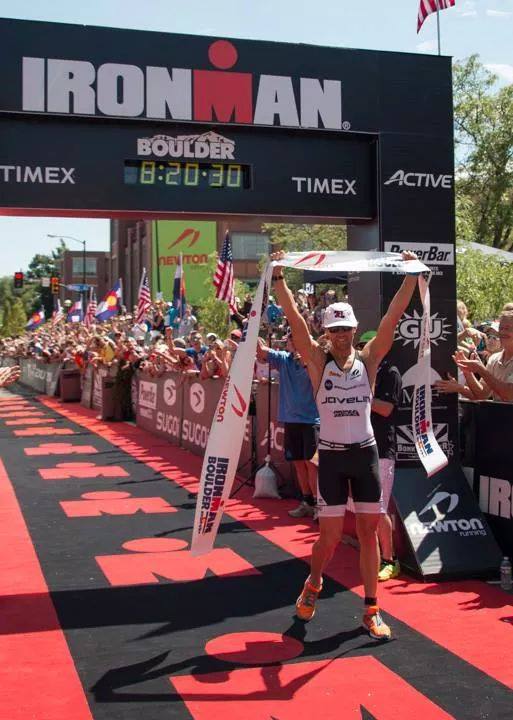
820My buddy, Justin Daerr, won Ironman Boulder this month. Even bigger, the ladies at my health club have started chatting about him!

He’s truly made it.

Not many people make the transition from average to champion. I was along for the ride.

epic_konaIn October of 2004, Justin came out to Hawaii for a camp that we were hosting. He had a big week of training and finished third in his age group in Kona. I didn’t know it at the time but October 2004 marked the high-water mark of my athletic career.

hawaii_run18 months before that camp, Scott Molina asked me, “What if that’s it?” At the time, I replied, “There’s always more.” Scott was a little early with his question but it was a good one.

What’s next?

After Justin became really good, he put in another 10,000 hours to become great. It’s the profile of a clean athlete, many years of plugging away. No quantum leaps.

runI like to focus athletes on 1,000 days of effort. After 1,000 days, of racing pro Justin was going far faster but didn’t have a whole lot to show for his efforts. He was a long way off the top athletes and, like me, only competitive over long distances.

The link in the paragraph above shows J’s results. He was speedy for a long time. Thing is, everyone else at his level is speedy too! Eight years of consistent sub-9 Ironman times. That’s really fast, for a very long time.

How do I measure my return on investment?

…is a question we should ask

…especially about time we will spend

Absent conscious effort, we will default to the values of our community. My athletic community values vanity and victory. These values rule what I see around me and lead to athletic errors.

As a champion, expectations and self-image change. My champion pals, closer to my age, experience pain with the inevitable transitions that life brings. Whenever that transition happens, I hope Justin keeps what’s best from the last decade.

  • He was willing to inconvenience himself to do the right thing.
  • He persisted in the face of evidence that he might not make it – a good lesson for me to re-learn!
  • He never mentioned the slings and arrows that were tossed at him. Justin’s non-response made me a better person.

These are the good old days.

Remember to enjoy them!