Restructuring and Rebalancing My Portfolio

At the end of May, I did my first rebalancing exercise. This required a fair amount of preparation:

  1. Setting up an individual 401K under my consulting company
  2. Checking my family cash flow for the next 90 days and making sure I had 120 days worth of reserves
  3. Getting a home equity line of credit to cover financial emergencies
  4. Moving legacy retirement funds to the appropriate (pre- or post-tax) IRA account
  5. Shifting my current IRA assets to Vanguard
  6. Making a table that showed where everything ended up, and what it held
  7. Deciding on my desired portfolio mix
  8. Considering tax implications of the restructuring that was implied by my mix
  9. Executing the strategy

The exercise above required wading through admin, building spreadsheets and carefully mapping things out. It’s worth getting specialist advice from a CPA because if you screw up then you can get hit with penalties and/or trigger capital gains taxes.

It’s a pain, and finance companies do not make it easy to move your business away.

Considering fees saved, I earned $1,000 for each hour of my time. I’ve seen cases where families could save up to $10,000 per hour.

Financial inertia can be extremely costly!

My decisions were the result of this year’s reading. I started with the short, free eBook, If You Can, and worked through the author’s recommended reading.

I used Vanguard funds and the expense ratio for my portfolio is less than 0.1% per annum.

Have you asked your adviser to explain your total cost of ownership? Following my blog on expenses, a friend called his adviser, asked the question and was transferred to a call center! He’s still waiting for an answer, they said it would “take a while to pull things together.”

For what it’s worth, my portfolio criteria are:

  • Simple
  • Low cost to hold
  • Focused on long term capital gain
  • Liquid in event of capital being required
  • Tax effective
  • If it won’t make a difference to my overall situation then wait

Like the behavioral finance books say, it was hard to sell the equity funds with the markets at all-time highs.

Now the tough part, resist tinkering and tracking.

How I Met Your Mother

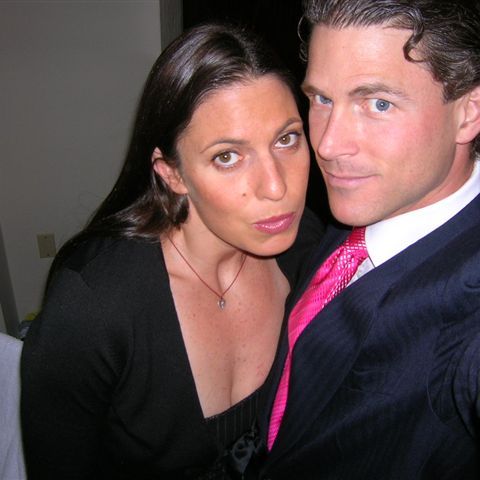
Gordo and MonicaWhen I lived in Asia, I made some money, had my best friend die and blew up my marriage.

A wise friend observed that it was fortunate that the marriage exploded because I was better off waiting until I was able to offer something to a relationship. My buddy, who would spend the next decade dealing with her breast cancer, captured an essential aspect of successful relationships – that they are best avoided until you are prepared to continually offer yourself.

I look back at my writing from that time and smile at how hostile I was to relationships. Ten weeks before I met my wife, I rode across the United States with a Swedish buddy. He gave comfort that, indeed, there were “at least three women in the world” for me. When I asked, “why three and not one?” He smiled and told me, “the world’s a big place, Gordo.”

Squash Court

[This is the squash court where I met your mother]

In the middle of 2004, I conquered my fears and walked into a room of (mostly) female, triathletes. They were training under the instruction of a six-time world champion, Dave Scott. Dave personifies the old coaching adage “challenge your men and love your ladies.” He didn’t cut me any slack!

It was a complicated situation as my wife-to-be was going out with my landlord’s brother and neither of us were aware that we should be together. I played a long game, got her out of the country and we were engaged before she returned to Boulder.

Nelson, NZ in 2005

[Here’s your mother as a young woman in New Zealand. She was working as my extra-special soigneur at a stage race.]

We were lucky. We grew into each other.

+++

The journey that led to a wonderful life partner began years before I met Monica. I started by cultivating independent self-love, which sounds like something you’d hear in yoga class.

In the language of business…

To do a good deal, you have to be willing to do no deal, a fundamental component of success.

Divorce caused me enough pain to make me hostile to any form of intimacy. First a childhood divorce, then my own as an adult. There were deep feelings of failure associated with marriage. I had not learned how to strengthen a marriage and was preoccupied with the illusion of failure.

After my divorce, I made myself a better person. This was not my goal. Becoming a better person happened because I stopped living the values of other people – back then I was misled by money and assets. Later I was misled by victory and vanity. At the end, I hope to end up with kindness, good humor and service!

My introversion, and pride, fed a desire to prove that I could be happy alone. Truth be told, I was never alone – I wrote frequently and had two very close friendships. One of these was with Scott Molina and he joked that I had ’embarked on the longest dry streak known to man.’ Scott’s observation still makes me smile!

To make myself relationship worthy, I needed to create a life where I was happy without an intimate relationship. In order to have something to give, I needed to develop a source of energy outside of the relationship. I found my source in athletics and nature.

The great spiritual traditions write about love being the source. I have a long way to go there. My love for my children is a sign explaining that everything I need is within myself.

As an introvert, the teaching that I’m my own source feels natural because I’m happy when I’m alone. However, I need to be careful that I’m not alone too much. First, because there is a deep human need for intimacy. Second, because a life with meaning requires us to do good work in the world.

After five years of working on myself, I met my wife. In Monica, I discovered that I enjoyed spending time with her more than I enjoyed being alone. I’m not sure if that will make sense to an extroverted reader, who might find solitude draining. However, for the sociopathic hermit in me, it was a revelation.

To create an intention for success, I tell my wife, frequently:

  • There’s no way I am going to improve my situation through any pathway other than our marriage.
  • I’m grateful for all you do – family life is a challenge but I know that family life alone would be far, far more challenging.
  • While I accept that it only takes one person to crater a relationship, I will never speak about failure on my side. If we hit hard times then I’ll stay close and wait for you to come to your senses.
  • I hold the trust between us as sacred.

All thoughts to the contrary, of what I state above, are a sign of temporary insanity!

Ironman New Zealand 2004

[As a couple, Ironman New Zealand 2004 was our best ever. Your mother swam 2.4 miles in 46 minutes and finished 2nd overall. Living in love makes you powerful!]

Today is the 10th anniversary of the day I met your mother and I’m so grateful.

Love you, Babe!

Eighty Years of Family History

Bea-bopAbove you can see my great-grandmother (Beatrice). Bea was born in the late-1800s. In knowing five-generations of my family, I am the link from the 1800s through to the 2100s.

My family was involved in the early days of the province of British Columbia (forestry and shipping). Shipping sounds glamorous but the reality was barges, booms and tugs. I love being near water and trees.

ElphinstoneI never worked in the resource-focused businesses but I did work on the water at YMCA Camp Elphinstone – the photo is plaque that’s still in the Longhouse. I loved my time working in Howe Sound and summer camp. Below is where I spent many happy summers.

WaterfrontThere were successful businesses up both sides of the family tree and some very, very good business people. None of the financial capital from my elder’s success will make it through to my kids generation but the human capital of the family has remained strong.

If my great-grandparents could survey the scene today, they would likely observe that, once sold, a family business is very difficult to replace. I think they would also realize that their financial success had many unintended consequences.

Over the years we’ve been caught out by bank guaranties and leverage. It’s important to remember that one mistake, particularly when combined with bank borrowings, can blow a generation’s worth of hard work.

Indeed, in my own case, I was saved from personal bankruptcy by getting spooked by the boom of 2003-2005. I spook easily (!) but it served me well as I got through the Great Recession of 2008/2009 intact.

Always consider a bank guaranty to be the equivalent of an immediate equity investment, without operational control. Also, remember to ask, “Can I hold this investment, for up to ten years, assuming I lose my job?” Every generation has been hit by unexpected unemployment.

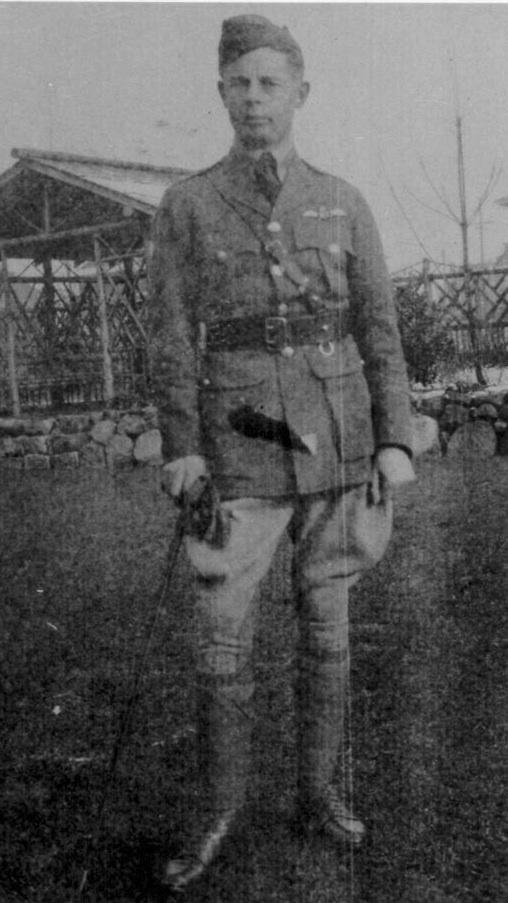
RAFMy elders would tell you that appearances matter, especially when you’re the little guy (in business or stature). The picture above is my great-grandfather, lone survivor of a mid-air plane collision. His son, my grandfather, made a habit of being kind and fair to everyone around him. This habit stuck with him, even as his mind unwound. Lacking kindness was my greatest weakness as a young man.

One of my earliest financial memories was being taught to never have more than 10% of my net worth in something I don’t directly control. Ignoring this advice proved costly, financially, but didn’t damage my quality of life. So pay attention to that tip, it saved the hard work of my generation of the family and you hear it repeated over-and-over by elders that have lived through severe recessions.

I’ve been an outlier with how I’ve chosen to live my life and can waste a lot of energy trying to make the world more like me. The best advice that I’ve received about living with other people is to optimize your life for the way things are, not the way you wish them to be.

There’s plenty of compulsive people in the family tree and we have a bias towards action. This trait helps you get things done. However, remember that if it won’t make a difference then you’re best to wait.

Daily, I remind myself that kindness makes a difference.

Seeing choices flow through 80 years, I hope my children develop a sense of personal success, then shift their emphasis towards loving their families, connecting with friends and improving their communities.

Getting Kids To Draw

Here’s a tip that buys me an hour when I switch the electronics off.

We visit Google Images and I let the kids pick out their own picture to color – make sure you include “coloring pages” at the end of whatever you want to draw. The picture below is “hippo coloring pages”

Hippo

I’ll let my son stand on my desk and touch the photo that he wants. He can’t believe that he gets to stand on my desk and touch the screen. Happy and excited is good.

Then he grabs the picture from the printer and I set him up at his coloring station.

Kids that are really clingy will do best with a coloring station in your office, or kitchen (depending on what you need to get done).

The coloring stations are set up apart but the kids can color together if they choose. Some days they want to be alone, other days they are OK together.

With older kids, they seem to like a mix of their own drawing and coloring. My daughter loves to make other people cards with words that we spell together.

All kids love pictures that I draw for them. I take full advantage of being able to impress my two-year old…

Gordo Hippo

A little bit of effort on my part keeps me from melting our minds by having Disney’s Frozen on endless loop.

Do you want to build a snowman?

Setting Family Financial Priorities – College and Retirement

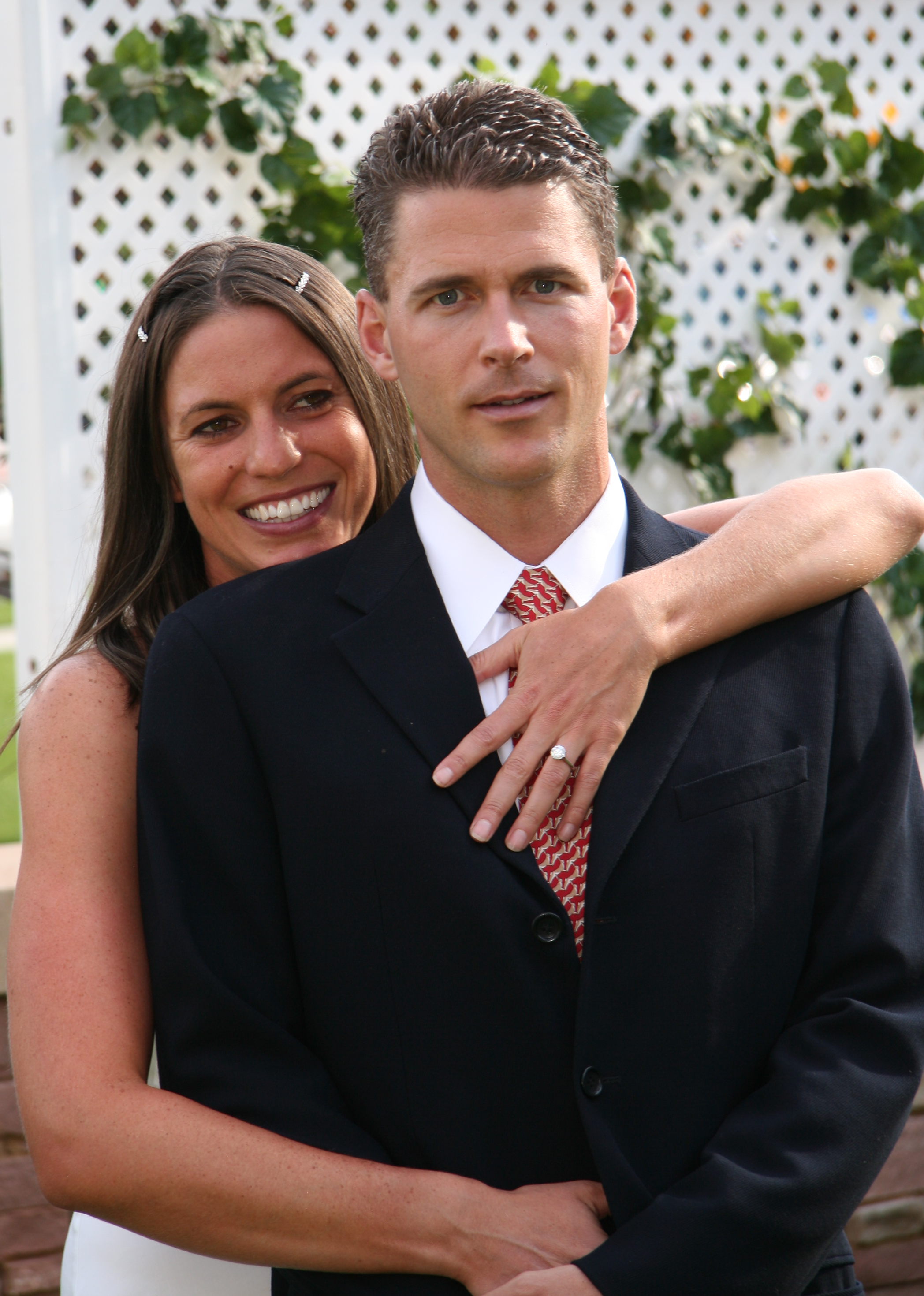
wedding_day

What’s next? It’s tempting to think about my kids. College accounts are on my list but they aren’t the next priority.

Why?

Because kids that will be successful don’t need much help and the family (particularly a financially responsible child) gains by not having to pay for Mom and Dad’s Golden Years.

Education has an mixed return on investment. Here’s my article on how families blow more than $1 million per kid. It’s a rare family that looks at education in terms of return on investment.

+++

If you want to give your family a leg up then take care of yourself. Do this by max’ing out your retirement accounts – especially anything with an employer match.

I have a single member 401K under my consulting business. If you’re self-employed then you can find out your options by getting in touch with Vanguard.

I spent Friday afternoon shifting my retirement assets and Vanguard has an online tool that the self-employed might find useful.

+++

What about college?

In current dollars, my pals that have put their kids through college have spent $200,000 per kid.

That’s $600,000 for my family of three – ignoring grad school.

Considering my entire family tree, there is no way the family would earn a reasonable return on that level of investment. Of course, my mind likes to tell me that MY kids will be different!

Thinking about the opportunity cost of $600,000:

  • A lifetime annuity of ~$2,400 per month – starting now
  • We could move into one of the best public school districts in the country
  • We could buy three rental properties and teach our kids about money by having them involved in deciding to borrow against the properties (or not) to fund their educations. The kids could receive a direct financial benefit from minimizing the cost (if any) of their educations
  • We could help send a dozen kids to grad school
  • We could back a family member to buy into an established professional practice
  • We could work less (for the rest of our lives) and make the world a better place
  • We could live abroad long enough for the kids to become bilingual (or to gain residency in a country with free education, national health care and retirement support)
  • We could improve the lives of thousands of people in the developing world (schools, safe drinking water, medical care)

The ideas above ignore the cost of the misery that we give ourselves worrying about funding college!

Given that I’m unsure that the family wants to support three college educations, we are working towards funding one college education spread between three 529 accounts.

Total annual contributions to college funds can be $14,000 per kid, per parent => a potential investment of $84,000 per annum for a two-parent family with three kids.

For all but the top 2% of US earners, paying for everything will be out of reach.

Don’t beat yourself up.

The best thing I can do for my family is love them and work on continually improving myself. I’ve come to see the benefits of my constraints.

Setting Family Financial Priorities – Healthcare

Over the last ten years, my family has incurred well over $300,000 of medical bills – births, broken wrists, malpractice, sick kids, MRIs – it all adds up.

In my family budget, I include my premiums ($7,872) and my entire deductible ($7,500). We fund our deductible via our HSA ($6,550 family contribution limit in 2014) and top up when required. The HSA is funded automatically each month so I’m forced to save that money. Most US Bank’s have a subsidiary that can help you set up an HSA.

$15,000 per annum is a lot of money but most years, we “save” a dollar for each dollar we pay out.

BellaFor example, my daughter spent 4 nights in the hospital:

  • $18,500 retail price became $8,500 after discounts given to my insurer
  • $8,500 bill blew through our deductible so we received a $7,500 invoice
  • We had previously saved $5,000 in our HSA so…

End result… I write an unexpected check for $2,500 instead of $18,500.

Health insurance offers up some benefits:

  • Cap our potential liability
  • Access the discounted rates offered to our insurance company
  • Pay automatically (direct debit insurance payments and HSA contributions)

Sidebar: work with health benefits would be a valuable addition to our family. A decent health plan could save us $15,000 per annum.

+++

My next investment is a long-term care policy – about $5,000 per annum for the two of us. Even though the likelihood of payout on the policy is remote – for now – the policy gives me a lot of comfort in case tragedy strikes my wife, or me.

More on this in a post from 2010.

If I couldn’t afford my retirement investments then I’d skip the long-term care insurance, it has a low expected return on investment.

Passing The Starbucks Test

A buddy shared that he’s close to passing the “Starbucks Test” for financial security.

He’s spent many years living below his means and is close to reaching the point where he could maintain his lifestyle, while earning minimum wage. The nearing of goal achievement is making him nervous.

Career inertia, spending and debt can conspire to make us believe that we have no choice but to continue.

I’m happy for my pal and remember how the realization that I could live on far less, was a sad period. I was free and couldn’t blame my circumstances.

My choice was to leave a conventional life behind. I spent close to ten years “having fun” and doing what “I” wanted. There’s a lot of conditioning that tells us that self-indulgence is the secret to happiness.

It might be! Those were good years. However, things change and eventually, I was left with a question (along with my three children)…

What’s the best use of the time that I have left?

Are you doing your life’s work?

If not then change slowly.

Child’s Play

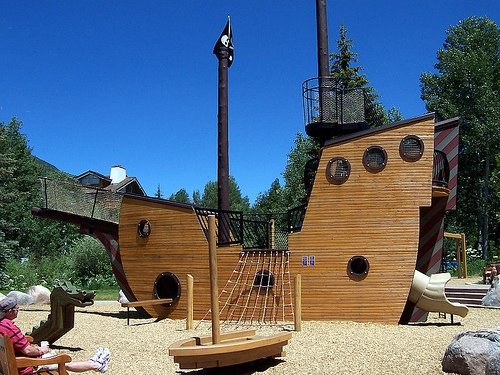
Pirate ShipAt my kids’ preschool there are only a few rules for safety – mainly around the zip line.

One of the rules they have for kids (and parents) is to NEVER help another kid up a tree or piece of equipment. Their view is the kids have a better idea of their limits than their friends, or parents.

Since they taught this to me, I’ve been a lot more hands off with my children and careful not to encourage them get in over their heads. It’s stressful when they are little but they figure out how things work quite quickly.

Wanted to pass that along as it’s been a useful technique to help my kids self-regulate.

One of my “fondest” toddler memories was my oldest daughter hanging upside down on a cargo net, screaming, at Pirate Ship Park in Vail. By the time I put my phone down and got over there, a mom had bailed me out.

Yes, I was the Dad looking at his phone while his three-year-old hung upside down.

Still working on getting the balance right.

Getting Crushed Financially

Market Moves

I love this chart.

Blow it up, print it out and study!

Jerry created the chart to show nearly a century of bull markets but what caught my eye was the nature of the eight bear markets.

  • Duration of 3 to 34 months
  • Scale of loss (peak to trough) of 22 to 84%

If you’re an investor then it’s important to realize that it is perfectly normal that you’ll get crushed once a decade. Knowing that it’s normal won’t make it hurt less, but it might make you realize that your pain is temporary.

Personally, my worst bear market was 2008. It was a doozy.

In the space of six months:

  • my family’s net worth fell 65%
  • I lost my job
  • My dependents doubled
  • I discovered that my (joint & several) partner was involved with fraudulent activity
  • I was exposed to the risk of civil prosecution

Absolutely awful.

I share this story to help you remember that THE world isn’t ending when YOUR world collapses.

Setbacks are part of life and my making it 20 years without a major financial setback was abnormal. In fact, I had several setbacks along the way (15% hits) that I’d forgotten.

Save the chart for a rainy day and I’ll retweet at the next recession.

The Luckiest People In The History of People

Last month, after three years, we had the final community night for my daughter’s preschool. I looked around the room and smiled at what a varied bunch we were. Big, small, young, old, crunchy and corporate… each of us with a kid attending preschool.

At these gatherings, we do a check in (link is to my 2013 article). We get a chance to share one joy and one challenge of being with our kids. The group is a powerful experience and, because it was the last gathering of this group of parents, many of us were emotional.

I’ve come to realize that these circles are valuable because I’m given the opportunity to not-solve the problems of everyone there. As you’ll see in the 2013 article, I don’t always take that opportunity.

I did better with listening at my 8th gathering. Some parents were saddened by the thought that their time in the community was coming to an end. They shared that their kids were also feeling sad about leaving the community and moving on to kindergarden. Here’s what I took away with me from the meeting.

Sadness about the end is an opportunity to teach our kids, and ourselves, about the realities of life. The reality being that everything ends and that it is ok to feel whatever we want about endings, including sadness.

It’s OK to show emotion.

My children think I’m the strongest man in the world. They’ve also seen me cry. They know I’m real.

When you feel the sadness of the ending, remember the craziness of living with your children. Hold the sadness of the ending against every parent’s fear that “this will never end!”

Hold the two qualities in your heart and look for a chance to teach it to your kids.

This lesson is everywhere – traffic, winter, rainy days, Monday, smog…

It’s seems strange but, when I’m calm, the sadness leads me to joy when I’m back with the kids. There will come a time when my children are not going to be cradled in my arms yelling at me.

The trick is to focus on the cradling, rather than the yelling.

+++

I was also struck by what a fluke it was that we ended up together – sitting on little chairs, at preschool, in Colorado, on a pleasant spring night.

I know enough about the private lives of the other parents to realize that we’ve all experienced a variation of death, illness, divorce or hardship over the last three years.

In addition to shared hardship, it struck me that we happen to be lucky to have healthy kids and the ability to send them to a place where they are loved.

Lexi's Pillow

Tens of billions of people have lived on our planet and I ended up on my little chair, sewing a pillow for my daughter, smiling to myself.

I’ve been chuckling about that for a month.

Very few people, in the history of people, have the opportunity to live the life that’s available to us.

What are you grateful for?