Sunday Summary 27 March 2022

Getting a much clearer idea about the topics that engage y’all.

Thank you for the likes, RTs and replies.

Athletic Performance

High-Performance Strategies

Wealth Topics

First Female Athlete

We’ve been having this debate for years, it simply took me a while to notice

First clean athlete – remember that person in the Euro Peloton?

Not just Europe, my wife and I been that athlete

…and had to figure out how to deal with it.


I’ve been dealing with cheats and scoundrels for 30 years.

Not just in sport.

This moment, it’s not about cheating, but look deeper.

Pay attention.

I’m not sure if banning “them” from “our sport” has ever achieved the result we were truly seeking.

Even if it did, very temporarily, our children need to learn how to operate in a world where we don’t dictate the rules of engagement.


Tolerance is an effective strategy for a world that rarely delivers my personal definition of fairness.

Choose the role of sport with deliberate intent…

  • personal excellence
  • overcoming one’s self
  • crowding out negative habits/influences
  • a lifelong habit of exercise

Free your mind from the choices of others.

Sunday Summary 27 Feb 2022

Getting A Better Body

Breaking Free From 9-5

Athletic Performance

Using High Performance Insights

Family

  • Kids & Screens
    • a daily habit of reading, chores and sport
    • know your why
    • my best strategies for kid tech

Metrics

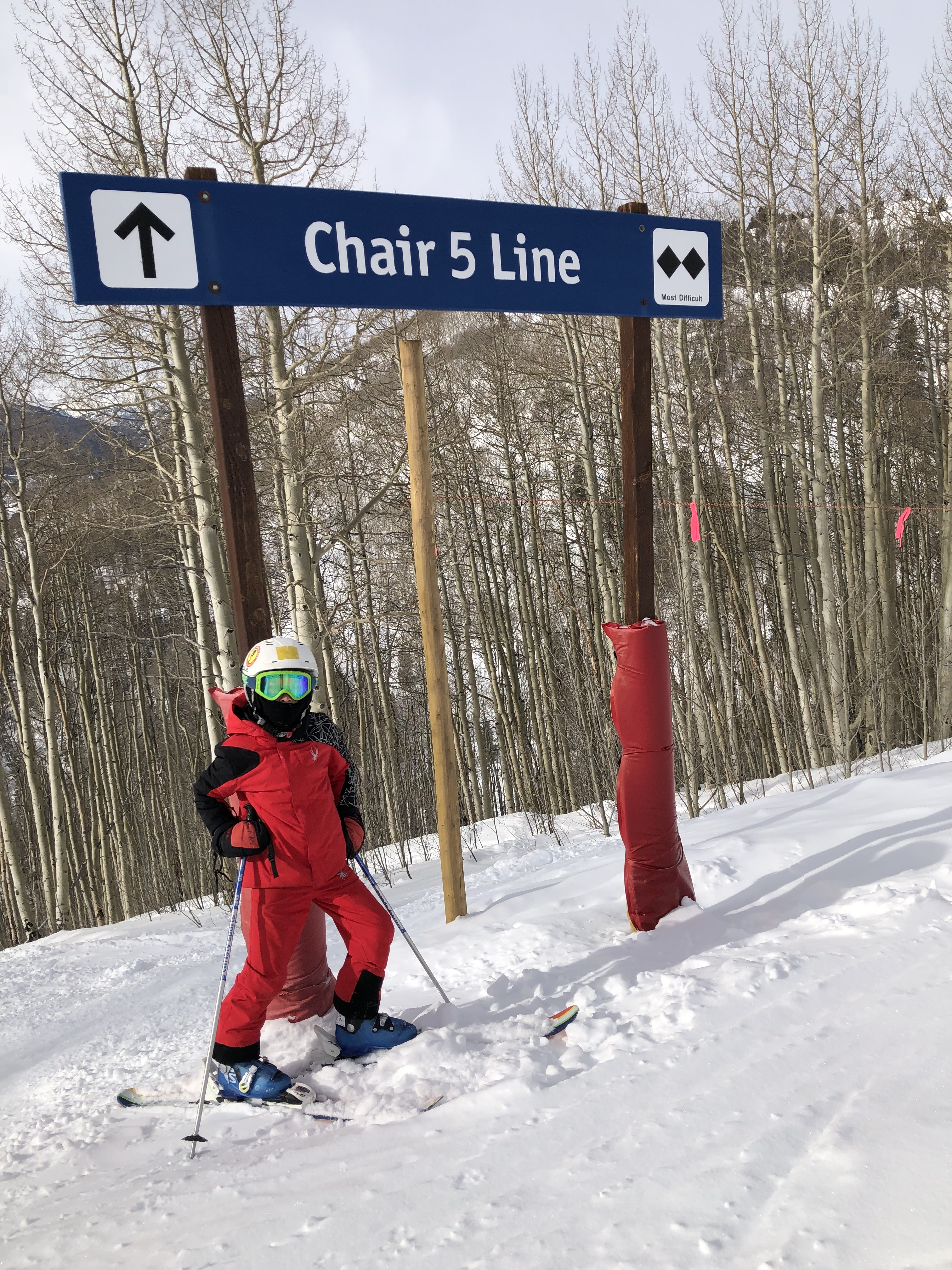
Yesterday, Monarch Mountain, Colorado.
My capacity to spend a random weekday with someone I love… an essential wealth metric.

Sometimes, we need to look at information that make us feel uncomfortable. As a leader, I acknowledge “bad” news, as well as my capacity to receive it.

I like simple metrics, especially those that don’t require purchasing hardware or subscriptions!

The first one… can I spend a random weekday with someone I love? Shared experience is a form of wealth.

Another… last year, how often did “yesterday” screw up “this morning“? => hangovers, days without exercising, days without writing, days waking up late… depends on your goals.

Keep it simple.

++

High-Performance Tracking

The amount of data coming from wearables has exploded over the last few years.

Like the early years of power meters, the data is best used to make our mistakes visible.

With health, the big ones might turn out to be: alcohol, intensity, salt, carbohydrate timing, inactivity, anaerobic load… time will tell.

In my life, the valuable information is in the mistakes. Most of us know what we ought to be doing. What’s helpful is clearly seeing my errors.

Soon, we will be able to be constantly connected to our physiology (blood lactate, HVR, HR, glucose, breathing rate, blood pressure). If we want then data will be constantly scrolling across our phones.

A lesson of Taleb’s Fooled By Randomness… the less often you check the data, the better the quality of the signal you receive. Nassim was writing about portfolio returns, the lesson applies widely.

++

Consider the one thing you are seeking to achieve in 2022, and write it down. The One Thing is the thing, if I happened, that would create a positive cascade in your life.

One things from the last 20 years…

  • Get a loss-making business to profitability (reduce cash burn)
  • Launch a new product (make money, while saving time)
  • Launch a new company (create options for financial wealth creation)
  • Cash flow breakeven (increase self-directed time)
  • Write a book (establish expert credentials)
  • Improve my relationship with my daughter (become a world-class father)
  • Take care of a dying relative (learn about death)
  • Become an expert skier (mastery)
  • Win an Ironman (mastery)
  • Find love (connection)
  • Increase the kindness I show my wife (2022 goal)

Before you move forward, look back…

  • Where did I sleep last year?
  • How many nights did I spend away from my One Thing?

Where I am… a revealed preference.


Rather than banning video games and strictly limiting electronics…
I got my son hooked on Duolingo, a piano teaching app and Word Cookies.
It’s easier to work within human nature than seek to overcome it.

Coaching Anxiety

A desire to achieve can be a powerful incentive to overcome ourselves. My son’s quest for his school’s beep-test record has taught him a lot about human nature in group situations.

Sport is a wonderful place to equip ourselves with skills we can use in our daily lives. I’m going to take another swing at sharing some ideas about anxiety.

First up, the feelings most of us label “anxiety” are useful. They are not a problem to be removed and anxious people aren’t flawed. In my life, these feelings provide little nudges towards better.

When might my emotional state become an issue? When I make quick decisions based on unlikely fears.


I was chatting about this with one of my kids and they stated flatly, “I’m never anxious.” I smiled because this kid has some of the highest baseline anxiety I’ve seen. However, like many of us, they do an excellent job of living with it.

We were on a chair lift. About four towers out they started to get twitchy about raising the bar. This rapidly progressed to mild hysteria, “we are going to get caught and hurt!!!” After we got off, safely, it gave me a chance to introduce the concept of being worried about a future that might never materialize.

The feared future can be adaptive => better behavior nudged by a fear of getting caught.

It can make us miserable => fear of loss, resulting in never taking a chance on improving one’s life.

It can cost us money => fear-based selling in the face of price-volatility

Body composition, friendships, portfolios, marriage, business relationships… all are damaged when we train rapid action based on our fears.


How might we use sport to build useful emotional skills?

Don’t train the startle reflex => endurance sport is filled with opportunities to notice, rather than act on, our instincts. ALL our deepest habits come to the surface in the face of competition and fatigue.

With my athletes, we’d start with bike pacing, and using their powermeter to give them visual feedback (when they had lost their minds!).

We’d progress to getting bumped while swimming, holding personal pace in groups and, finally, letting other people make mistakes.

Letting other people make mistakes => letting others deal with the consequences of their actions

…this habit leads naturally towards “let it go.”

On the bike, in a race, on a zoom call, at the meal table… notice when the startle reflex is triggered and pause.


As a father and husband, my victories are invisible.

Conflicts not triggered, confidence not damaged, relationships strengthened by not-acting on my fears.

Notice, then let it go.

2021 Season Planning


Despite an irregular year, my fitness followed a typical pattern with a clear peak around the end of August.

Because of COVID it’s going to be tempting to change things up this winter. I’m not sure that’s a good idea. The earliest I can see a return to racing (other than super-spreader events in soon-to-be-personal-freedom-loving-hotspots) is Q3-2021.

You want to be thinking about multiple base cycles. This season, more than ever, early base is really early… …we’re way out from when you’re going to want to perform.

Here’s some ideas that might help you avoid common pitfalls.

Drop your zones – I spent the last 7 weeks pushing one-rep maxes and climbing mountains. I was either sore or exhausted, and had many days where all I could manage was easy spinning.

The reduced bike load had the effect of drawing down my aerobic bank account. I got my money’s worth and am satisfied with my COVID-summer. Coming back to “real” bike training…

1/ I put in place a 130 bpm HR cap – for this first cycle of the 2021 season. This is just under the top of my “steady” HR zone when I’m fit.

2/ Tested my low-end aerobic fitness (around 120 bpm for me), saw my power had fallen by ~40 watts so pulled 40w out of my FTP estimate and re-calculated my zones.


My 2021 season-opener zones. Best 20-minutes this past season was 265w.

I could train much more intensely but what would the extra effort buy me?

1/ Know when you want to be fit and the type of fitness you require. My required fitness is sustained endurance, with pack, to guide my family on trails and snow.

At 51, my true goal is pushing out the start of old-age, which implies a large functional strength reserve at 60 years old, and a body in orthopedic shape to use it.

The best choice I made in my athletic career was to avoid choices that would jeopardize this overriding goal for my future self.

2/ Closing out 2020, building mojo gets you more than building fitness. We are going to need a lot of mojo to get ourselves from January to Easter.

The lower zones are a wonderful break from having to get psyched for sustained tempo and generating KJs when tired. If ever there was a good time to let go of chronic endurance then now is that time!

3/ Leave space for COVID disruptions. It could be a hectic winter with random quarantines due to positives at my kids schools.

I’m a lot more patient with my kids, my spouse and the reality of my COVID-life… when I’m a little under-done with my training.

Freshness is a good trade for an improved life experience.


At the back of my mind, I’m remembering that my first “COVID winter” started on March 13th. That’s 20 weeks from now!


Yesterday afternoon at the Casa del Gordo

Waking up with a foot of snow on the ground (October 26th) I think caution with pacing my season is warranted.

Hope this helps,

G


PS:

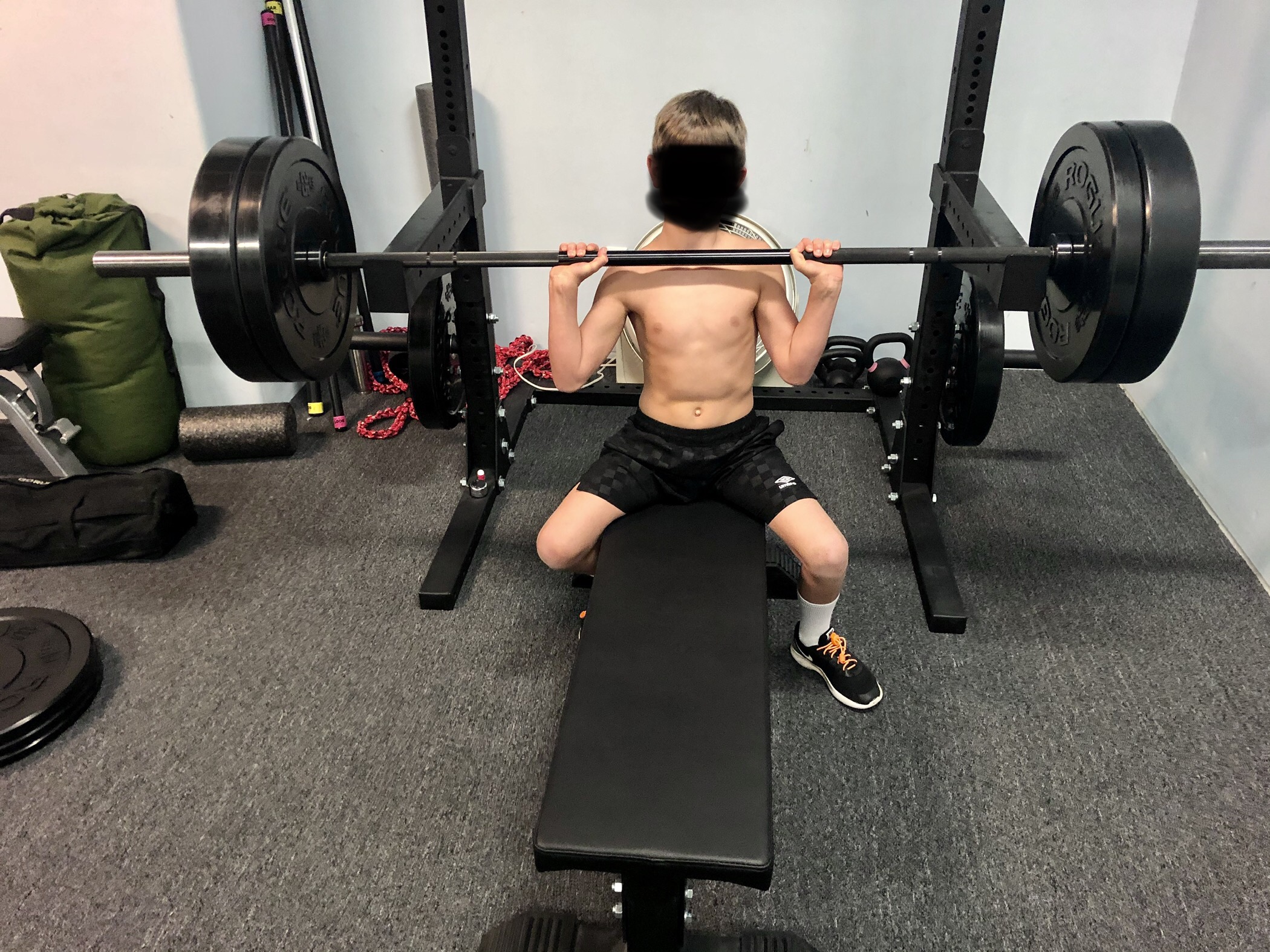
Two big 1RM achievements for me in 2020. 135# overhead and 200# bench.

Earlier in the block, I had missed on 205# and found myself pinned under the bar, in my basement, solo, at 5:30am. Eventually, I rolled out and was fine.

For the 200# attempt, I brought in a spotter.


What’s Your Filter

Our youngest told me our cat needs a Halloween costume. I laughed while realizing that my home-school internet monitoring system might need improvement.

Most of us will be “adulting” for 50+ years.

Half a century is more than enough time for choice to impact outcome.

Here’s how I stack the deck.


Understanding three things greatly simplifies decision making:

  • Payoff function
  • Worst-case scenario
  • Who bears the worst-case scenario

In most cases, knowing the above eliminates the need to make any prediction (of an unknowable future).

In investing, you can bet big when someone else bears your downside (non-recourse leverage, other people’s money). At home, you will want to be more careful.

You are going to be tempted to spend most of your time predicting an unknowable future.

Don’t.

Instead, figure out the payoff function, what’s the worst that can happen and who bears that downside.


Previous writing touched on the payoff functions for fame, financial wealth, strength training and personal freedom.

Tim’s blog did a great job of laying out on his worst-case scenario – shot in his own home as well as a brain dump of everything that can go wrong, and right, with fame. It was an enjoyable read but life is too complex to perform cost-benefit analysis for every choice.

Sounds good, doesn’t scale.

One of my favorite shortcuts is to teach myself the areas of my life where I have a lousy track record, and defer to my expert advisor(s). I look for advisors with domain-specific experience and a temperament different from my own then… …I do what they recommend.

There’s deep wisdom in stepping outside ourselves => What Would Jesus Do, or Buffett, or your coach, or whomever you think knows better than you.


Each time I choose, I open the opportunity to make a mistake. To reduce unforced errors, there are filters I use to eliminate the need to make a choice and to make the correct choice obvious.

First level filter => repeat my choice for a decade, where’s this likely to take me?

What’s the worst that can happen? Live long enough and you’ll see it happen.

Specifically, I want to stay well away from:

  • Prison
  • Permanent Disability
  • Bankruptcy
  • Divorce
  • Violence
  • Self Harm

The first three are obvious, but that doesn’t stop many, many people from surfing close to the edge, or getting an emotional rush from having charismatic risk-seeking friends.

Sometimes I need to phase out a relationship, sometimes I need to adjust my own behaviors.

With marriage, specifically, it’s impossible to “see” just how challenging your life will become if you have kids. You’re going to be really, really stressed out for a decade. Every single one of my prior bad habits tried to make a re-appearance in my life!

There’s no easy way around it but you can significantly reduce your chance of disaster if you pay attention to how your potential mate approaches risk.

Personally, I like to drive with people. You can learn a lot about someone by chatting, and watching, while they drive in traffic.

It is difficult to let charismatic sociopaths out of our lives. These people are a lot of fun to hang around with, especially when we aren’t the target of their ire. It gets easier with a few bad experiences.

When you need to make a change, resist the urge to justify your choices.

Learn to ghost with grace.


What if we are the person that needs to change?

Owning my choices and considering where they might take me.

Mountaineering, peer choice, alcohol use, cigars, bike racing… as my life changed from “just myself” to “my young family” the following became clear to me…

The people who were bearing the downside had no choice in whether to take the risk.

To make myself feel better, I took out a long-term care policy. The insurance reduced the financial burden if I was disabled but didn’t address the mismatch between who was taking the risk and who was bearing the downside.

In my 40s, severe permanent disability could have been worse than death. In 2013, with three young kids and an impaired balance sheet, I was in a very different place than I hope to be when our youngest graduates high school (in 2030, or so).

Perhaps I’ll add back risky stuff in my 60s… right now, I doubt I’ll have the energy.

🙂


Divorce, violence and self-harm => the bottom half of the list.

  • Nobody gets married hoping for a divorce.
  • Nobody starts a drive hoping to get their car shot up in a road rage incident.
  • Nobody repeats a pattern of justified rage hoping to create a crisis.

But these things happen, and their seeds are small choices, repeated.

I try to be alert to habits that can lead me astray.

Anger remains a challenge for me.

I pay attention to situations and habits that reduce my faults.

I focus on better.


My definition of winning has changed over time. However you define it, success is more likely with a plan, a couple well chosen peers and a habit of referring to a clear filter.

Making a habit of the first-level filter, tosses all kinds of stuff into the forget-about-it pile.

Reminder about the 1st Filter => repeat for a decade, where am I likely to be?

The first filter very quickly gets rid of (most of my) bad ideas.

Then what.

Here’s how I set priorities and shape my “to do” pile.

When I was an elite athlete, every decision I made was passed through a filter of, “Will this help me win in August?” At that time, the filter worked very, very well.


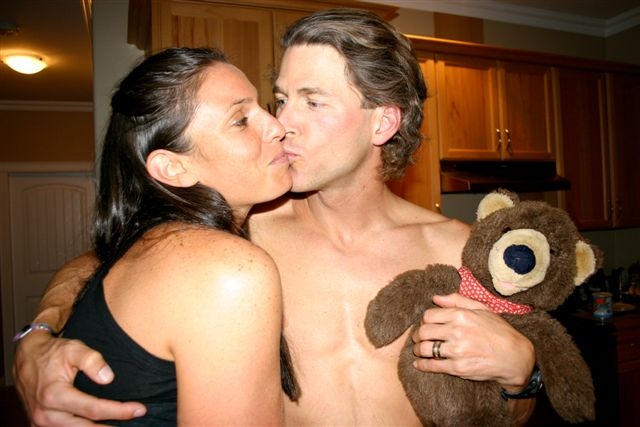
August 2007, with my real 1st Place Trophy. Before kids, we took ~1,000 days for ourselves. Highly recommended!

In 2005, I married and quickly realized my filter (of winning) would, if applied over many years, make a second divorce more likely. Deeply seared from my divorce, I really, really, really didn’t want another divorce.

I wanted a different result so I needed a different approach.

I needed to change my filter to…

“How will this impact my marriage?”

Your situation is likely different, but your need to know, and direct, your filter is the same.

Baby, or COVID, arrives… “How will this impact my family?”

Allocating time week-after-week… “What’s my real priority?”

Trivial irritations, the opinions of strangers… “Who gets my emotional energy?”

Every single person we meet has a filter => victory, vanity, external wealth, fame, likes, validation, please the person in front of me, attention, minimize conflict, how do I feel right now, what is the last piece of advice I heard… lots of people, lots of different filters.

Make a choice.

Iterate towards better.

Chronic Endurance

A friend’s question gave me a nudge to flesh this out.

My pal asked, “am I damaging my health by pursing my endurance dreams?”

The science seems clear => you are very, very unlikely to screw up your health by exercising. Most everyone could benefit from exercising a little more often.

+++

However…

My demographic is different than the general public.

Call us the “screw the limit” exercisers.

What about us?

+++

I’m fortunate to have a group of endurance mentors that are moving through their 60s, 70s and 80s with many, many, many (!) years of chronic endurance training under their belts. Some of their hearts, and joints, are coming off the rails.

It’s tempting to “blame” exercise for their issues but that ignores the problems they avoided through exercise (high blood pressure not received, depressions not experienced, diabetes not developed, harmful addictions successfully managed).

+++

That said, whenever I find myself asking a question about excess, the fact that I’m asking is, in itself, part of the answer.

If you’re already exercising daily then you’re not going to find any doctor to advise you that you need to ramp that up by a factor of 2-5x.

…and you may find yourself reaching out to someone like me to get comfort that it’s OK to do a little less.

In doing a little less, but continuing to exercise daily, you will reduce your risk of ruin.

“Ruin” being the loss of the benefits from daily exercise.

Risk of ruin is what encouraged me to do less.

Immune system failure, bike crashes, lower leg injuries, death by avalanche/car accident… each is extremely inconvenient.

In doing less, I discovered unexpected benefits of eliminating chronic endurance => improved sex drive, better cognitive ability, happier joints, less cravings and additional muscle mass.

If you’re under 50, or pre-menopausal, then my benefits list will make more sense in a few years!

+++

What about that Tour de France study about longevity? (abstract linked)

While extreme, I’m not writing about Tour athletes.

Chronic endurance is about chasing podiums for decades after your elite career.

It’s not surprising TdF athletes live longer than their peers. The constitution required to get to the start line creates a special cohort.

A better cohort to review is “masters age-group champions” across 10, 20, 30, 40 years and compare them to “daily exercisers”.

There’s not much money to be made studying healthy people so I wouldn’t hold your breath on seeing my alternative study!

Frankly, I wouldn’t expect there to be much difference in longevity. You’d be studying two healthy populations.

Our findings underpin the importance of exercising without the fear that becoming exhausted might be bad for one’s health.

Lifespan isn’t the point.

Being exhausted is horrible for our relationships.

Look around and you will see that relationships are what we lack in later life, particularly if our favorite hobbies involve being alone… 😉

Quality of life and keeping a lid on my risk of ruin… that’s what interests me these days.

None of these benefit from chronic endurance.

Managing Towards 1,000-Day Outcomes

2019-02-23 09.55.59I can get a lot done, while achieving nothing meaningful, by solving problems all day.

Am I managing towards desired outcomes, or focusing on my problems?

2019-02-23 14.54.54

My favorite thing is doing stuff in nature and I want to have a successful marriage.

So, I try to be open to the experience of sharing things in nature, with my wife.

One catch…

  • 1,000 days ago, my wife couldn’t ski
  • 500 days ago, she was better but we were not sharing the vibe (more like enduring it)
  • So, we both did what it takes so that we could share skiing together, and enjoy it

1,000 days of focus was enough for the two of us to capture the bulk of the benefit (but it did take 1,000 days!).

+++

The big picture points:

#1 – We managed to strengthen our marriage by doing something neither of us was good at three years ago.

#2 – If your younger self was achievement-oriented then working towards mastery in middle age is extremely satisfying.

This is a game we can play, together, for the rest of our lives.

2019-02-24 09.18.11

1,000 days ago, this guy was Level Zero at the ski school. We kept signing him up for lessons and he didn’t get one tick on his skill list!

He showed NO signs of aptitude, for a year, but he enjoyed the process.

Now he’s skiing the entire mountain and loving it. His price was a whole lot less than mine. It took him ~100 days on snow and a million vertical feet.

If you don’t the work then you’ll never know if you could have achieved the result.

Be wary of letting “problems” get in the way of gradually moving towards desired outcomes.

Iron School

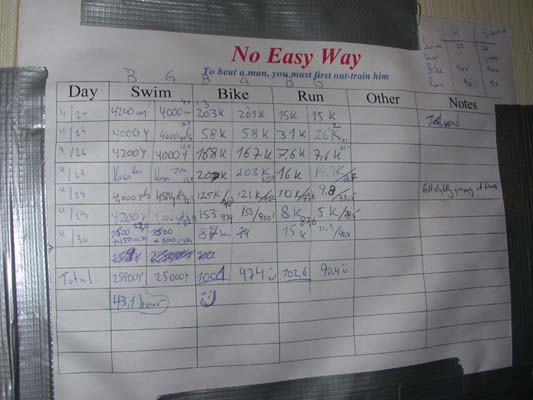
Had an interview request asking about my big training days — rather than trust my memory, I went into the archives.

++++

Iron School by Gordo Byrn

August 2004
By Gordo Byrn
8/13/2004

Preparing for IM Canada a couple of years ago, my coach (Scott Molina) had me go ‘old school’. Following my Spring 2004 Adventure (swim-bike-run America), Scott thought that it would be a good thing for me to enroll in Iron School. Having written a book on Ironman training, and managed a few solid race finishes – I was starting to feel that I had a solid grasp of what it takes to be a quality coach-athlete-IMer. I was about to be humbled, yet again!

What’s Iron School? It’s my name for Dave Scott’s elite training group based here in Boulder. Dave likes to call it Team World – I suppose that’s because we come from all over the place. I’d heard of Dave’s group last year and had visions of ripped athletes shredding sets like 60×100 on 1:05. I was highly concerned about my ability to survive. However, with over 500 hours of training in my body for the first five months of the year, I figured that now was a good time to give it a go. At 35, I’m not getting any younger.

Scott had warned me, “Dave will challenge you to go pretty hard. But it’s the best coaching education that you’ll ever get and, besides, the chicks are hot.” He was right on all counts.

Day One
As it turned out, I recognized Dave from his calves. He had his back to me when I first saw him and I noticed two tanned ripped calves extending down from his shorts. I wandered up and he welcomed me to the crew.

Coming off nine weeks of living in a trainer with the Baron, it was a shock to my system to be doing core work with five hard body babes (HBBs) wearing not much more than sports bras and tri-shorts. That first day the “men” consisted of Dave and me. We did about 45 minutes of core and balance work in a squash court. I’d been careful to arrive in decent shape, but it sure seemed that I had the highest body fat in the room.

Scott gave me clear instructions to take it easy but how can you do that when you are training with five ladies and a 50-year-old six-time world champion? They were crushing me and my ego wouldn’t let me crack. It took me three massages and a week to recover from that first session.

Scott also told me to wait a week before speaking to Dave. You see, I have a tendency to be pretty intense when asking experts about all-things IM. I made it through the first hour keeping to myself. However, after the session Dave asked me a quick question about my results and…. I was off! He got a continuous stream of my triathlon history for the next 15 minutes – complete with splits, paces, heart rates, wattages and anything else I could think of. The main thing I remember from that exchange was his observation, “Gordo, we aren’t training for the race across America.” He’d be repeating that to me a lot over the next little while. It’s become a favorite phrase of mine.

How Fast?
Three weeks after I arrived, I’d managed to convince Dave that I was serious by getting drilled by him and the ladies on a daily basis and coming back for more. Scott told me that most folks only last a couple of weeks with Dave before they find out that it’s all a bit too much for them. Dave sets the highest standards.

Dave and I had a little planning session for Phase One of my IMC specific preparations. Dave offered me some ideas on my key workouts and I diligently took notes. I had an outline of my week, went home and built it. When I did that I saw that it “only” added up to about 30 hours. That’s pretty light for me, so I figured that it would be manageable. Thing is, I had about ten key sessions and Dave gave me a little mission for each session. There was very little truly hard stuff but far, far more moderately-hard (5-12 bpm under LT) work than I’d been used to.

My ‘favourite’ was this run session that Dave recommended – 34K run build to steady over the first 8K then 3×25 min open marathon effort, with steady recoveries. To make it interesting, I’d do this in the middle of the day. Just as I finished my first time through this session, Chris Legh jogged by (he was peaking for IMCDA at the time).

Chris: “Mate, you look shattered”
Gordo: “Dave Scott session. Didn’t want to leave any money on the table…”

I understood the physiology behind the training that Dave was recommending, but the training itself was leaving me feeling pretty nauseous after most of my key sessions. Driving home, I would often ask myself “should you _really_ be driving in this condition?” My fatigue got to the point where I would lie in bed having a conversation with myself. “They won’t break me”. I suppose “they” were Dave and Scott. However, “they” weren’t trying to break me. They were simply giving me the training to meet my goals as I laid out. I’d alternate between “death before surrender” and laughing at the insanity of my life spinning arms, legs and wheels.

I have to hand it to him, though. Dave really challenged me and I just managed to get through each week (daily stretching, three massages per week, zero social life besides a cable modem). In my eyes, Dave is truly “the man”. As tough as he is on us, he’s miles tougher on himself.

After a few weeks of drilling it, I wondered what Dave’s views were on recovery weeks.

Gordo: “Dave, I’ve been going pretty solid for two weeks on the new program.”
Dave: “Gordo, you’re doing great. Keep it rolling, son.”
Gordo: Well, you know, I did two weeks of decent training before we changed my program.
Dave: “And?”
Gordo: “And I rode across the States before that. I was wondering when you thought I should back off.”
Dave: “Keep it rolling until you can’t elevate your HR, then take a few easy days.”
Gordo: “Got it.”
So, I developed a running joke that, eventually, I’d have a true “breakthrough session” where I’d explode and get to take a few easy days. Thing is, I never blew. I don’t have a lot of spare brainpower these days but I seem to keep rolling along. It’s been an eye-opening experience. Dave’s taught me a lot. I’m grateful for being taken into the crew.

In addition to Dave, I’ve learned quite a bit about what it takes to succeed from my fellow members of Team World. Each of the crew embodies an essential trait of championship performance.

The Home Grrrlz
When I started to “speed up” in 2000, one of the best things about racing was running alongside the elite ladies. Running with the top women has always been a pleasure with me. I’ve always felt a deep calm in that situation (except that time Lori dropped me…). Now I get to train with the ladies every day, not bad at all! I find something really entertaining about their attitudes and the little games that we play with each other. Besides, if you’re going to drill yourself, you might as well do it while being surrounded with a selection of the finest bodies on the planet.

Amanda Gillam is one of the crew. Her partner is Michael Lovato – Mike’s bigger than me and wears a skull & crossbones swim cap. So I’ll be real polite here and simply note that Amanda owns the finest selection of mini-sports wear that I’ve come across outside of a Victoria Secret catalogue. She’s not the only reason my new goggles are mirrored, but she might be one of them.

Bella Comerford is another one of my favorite training partners. Bella never, ever, ever misses a session. And the only way that she’ll back off is if she gets a direct instruction from The Man himself. Towards the end of June, the rest of Team World were away doing IM races. It was just Bella and me in the squash court. We came up with a game of “Core War”. Forty Five minutes of alternating core exercises – I choose, she chooses, I choose, she chooses… Is that how compulsive obsessive ultra-endurance-types flirt? It seemed like such a good idea at the time… I didn’t walk straight for two days.

One of the best things about swimming in Kailua Bay is the dolphins. I’ve been lucky enough to swim with them several times when training for Ironman and Ultraman. Dolphins are beautiful, yet crafty, in the water. Moving with effortless ease, they stay just out of reach, tempting you to try to swim with them, to touch them, but you can never quite catch them. Monica Caplan is my daily dolphin, her quiet power reminding me of the special feeling I get when I visit the Big Island.

Joanna Zeiger trains with us. I get a big kick out of her – she’s the only one of the girls that hasn’t teased me about my ‘considerable idiosyncrasies’. Possibly because she understands best what it’s like, what it takes. Some of my favorite Jay-Z memories:

·> Melting the entire top lane at the pool the day we did 4×1000 meters. Jay-Z finished up by holding 1:12s for the final K (at altitude). Everyone, but Lessing, got out of the lane and he was left whimpering at the end. I was two lanes down, with my tongue hanging out, holding 1:25s

·> Two days later, she nearly gave herself an asthma attack swimming “fast 50s”. I asked her what happened and she observed that “Dave said swim fast”.

·> Gym work, every day. I’ve never arrived at the club and not seen Jay Z lifting. I’m sure she takes days off but I haven’t seen them.

·> Track sessions – today Jay-Z asked to run with us. It was a big moment for me. Why? Back in May 1999, I was a newbie staying in San Francisco for the Escape from Alcatraz. Joanna was one of the favorites for the race and was so far beyond my personal definition of “fast” that I couldn’t wrap my head around a person being that quick. At the race, I summoned my courage to walk up and say hi to her. She was really nice and wished me good luck. Five years later, she’s asking me to pace her for a Dave Scott track session. Pretty Neat!

So that’s a brief run-down of Iron School – it’s been a great summer of training with Dave and the gang. Only a few more sessions until Jay-Z and Big G toe the line at Ironman Canada. I’ll try to report back before the race. Dave’s promised that we will be backing off shortly…

See you at the races,
– gordo