Marriage Material

I blew up my first marriage in a year.

If you asked me about it then, not only would I have blamed my ex-spouse, I would have blamed the entire concept of marriage.

Roll forward a couple decades (!) and here’s a lesson that I’m seeking to pass along to my kids.

Sibling bickering is exhausting, painful and universal.

Rather than focusing on “fixing” my kids – who seem healthy, loving and normal – I use conflict as an opportunity to teach.

I wait for the energy to go out of the situation.

Hey, I want to teach you a Jedi mind trick.

When you are upset…

Watch your mind.


It is going to fix on something outside…

…Bella’s voice

…Axel’s question

…Lexi’s tone

…my face


Your mind is going to trick you into thinking that the problem is out there.

Not helpful.

Because you can’t do anything “out there.”


What you can do is pause and ask, “What do I want?”

And you’re going to find something to helpful to do.

+++

Simple, not easy.

Supporting Public Education

In my community, many families opt out of the public school system. Public schools are better with all our kids attending. We’d love to have you opt back and join us.

Three kids imply $100,000 per annum, pre tax, in the private system. Three million dollars of future value when my wife reaches retirement age.

For a whole lot less, consider…

Volunteer in the district — I started by helping in the classroom but realized my skill set was most useful at the district level. Monica rotates between our kids’ classrooms on a weekly basis. If you want better treatment then give.

Hire public school teachers to tutor – the single best investment you can make for your kid – you will be amazed at the benefit one session per week brings to your child.

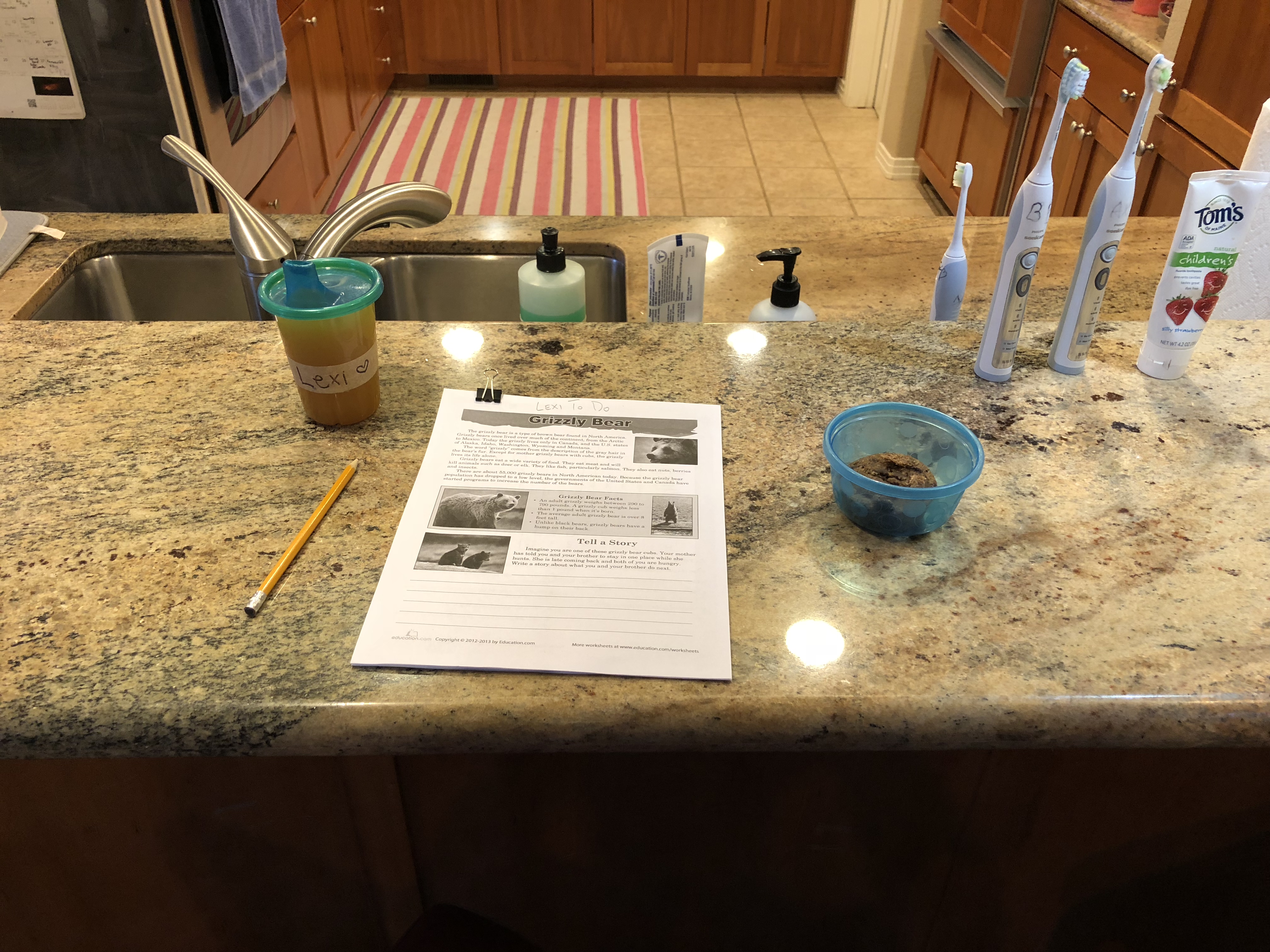
Join education.com // it’s a no-brainer and gives you access to worksheets you can do with your kids.

Smarter application of family finances:

  • childcare to support your marriage and the young adults that work for you
  • after school activities because fit kids have greater capacity to learn
  • swap money for time and use the time to make yourself a better person
  • live walking distance to a great public school, kill your kids’ commute and be a hub of goodness in your community

I often catch myself fixating on external problems that distract me from taking action on what I control.

Choose wisely where you invest time, money and emotion.

Long Term Healthy

Yet another friend convinces a doctor to give her a procedure so she can continue to do what’s causing her pain…

…reminds me of a realization – prescribing is less fun when I see my role in hurting the health and home life of my clients.

+++

Avoid Athletic Ruin

Missing one day of cardio makes me serious, two days off and I’m quiet, three days off and I’m sullen…

Ruin, in an athletic sense, is dealing with the implications of not being able to exercise.

If that rings true then what follows might help.

+++

Given my lifetime of extreme exercise, bike crashes and running injuries, a radiologist could find a lot of things “wrong” with my body.

Knowing that I’m a walking insurance reimbursement opportunity – I stay away from those that profit from unnecessary treatment.

When I pay attention to what follows, my body works great.

+++

Before paying someone to cut, inject or irradiate you…

Rest – addicts seek extreme friends to reassure themselves that an unreasonable lifestyle is sustainable – sometimes I’m the seeker, sometimes I’m the friend.

Lifestyle Modification – winning isn’t important, racing isn’t important – ask a broken down athlete what they miss and you’ll hear a similar story, I wish I could simply get out the door without pain. It’s worth a lot of compromise to maintain my ability to get out the door.

Pre-Habilitation – why not try a world-class rehab program BEFORE you opt for surgery. For non-acute injuries, rest as if you had a procedure then give your best effort to strengthen your body and increase your range of motion.

My demographic takes pride in doing what-it-takes for athletic success. If you want a true challenge then do the above and deal with the internal dialogue that results!

+++

Risk seeking friends – this is wider than athletics.

My past choices have shown that I have the capacity for bad judgement.

  • Elevate my heart rate.
  • Introduce group dynamics and social proof.
  • Surround myself with charismatic risk seekers.

…and you have the recipe for a good time! 😉

It’s also a perfect storm to spin myself into fatigue, injury and depression.

Remember who gets to deal with the wreckage.

Strategies for Good Times

Here are three areas where I fool myself.

Consider Ruin – I’ve done a good job of addressing the risks identified three years ago. So good that, when I asked myself the question, “What can wipe me out?” I quickly answered, “You’re set amigo.” That’s a top-of-the-market sentiment if I ever heard one.

Having mitigated the hazards of leverage, unemployment, litigation, fraud, risk-seeking peers and insolvency… my main risks are health and accidental death.

Do you know your own?

Stay Variable – I was listening to out-of-state visitors rave about the beauty of the Rocky Mountains.

They’re right.

Where they go wrong is assuming that buying a condo will enable them to lock in the emotions of beautiful spring day.

I’m just like them.

We’re all just like them.

Good times give us access to additional finance/capital. We often use this money to capitalize luxuries and time.

Stay variable, stay invested and resist the urge to lock in family overheads.

Rebalance Time – the best deals I’ve done have been where I traded money-for-time.

It takes vigilance to carve time to become world-class at things that interest me. Mastery makes me happy.

Social media, marriage, long-term friendships, work/non-work, self/family – I don’t advocate being in balance – I do advocate making an honest assessment and asking myself if I’m OK with where my time allocation will take my life.

Family Leadership

My kids are at the stage where they’re still asking for permission to go to the bathroom.

That will change.

When it does, I want to be ready for a chat on family leadership.

As a young man, I was a passionate believer in advancement based on merit. Merit being (solely) a function of competence and output. This suited me because what I lacked in tact was overcome by effort. I’m guessing most teams have members with weaknesses that are overcome by high output.

When we ask the world to judge us solely on output, we’re setting ourselves up for problems.

We are going to find most people confusing. This confusion will manifest in our families and relationships.

What’s my emotional output?

  1. How do people feel after they interact with me?
  2. How do I treat people that have no recourse against me?
  3. Do I stand ready to do what I’m asking you to do?

Thinking back to how I would have answered these 25 years ago…

  1. I don’t care
  2. No idea
  3. I use other people’s time and money to accomplish my goals – they are free to do what they want

I’ve found a large return from small adjustments.

Getting To Know My Boy

As my kids age out of preschool, it’s proven easier to build a relationship with each of them.

Each of my kids has different capacities for emotional, social and physical intensity.

I’ve made a few unforced errors when I forget this reality.

Our kids’ training is similar but he’s taken a shine to the following:

  1. Indoor Climbing
  2. Swimming
  3. Soccer
  4. Family PT (push ups, chin ups, burpees, sit ups, dips)
  5. Hiking Uphill
  6. Skiing Bumps

I happen to like #4, #5 and #6 so we do those together, a lot.

I get a lot of satisfaction from developing competency, then mastery, of physical pursuits.

He’s the same way, and gets to demonstrate his developing physical power to his dad.

When we’re out in the field, parents ask “how’d you get him to do that?”

In the moment, I’m simply a “proud papa”.

On reflection, I think the following are the core of what works…

  1. Be the brand
  2. Share an active life in nature
  3. Meet the kids at their level

Time and attention are precious to all of us.

…and the kids will get my attention one way, or another!

What We Don’t See

Twenty-five years ago, I heeded a call to be a better person.

Just a bit better.

Frankly, at the beginning, it would have been tough to see the “better.”

My changes were, essentially, being less unhealthy and less of an asshole.

Even small acts of improvement are not easy.

They are challenging because, inside my head, I only “see” one side of life.

In the moment, my only experience is discomfort.

They are challenging because, I had created a life that supported my poor decisions.

Remember, what we don’t see.

Avoided Setbacks and Unforced Errors.

We never experience avoided health problems, relationships not falling apart, sidestepped addictions, bypassed financial ruin…

I’m grateful the 20-something version of myself was sick of being sick and decided to go for a walk.


The 30-Day Test

The first principle is you must not fool yourself — and you are the easiest person to fool.

— Richard Feynman


If you self-medicate with drugs or alcohol then you’re going to have a story wrapped around your usage.

My story is beer helps me fall asleep. It’s easy, and wonderful, to knock myself out with a couple of beers. Across 2017, I noticed a habit forming.

As two beers became four, I remembered Doc Evans’ video about alcohol and health. I also sensed that my reason for drinking was weak.

So I decided to make changes, for 30 days:

  • wake up 30 minutes earlier (5:30am is my new normal)
  • ditch the beer
  • pay attention

Similarly my earplug usage was up to 100+ hours per week and a sense of panic would arise when I found myself without plugs. I’d been using plugs for years and they helped, greatly, with not lashing out in the face of my kids’ whining.


How’d it work out?

I lost 8 pounds.

The earplug adjustment happened so quickly I forgot I needed them.

I haven’t forgotten about beer.


We often have habits that hold us back and forever seems daunting.

30-days was:

…long enough to expose my faulty thinking

and

…short enough to get me to start.


One final sleep tip, I lie beside my son for 15 minutes when he goes to bed.

No agenda.

Just breathe.

Our favorite part of the day

Applying Wealth Wisely

A reader recommended a book about Living with a Seal. The book is an entertaining read, but I did find myself swearing far more than usual afterwards (burpee test!).

The book is about a marathoner who spends a month training with David Goggins (former seal). Having done extreme training, I think it’s safe to assume the rest of the guy’s life was on hold during his month with Goggins!

Complete control of your schedule and the ability to focus on one thing for an extended period of time.

Whether you want to train with a seal, start a business, write a book or simply get really, really good at something… the ability to control your schedule is the starting point for your journey.

Can you take a month “off” to focus on “one thing”?

A month is a good unit because it’s about what it takes for me to start a new business, write a book or bump my level up in anything.

As an elite athlete, I’d spend 13-week blocks focusing on my sport. By that time, I was already good, and seeking to become the absolute best I could be.

You need time because a second use of wealth is accessing, then following, the ACTIONS of world-class teachers.

Advice without action is entertainment.

I’ve been guilty of throwing money and other people’s time at anything I found unpleasant. It can be a winning strategy but it was a band-aid for unnecessary complexity in my life choices.

If you’re a do’er then work towards control of your schedule so you can learn-by-doing alongside the best.

Parenting is similar to learning to swim — we’re not going to become world class on a couple hours per week!

Make sure your mentors have the sort of lives, and character, that you’d like to emulate.

Chose wisely!

Mental Health for Aging Athletes

Lucho shared this video of David Goggins.

So many memories come back when I listen to Mr. Goggins share his truth.

It takes courage to change.

===

Here’s something I learned from the greatest triathlete of my generation…

If your mental health relies on a physical expression of self then focus your drive on reducing your patterns of self-harm.

Everything else is details.

===

Some useful details…

What’s your objective?

Can you answer this question simply, and immediately?

What’s your objective?

Not because of the the importance of whatever you are working on.

Rather, because working towards an objective gives structure to your days and meaning to your life.

+++

What’s your pattern of daily release?

Strength training and uphill cardio have better long-term outcomes than…

  • drugs and alcohol
  • violence and anger
  • outrage and gossip

…if your current alternatives aren’t working then consider…

Strength training and uphill cardio.

Whatever works for you… remove the things that prevent you from getting your daily release.

Pay attention to the habits that screw up tomorrow.

+++

What is your pattern of breakdown?

You are going to see this in your peers, before yourself.

The closer you are to the sharp end, the brighter your flame will burn.

Whether it is 5, 15 or 25 years… each body and mind has a limit to the amount of elite-level output it can sustain.

Similar to how you conditioned yourself to endure, train the capacity to appreciate when you’ve had enough.

  • Enough pain
  • Enough challenge
  • Enough exercise
  • Enough work
  • Enough glory
  • Enough winning
  • Enough dessert

Encourage the humility required to admit you’ve had enough.

+++

When life seems out of whack, return to the basics.

  1. Objective
  2. Release
  3. Patterns of Breakdown

Then…

  • Do good deeds in private.
  • Be your own hero.