The Blue Flame Years

blueflameLast week, I might have left you with the impression that it’s always a good idea to trade money for time. Here’s a counterpoint.

What do you plan on doing with that time?

As a young adult, I had the opportunity to travel before graduating college. I spent much of that summer drunk. A dangerous trade for a young man with a family history of addiction and mental illness.

Later, I dialed down my drinking and discovered a big increase in time on my hands. I was fortunate to fill this void with sport.

As a coach, I often saw athletic performance decline when an athlete gave themselves more time to “get serious” with their sport.

A high-powered lawyer shared his fear of retirement. He was terrified at the prospect of increasing his non-working lifestyle (sleep, booze and high living).

With a bit of luck, your parent’s helped guide your focus. If not then you would be smart to channel that energy into areas that you’ll value in later life…

…but what the heck are those things?!

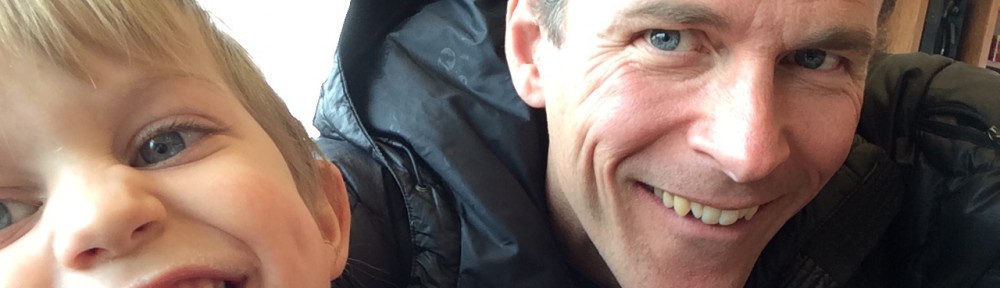
Here’s what the young man (in the picture above) got right.

An education that you can apply to help other people – this could range from finance (helping myself) to engineering (building things with others) to medicine (helping others).

A habit of lifelong physical activity – if your parents didn’t pass this on to you then you’d better start immediately – don’t get wrapped up in performance, focus on touching nature every day.

World-class peers and mentors – when you are burning bright, it is more important to learn, than to earn. During a two-year apprenticeship, I was paid peanuts by one of the best firms in the world.

An ability to live cheaply – this accomplishes three things: (a) gives you the flexibility to take any type of work; (b) minimizes debt from your education; and (c) enables you to continue an early habit of saving money for freedom.

A fear of debt – assume that every $1 you borrow before 25 is $10 that you won’t have at 40. Frankly, if you don’t quickly establish a habit of living within your means then it will never take hold. Ask your parents and study their friends.

A love of work – here’s what my wife gets right about endurance sports for kids – growing up active, my kids are associating output with fun. If you have an alpha child then sports are an essential part of not ruining, or drugging, what makes her great.

I have made a ton of mistakes.

A handful of good habits mitigated the damage.

Family Investment

2016-05-29 16.30.07Having worked in finance, and coached the triathlete demographic, I know people with a lot of discretionary income.

I have three kids and the way we allocate income has changed significantly over the years. Here’s a current snapshot.

family_spend

The marriage/kids slice (blue) is about half our spending. What the heck is in there?

  • Sitters and Live-In Au Pair
  • Preschool Fees
  • House cleaning
  • After school activities
  • Summer activities

With minimal psychological maneuvering it would be easy to shift the marriage/family allocation towards myself.

My wife arrived into our marriage with an expectation of driving herself straight into the ground to “support the family.” Her story is repeated across a range of households.

It is tempting to compromise our marriage for short-term savings.

+++

I like to invert the temptation and ask myself…

How do my spending choices benefit my marriage?

What about my health?

Consider…

A – collectively, we see no issue with parents torching their physical, and mental, health to “support” the family. Among my peers, the easiest way to get time alone is by working full-time. Double income, no time.

B – couples are often blind to the price the marriage is paying from being completely fried. The baby/preschool years will end up being a decade for us (2008-2018). Do you have enough passion in your life?

C – my spending places the highest premium on buying time

  1. time exercising – to maintain my physical health
  2. time alone – to maintain my mental health
  3. time with my spouse – to share experiences

My wife often feels uncomfortable with our childcare spending. There is tremendous social pressure for a mother to follow a path of doing everything.

Buying time is insurance against the risk of arriving at 50 overweight, mentally fried, with a marriage in need of counseling and an oldest heading into middle school with an angry (or absent) father.

Trade money for time.

Family Risks

cargobikeWhen you consider risks to your family’s capital, what sort of things pop up in your mind?

  • Stock market crashes
  • Unemployment
  • Death of main breadwinner
  • Divorce
  • Underperformance of family business
  • Change in political situation
  • Change in interest rate policy
  • War and civil unrest

If we broaden the scope to human capital, what might you add?

  • Addiction and Substance Abuse
  • Remittance dependence
  • Health and wellness
  • Dementia and eldercare

I’ve known five generations of my family and we’ve experienced all of the above.

Surprisingly, the top-of-mind risks are not our source of greatest loss.

Aside from mental illness, our greatest source of turmoil has been due to developing an abnormal sense of normal. More specifically, we’ve looked up to friends & family that led us astray with regard to our financial aspirations.

DaddyGIf you happen to be a self-made individual then you will, quite rightly, say “it’s my life and I’ll live the way I darn well choose.”

You are right.

I commend you.

Self-reliance is a wonderful gift to our communities and I hope to teach it to my kids.

…but I remind myself of the cost of benchmarking at ever higher levels of achievement.

  • The cost comes in time not spent with my spouse and kids.
  • The cost comes from choosing work that is ethically ambiguous.
  • The cost comes when spending time becomes spending money.

+++

This caution also applies to risk.

As a young man, I tracked into higher and higher levels of “acceptable risk.” A good friend died. Another went bankrupt.

Teach your kids to notice risk-seeking behavior in themselves, and others.

  • Mountaineers => good, great, dead
  • Property Developers => good, great, bust
  • Professional Athletes => good, great, disgraced

+++

Finally, consider the impact of neighborhood and peers.

A friend jokes that his daughter was one of the few kids at her Bay-Area school that didn’t have an elevator in her home.

What’s my children’s definition of normal?

Choose wisely.

Money and Attention

storyGiven the firehose of media attention pointing at the US Presidential election, it’s easy to get tired, fed-up, angry, worried… you name it with regard to the state of politics.

It is worth remembering that the players have a vested, mutual, interest in getting us scared, and angry enough, to give them money and attention.

Rather than bringing fear and hate into the world, consider the following…

Take a characteristics of your least favorite politician and remove it from yourself.

  • You might have a concern about a lack of tolerance.
  • You might have a concern about a lack of integrity.
  • You might have a concern about a focus on personal wealth.
  • You might have a concern about fairness.
  • You might not like the way the person looks.

Whatever the trigger, we are going to be reminded of it, a lot, over the next five months.

Become aware of the trigger…

…and work to subdue the trait from within yourself.

Healthcare Tradeoffs

2016-05-13 12.25.44I’ve been helping an elderly friend navigate the healthcare system. It is easy to get present-procedure focused. No one took a long-term view of my buddy’s life path.

It’s going to be easiest to explain by putting myself in his shoes.

Let’s say I’m 80 years old and have a stroke, from which I will recover. At the hospital, they discover I need a pacemaker. The pacemaker is required because I have a condition, which is causing my heart to stop beating for up to 5 seconds at a time, mainly when I sleep.

The heart surgeon says I should fix my heart – he’s done the procedure close to 1,000 times. I am likely to see additional years of life.

Why would I hesitate?

I might hesitate because I know my family history.

By the time the pacemaker battery needs replacing (my late-80s) all my grandparents would have been dead, or nearing death.

Here’s what my family tree has been serving up…

  • Organ failure with Alzheimers (pacemaker kept on ticking until kidney failure killed the heart)
  • COPD with dementia
  • Cancer
  • Stroke

“Doc, I have a concern we are helping my body last long enough for me to lose my mind.”

No easy answers…

…but here are some questions:

  1. What’s my mental, physical, spiritual state now? How am I doing relative to peers and family history? There could be very good years left before dementia hits hard.
  2. Are there conditions/diagnoses where we switch off the pacemaker? Do I want to specify, now, what my power-of-attorney should do? It’s easier for a POA to follow my instructions than struggle to balance the considerations of: past self, ever changing conditions and future self.
  3. Does my POA have access to a medical advisor with the skill, and compassion, to navigate these decisions? Look for a middle-aged MD, with a large family tree, where the elders frequently live into their 90s.
  4. Do I have the capacity to continue to bring love into the world? I’d be willing to suffer quite a bit if it was a win for my children.

Lifestyle, diet and modern medicine can greatly reduce our chances of dying early. In each of our family trees, there comes a point where we’ve done about as good as we can expect.

I’ve preemptively forgiven my POA for the decisions that will need to be made.

I’ve had a wonderful life.

Building Bridges

2016-02-12 18.28.49A few years back, I identified my relationship with my daughter as an area that had the potential to greatly improve my life. At the time, I was devoting excessive energy to her via worry and stress. She was always in my mind, even when I was away from her.

How can we reduce the impact of our not-helpful obsessions within our minds?

I use two techniques:

  • Be kind and generous to as many people as possible – lots of tiny actions
  • Express the same habit, directly, to the person with whom I want to improve my relationship

Now, it’s important to bear in mind that it only takes one person to torpedo a relationship. So I might not be successful.

That’s OK – “success” isn’t my goal.

If the goal isn’t “success” then what is it?

Take a minute and consider what your words to your children indicate about your definition of success.

When I’m stressed, my words might indicate a desire for compliance, quiet and solitude. Is that what my family really needs?

Those same desires can be satisfied via personal, internal serenity within whatever relationship I have with people.

What’s this have to do with the “one-on-one” trip?

Taking the toughest member of the family on a road trip was a way to “step up” within my household. I’ve been taking my oldest on the road since she could walk.

ax_zenMy young children have a simple agenda with me…”do stuff with Dad.”

It’s simple, but not easy.

It’s not easy because “dad” has a preference for strong coffee and exercising uphill. I also like to be left alone to read, write and think.

To do fatherhood “right.” I have to make the commitment to be with my child, on the child’s terms.

A habit of service spills over into other aspects of my life, for example my marriage.

  • Just me and the child
  • Focus on doing things the kid likes
  • Never more than three nights away
  • If the kid is awake then my agenda is put to one side

Truth be told, the trips started as a way to get my Alpha Child out of the house. The fact that I ended up with better relationships with everyone was an unexpected bonus from seven years of sticking with it.

ax_mexico

Non Financial Aspects of Estate Planning

2016-03-09 15.23.39A friend asked me to give this talk to his firm, but I prefer to write short articles. 😉

When families talk about estate planning the discussion can center around cash flow, assets and tax minimization. While those topics need to be sorted, dollar-centric living can lead to regret.

If you apply last week’s tips about family leadership, you might discover certain realities about financial wealth.

2016-03-16 13.56.23Namely…

The highest use of an asset lies in its capacity to enable better choices…

  • flexibility to allocate time towards shared experiences
  • the ability to control one’s schedule
  • the opportunity to tag along when other people are doing what they enjoy
  • health in the context of body, mind and spirit

+++

2016-03-13 21.51.50Cash flow without education, connection and meaning can be a negative. Examples are the challenges faced by lottery winners, professional athletes and young, highly paid professionals.

With cash flow, I would go further and point out that excess family cash flow will ultimately be consumed by the least responsible adults in a family system.

You might tell yourself that you are “doing it for the kids” but the money ends up being blown by someone’s aunt or uncle.

2016-03-11 20.04.44-1What to do?

  • In your lifetime, use money to acquire time.
  • Share time with people you wish to influence with your values. Be the brand.
  • Remember that it’s better to earn, and spend, our own way in life. It’s what you did.
  • Have a bias towards “assets used for shared experiences,” rather than cash flow.

Ask the question, How do I wish to be remembered?

Be that person, today.

+++

2016-03-10 08.52.21Shared experiences, both positive and negative, bridge generations across time.

As a child, I had four grandparents and three great-grandparents. Of my childhood elders, only one made the transition into my children’s consciousness. The elder that bridged across did so because my daughter and I were involved in her end of life care.

Love, not money, is what travels across time.

2016-02-24 16.51.20

Family Leadership

2016-02-08 10.36.04I’ve written about the concept of the good-enough parent — a combination of showing up and not retaliating. It is a simple strategy but quite challenging in the face of a disgruntled preschooler!

Seven years in, I’ve managed to make non-retaliation a habit. If you are still working on it then remember to practice all-the-time…

  • Yield in traffic and queues
  • Breathe into tension
  • Slow down

New habits are most easily created when we are capable of self-control — away from the kids, in low stress environments.

I’ve been at it for over 15 years.

+++

What’s next?

I’ll start by sharing what’s definitely not next.

A habit of constant correction will make you, and everyone in your house, miserable.

An easy way to make this visible… track your positive-to-negative interactions with your kids, spouse and friends.

Another way… ask a close friend… When I talk about myself, what do I say?

If this is an area for improvement then it’s already obvious to everyone around you.

It was shocking when I did this with my oldest. I became so aware of my error in approach that you can get a quick rise out of me by constantly correcting her in my presence.

Correcting less, in ALL areas of my life.

+++

2016-03-09 15.27.20What about next-level positive habits?

De-escalationbecome skillful in draining the energy out of situations.

Most of us didn’t grow up in an environment that taught us these skills.

Becoming an effective family leader will require education, motivation and daily practice.

Two things helped me here:

  1. learning the methods of outstanding preschool teachers – if they can teach preschoolers to de-escalate then they can certainly teach us!
  2. reading the secular writings of spiritual masters

2016-03-12 10.34.52Opening To Experiencethe most valuable experiences shared with my family serve no purpose, other than sharing an experience with my family.

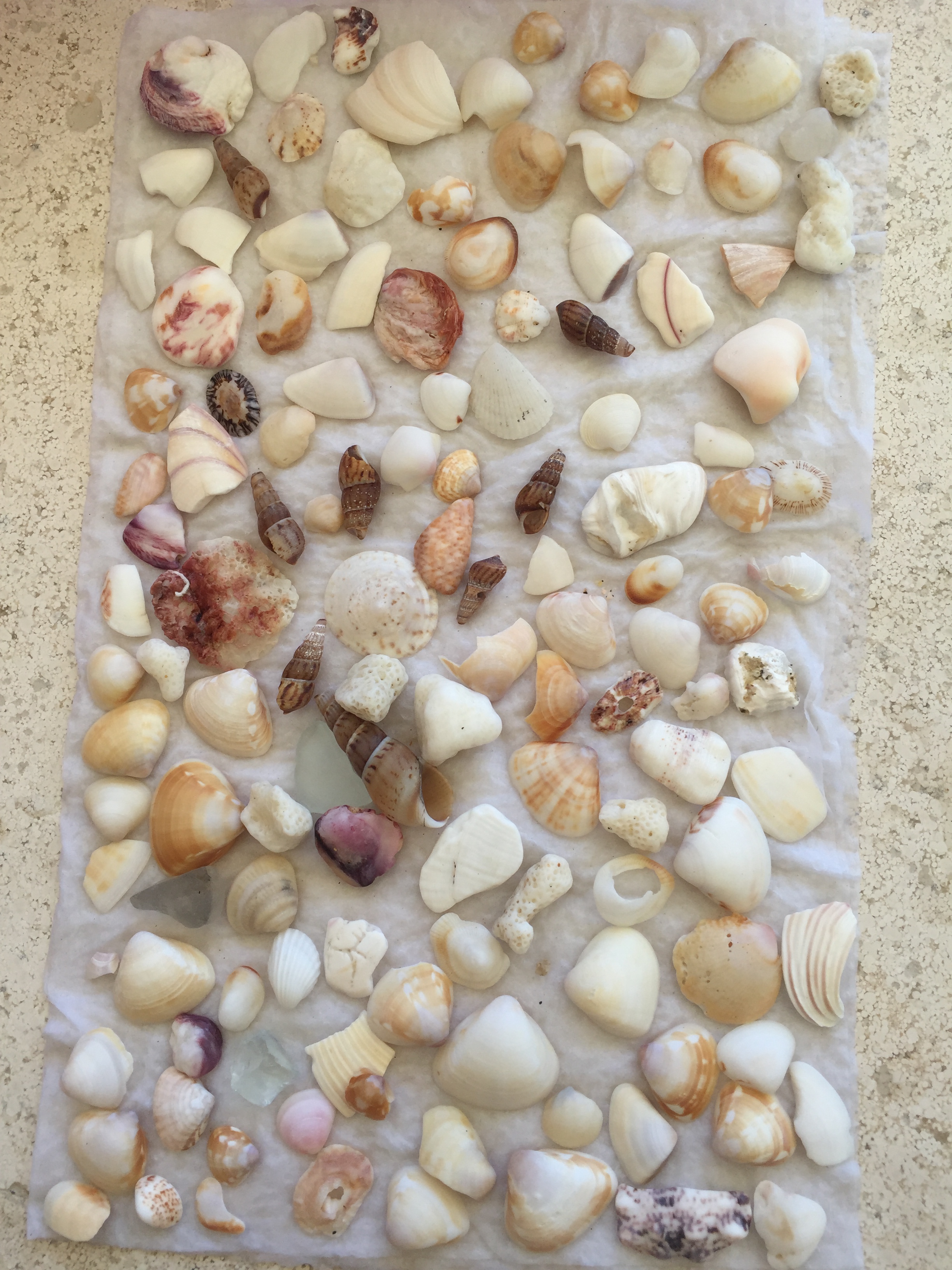
Often, my shared experiences are activities that I would not choose for myself. Recent examples, collecting sea shells, swim races, downhill skiing and art shopping.

2016-03-12 10.31.31Most of the leadership we were shown as children was about saying “no.”

Constantly being told what not to do.

Consider becoming the embodiment of what to do.

Is it any wonder many of us rebelled and left as soon as we could?!

Is it any wonder that many of us continue to hold resentments about events, and people, that haven’t existed for 20, 30 or 40 years?

To break this cycle, I say “yes” as much as possible. Yes to beachcombing. Yes to downhill skiing. Yes to painting. Yes to card games.

Stay open to experience.

Stay open to love.

2016-03-10 08.42.33

My Children’s Laughter

Loading UpIn my mid-20s, it dawned on me that I had saved enough money to sail around the world.

Instead of a trip, I took a promotion.

By my early 30s, my net worth had grown and I took a leave of absence, to effectively, exercise all-day everyday.

It wasn’t a feeling of financial security that pushed me to make the change.

It was a set back, an unexpected divorce.

Other major changes have been triggered by unemployment or massive financial loss. In buddies, I’ve seen health issues as the trigger.

Most recently, it’s been misery. Unexpected misery has proven to be the most useful part of parenting.

A story about coping…

BelleSince 2008, I’ve done, or seriously considered…

  • Studying ministry
  • Teaching my kids, my wife’s family’s religion
  • Selling my house, buying a catamaran, sailing around the world – this would include boat-schooling my kids
  • A bioscience degree
  • Various start-ups
  • Returning to finance
  • Pursuing a world-title in a niche sport
  • Pursuing a world-title in another, even smaller, niche sport
  • Relocating to Australia
  • Relocating to California

Pretty big list but I’ve discovered that major change is unlikely to be the solution to a question, that I’ve had difficulty framing.

In my search, two mantras popped up…

2016-01-28 10.03.11Everything I need can be found at home – there is no happiness available in a new sport, new town, new house, new job, new partner… that isn’t available within my existing life.

2016-01-27 11.38.06Meaningful work is part of the solution – everything that I’ve enjoyed in my life is a result of effort. I’m constantly trying to fool myself that doing less will create more happiness. I have the means to make myself miserable through sloth.

Road tripBut what to do?

There are two traits with guaranteed huge payoffs to myself and every person with whom I interact – patience and kindness.

Patience moves my inner life towards serenity.

Kindness vaccinates my mind against anxiety and the opinions of others.

At some stage in your life, I hope you realize that you are free. When that realization touches fear, and a feeling of “WTF now?!”, I hope you remember to fall back on kindness and patience.

What does all this have to do with my kids’ laughing?

After five years of effort, I wouldn’t describe my inner life as jovial. However, I live with three of the happiest children in the world.

When I listen to their frequent laughter, I know that I am happy enough.


Two Gifts

2016-01-09 19.05.25For a number of years, I’ve chosen one thing and constantly reminded myself that I have far more than I need of this item.

If you’ve heard me talk about my experiences with finance, or sport, one theme that I emphasize is a feeling that I was far more successful than I expected to be.

Another example might be talking about living with preschoolers… it’s the most hugs I’ve ever had in my life. I’m very well loved.

Or what it’s like to be married to my wife… sharing my life with her is far from a hardship posting.

This habit need not be built with the “big” things in our lives.

2016-01-09 16.56.53Each time I leave a tip at a restaurant, I might pause and say, internally, “isn’t it wonderful to be in a position where I have a little extra to give.”

Each time I reach into the fruit drawer of my fridge, “pretty amazing that we can have crispy apples, year round.”

If I shovel my neighbor’s sidewalk, “it’s so cool to have the time to help this person out.”

The point being to create, and reinforce, a trigger than reminds me that I am surrounded by examples of having more than I need.

So the first gift I wish for you is a feeling of having enough, in at least one area of your life.

2016-01-03 12.59.47++

A new habit I’m seeking to build is paying attention to how I feel when I’m walking.

I picked this one up from The Art of Power, by Hanh. It’s a wonderful book, filled with stories about how I fool myself!

I have found walking a little slower feels better.

I’ve noticed that breathing a little deeper feels better.

Strengthening those two habits will lead to better outcomes.

Because…

Most my errors come from quick action when anxious.

So the second gift I wish for you is short, pleasurable breaks whenever you find yourself walking.

2016-01-01 11.49.55