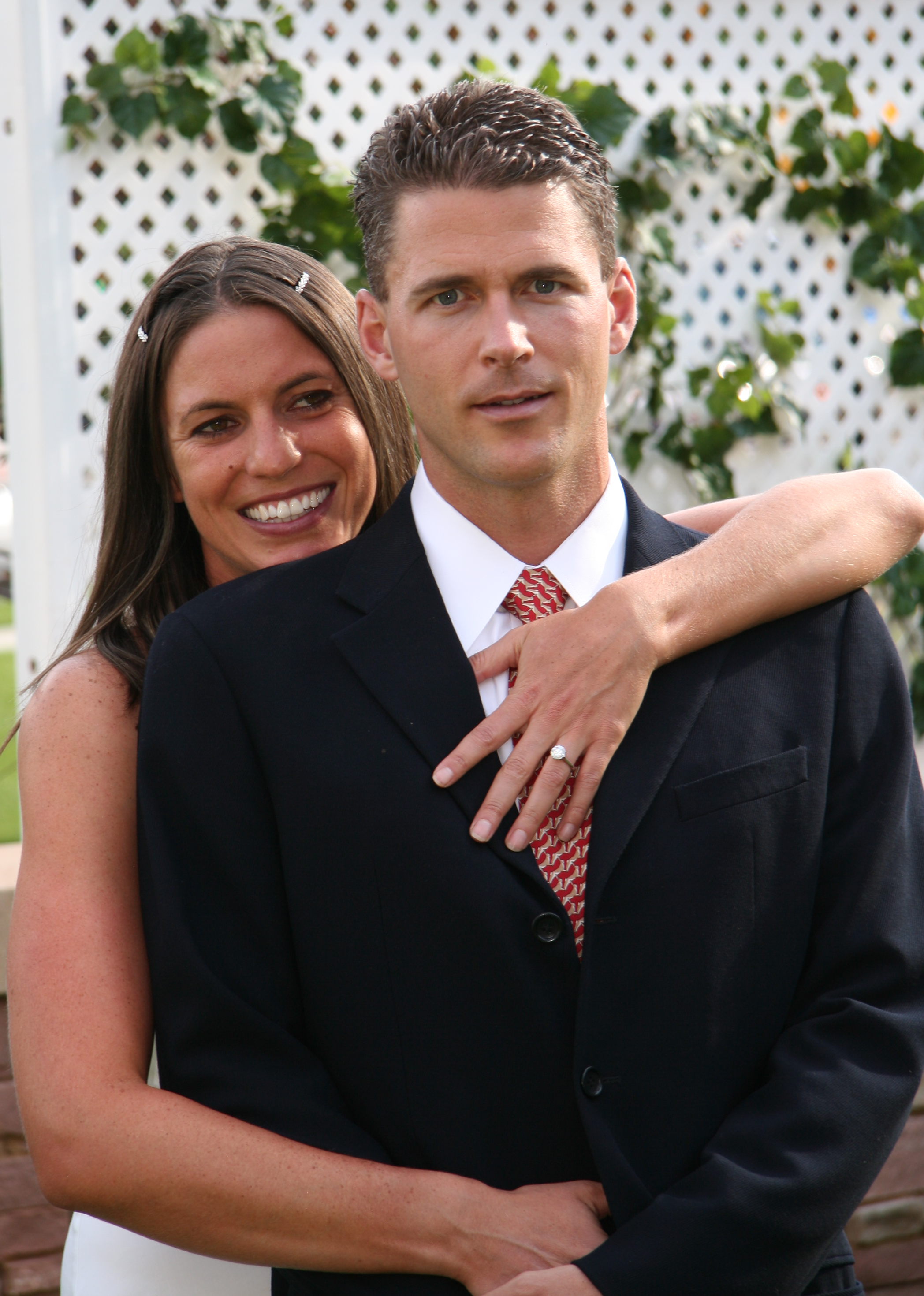
My Financial Domain and Legacy

You can find my Part One here and Paul’s thoughts on Part One here.

#3 – What are the other things in life that are critically important to me, and for which I will be financially responsible?

This is a great question.

Be sure to run your answer by your therapist.

Why?

Because people that are high-achievers and good savers tend to take on responsibilities outside of their domain. I’ve watched families make themselves miserable by taking ownership of the financial wellbeing of adult relatives.

What’s my financial domain? Myself, my spouse and my minor children.

Watching people that I love struggle is no fun at all. However, I respect the people that had the courage to let me suffer as a result of my own choices.

#4 – What are the risks in the universe which may prevent me from fulfilling my responsibilities to myself and to others, and how might I defend against them or at least mitigate their impact?

Another great question!

Humans are lousy at assessing risk and statistics. An excellent investment you can make is reading Taleb’s Antifragile – please don’t use the book as motivation to set up a personal derivatives strategy!

Pro Tip: use insurance products to insure an identifiable risk, not make investments.

#5 – If I have accumulated wealth that exceeds all of the above requirements, how might I best utilize that wealth to derive the most personal satisfaction available from life?

It’s a shame that it takes so much money for people to realize they had won before they even started.

Value your time, more than your money.

Diversify your time towards helping people that have less of what you think you need. Specifically, teach what you’ve learned.

Improve your family’s human capital, starting with your health, your manners and your gratitude to the society that enabled your success. Start with small, simple changes:

  • Physical movement AM and PM
  • Get strong
  • Eat real food
  • Be a little more kind
  • Be a little more fun
  • Optimize your health markers via diet and exercise (blood pressure, cholesterol, blood glucose, body composition)

If you are a self-made person then love the people closest to you by ensuring that they have the opportunity to prove their self-worth via their own initiative and through their own passions. Tell your kids when they impress you.

Be willing to constrain yourself to create harmony within your family and community.

Laugh out loud.

One Kind Word

Duty CallsSometimes I watch my friends get caught up in drama, and sometimes I watch myself.

+++

What’s your mission?

Whether you desire riches, fame or simply want to be loved, it helps to figure out the “why” of your existence. We get a lot of clues through the people that we admire.

Here are some of my whys for living

  • Write Books – help my kids; establish expert credentials; challenge my mind; get my ‘story’ straight
  • Blog – use my best form of expression to connect with like minded people to share my experience so we all feel less alone; experience gratitude from sharing my story; hold myself accountable to the ideas that I express publicly
  • In My Family – fulfill my role as a member of the family; What’s that role? Just love ’em.

At the care center where I volunteer, they have a flow chart that helps the team figure out when to act. I probably walked past the chart 50x before I gave it a read. The first question was revolutionary:

“Is this my domain?”

Each time I’m tempted to engage, I’ve been pausing and asking, “Is this my domain?”

It’s been eye opening to discover how much of my life isn’t my domain. In fact, I can ditch much of my internal strife by sticking to my domain.

Sometimes, it is my domain – take, my kids. With a pause, I get a chance to consider my goals, “teach my kids by my actions.” If I don’t want them to freak out with each other, then it helps not to get caught up in transient dramas.

+++

Being angry at injustice is a source of energy. If you pay attention to it then you can simply open up to the feeling and change the emotion. Anger, with a bit of time and breathing, can change into a desire for positive action.

That sounds great and I might get there. However, I’m not that Zen, so I convert my negative feelings to a drive to empty the dishwasher, take out the trash, fold the laundry or vacuum.

+++

Later, I look deeply and consider what’s really driving the response.

Often, I will try to con myself that I want to help others but, in my case, it’s a desire to make the world more like me, or get you to change your opinion to show me you care.

If I’m still stuck then I look for a way to send the person a little bit of love – a kind comment, any small gesture to help alleviate their pain. For people that get caught in hate, there’s always a source of pain that’s hidden from our view.

One kind word can break the chain.

Don’t Know, Don’t Care

Lexi's Pink BootsA story that runs far beyond your portfolio.

Like most of us, I tend to shun painful thoughts, people, experiences…

However, in reading a book on finance, Your Money & Your Brain, I discovered a better way to think, and live.

Don’t Know, Don’t Care

Rather than getting rid of whatever seems to be bothering me. Why don’t I move my life towards a position where I’m OK either way.

In the finance book, the author was making the case for passive investing.

  • What’s going to happen to… ?
  • Should I sell?
  • Should I buy?
  • Where will interest rates be next year?
  • Corporate profit margins, availability of bank credit, tax policy, insolvency risk, terrorism, politics….

There is no end of worries available to you.

If you’re following a passive strategy with a fixed monthly investment then none of the above matter.

Another benefit is I don’t have to follow the noise that’s constantly pouring out of the media.

Once I saw the logic of changing one area of my life, I started to consider the other areas where I trade happiness, for worry.

Step into the mind of young woman:

  • Will they like me?
  • What will they think about my shorts?
  • Do my shoes match my outfit?

Sweetie, I don’t know but I think you’re terrific.

The “don’t know” strategy doesn’t make me immune to the opinions of others, but it gives me a mantra to occupy my mind on something more useful than worry.

Life is none of my business.

What Do We Need To Retire?

My post showing how a 1.2% fee differential can cost you 131% of your pension contributions inspired Paul Meloan to write an article about The Clear Value of Financial Planning. The article lays out Paul’s case for his work in the field.

To help you understand the cost/benefit relationship, have your advisers write out the dollar amounts that you’re paying in fees, expenses and taxes. Be sure they include all the soft costs that are buried in your mutual funds.

In Paul’s article, he lays out questions for a family to consider. I thought I’d answer these questions, as viewed from a life outside the box.

#1 – How large of a pool of assets do my significant other and I require in order to live in the manner which we desire for the rest of our lives?

The most important thing for you to remember is to declare victory immediately. You have more than you need and are in a position to think about the future. Many, many people are less fortunate than you. Spending time with the less fortunate will temper your needs and get you to financial freedom more quickly.

The financial services industry is built backwards from your true needs. If you listen carefully then you can hear the industry say, “you can be happy tomorrow if you have more.”

Be happy now, with less.

I recommend that you flip question #1. When I look at my family’s net worth, I express it in terms of “years of current expenditure.”

For example, if your net worth is $500,000 (Assets Minus Liabilities) and your current expenditure is $125,000 per annum then you have FOUR years of current expenditure (500,000 / 125,000).

Why is this is a useful way to consider your position? It’s useful because it changes the conversation from

  • What do I need to be happy tomorrow?; towards
  • How can I spend wisely today?

The years-to-burn exercise reminds me that the fastest way to improve my financial position is to reduce my current expenditure, not take more risk.

In terms of years-to-burn, my peak wealth was 13 years ago. I was living out of a Subaru and sleeping on a friend’s floor in LA. My life was extremely simple – eat, sleep, train. It was one of the happiest periods of my life and my net worth was 1/6th of right now.

It’s worth repeating… I increased my net worth by 600% and feel less wealthy.

Historically, most my spending has been wasted.

  • luxury air travel
  • high-end hotels
  • excessive childcare
  • personal assistants
  • office space
  • non-performing assets
  • personal luxury expenditure (clothes, cars, boats, vacations)

I ditched most of these because I discovered that they were bandaids healing myself from a lack of satisfaction with daily living. My spending was driven by our culture rather than my needs.

Choose your hometown and your buddies carefully! I assure you that the exact same family will have needs that vary by geography. Consider:

  • Manhattan vs Boulder
  • Aspen vs Truckee
  • Palo Alto vs Greenville
  • Santa Barbara vs Hood River

I came close to moving to Palo Alto to spend more time with my pals (love you guys and gals). It would have changed my life – not better, not worse – but absolutely different.

The more time that you spend helping people that have less than you, the smaller your retirement fund will “need” to be. There are examples of this all around us.

Finally, the benefit of wealth is not to leave work. The benefit is to feel secure enough to choose meaningful work, regardless of compensation. Hang out with people that are rich in personal satisfaction (artists, priests, teachers, ministers, caregivers, coaches, guides) – you’ll know them when you speak with them.

#2 – What should be the composition of that pool of assets, and how should they relate to each other in terms of risk and expected returns?

You can beat all of your pals by using Bogle’s Little Book of Common Sense Investing.

As a bonus, the strategy is simple to understand and easy to execute.

If you can’t figure the book out then call Vanguard and they will help you in exchange for a fixed price fee when you need help.

If you keep screwing up then get yourself a financial coach and pay a fixed fee to hold you to your plan.

We all do better when someone is watching – that’s why I have a blog.

Summertime Template For Young Kids

Here’s a template to help you maintain your sanity, and productivity, with school out of session.

Goals:

  • Exercise before facing the kids
  • Personal time for mom & dad
  • Tire the kids early
  • Nap through the hottest part of the day

Here’s how we roll:

  1. I’m up by 5:30a and back from exercising by 7:30a
  2. My wife does her exercise 7:30a to 9:30a and I get the kids sorted
  3. Kids out the door by 10am and I now have a 3.5 hour slot of total quiet at my house. As, I work at home, this is valuable
  4. Wife and kids head to the club with packed lunch – family swim until 11:30a
  5. Kids eat lunch in the childcare at the club – my wife is free for up to two hours for errands and personal time. Three days a week she coaches masters
  6. Kids arrive home, suitably whipped, 30-60 minutes of madness then everyone naps.
  7. I get another 90-120 minute slot of total quiet – my wife gets a personal slot
  8. Before the kids wake up, I exit for my second exercise session of the day
  9. Evening trip with the kids (swim, friends, park or errands) OR movie night
  10. Dinner (out or home) then bed

This gives me two training sessions, five hours of quality work time and interaction with each of my three kids.

Date night fits with a sitter coming in when the youngest kids are napping.

Alternatively, consider using “day rate” with sitters. We agree a fixed-price deal (8:30am to 8:30pm) and have the sitter take long breaks over lunch and nap. With my working at home this can be a win-win-win between husband-wife-sitter.

For this strategy to be effective, caregivers must resist the urge to interact with the kids on a day off, and during their daily breaks!

Repeat every day June to August.

For weekly productivity, I can get a lot done with 35 hours of totally quiet time split between 14 slots.

Because swimming is cost effective and accessible to club-provided childcare, we make getting our kids water-safe a high priority (links to my Endurance Corner article). So far, each of our kids has been water-safe by their third birthday.

Axel Swim 18 mths

Restructuring and Rebalancing My Portfolio

At the end of May, I did my first rebalancing exercise. This required a fair amount of preparation:

  1. Setting up an individual 401K under my consulting company
  2. Checking my family cash flow for the next 90 days and making sure I had 120 days worth of reserves
  3. Getting a home equity line of credit to cover financial emergencies
  4. Moving legacy retirement funds to the appropriate (pre- or post-tax) IRA account
  5. Shifting my current IRA assets to Vanguard
  6. Making a table that showed where everything ended up, and what it held
  7. Deciding on my desired portfolio mix
  8. Considering tax implications of the restructuring that was implied by my mix
  9. Executing the strategy

The exercise above required wading through admin, building spreadsheets and carefully mapping things out. It’s worth getting specialist advice from a CPA because if you screw up then you can get hit with penalties and/or trigger capital gains taxes.

It’s a pain, and finance companies do not make it easy to move your business away.

Considering fees saved, I earned $1,000 for each hour of my time. I’ve seen cases where families could save up to $10,000 per hour.

Financial inertia can be extremely costly!

My decisions were the result of this year’s reading. I started with the short, free eBook, If You Can, and worked through the author’s recommended reading.

I used Vanguard funds and the expense ratio for my portfolio is less than 0.1% per annum.

Have you asked your adviser to explain your total cost of ownership? Following my blog on expenses, a friend called his adviser, asked the question and was transferred to a call center! He’s still waiting for an answer, they said it would “take a while to pull things together.”

For what it’s worth, my portfolio criteria are:

  • Simple
  • Low cost to hold
  • Focused on long term capital gain
  • Liquid in event of capital being required
  • Tax effective
  • If it won’t make a difference to my overall situation then wait

Like the behavioral finance books say, it was hard to sell the equity funds with the markets at all-time highs.

Now the tough part, resist tinkering and tracking.

Eighty Years of Family History

Bea-bopAbove you can see my great-grandmother (Beatrice). Bea was born in the late-1800s. In knowing five-generations of my family, I am the link from the 1800s through to the 2100s.

My family was involved in the early days of the province of British Columbia (forestry and shipping). Shipping sounds glamorous but the reality was barges, booms and tugs. I love being near water and trees.

ElphinstoneI never worked in the resource-focused businesses but I did work on the water at YMCA Camp Elphinstone – the photo is plaque that’s still in the Longhouse. I loved my time working in Howe Sound and summer camp. Below is where I spent many happy summers.

WaterfrontThere were successful businesses up both sides of the family tree and some very, very good business people. None of the financial capital from my elder’s success will make it through to my kids generation but the human capital of the family has remained strong.

If my great-grandparents could survey the scene today, they would likely observe that, once sold, a family business is very difficult to replace. I think they would also realize that their financial success had many unintended consequences.

Over the years we’ve been caught out by bank guaranties and leverage. It’s important to remember that one mistake, particularly when combined with bank borrowings, can blow a generation’s worth of hard work.

Indeed, in my own case, I was saved from personal bankruptcy by getting spooked by the boom of 2003-2005. I spook easily (!) but it served me well as I got through the Great Recession of 2008/2009 intact.

Always consider a bank guaranty to be the equivalent of an immediate equity investment, without operational control. Also, remember to ask, “Can I hold this investment, for up to ten years, assuming I lose my job?” Every generation has been hit by unexpected unemployment.

RAFMy elders would tell you that appearances matter, especially when you’re the little guy (in business or stature). The picture above is my great-grandfather, lone survivor of a mid-air plane collision. His son, my grandfather, made a habit of being kind and fair to everyone around him. This habit stuck with him, even as his mind unwound. Lacking kindness was my greatest weakness as a young man.

One of my earliest financial memories was being taught to never have more than 10% of my net worth in something I don’t directly control. Ignoring this advice proved costly, financially, but didn’t damage my quality of life. So pay attention to that tip, it saved the hard work of my generation of the family and you hear it repeated over-and-over by elders that have lived through severe recessions.

I’ve been an outlier with how I’ve chosen to live my life and can waste a lot of energy trying to make the world more like me. The best advice that I’ve received about living with other people is to optimize your life for the way things are, not the way you wish them to be.

There’s plenty of compulsive people in the family tree and we have a bias towards action. This trait helps you get things done. However, remember that if it won’t make a difference then you’re best to wait.

Daily, I remind myself that kindness makes a difference.

Seeing choices flow through 80 years, I hope my children develop a sense of personal success, then shift their emphasis towards loving their families, connecting with friends and improving their communities.

Getting Kids To Draw

Here’s a tip that buys me an hour when I switch the electronics off.

We visit Google Images and I let the kids pick out their own picture to color – make sure you include “coloring pages” at the end of whatever you want to draw. The picture below is “hippo coloring pages”

Hippo

I’ll let my son stand on my desk and touch the photo that he wants. He can’t believe that he gets to stand on my desk and touch the screen. Happy and excited is good.

Then he grabs the picture from the printer and I set him up at his coloring station.

Kids that are really clingy will do best with a coloring station in your office, or kitchen (depending on what you need to get done).

The coloring stations are set up apart but the kids can color together if they choose. Some days they want to be alone, other days they are OK together.

With older kids, they seem to like a mix of their own drawing and coloring. My daughter loves to make other people cards with words that we spell together.

All kids love pictures that I draw for them. I take full advantage of being able to impress my two-year old…

Gordo Hippo

A little bit of effort on my part keeps me from melting our minds by having Disney’s Frozen on endless loop.

Do you want to build a snowman?

Setting Family Financial Priorities – College and Retirement

wedding_day

What’s next? It’s tempting to think about my kids. College accounts are on my list but they aren’t the next priority.

Why?

Because kids that will be successful don’t need much help and the family (particularly a financially responsible child) gains by not having to pay for Mom and Dad’s Golden Years.

Education has an mixed return on investment. Here’s my article on how families blow more than $1 million per kid. It’s a rare family that looks at education in terms of return on investment.

+++

If you want to give your family a leg up then take care of yourself. Do this by max’ing out your retirement accounts – especially anything with an employer match.

I have a single member 401K under my consulting business. If you’re self-employed then you can find out your options by getting in touch with Vanguard.

I spent Friday afternoon shifting my retirement assets and Vanguard has an online tool that the self-employed might find useful.

+++

What about college?

In current dollars, my pals that have put their kids through college have spent $200,000 per kid.

That’s $600,000 for my family of three – ignoring grad school.

Considering my entire family tree, there is no way the family would earn a reasonable return on that level of investment. Of course, my mind likes to tell me that MY kids will be different!

Thinking about the opportunity cost of $600,000:

  • A lifetime annuity of ~$2,400 per month – starting now
  • We could move into one of the best public school districts in the country
  • We could buy three rental properties and teach our kids about money by having them involved in deciding to borrow against the properties (or not) to fund their educations. The kids could receive a direct financial benefit from minimizing the cost (if any) of their educations
  • We could help send a dozen kids to grad school
  • We could back a family member to buy into an established professional practice
  • We could work less (for the rest of our lives) and make the world a better place
  • We could live abroad long enough for the kids to become bilingual (or to gain residency in a country with free education, national health care and retirement support)
  • We could improve the lives of thousands of people in the developing world (schools, safe drinking water, medical care)

The ideas above ignore the cost of the misery that we give ourselves worrying about funding college!

Given that I’m unsure that the family wants to support three college educations, we are working towards funding one college education spread between three 529 accounts.

Total annual contributions to college funds can be $14,000 per kid, per parent => a potential investment of $84,000 per annum for a two-parent family with three kids.

For all but the top 2% of US earners, paying for everything will be out of reach.

Don’t beat yourself up.

The best thing I can do for my family is love them and work on continually improving myself. I’ve come to see the benefits of my constraints.

Setting Family Financial Priorities – Healthcare

Over the last ten years, my family has incurred well over $300,000 of medical bills – births, broken wrists, malpractice, sick kids, MRIs – it all adds up.

In my family budget, I include my premiums ($7,872) and my entire deductible ($7,500). We fund our deductible via our HSA ($6,550 family contribution limit in 2014) and top up when required. The HSA is funded automatically each month so I’m forced to save that money. Most US Bank’s have a subsidiary that can help you set up an HSA.

$15,000 per annum is a lot of money but most years, we “save” a dollar for each dollar we pay out.

BellaFor example, my daughter spent 4 nights in the hospital:

  • $18,500 retail price became $8,500 after discounts given to my insurer
  • $8,500 bill blew through our deductible so we received a $7,500 invoice
  • We had previously saved $5,000 in our HSA so…

End result… I write an unexpected check for $2,500 instead of $18,500.

Health insurance offers up some benefits:

  • Cap our potential liability
  • Access the discounted rates offered to our insurance company
  • Pay automatically (direct debit insurance payments and HSA contributions)

Sidebar: work with health benefits would be a valuable addition to our family. A decent health plan could save us $15,000 per annum.

+++

My next investment is a long-term care policy – about $5,000 per annum for the two of us. Even though the likelihood of payout on the policy is remote – for now – the policy gives me a lot of comfort in case tragedy strikes my wife, or me.

More on this in a post from 2010.

If I couldn’t afford my retirement investments then I’d skip the long-term care insurance, it has a low expected return on investment.