What Do We Need To Retire?

My post showing how a 1.2% fee differential can cost you 131% of your pension contributions inspired Paul Meloan to write an article about The Clear Value of Financial Planning. The article lays out Paul’s case for his work in the field.

To help you understand the cost/benefit relationship, have your advisers write out the dollar amounts that you’re paying in fees, expenses and taxes. Be sure they include all the soft costs that are buried in your mutual funds.

In Paul’s article, he lays out questions for a family to consider. I thought I’d answer these questions, as viewed from a life outside the box.

#1 – How large of a pool of assets do my significant other and I require in order to live in the manner which we desire for the rest of our lives?

The most important thing for you to remember is to declare victory immediately. You have more than you need and are in a position to think about the future. Many, many people are less fortunate than you. Spending time with the less fortunate will temper your needs and get you to financial freedom more quickly.

The financial services industry is built backwards from your true needs. If you listen carefully then you can hear the industry say, “you can be happy tomorrow if you have more.”

Be happy now, with less.

I recommend that you flip question #1. When I look at my family’s net worth, I express it in terms of “years of current expenditure.”

For example, if your net worth is $500,000 (Assets Minus Liabilities) and your current expenditure is $125,000 per annum then you have FOUR years of current expenditure (500,000 / 125,000).

Why is this is a useful way to consider your position? It’s useful because it changes the conversation from

  • What do I need to be happy tomorrow?; towards
  • How can I spend wisely today?

The years-to-burn exercise reminds me that the fastest way to improve my financial position is to reduce my current expenditure, not take more risk.

In terms of years-to-burn, my peak wealth was 13 years ago. I was living out of a Subaru and sleeping on a friend’s floor in LA. My life was extremely simple – eat, sleep, train. It was one of the happiest periods of my life and my net worth was 1/6th of right now.

It’s worth repeating… I increased my net worth by 600% and feel less wealthy.

Historically, most my spending has been wasted.

  • luxury air travel
  • high-end hotels
  • excessive childcare
  • personal assistants
  • office space
  • non-performing assets
  • personal luxury expenditure (clothes, cars, boats, vacations)

I ditched most of these because I discovered that they were bandaids healing myself from a lack of satisfaction with daily living. My spending was driven by our culture rather than my needs.

Choose your hometown and your buddies carefully! I assure you that the exact same family will have needs that vary by geography. Consider:

  • Manhattan vs Boulder
  • Aspen vs Truckee
  • Palo Alto vs Greenville
  • Santa Barbara vs Hood River

I came close to moving to Palo Alto to spend more time with my pals (love you guys and gals). It would have changed my life – not better, not worse – but absolutely different.

The more time that you spend helping people that have less than you, the smaller your retirement fund will “need” to be. There are examples of this all around us.

Finally, the benefit of wealth is not to leave work. The benefit is to feel secure enough to choose meaningful work, regardless of compensation. Hang out with people that are rich in personal satisfaction (artists, priests, teachers, ministers, caregivers, coaches, guides) – you’ll know them when you speak with them.

#2 – What should be the composition of that pool of assets, and how should they relate to each other in terms of risk and expected returns?

You can beat all of your pals by using Bogle’s Little Book of Common Sense Investing.

As a bonus, the strategy is simple to understand and easy to execute.

If you can’t figure the book out then call Vanguard and they will help you in exchange for a fixed price fee when you need help.

If you keep screwing up then get yourself a financial coach and pay a fixed fee to hold you to your plan.

We all do better when someone is watching – that’s why I have a blog.
Restructuring and Rebalancing My Portfolio

At the end of May, I did my first rebalancing exercise. This required a fair amount of preparation:

  1. Setting up an individual 401K under my consulting company
  2. Checking my family cash flow for the next 90 days and making sure I had 120 days worth of reserves
  3. Getting a home equity line of credit to cover financial emergencies
  4. Moving legacy retirement funds to the appropriate (pre- or post-tax) IRA account
  5. Shifting my current IRA assets to Vanguard
  6. Making a table that showed where everything ended up, and what it held
  7. Deciding on my desired portfolio mix
  8. Considering tax implications of the restructuring that was implied by my mix
  9. Executing the strategy

The exercise above required wading through admin, building spreadsheets and carefully mapping things out. It’s worth getting specialist advice from a CPA because if you screw up then you can get hit with penalties and/or trigger capital gains taxes.

It’s a pain, and finance companies do not make it easy to move your business away.

Considering fees saved, I earned $1,000 for each hour of my time. I’ve seen cases where families could save up to $10,000 per hour.

Financial inertia can be extremely costly!

My decisions were the result of this year’s reading. I started with the short, free eBook, If You Can, and worked through the author’s recommended reading.

I used Vanguard funds and the expense ratio for my portfolio is less than 0.1% per annum.

Have you asked your adviser to explain your total cost of ownership? Following my blog on expenses, a friend called his adviser, asked the question and was transferred to a call center! He’s still waiting for an answer, they said it would “take a while to pull things together.”

For what it’s worth, my portfolio criteria are:

  • Simple
  • Low cost to hold
  • Focused on long term capital gain
  • Liquid in event of capital being required
  • Tax effective
  • If it won’t make a difference to my overall situation then wait

Like the behavioral finance books say, it was hard to sell the equity funds with the markets at all-time highs.

Now the tough part, resist tinkering and tracking.

How I Met Your Mother

Gordo and MonicaWhen I lived in Asia, I made some money, had my best friend die and blew up my marriage.

A wise friend observed that it was fortunate that the marriage exploded because I was better off waiting until I was able to offer something to a relationship. My buddy, who would spend the next decade dealing with her breast cancer, captured an essential aspect of successful relationships – that they are best avoided until you are prepared to continually offer yourself.

I look back at my writing from that time and smile at how hostile I was to relationships. Ten weeks before I met my wife, I rode across the United States with a Swedish buddy. He gave comfort that, indeed, there were “at least three women in the world” for me. When I asked, “why three and not one?” He smiled and told me, “the world’s a big place, Gordo.”

Squash Court

[This is the squash court where I met your mother]

In the middle of 2004, I conquered my fears and walked into a room of (mostly) female, triathletes. They were training under the instruction of a six-time world champion, Dave Scott. Dave personifies the old coaching adage “challenge your men and love your ladies.” He didn’t cut me any slack!

It was a complicated situation as my wife-to-be was going out with my landlord’s brother and neither of us were aware that we should be together. I played a long game, got her out of the country and we were engaged before she returned to Boulder.

Nelson, NZ in 2005

[Here’s your mother as a young woman in New Zealand. She was working as my extra-special soigneur at a stage race.]

We were lucky. We grew into each other.

+++

The journey that led to a wonderful life partner began years before I met Monica. I started by cultivating independent self-love, which sounds like something you’d hear in yoga class.

In the language of business…

To do a good deal, you have to be willing to do no deal, a fundamental component of success.

Divorce caused me enough pain to make me hostile to any form of intimacy. First a childhood divorce, then my own as an adult. There were deep feelings of failure associated with marriage. I had not learned how to strengthen a marriage and was preoccupied with the illusion of failure.

After my divorce, I made myself a better person. This was not my goal. Becoming a better person happened because I stopped living the values of other people – back then I was misled by money and assets. Later I was misled by victory and vanity. At the end, I hope to end up with kindness, good humor and service!

My introversion, and pride, fed a desire to prove that I could be happy alone. Truth be told, I was never alone – I wrote frequently and had two very close friendships. One of these was with Scott Molina and he joked that I had ’embarked on the longest dry streak known to man.’ Scott’s observation still makes me smile!

To make myself relationship worthy, I needed to create a life where I was happy without an intimate relationship. In order to have something to give, I needed to develop a source of energy outside of the relationship. I found my source in athletics and nature.

The great spiritual traditions write about love being the source. I have a long way to go there. My love for my children is a sign explaining that everything I need is within myself.

As an introvert, the teaching that I’m my own source feels natural because I’m happy when I’m alone. However, I need to be careful that I’m not alone too much. First, because there is a deep human need for intimacy. Second, because a life with meaning requires us to do good work in the world.

After five years of working on myself, I met my wife. In Monica, I discovered that I enjoyed spending time with her more than I enjoyed being alone. I’m not sure if that will make sense to an extroverted reader, who might find solitude draining. However, for the sociopathic hermit in me, it was a revelation.

To create an intention for success, I tell my wife, frequently:

  • There’s no way I am going to improve my situation through any pathway other than our marriage.
  • I’m grateful for all you do – family life is a challenge but I know that family life alone would be far, far more challenging.
  • While I accept that it only takes one person to crater a relationship, I will never speak about failure on my side. If we hit hard times then I’ll stay close and wait for you to come to your senses.
  • I hold the trust between us as sacred.

All thoughts to the contrary, of what I state above, are a sign of temporary insanity!

Ironman New Zealand 2004

[As a couple, Ironman New Zealand 2004 was our best ever. Your mother swam 2.4 miles in 46 minutes and finished 2nd overall. Living in love makes you powerful!]

Today is the 10th anniversary of the day I met your mother and I’m so grateful.

Love you, Babe!

Getting Crushed Financially

Market Moves

I love this chart.

Blow it up, print it out and study!

Jerry created the chart to show nearly a century of bull markets but what caught my eye was the nature of the eight bear markets.

  • Duration of 3 to 34 months
  • Scale of loss (peak to trough) of 22 to 84%

If you’re an investor then it’s important to realize that it is perfectly normal that you’ll get crushed once a decade. Knowing that it’s normal won’t make it hurt less, but it might make you realize that your pain is temporary.

Personally, my worst bear market was 2008. It was a doozy.

In the space of six months:

  • my family’s net worth fell 65%
  • I lost my job
  • My dependents doubled
  • I discovered that my (joint & several) partner was involved with fraudulent activity
  • I was exposed to the risk of civil prosecution

Absolutely awful.

I share this story to help you remember that THE world isn’t ending when YOUR world collapses.

Setbacks are part of life and my making it 20 years without a major financial setback was abnormal. In fact, I had several setbacks along the way (15% hits) that I’d forgotten.

Save the chart for a rainy day and I’ll retweet at the next recession.

The Trap Of Fixing

Camping With My SweetieSome say hate is a sign that you’re having an impact.

I’m not sure.

I think it’s more accurate to say that hate is a reaction to what I’m sending out. It’s an opportunity to pause, consider and learn.

When I’m focused on helping people, my ratio of positive to negative interactions is 500:1.

I find being told to change extremely painful. It’s like I let the World down, which is a major trigger for me.

The best antidote that I’ve found for dealing with my own negative feelings is to pause, not react, and ask myself, I’ll be happy when…

  • all dopers are caught
  • all frauds are punished
  • you change, rather than me
  • you. stop. that. right. now.
  • you close your sport, business, site, magazine because it bothers me
  • everyone, like me, has equal justice, from bigots like you
  • you break those friendships off

Are you sure that you’ll be happy if they change?

I won’t be happy when you change. I’ll pat myself on the back and move on to the next target. It is a path that’s guaranteed to make ME miserable and strengthen whomever is happens to be “wrong.”

My reality is that I will either be happy now, or not at all.

I share this because the 500:1 ratio is a compelling case that we can have a much greater impact by helping, rather than correcting, each other.

The positive interactions are what make us happy.

Break the chain.

What’s Your Source – A Game

In my early 30s, I gave up climbing as a favor to my family. It was a choice that left me starved of my core need to exercise alone in nature. The “gift” I gave my family had the unintended consequence of starting me down a path that lead to triathlon, as well as my divorce.

Do you know what provides deep personal satisfaction?

Anger, drug and alcohol abuse, fear, depression, gluttony… in my life, these are a sign that I’ve fallen away from a life with meaning.

As a husband, and father of three young kids, I can feel good about putting marriage and family first in the short term. However, if I lose track of my own needs then I end up depressed, angry and full of resentment for the people I was trying to help!

Here’s a game that you can play to stay on track.

Think of yourself and fill in this blank 2 or 3 times…

I am most myself when__________

In my case, I came up with when… I’m riding, uphill, at altitude, in a forest, on a cool day.

Another visualization was when… I’m standing on a ridge line, far above the valley, in the sun.

Another… I’m standing in a forest, it’s snowing and very quiet.

When I see my essential self, I tend to be alone and up high. Mountaineering was a good fit for me.

Then shift your focus to your spouse. In my case…

Monica is most herself when__________

You are likely to find that you skew your view of your spouse based on how you see yourself. I saw my wife swimming (alone) in a pool.

After you’ve had a chance to think through each other, compare notes. I found out that I got my spouse-vision completely wrong!

Monica’s self-image surprised me (at first) because the visions were about helping people. She’s in a good spot as a mom and swim coach – those roles are how she sees her true nature and consistent with some profiling that we’ve done (Myers Briggs).

I hadn’t realized that swim coaching was feeding a core aspect of her personality. It turns out that coaching is a source of energy, satisfaction and meaning for her. It was an important realization for our marriage – we’d be smart to keep that work!

With a young family, you’ll be tempted to lose yourself for the benefit of the kids, or your spouse. You will need your spouse’s support to keep your essential nature in the marriage. The visualization game is one way to start the conversation, and far better than the trouble we cause ourselves when lost in a relationship.

If you keep a daily dose of your essential nature then you’re likely to be a better, and happier, parent and partner.

And now, I’m off for my walk in the forest (uphill, alone, at dawn) after writing my article (quiet, alone, sharing).

It’s important for me to remember that the value of time alone isn’t in the leaving. The value lies in my ability to continue to do work in the world.

+++

Further Reading: How To Make Love All The Time by De Angelis (yes, I read it)

Moving Through A Depression

Tropic Coffee

50 is coming and I can feel that I’m spending my ‘middle’ worrying about money and getting yelled at by my kids.

The challenging thing about depression, or any of my other irrational feelings, is my inability to shake them via conscious thought.

Sharing my fears and concerns helps put them into a more rational context but my cure is always based around actions, rather than more thinking.

I smile when I re-read the paragraph above because (of course) thinking about “thinking too much” doesn’t work!

What does work?

Most helpful was the realization that I needed to make my life more difficult, while not adding stress.

I did this by purchasing a light alarm clock and changing my life so I get up two hours before my kids, who are thankfully good sleepers. By pulling the two hours from the end, to the beginning, of my day – I was able to write, exercise and sit without disruption. Writing, silence and exercise are the best antidote to the despair that I feel around kid noise.

In the heart of winter I reached out for help and attended a parenting workshop. The workshop gave me insight on how fantastic my kids are – nothing like listening to other parents to make me grateful for my own kids! However, despite my kids being normal (and desirable), I find their noise debilitating and draining.

What about the noise?

Some families cope by having constant background noise (TV and radio). For instance, the best parent that I know wears a radio walkman while she works in her house.

Other families ‘cope’ by yelling at the kids and emotionally beating them down. Effective, but not me.

I’ve been wearing earplugs to take the edge of the most intense moments, which rarely add up to more than 90 minutes a day.

People that cope well with noise will tend to find my choice of earplugs rude. Their reality is incapable of understanding what kid noise does to my internal life. I ask them for forgiveness and share the story of the great parent with the walkman.

+++

My son goes to school with the child of a social worker, who shared that her professional training hits a wall when she meets the reality of her own children. Her advice: stay two-steps back from the breaking point.

In applying this advice, I dropped lunch time workouts and replaced them with working in an absolutely quiet environment. This change took a lot of fatigue out of the back-end of my day. On Monday, Wednesday and Friday – I was swimming so intensely that I’d be mentally flat in the afternoons and exhausted by the evenings. Swapping my swim training into an early morning forest jog does nothing for my athletic fitness but it makes a huge impact on my overall mood.

Not swimming is complicated (in my head) because my swim coach is my wife and not spending time with her triggers my fear that my marriage will end and it will be my fault!

So…

The other bit of stress release is to tell my spouse the whole truth with how I am feeling, especially my fears (spending concerns, that I’ll act when I feel despair, that she will leave me, that I’m not a good man).

I have persistent themes that build internal stress – these all get shared with her (and pretty much everyone through my blog).

Most of this is article is to remind myself what to do – I had a tough 48 hours and started writing at 5am in a quiet house!

+++

What makes a difference?

Do something physical and spend a bit of quiet time in advance of the most stressful times of your day. For me that means short, solo, moderate workouts in nature done early morning and late afternoon. Each workout is short enough that the endurance coach in me wants to repeat the entire thing. Physical release and balancing the noise of my home life with quiet periods in my work life.

For the parents that deal with commutes and live in crowded cities – I don’t know how you do it. I’d be at risk for heavy self-medication and persistent deep sadness.

If you’re in that position then wait it out and don’t act on despair.

If I take responsibility for doing what I know works then I always move through a depression. When I’m really beat down it means that I’m very close to things improving.

See the beauty in the good moments.

+++

Serious athletes might find value in an article I wrote about athletic depression and training mania.

I’ll Be Happy When

Tucson Camp

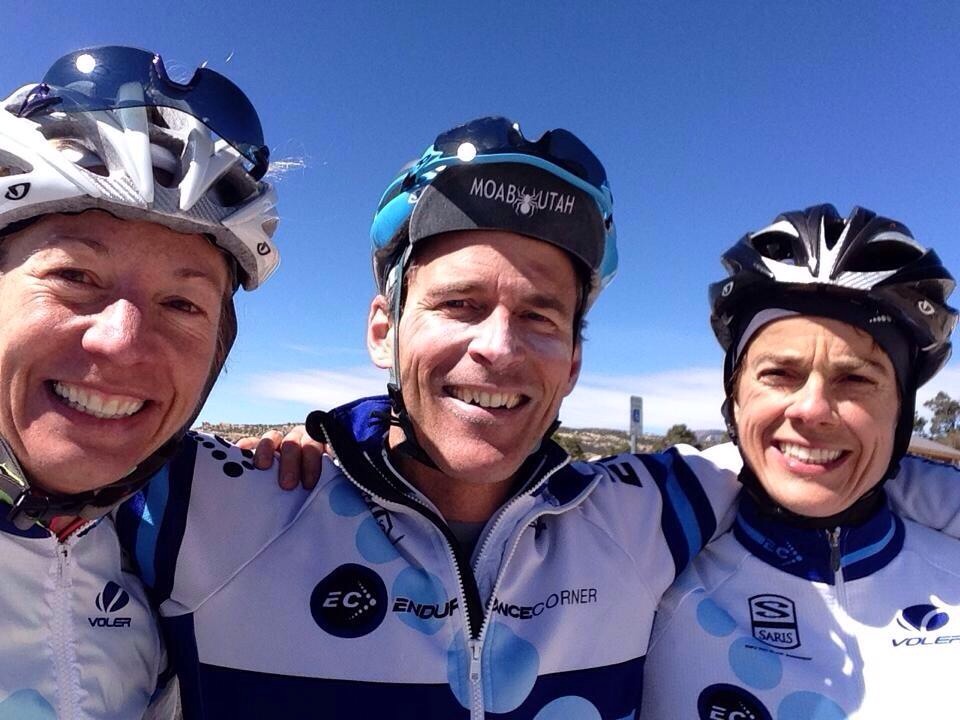
The article is not about my friends in the photo.

I put them in the article because we’re happy when we ride together. So… I will be happy when I ride with my friends.

That’s a start.

+++

A story about a friend that, like me, can struggle with happiness. In his case, extreme athletic success leaves him feeling empty. To top it off, he has a large public profile which leaves him exposed to the people that hate us for no reason.

We spent an evening talking and I shared the best things that I learned by leaving a career that paid me a lot of money.

If you’re not happy with your current success then you’re unlikely to be satisfied with more.

In a couple years, you will forget why you needed to change and trick yourself into coming back to something that wasn’t able to satisfy you in the first place.

Be sure to write it down.

All of these apply to my life. I’ll be happy when…

  • I graduate from school
  • I get into school
  • I’m promoted to partner
  • I run sub 60, 45, 40, 35 minutes for a 10K
  • I race sub-9 at an Ironman triathlon
  • I get my weight under 190, 180, 170, 160 pounds
  • I win a race
  • I win another race
  • I win a world championship
  • I pay off my loans
  • I borrow more loans
  • I save $1,000 / $10,000 / $100,000 / $250,000 / $1,000,000 or more
  • I find someone to love me
  • I buy a big house
  • I sell a big house
  • I own an Alfa Romeo Spider
  • I sell an Alfa Romeo Spider

Make it real, write it down, see how it makes you feel. This tip works like magic!

When you do it, PAY ATTENTION.

Did it work?

After 30 years of ticking off goals, I’ve come to see a pattern that amuses me.

  • I have to admit that achieving goals fails to provide lasting satisfaction
  • There seems to be chronic dissatisfaction stalking one side of my personality
  • But I tell myself that’s OK because dissatisfaction helps me strive towards my goals
  • And by achieving my goals…
  • I’m likely to continue to be dissatisfied

And, I watched my wife and kids – who are deeply happy.

And, I realized that the “things that make me unhappy” don’t happen all that often. Just like the happy things, they are temporary. What makes them linger is carting them around afterwards.

And I could see my internal voice constantly tempting me towards dissatisfaction by saying I need to get more and more stuff done.

Here’s what I know is likely to work most days – run in the morning, write, ride in the afternoon. Between those three things, do what needs to be done, ideally by helping others.

Zoo

Miniature train rides (above) also seem to work well – for us and the train conductor! I’m happy for that guy.

What’s your formula?

Losing Five To Ten

Undercover

Every athlete that I’ve ever coached has thought that their life would be better if they lost five to ten pounds. This belief flows through most of my friends, my coaches, my wife and myself.

Nothing in my life, requires me to be in a state of perpetually losing weight, yet I spend 95% of my year trying to whittle myself down. In case you’re wondering, the other 5% of the year sees rapid weight gain. My personal best is gaining more than 20 pounds in the two weeks after Ironman New Zealand 2004.

Similar to my athletic goals, my desire to be unnaturally lean has caused me to make poor decisions.

Where do my irrational desires come from?

Can I moderate the influence of irrational desire in my life?

As a recovering addict can tell you – if you want to make a change then you need to take a break from the sources of your addiction. The first step in freeing myself was changing my health club.

I used to train with the fastest group of triathletes on the planet. For an athlete with ample self-confidence, it is an ideal environment to motivate oneself to do whatever it takes to win races.

As my life shifted, I noticed the group was having an adverse effect on my self-esteem and I was being a dick to people. I listened to how we spoke about each other and what we valued in ourselves. I’d get a kick out of the most-skinny triathletes in America commenting about which one of us was “too skinny.” Of course, Mr. Too Skinny would head out the next weekend and crush the field – reaffirming our collective desire to get lighter and lighter. With my pals, losing weight is always the right answer.

Here’s the lesson – the neuroses of our peers will become our goals.

We can’t create self-esteem by changing to match the requirements of others. However, we can change the people with whom we spend our time, and let behavioral psychology do the work for us.

What do you need more of?

Spend time giving to people with less.

Your Son Thinks You’re Superman

Some observations I picked up from watching five male generations interact within my own family.

You Are Superman – all reality is relative and, at least in a preschooler’s world, adults are endowed with super powers. We make food appear, we are HUGE, we can lift heavy objects with ease and we hold sway over every aspect of our young children’s lives.

When I admit that my son thinks that I’m Superman, certain positive outcomes flow.

  • I’m more patient with him
  • I can see how shattering it is when I don’t have time for him
  • I treat him better

In making a habit of treating one person better (because, well, I’m Superman), I create a habit that helps me treat everyone better.

+++

What happens when we look up the family tree?

Part of becoming an adult is creating an identity separate from our parents. The teenage years are all about the push-pull of this transformation. If you’re struggling with your teenagers then I’d encourage you to remember that somewhere in their psyche, you are still Superman!

The bizarre anger and rejection that we see in our families. The behavior makes more sense if you remember that your kids are trying to cope with the impossible task of defining themselves separate from the most powerful people they have ever known (their parents).

Some of us never let go of this habit of pushing away.

+++

Just like the Easter Bunny and Santa, at some stage, my kids are going to figure out that I’m not Superman.

But somewhere in their psyche, there will always be a seed that says otherwise.