Aging Athletes on the Kokopelli Trail

FullSizeRender 2I spent early October riding the Kokopelli Trail in Utah.

I enjoyed the trip more than I expected and want to share ideas to increase your athletic satisfaction as you move into, and beyond, middle age.

High performance is not about health, but long-term athletic satisfaction is most certainly correlated to health, strength and mobility.

As a cohort, our group of 40 to 60 year olds was the healthiest population that I have ever trained alongside. I am using health in a classical context – body, mind and spirit.

+++

Here in Boulder, I see many friends “age-down” their training partners, seeking younger and younger peers. Heck, we even race our kids as soon as they are fast enough to give us a push.

If you feel compelled to hang onto your youthful performances then be sure to try the opposite, at least some of the time. Age up your pals, teach children and be kind to beginners. Pay close attention to how this makes you feel.

As one of the the “youngsters” on the trip, I learned a lot from listening to the veteran athletes talk about their lives.

+++

Usually, a training camp involves a 5:30am alarm, wolfing down a breakfast, training all day, eating two massive dinners and sweating myself to sleep. Repeat for six to ten days.

Dropping into a guiding company that was celebrating 25 years of trips, I realized how little I knew about what (normal) people want.

On the first morning, the guides had a chuckle when I arrived in the lobby with my helmet, shoes and full riding kit. It was POURING rain and they gently broke it to me that we weren’t riding for a while.

2015-10-05 11.32.21This pattern, of gently breaking it to me, would continue for the week. Eventually, I capitulated and decided to (attempt to) be a model guest.

+++

I was surprised by the aspects of the trip that I enjoyed the most — the relaxed mornings and evenings.

I commented to a friend, “This trip is a good workout spread across a great day.”

2015-10-09 08.18.50Bottomless coffee and massive fruit salads in the mornings. As Wes-the-guide can attest, there is something truly satisfying about eating out of a mixing bowl.
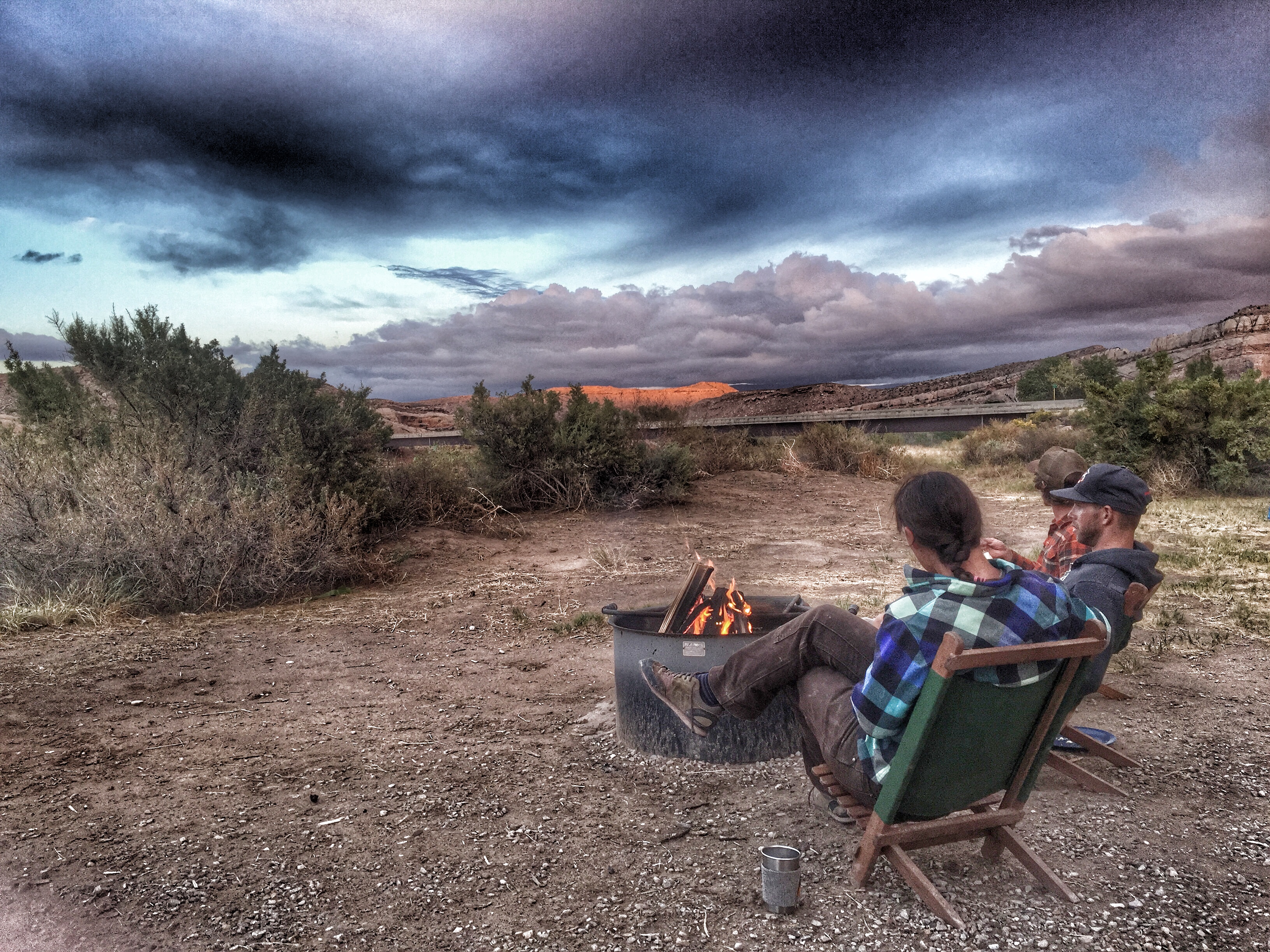
FullSizeRender 3Casual dinners and beers around the campfire in the evenings. Our guides taking a well-earned break after a 13-hour day taking care of us.

FullSizeRender 5Stunning camping venues. Wine and cheese at a remote desert campsite.

+++

I should remember that the health, strength and mobility required to enjoy unique experiences in nature is FAR less than what’s required to train alongside high-performance athletes that are half my age.

FullSizeRender 6

Old habits die hard.

I’m changing slowly.

Wealth Habits: Capitalizing Luxuries and Time

IMG_4160Over the last year, I’ve sold two paintings and a piece of jewelry. My family had owned these items for a long time and they have given us a lot of pleasure. However, each September, an insurance bill arrived and gave me a fair amount of pain.

So now the items are gone and last week my insurance bill arrived. I noticed that my insurance savings are enough to take my wife to visit any museum in the world, annually, forever.

By getting through the pain of change (the sale)… I created a situation where we could share experiences together (future trips).

The cost of the status quo is often hidden.

+++

Similar story.

I’ve been thinking about buying a boat, a sprinter van and/or a truck.

Despite evidence to the contrary, at some level, I think these assets will make it easier to spend time with my kids.

These assets are expensive to own, depreciate and require time to maintain.

How to counter the urge to purchase?

Assume depreciable assets are free to own, lease, keep receipts and track total time/spending in a year.

Cat SailAn example for the boat:

  1. As a teenager, I spent many summers working on the water. In those years, what was the total number of days that I would spend on the water? My peak days were 60 per annum. This year was closer to 25 days.
  2. Based on my rental history for the last two years, what’s the average cost per day of renting, rather than owning? Let’s assume it is $1,000 per day.

Based on actual days on the water, how many years expenditure would I capitalize with a purchase? In my case, it is 10-25 years of expenditure based on how you slice the numbers and the size of vessel. Also, worth noting that I was on seven different vessels in 2015.

The above analysis is essential before you buy a vacation home, consider becoming a ski-family or purchase a large depreciable asset.

+++

Think back one decade, or two… have your preferences changed? Mine have changed tremendously and I have discovered that I am a lousy judge of what I’ll want in ten years’ time!

How might a large capital purchase impact the freedom you have to allocate your time?

By staying variable in the family budget, I can:

  1. free significant time in my daily schedule
  2. finance childcare
  3. budget for shared experiences
  4. immediately ratchet down spending, when required

+++

2015-09-20 17.53.02The final step is to pay attention when you are enjoying a “luxury” expenditure.

Notice the changes (if any) with your inner experience.

My benchmark is the way I feeling during a walk in the forest that’s ten minutes away from my desk.

Live where you don’t need to leave.

Real Estate – Should I buy or sell?

2015-09-14 13.55.37

In May 2014, I shared a template for reviewing your real estate. Let’s revisit that property – (prior values in parenthesis).

  • Today’s Zillow value $1.2 million ($850,000, +26%)
  • Recent Assessment value $1.05 million ($830,000, +27%)

Zillow and the county assessor have revised values up by more than 25%. You’re wondering if there is a bubble. You receive an offer of $1.1 million, should you sell?

In the article from May 2014, the “owner’s value” was $925,000. This offer is ~20% higher. Seems straightforward to sell, but pause to consider…

  1. How has the investment changed over time?
  2. What are you going to do with the money?
  3. What are the tax consequences of selling?

2015-09-11 15.25.11Investment Review

The big story in Denver/Boulder real estate has been increasing rents. The current rental income for the property is ~$60,000 per annum. Taxes, insurance and repairs cost $10,000, so the net cash flow is $50,000 per annum.

Previously, cash flow before interest and depreciation was closer to $25,000 per annum. So there has been a near doubling in the annual cash flow from this investment, but pause to consider…

Is the cash flow sustainable?

In this case, the cash flow is not sustainable. Houses wear out, roofs need replacing, plumbing needs repair and appliances break down. So let’s adjust the $50,000 per annum to $40,000 to reflect sustainable cash flow.

The offer is $1.1 million to buy $40,000 of sustainable cash flow. That is an implied yield of 3.6%.

How does that stack up?

++

Alternative Uses of Funds

US Treasury Yields

  • 5 year, 1.6%
  • 10 year, 2.3%
  • 30 year, 3.1%

Vanguard Select Fund Yields

  • VTSAX (US Equity) – 2.0%
  • VBTLX (US Bond) – 2.2%

If you are the seller then you should ask yourself “What am I going to do with the sales proceeds?”

If you sell real estate that yields 3.6% to buy bonds that yield 2-3% then the value of your investment is likely to be eroded over time. Most obviously, because rental income tends to increase over time, while interest payments are set for the duration of the bond.

High-quality assets with growing income streams are attractive.

++

Taxes

If you sell at $1,100,000 (to a buyer without an agent) then what’s your net realizable value?

Using numbers consistent with the May 2014 article, you would net about $1,025,000 (before any mortgage pay off).

You’d also want to adjust the sustainable cash flow from the property to reflect taxes you pay on the income. To make things simple, let’s assume a sustainable cash flow after taxes of $32,500 (yielding ~3.2% after tax).

The above numbers would change, possibly significantly, based on the size of mortgage payoff and your personal tax position.

It’s worth having a professional walk you through the detail.

++

Overall

When I look at the above, I see a market that has increased 25% in value. Seems like a lot.

  1. Rental growth is in line with the increase in value.
  2. Alternative investments are yielding less than this asset.
  3. The asset is located in a zip code with real-economic growth that is higher than the US average.

So the market seems fairly priced – at least to me, today.

What should the buyer and seller do? In these market conditions, they are likely fine either way.

What’s going to happen to future rents and prices? I would be suspicious of anyone that claims to know.

Family Financial Review

2015-09-10 11.53.28August/September is the time of year when I do my life review. I’ll be writing about the various components over the next few months.

2015-09-04 19.00.49Fear Impairs Judgement – you’ve certainly felt financial fear in the last three weeks. However, the lesson runs deeper than short-term volatility.

The financial media tempts me to:

  • frequently tweak strategy
  • aim for the perfect asset allocation
  • act impulsively to avoid future losses
  • seek superior returns

Strategically, I want to avoid all of the above.

Tactically, I want to manage family expenditure and execute a reasonable long-term financial strategy to the best of my ability.

Being good enough is good enough.

++

Sell Illiquid Assets Into Late Bull Markets – in 2014, I decided to sell land, art and jewelry.

Our illiquid assets cost money to hold and I realized that the cash would be better spent on childcare and pre-K education.

Despite selling for less than expected, the net result has cut the family’s core cost of living by 4% and enabled my wife (and me) to work less.

The question to ask yourself is not “is this my best price?”

The question to ask yourself is “are we in a late bull market?” If the answer is “yes” then it’s a good time to sell illiquid assets.

++

2015-09-06 17.06.43-1Asset Allocation is often a distraction from what matters – with good wealth habits, you can ignore the small stuff.

Here’s a post from December 2010 on asset allocation. Five years along, I’m making progress at following my own advice.

This post from April 2012 (about my future asset allocation) reminds me of the folly of forecasting.

For the benefit of my future self, here’s a snapshot from 2015.

  • 30% – investment real estate
  • 25% – low-cost, diversified equity funds
  • 25% – fixed income in home currency
  • 15% – family home
  • 5% – cash and other

There are historical and family-specific reasons for the above. Not a recommendation to your family.

++

2015-09-06 20.04.16Time and Health – Am I acting in harmony with my mortality? with my values?

If you find that a self-serving bias isn’t generating satisfaction then consider shifting your focus towards taking better care of your health.

The shift towards health will surface conflicts between your values and how you allocate your time.

No step is too small with regard to positive self change.


Wealth Habits: Are we there yet?

2015-07-09 11.30.50A question I ask athletes is, “Why did you start?

When sitting down with a family, I change the question slightly, “What is living well?

Write down detailed answers.

Answering these questions honestly will surface your values and help you make better choices.

The answers will also help you understand when you’ve achieved victory, and you might discover something rather strange about winning.

You feel just the same.

Because you feel the same, you’ll be tempted to change your strategy. You will forget why you started and lose sight of what it takes to live well. You’ll strive for more.

The exact nature of your “more” will be influenced by your peers. Unsure? They will be happy to tell you. Just ask a room full of buddies… “What’s your proudest accomplishment?”

Look inside and see if you’re tempted to strive towards their goals.

With my academic, financial and athletic friends – I can feel the temptation to strive.

Striving towards another person’s answers might not fulfill you, especially as only a minority bother to consider the “why” behind their daily choices.

You may find that it takes a surprising amount of faith to stay the course. My list is exercise, write, read, love, help others and sleep.

It’s important to remember your answers. They are an effective antidote against the temptation to strive. In my case, striving is a result of desire: to buy assets, to make money, to compete against others, to go shopping and other variations of more more more.

  • In a family
  • In a marriage
  • In a company
  • In your life

How will you recognize success?

It might feel different than you expect.


Less Little Lies

bear2A friend asked what it has been like to step back from athletic competition. Much of what follows applied when I left jobs, peers or habits – any of which might not have fit my life anymore.

The immediate impact is usually relief and a realization of the unnecessary cost my choices where imposing. Quite often, the relief is followed by sadness at leaving old habits, even negative ones.

In terms of “what’s it like” to compete less – it’s exactly the same, just less fatigue and soreness. All my “issues” follow me wherever I go!

What is available is an opportunity to look at the impact of a competitive, or corporate, lifestyle.

I often cloak a selfish reality with talk of benefits outside myself. Shareholder value, national prestige, competing on an international stage, earning money for my children… these little lies are repeated until they become my reality.

Fooling myself isn’t necessarily a problem. I spent my teens and twenties solely focused on my personal outcome. It worked at the time.

In my 30s, I broadened my circle to help other people assist with achieving my personal outcome. It still worked for me.

That lifestyle was a form of greed – more more more.

With a spouse and kids, the lies have to increase to justify continuing the choices of my youth.

Long-term competition isn’t a problem. The problem is the thinking that results from turning away from my spouse, my kids, my family and my community.

We tell ourselves that we will change when we have X, or achieve Y, or become Z.

What I’ve done is tell myself…

I’m going to look directly at my flaws, a diseased friend, a homeless beggar, a hysterical child or a demented hospice patient.

Whatever it is that scares me. I’ll look at it.

I’m going to acknowledge that I can’t fix the situation but I’ll try to do something small to make life better.

Working towards overcoming the difficulties of my inner life is similar to the pleasure of overcoming others through competition.

The reward is just as sweet and others do not pay a price for my success.


Can’t Be Bought

bearLooking forward to 50, I will find myself with 10, 7 and 6 year olds living under my roof. Those are great ages to accompany a 50-something man as he explores the world.

There remains a lot to look forward to.

The key advice that I give myself, and offer you, is to approach life with the understanding that you can’t be bought.

The reality is, often, we can be bought. If that describes your current position then keep your mind open to the possibility of increasing your price until you remove it all together. That’s what I’ve been working towards for the last 20 years, or so.

What’s your price?

I must remember the dissatisfactions have come from letting money influence my life choices. I’ve taken on assignments because I thought I should, rather than because they fit my principles. I’ve sustained a double-whammy when those assignments took me away from the people closest to me.

What are better principles to guide my thinking?

  • Lean towards marriage, family, friends, local community – let’s call these Core People
  • Share experiences with Core People
  • Pay attention to spending that has an immediate beneficial impact – my highest utility spending is childcare that enables me to share experiences or spend time alone
  • Aim to help all people – keep broadening my circle of altruism
  • Set aside time for continuous simplification – automatic bill pay, empty time in my schedule, reduced admin, streamline possessions
  • Don’t pay for luxury – adversity makes fond memories

Every day offers a chance to turn toward my principles.

Looking At 50

unitedIf I followed the path of the majority of my mentors then 50 would see me gearing up for a Big Push. The push might be towards athletics, or business, or a career path that I neglected earlier in my life.

Instead, I find myself asking, “How can I make a lasting difference for my family?”

That’s surprising, based on my younger self, but not surprising if I take the time to learn about the natural progression of men in my situation. So that’s been a clear lesson, the illusion of individual experience. If you can’t see this illusion in yourself then spend some time with a teenager.

Late last year, I had lunch with a young man that works in finance. He lives in Hong Kong. He drives a wonderful Italian sports car. He makes plenty of money. He’s one of the fittest employees in his firm. He’s engaged to a fantastic Chinese-Canadian woman.

It got me thinking.

You see… I was having lunch with a man who was living my former life in Asia.

It was humbling. Humbling because it drove home how I’m prone to fooling myself about success being due to the special nature of myself.

Don’t take the good, or the bad, too seriously. Take time to learn from the many who have walked before us.

Ultimately, all that we will be left with are memories of what we’ve done:

  • taking action that serves the collective
  • being open to those that love us
  • focused time on marriage, family, friends, community

Choose wisely.

When To Review Strategy

dad_axI’ll start with my answer… now is not the time to change strategy because I know…

  • The more often I change, the greater my opportunity for error and increased costs
  • The more changes I make, the worse I’ll do

+++

Q2-2015 marked the completion of the five-year plan that I put together at the end of 2008.

When to consider change?

A major life event is a good time to consider change.

  • In 2008, I was faced with unemployment.
  • In 2000, it was a divorce.
  • I’ve seen friends face criminal charges, bankruptcies, health emergencies and deaths.

A crisis can be a sign that, absent change, things are likely to deteriorate. It can also provide a nudge to endure the discomfort of change.

In my case, a high-spending rate combined with unemployment to tip me off that I was heading towards a major problem.

The plan required us to move (twice), establish new careers, achieve a dramatic reduction in spending and change the allocation of 95% of our balance sheet.

I expected the changes to be costly and forecast our balance sheet to decline by 20%. I was wrong. In reality, the balance sheet increased by 2% per annum.

Why?

  • I’m good at cost control – we made changes early, and severely.
  • We maintained exposure to favorable events – things like promotions, bonuses, babies, cheap mortgages, new friends, equity options.
  • Despite my fears, the world tends to improve.

I was also wrong about the price that we would achieve for the assets we sold. On average, we sold 10% under my estimate of “fair value.”

The Endowment Effect shows that we overvalue what we own. It’s valuable knowledge to be reminded that I’m prone to the standard forms of human misjudgment.

These two lessons are important to remember:

  • Things are likely to turn out better than I expect
  • I overvalue what I possess (jobs, assets, habits, the status quo)

I paid close attention to my “good days” since 2008. They were nothing like I expected and have influenced my thinking in how best to spend the next 1,000 days.

A Valuable Legacy

bike_dadWhen I think of the word legacy, I might see tangible assets being left to my children, family and community. This type of thinking flows from my background in finance, where success is measured in dollar bills.

As a father, I’ve come to see that many of my successes are hidden.

  • The conflict not engaged in
  • The harsh word not spoken
  • The anger not acted upon

Might the absence of certain experiences be a valuable legacy to leave my children?

  • The absent father not indulged
  • The distant mother not reinforced
  • The angry parent not encouraged
  • Keeping myself from becoming a casualty in my later years

In working on the above, I might make my kids aware of my faults, my failings and the techniques that helped me manage them.

A different, but valuable, inheritance.