Breaking The Chain

Today’s title is the name of a book that was given to me by my coach. The book is about the impact of 100 years of choices in the sport of cycling. The stories will blow your mind.

The concept, of a continuous chain, is also a teaching in Eastern Philosophy. One aspect is that we can do good works when we DON’T pass along the pain we receive from another person. The gift of “not passing” is something that I practice at home.

FlagstaffA few years back, I made a decision to leave a group of friends rather than engage them over their cruelty of their language to each other.

I thought it would be more productive for me to change everyone’s names and write blog posts instead…

I’m laughing as I type that because it’s true. We all dig in when confronted directly.

Tips that help me be part of the solution for friends and family.

Statute of Emotional Limitations – I got this from Gordon Livingston. He recommends deciding on a statute of limitations for our childhoods. When we turn 25, 35, 45, 65 or 75… …we decide that we’ve grown up and we’re leaving it behind. it’s never too late to decide that you’ve grown beyond the slights of the past.

Young kids are fantastic teachers of this point. A baby holds nothing from her past. Even my three-year old, doesn’t retain emotion for more than a couple minutes. It’s a wonderful way to be and somewhat confusing to a father (me) that’s prone to holding a grudge.

Making time is a useful coping strategy if you’re prone to self-pity.

A favorite book is Tuesday’s With Morrie – Morrie is living with ALS and one of his coping strategies is to really experience his sadness each morning. Being completely sad for a few minutes enables him to live the rest of his day.

Recognizing Limits – there’s some stuff from my past that I might never get past. Some relationships that might never get sorted. Some episodes that will tag along for what remains of my life. I have a choice to own that reality.

Going further, in cases of abuse and trauma, the magnitude of the stress might have permanently rewired how we respond to certain situations. In my own case, just-the-right-mix can knock me off kilter.

As a result, I need to forgive myself for falling short of the idealized image in my head. Take fatherhood, at the end of a challenging shift with my kids, I might never be Christ-like, or tap my Buddha-nature, or whatever I happen to be shooting for at the time.

To deal with my shortcomings, it helps to think about the chain that led to me and understand that I’m going to leave a few loose ends when my time is done.

Lexi_PilotTaking a longer term perspective, my role is to move things along a little bit, not screw up and let my kids take the controls.

Some things take more than one generation to work through – that’s ok.

Be gentle with your short comings – simply try to do a little better.
Managing My Baseline

As I’ve gained a better understanding of my mind, I’ve made micro changes to improve my daily satisfaction. Most of these changes involve reseting my baseline for expectations.

Two simple examples can be found in my approach to coffee and wine.

COFFEE

I was thrilled when Peet’s Coffee & Tea opened in Boulder. However, I noticed that my baseline quickly reset and drinking coffee elsewhere resulted in disappointment.

My ability to easily access “the best” increased my total dissatisfaction across a month.

What to do?

I switched my morning routine to start with a cup of CostCo brew. It’s a solid brew and gets me rolling.

However, a few months ago, I won coffee-for-a-year from Peet’s and get a pound of beans each month. So I started drinking Peet’s in the morning and everything reset again.

More disappointment resulted when, mid-month, we’d run out.

However, now I see my disappointment as a chance to reset and I anticipate each new month’s shipment.

Anticipation is a key part of pleasure – worth remembering that tip in relationships as well!

WINE

My senses of hearing, taste and smell are all below average. It’s an area, like my driving, where my self-assessment is more accurate than most.

When buying wine, I combine my known sensory deficit with a simple heuristic – never pay more than $15 for a bottle of wine.

This makes it easy for my pals to blow me away with their moderate vintages, has me drinking less and reduces my total annual spend on alcohol. All good results.

Like my three-year old son, I try to make myself easy to impress!

LAIRD HAMILTON

That’s Laird, Gabby and family above. My wife follows them on Facebook and mentioned that she thought they were a well-grounded couple.

All I could do was laugh and say, “Laird’s your baseline for a husband?!”

Apparently, Laird’s “a little soft” but that’s OK because he has three kids.

For some reason, Laird appearing soft didn’t make me feel a whole lot better.

Anyhow, exercising makes me happy and, perhaps, my wife was giving me a nudge to train more.

+++

Remember what I said about the coffee and the wine, it applies in every aspect of our lives.

Too much luxury can ruin our appreciation for the beauty of everyday life.

Take time to reset your expectations.

Five True Friends

mooseThe Philosopher’s Mail is one of my favorite sites on the web. Happiness is a recurring theme in their writing, as is social connection. As your doctor can confirm, there is a link between social connection and health.

The good people at Philosopher’s Mail shared Epicurus’ recipe for a good life. The link is to a lovely article with snazzy pics of Paris Hilton. The article is worth your time – it describes an antidote if you find that external success fails to lead to lasting satisfaction.

The philosopher’s antidote

  • Five true friends, that reinforce inner values (not the external values of city living)
  • Self-determination by escaping the tyranny of corporate serfdom, regardless of financial cost
  • Daily time for quiet reflection, ideally with low-intensity exercise in nature

It’s an interesting list because most of us will lack one aspect of the troika. In my case, it takes effort to say “yes” to social interaction.

As well, we are usually attracted to people that have external traits that we wish to emulate. This can be a good thing…

  • A politically-connected friend making us feel gratitude that we don’t have the duties that come with being a very important person.
  • A healthy friend inspiring us to start a streak of daily activity.
  • A champion friend inspiring us to persist a little longer at a difficult task.

I have different pals with all of the above and, when I’m at my best, they reinforce good traits in me.

However… I’ve also noticed that my most human, and occasionally screwed up pals, can leave me feeling grateful, useful and valued – three traits that have a strong link to personal happiness.

So while the need for pals is well known, I can lead myself astray. So it’s worth using my daily time to quietly consider…

  • Do I have five people to whom I can speak plainly?
  • Separately, who are the five people with whom I spend the most time?
  • How do those people make me feel?

Once I have insight, it’s up to me to have the courage to change.

Be brave.

Four Hidden Hazards – for aging athletes

Ron KonaBecause the big money lies in helping sick folks, athlete health is likely to remain a poorly understood niche. Here are three hazards that most people miss.

Lifestyle & Nutrition Stress

As an elite athlete, my blood markers would indicate kidney stress. I coached a kidney doc and did a consult to rule out kidney disease. Where we ended up was acknowledging the stress of the athletic lifestyle:

  • High calorie diet
  • High protein diet
  • High sugar diet
  • Constant muscle breakdown

Now, there are many ways that my athletic lifestyle reduces stress (body composition, blood pressure). However, a high-performance lifestyle increases stress, when compared to an active lifestyle.

From 2001 to 2008, I was “fast” but I carried around an immune system that was chronically suppressed.

Around 2010, I cut my training in half, and my blood markers went from good to outstanding.

My kidney function cleared up, my immune system strengthened and my HDL/LDL cholesterol improved. (82/84 mg/dL).

I put this out there because I had a fear that I would “lose everything” if I backed off.

The reality => Moderation improved my health and my marriage.

Passing Out & Crashing

I’ve been exercising daily for ~20 years and it’s the best investment I’ve made.

If you want to slow the aging process:

  • Get enough sleep
  • Don’t smoke
  • Take it easy on the booze
  • Eat real food
  • Move daily

The flip side of being a long-term exerciser is I can go a long, long way on nothing. It’s a trait that can get an older athlete into trouble.

When tired, depleted or “open” from exercise, my blood pressure can dip suddenly. So far, I have never passed out but I’ve felt lightheaded on many occasions.

Passing out is a serious medical condition – Part One and Part Two on the Athlete’s Heart Blog will tell you more.

If you share my profile then be aware that falls and crashes are different as we age. A key part of aging well is avoiding the strength and muscle losses that come from extended breaks.

I have changed my approach to improve my risk profile.

The Scalpel of Eternal Youth

Here’s how I categorize WEEKLY run mileage:

  • 20 miles = “not running”
  • 30 miles = “light week”
  • 40 miles = “basic maintenance”
  • 50 miles = “good week”
  • 60 miles = “enough to run a decent marathon”
  • 75 miles or more = “stretch week”

Follow this running protocol long enough and you’re likely to deal with orthopedic issues.

The most effective treatment for chronic injury is lifestyle modification.

Your orthopedic surgeon makes NO money from this truth!

A surprising thing about middle age => moderation turned out of be healthy and enjoyable.

Who Knew?

Too Painful To Care

Monday I wrote about driving energy inwards to improve myself, my marriage, my family.

Related to this lesson, I’ve noticed a habit of avoiding knowledge that conflicts with my core beliefs. This isn’t anything new – human misjudgment is an ever present topic. However, spotting my own misjudgments can make me far more effective.

Being effective, and making better choices, is a more important to me than avoiding change.

A story.

The Tour de France just finished and I didn’t watch any of it. My lack of motivation was unusual and I wondered why.

The legacy of cheating has been to make it too painful to care. In my case, that manifests in a lack of interest in elite sport. In the case of the wider public, there is an element of truth-fatigue. It’s too painful to discover the reality that underlies an obsession with winning.

I’m using sport as an analogy – it’s an easy one for us to feel, and see in others. Choose your favorite sport and you’ll find a tendency to overlook it’s short-comings. If you can’t see it then ask a foreign friend their thoughts (or simply a pal that likes a rival franchise).

The lesson for daily living is deeper.

  • A friend with Alzheimer’s
  • An elder with dementia
  • A sexually abused child
  • A partner that defrauds the community

In these cases, we will feel a strong urge to “give the benefit of the doubt” to whatever causes the least pain. We will default towards inaction and strongly avoid information that compels us to face pain. I feel avoidance strongly in myself – it’s taken many setbacks for me to overcome.

One of the best lessons of hospice is that freedom lies on the other side of fear. Hospice lets me “be with” my fear of death/disease and feel grateful for today. Gratitude is powerful medicine to carry around inside.

Hospice is “easy” – it’s quiet and I’m not expected to solve anything. My home on the other hand… is often loud and I’m in charge. Maintaining serenity in my own house would be transformative for me, my wife and my kids.

So I look for small, daily, opportunities to practice equanimity:

  • Reading a conflicting viewpoint
  • Avoiding “justified” disappointment in a friend
  • Letting a commute unfold without battling my fellow drivers
  • Not playing into a negative emotional pattern with a spouse, child or myself (!)

Overcoming the smallest things, closest to us, can be powerful.

It takes courage to face pain.

Be brave.

Scope Lock

It’s easy to let short-term news dominate our thinking.

  • Children killed in war
  • Lost airplanes
  • Destroyed airplanes
  • Crashed airplanes

With death, in particular, I was curious.

I asked Google, “How many people die, per day, in the world?”

Google replied, “about 150,000.”

Per DAY.

That helped me put my obsession into context.

++

Realizing that my thoughts are largely wasted can create cognitive dissonance.

…but it’s awful

…I need to care (to show I’m a kind person)

I ask myself, ‘is linking worry to goodness effective?’ In my life, worry makes me anxious, not compassionate.

++

Here’s what I’ve noticed in myself. There’s a hidden cost to obsession with others.

The more I focus on seeking to change others, the less energy I have to change myself.

What one thing, if it happened, would change everything?

In my case, kindness through daily action in my own house.

Beware of feeding what you want to leave behind. In my case, fear – anger – anxiety.

Talking About Dementia

The medical director of the hospice where I volunteer gave a lunchtime presentation on dementia.

An interesting stat she shared was 45% of people 85 or older will show symptoms of dementia. With longer life spans, we’re going to be dealing with more dementia.

The mechanisms for the various types of dementia are not well understood but she cited the following risk factors:

  • Heart disease
  • Stroke
  • Alcohol use
  • Diabetes
  • Family History of Dementia

Like most of us, I have all-of-the-above in my family tree. If I live long enough then it’s likely that I’m going to bump into dementia.

What to do?

  • Consistency and routine in daily living
  • Physical and mental stimulation – stay engaged in your family, in your community, consider part time work
  • Safety – ID bracelets, honest discussions about driving
  • Reminders & Cues – at 45 I have a system in place to manage my days – if you are used to subcontracting all your admin then consider bringing it back in-house before you become part of the elder elderly.

With my grandparents, we used atomic clocks (automatically set for time, day of week, date, month) to help them keep track. Towards the end, I ran my grandmother’s calendar and would handle arrangements for key appointments. They were both in assisted living and my grandmother commented that she would have moved in earlier if it wasn’t for her reluctance to ask for help.

There was an excellent question from the audience… Do my visits have any impact? The doc made the point that the impact of a visit might be not seen until later – when the patient is happier, more content. Don’t assume that low, or no, response means that you’re having no impact.

In my own family, the anticipation of a visit was very positive. I went as far as planning a series of rotating visits more than a year in advance. Each elder needs a champion to marshall caregiving resources.

Likewise, with demented patients, don’t assume that negative behaviors are disease related – the patient could be acting out in response to pain, lack of stimulation or excessive stimulation.

Interesting point for older athletes – the body’s thirst, and hunger, mechanisms dull with age (as well as due to dementia).

The doc shared that artificial feeding of demented patients doesn’t prolong life and changes the nature of death – this is due to complications associated with tube feeding.

++

The thought of losing one’s mind is terrifying and the topic of assisted suicide came up. We didn’t have time to explore that issue, but it’s going to be on the 2015 ballot in Colorado.

Given dementia rates in my family, it strikes me as more productive to create a care plan, rather than relying on a quick death, or euthanasia.

I was also left with the following:

Be sure to consider “who’s suffering?” 80% of hospice patients have cancer so my experience with the demented is limited. That said, be sure to look inward when you’re dealing with a family member with dementia. Our minds can torment us more than the disease torments our loved ones.

583My grandfather had advanced dementia and was fully capable of experiencing happiness and joy. He maintained his dignity, if not his memory, until the end of his life.

The death of an elder is an opportunity to make better decisions within the entire family. What did we get right? What would we change? What advance directives are needed for the next generation? for myself? Is my life structured appropriately if I start to experience symptoms of dementia?

IMG_0920Most personally, it strikes me that if I decide to kill myself then I deny my community the opportunity to learn from the end of my life.

As a society, we can learn to live better by taking care of people on the way out. My grandmother was moderately demented at death. She faced death with courage and caring for her was a gift, not a burden.

Watching a loved one unwind from Alzheimer’s is extremely difficult and I hope to have the ability to avoid judging opinions different than my own.

Real people, tough decisions.

The Person You Will Become

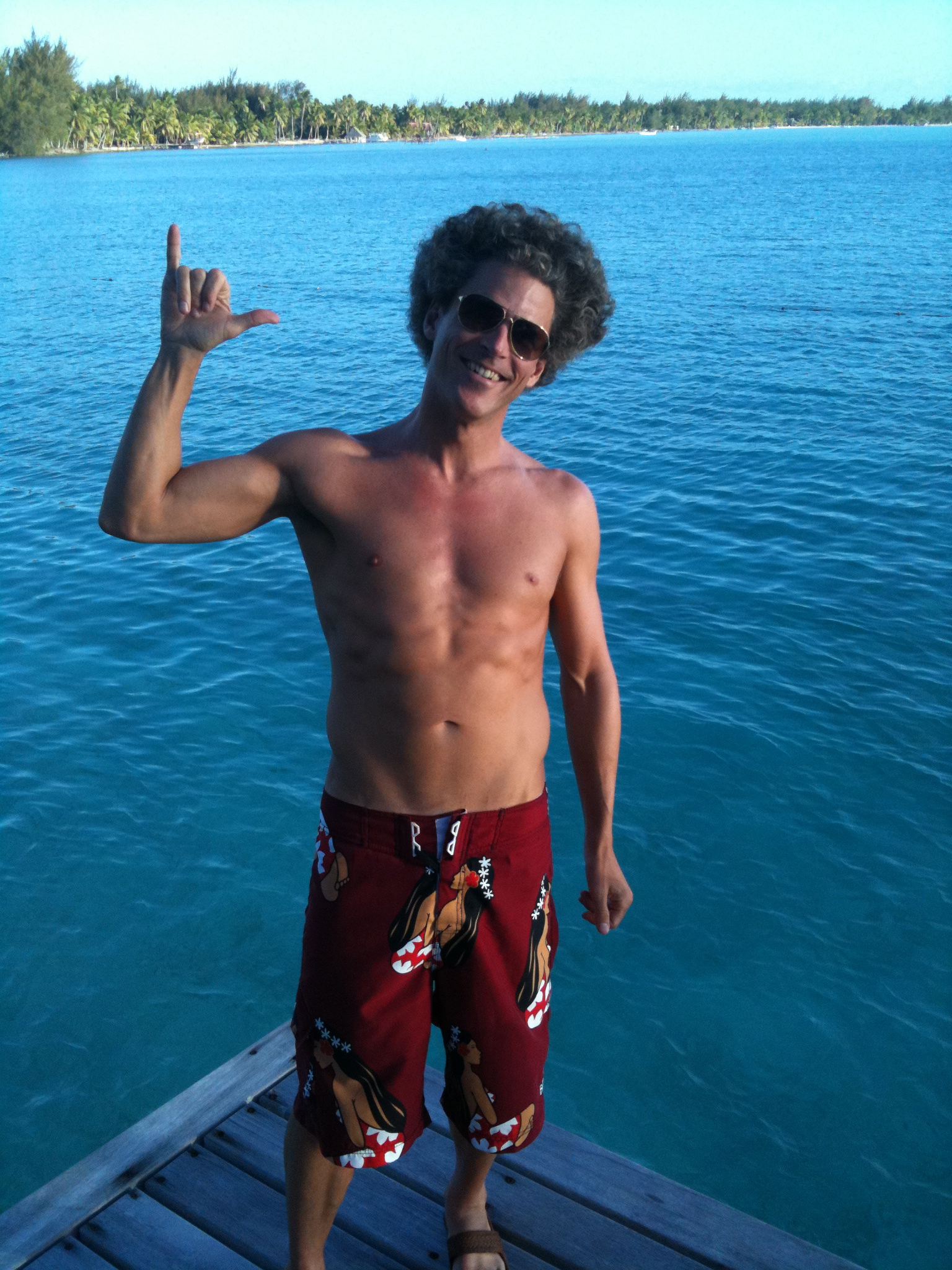
IMG_2458The photos are from Bora Bora, an expensive vacation that Monsy and I took a few years ago.

The trip was worth the money. As “the Boulder couple,” my wife had me keeping her company as she ran around the island (20 miles), did her (five-mile) open water swim sessions and dragged a towel through the water (to build strength).

IMG_2451Another good memory is doing a sprint swim workout (while the Italians were sipping champagne) and Monica yelling at me to “swim straight.” I had trouble holding my line with the white sand bottom!

There were lots of honeymooners on the island. Comfortable in our own relationship, we wondered who “would make it.” Success being defined as sticking together as a couple.

One set of honeymooners was a high-profile couple. He was wealthy, she was stunning.

This week, I found out that things didn’t work out well for them. It was described to me as… he lost his hair, he lost his money, his wife started fooling around, he filed for divorce then he blew his brains out.

So sad for everyone involved.

For one moment, he lost all hope.

++

IMG_3636Collectively, we tend to view divorce as a failure and a bad thing. There are elements of truth in that view and… there are elements of truth in the opposite view.

Failure can be a powerful catalyst for positive change.

Some of my failures have turned out to be useful experiences.

The key is getting through the suck, the pain, the hurt and the misery.

The people that we’ve hurt, let down, disappointed… they might have good cause to never forgive us. That’s their journey.

What’s important to remember is that life is precious and our darkest moments can be the catalyst for the person we want to become.

IMG_3663At 45 years old, my family gets the benefit of my past screw ups and failures. My prior errors are invisible to the people in my current life.

Stay in the game to meet the person you will become.

They might be wonderful.

How Am I Fooled By Fear?

Monsy in Boulder

The best antidote I know for fear is a good laugh that is followed by asking myself, “What’s best for my wife and kids?”

Once we can see our fears, we discover their impact on every decision in our lives – relationships, office politics, athletics, contract bidding, you name it.

This thinking comes from Your Money and Your Brain, which was recommended in If You Can (link to free eBook). Turns out that I’m a case study for how we fool ourselves.

Extreme Loss Aversion

Periodically, I’m stalked by a fear of being wiped out.

An antidote is to view the world through a bigger lens. Evaluate bad news with regards to my life – most “bad” news has no impact on me but I transfer remote fears into my home life.

Strike It Big!

The flip side of my risk aversion is a feeling that striking it big would solve all my problems. The voice in my head tells me, “then you won’t have to worry about anything.” However, that’s unlikely. I’ve always had fearful feelings.

The antidote is to point out the obvious:

  • we’re in a good position
  • keep doing what we’re doing
  • inappropriate, and unnecessary, risk is one of the few things that can screw us up

It’s a message that I give to others, and I’m repeating it to myself, here.


Better Thinking About Taxes

Taxation is a topic that’s guaranteed to tip most people over the edge of rational thought.

Let’s see if I can help you make better decisions by slowing down your thinking.

The first thing you need to do is add up all the taxes that you’ve paid in the last year. Your total might include:

  • Federal, state and city income tax
  • Payroll taxes, worker’s compensation premiums and unemployment insurance contributions
  • State, county and city sales and use taxes
  • Real estate taxes and rates
  • Transfer taxes and stamp duties
  • Value-added tax (for my non-American friends)

The first step is painful. It’s a big number for almost everyone.

In fact, this step alone creates a level of pain that drives many smart people to over-react. Wind farm investments, geographic relocation and massive personal overheads are often reactions to a sense of injustice with regard to tax policy.

When I moved to Colorado, I was surprised to discover that it’s a low-cost place to live. In fact, it’s a far, far cheaper to live here than London, Hong Kong or Bermuda – all locations where I’ve paid significant taxes.

Taxes are best considered in light of our total cost of living. The cost of which includes education, housing and healthcare.

At the end of 2000, I left the low-tax environment of Hong Kong and ended up in New Zealand. In New Zealand, my marginal tax rate increased significantly but my core cost of living dropped by 95%.

Years later, working in Bermuda, I spent a small fortune on travel and living expenses to keep my average tax rate down. Eventually, I did the calculation that I’m sharing in this article and had an “a-ha” moment.

Today, in Boulder, my total tax bill (all of the bullets above) is roughly equal to the cost of a single private education in London, Hong Kong or Bermuda. With three kids, the life of an expatriate would be expensive. In fact, I’d have to work so much, I’d rarely see my family.

While an American city with a good school district is a low-cost location – even better was New Zealand. Moving to NZ, I lived with roommates, was covered by single-payer health care and worked for European / North American clients. I read about young people doing similar arbitrage with a bases in Asia, South America or small North American towns.

If you’re motivated then you can find opportunities to optimize your cost of living. Rather than worrying about your marginal tax rate, focus on the best location for your current life situation.

++

As for the psychological impact of a tax increase, I often let my emotions get the better of me.

To understand your true exposure to tax rates, take your total tax bill and divide it by your net worth. That percentage is the true “take” of taxes from your family.

For example, consider a young woman earning $70,000 per annum. Her total taxes are  $17,500 and her net worth is $40,000. With an average tax rate of 25% (17,500/70,000), she’s paying 44% of net worth in taxes each year (17,500/40,000). She has a significant exposure to tax increases.

Compare the above to an older woman who’s been saving for many years. Her gross income is $165,000, her total tax payments are $50,000 and her net worth is $3.5 million. Despite having a far larger tax bill, her taxes represent 1.4% of her net worth. Her exposure to rising tax rates has been limited by decades of living below her means.

Smart savers free their families from exposure to tax policy.

++

Takeaway points:

  1. Taxes are a component of living in a civilized society
  2. Analyze your cost of living in the largest possible context
  3. Healthcare, childcare, education, housing and real estate expenses must be incorporated in any discussion of taxation
  4. To understand your true exposure, consider taxes (and all other spending) relative to your family net asset statement