The Middle-Aged Athlete

ec_hatLast weekend, a bunch of my pals were in Hawaii for Ironman. Watching from a distance, Ironman is a reminder that the human body can do some incredible things. While the race is neat, what’s most impressive is the training load that the competitors put themselves through. The physical output, over many years, is impressive – sitting here, I can’t believe I was able to do it!

I’ve had success coaching men between 40 and 75 years old (as well as women from 40 to 55 years old). Interestingly, it’s the guys who are most prone to saying, “I wonder if I’m getting old.” Top amateur women just keep on rolling, about the only thing that slows them down is injury and illness.

On the other hand, guys get really tired. I like to joke with my wife that I get Man-Fatigue – like man flu – it’s a whole different level of fatigue from what she experiences.

What follows isn’t for my pals, who are still crushing it. Keep doing what you love for as long as it makes sense. I miss those days, and you will too! It’s for the rest of you – particularly, if you were a top athlete in your 20s and 30s.

When it comes to aging, I hear this a lot…

  • Age is just a number
  • You’re only old when your age is an excuse
  • 40 is the new 30

These sayings are linked to the first phase of aging – holding on against the natural progression of time. I’m more fond of saying, “this is what 45 looks like and it’s not so bad!”

In my peer group, characterized by exceptional will, a few can extend the “holding on” phase into their 50s and, extremely rarely, their 60s. You can find examples of these special humans (!) on the Big Island each October. I know a few and they are amazing people.

What lies hidden is the psychological, and physical cost, from living an unnatural life. When we put ourselves together in a peer group, that consists of much younger 1%’ers, we’re left wondering… what’s wrong with me? Why can’t I be like XXXX? Am I getting old?

I used to think that I’d be hanging on. Now, I’m not so sure. At first, I thought it was my kids making me tired but there seems to be something deeper at work. Time will tell. Maybe I’ll get a second wind in my 50s! 🙂

When I catch myself thinking that a return to my 20s/30s will improve my life – I say…

  • It’s amazing how much exercise I was able to do
  • I’m grateful to have had the opportunity to compete at a high level

Wonder and gratitude are effective antidotes to mourning the past.

Another thing that I’ve noticed is I get an excellent mood response from small doses of exercise. I have to remind myself of this A LOT so I don’t fry myself.

With exercise, generosity, novelty…happiness links better to frequency than intensity, or dosage.

How do you know if you’re holding on too tight?

  • Ask the people closest to you
  • Pay attention to frequent orthopedic injury
  • Pay attention to frequent depression, or anger

If you aspire to performances that were extreme when you were 10-25 years younger then be sure to spend time with people your own age, as you age.

Trying to be the 1% of the 1% can lead to a rough ride as the years roll on.

Choose wisely.

The Yellow Brick Road, not taken

the_roadOne of the best lessons of my life is:

The cost of the status quo is hidden

We never get to see what we miss by NOT changing.

In my early 30s, I made a decision to leave my life in finance and it turned out well. However, I will never see the life that I missed by leaving early.

Recently, I came across a glowing account of Blackstone’s acquisition of Hilton Hotels. The story is written in the style of the hero’s journey.

As I read the article, I realized that the hero was my best-case scenario from an old life in private equity. In the article there is a photo of the hero, sitting in a chair, he has set a personal best performance that’s going to be tough to replicate. In business, and in sport, I’ve had a few of those moments.

Flying back from a Couples Retreat, I asked my wife to read the article. She found it to be an amazing story.

I said, “You just read my best-case scenario from the life I had before I met you. I’m so grateful I got out.”

Similar to what I see when I watch elite sport, my view of elite finance is different than most.

I saw…

  • Buy at the top with other people’s money
  • Pay off bank employees to pass my losses through to their shareholders/taxpayers
  • Provide massive financial incentives for management to work their tails off
  • Let time bail you out
  • Bask in the glow of my peers’ envy

When you look at the life you’re living, what do you see?

Money, Marriage, Kids, Family

Back in July, I caught myself fantasizing about my life in the year 2030, when my youngest graduates from high school.

Longing for a better life in the future is a sure sign that I need to make changes in the present!

My dream, of 2030, was an example of the main excuses that I give myself:

  1. Money – If only I had more…
  2. Marriage – I can’t do that, I’ll damage my…
  3. Kids – The trap of giving to the point of self-neglect and external resentment…

To the list above, I’ll add “Family” – I hear others say that they can’t do XYZ because of family considerations.

While it helps our own happiness to serve another, resentment happens when we feel bound to serve.

I know from my own experience that a resentful grandson, son, father or husband isn’t much help at all. I’m awful to live with when filled with resentment.

My antidote with relationships is straightforward.

  1. Empower each other to say “no”
  2. Always be part of the solution – much better than seeking to be THE solution!
  3. Respect other people and let them solve their own situations
  4. Consider every interaction a gift, rather than an obligation – point #1 is essential for this mindset

Now, with money, the antidote is more complicated. My best advice: start by ditching people, situations and things that makes you feel envy.

Envy distracts me from my true needs.

Recently, I spent six years working myself out of financial squeeze and wanted to share the process. When I’m not sure what to do, I start with a clean sheet of paper.

Blank Sheet Living…

Based on where I am today, where would I like to be in five years and what’s it going to take to get there?

Six years ago, I decided that it was important to reduce my family’s net cost of living. I looked at moving to where I could earn more money (Silicon Valley) and where I could live far more cheaply (Boulder County).

In the end, the US Federal Reserve drove mortgage rates to the point where I moved across town, downsized 50% and achieved my goal.

It took a surprisingly large amount of effort to take the path of least resistance!

So now I’m “there” – I achieved my plan and have the ability to reset my life again.

Additionally, I have a wonderful spouse that empowers me to do ANYTHING.

There is deep wisdom in empowering another to choose to love, and serve, us.

I’ve lost all my excuses.

It can be terrifying to lose my excuses!

+++

Goal: Strategy, Tactics

Serenity: Time Alone, Weekly overnights to the high country to explore in solitude

Connection: More Monsy, Share experiences with my spouse and strengthen my marriage, which is my best asset

Long-term Health: Use My Drive For Fitness, Exercise twice a day, watch the booze and carbs

+++

Serenity, Connection and Long-term Health => What’s Your List?

Ten Lessons From The Great Recession

pawneeFor my family, September 2014 marked the the end of the Great Recession, which (for us) had started in October 2008. Navigating the recession took a year longer than my worst case assumption of five years.

I wanted to share my lessons as I can feel the temptation to ignore them returning!

#1 – You can’t know your partners – I’ve lived with friends for up to six months at a time and had no idea about their personal situation – my favorite quote here is one about knowing your marriage… “if you’re lucky then you might know 50% of your marriage, YOUR half.”

#2 – Burn rate kills – Between October 2008 and March 2009, I lost 100% of my net income. Without significant changes, I knew the loss of income would screw up our family finances. I would have really freaked if I knew that interest rates were going to zero! Staying variable enabled us to cut 90% of business expenses and 50% of household expenses – these were gone by April 2009. The lesson here is to be very careful of building up long-term financial commitments.

#3 – Real Estate, even prime, is only liquid in a bull market – there is an urban myth that real estate is a low volatility asset class. Until 2009, there were many national markets that had NEVER gone down! I will not be able to time the market – I should always be willing to sell early – future purchases should only be made for assets that the family is willing to hold for more than 25 years.

#4 – For my core capital, my benchmark return is zero – there is a portion of my family balance sheet that would be very painful to lose. Don’t risk capital for tiny yield – examples here are constantly pedaled by brokers (foreign currency deposits, derivative-linked investments, highly-leveraged investment schemes, alternative assets, growth stocks).

#5 – I’m a better man when I’m constrained – This applies in all areas of my life. At the peak of the boom there was tremendous ego and waste in my life. I’m very fortunate that life gave me a kick in the butt and I had to make choices. I don’t have the emotional maturity to be unconstrained in action, maybe someday!

#6 – Create plans B, C and D – ring fence different aspects of your life, and finances – NEVER guarantee another person’s obligations (see #1 above). In 2014, my life has a series of fallback plans to deal with potential setbacks – I spent the recession taking steps to protect myself, my wife, my kids, and my family.

#7 – Investment properties should avoid furnished rentals, anything with a material housing association payment, and anything with a cost to hold (vacant) that’s greater than long term interest rates – I made good money by investing in real estate through the bottom but would have done better by focusing on properties with a lower cost to hold.

#8low-cost passive index investing gives me what I need. The best gamblers I know take a profit-share on other people’s money and use non-recourse leverage.

#9 – stop trying to win – I misallocate energy, money and time when I forget that a simple life is a good life. Reaching for external success and excessive financial wealth leads to poor decisions and choices. I make my best choices when I measure wealth in terms of health, controlling my schedule and sharing time with people I love.

#10 – don’t capitalize luxury expenditure – particularly, second homes and depreciable assets – stay variable!

My errors and misjudgments persist across cultures and generations!

Choose Wisely


Budgets For Beginners

flyingA reader asked for simple tips for starting out with financial management.

+++

#1 – track everything you spend in a month

You may be surprised at the comfort that “knowing” gives you. The anxiety of “not knowing” is usually huge.

#2 – make a list of everything you owe, the minimum payments, and the rate of interest on each account

#3 – after you pay your monthly essentials, surplus cash goes to eliminate your credit card accounts (highest rate to lowest rate). Pay them off and close the accounts. Make a minimum extra repayment of $100 per week on the account with the highest rate.

#4 – saving (or debt repayment) is best done weekly, and automatically – for Americans, an IRA is a good option to consider. If you’re unsure what to do then have each adult in your house stick $100 per week into a target date retirement fund with a low-cost provider, like Vanguard.

+++

The habit of weekly savings is powerful.

I helped a friend repay $10,000 in two years by using 100 weekly checks – her net worth when we started was negative $10,000. All she had was her clothes, her computer and a debt she owed. If she’d continued the savings habit then she’d have a portfolio of $75,000 now.

$100 per week from 18 to 62 years old will grow to $720,304 (5% compounding).

+++

Financially secure parents/grandparents – consider matching earned retirement savings, this will help you to avoid supplementing consumption.

$100 per week from 12 to 30 years old will grow to $150,000 (5% compounding).

+++

How much should you save?

If you want more info on saving for retirement then Bernstein’s ebook is a good one – it’s $0.99 on Amazon right now and a quick read.

The Billion Dollar Dinner

2014-09-20 17.17.34Early in my finance career, I was invited to a very nice dinner. The occasion was to celebrate the firm passing the $1,000,000,000 mark for assets under management. In the early 90s, a billion dollars was a lot of money…

Roll forward 25 years and a billion dollars has become a salary for the best hedge fund managers. What an amazing industry.

In my article on fees, I introduced the concept of a “two and twenty” fund. The partnership received 2% of the assets under management (annually) and 20% of the gains. I didn’t run the numbers at the time, but the partners were celebrating ~$400,000,000 of fees and potential profit sharing. Huge sums of money created by the smartest room of people with whom I’ve ever shared dinner.

I can’t remember much about the dinner but I probably drank too much. I had some bad habits in my early 20s and the partners warned me to dial down the boozing! I wouldn’t discover the medicating effect of exercise until five years later.

Fortunately, I had good habits that balanced the bad.

Always make the needs of your boss your #1 priority. The only exception to this rule is if your boss’s boss makes a request!

When I started in London, they carved off a piece of hallway to create a cubicle for me. My chair was the only desk that could be seen from the Managing Partner’s office. When my boss had a task for me, he’d lean forward and yell,

Byrn, Heel!

Yes, I was treated like a dog.

And I loved it.

I’d stop whatever I was doing and scamper into his office for instructions.

The other habit that served me well was saving 50% of everything I earned between 12 and 30 years old.

My parent’s divorce left me with a deep fear of running out of money. As a result of my fanatical savings, I had capital to invest later in my career. In fact, I invested so much in the partnership that the regional heads changed the rules to restrict the investment of junior partners! Envy is part of the finance game and it worked out well for everyone.

With the size of the numbers bouncing around, you’d be forgiven for thinking that I’d retired a wealthy man. I made good money but decided to leave most of it on the table to try my luck at triathlon. It was a decision which, rightly, seemed totally bizarre to my family. I left the firm with a net worth of 20 years living expenses.

Always compare financial wealth to spending and remember life’s about time, not money. I didn’t become a wealthy man until I cut my spending, moved to a low cost location and began to pay attention to what gave me satisfaction.

Far more valuable than money, perhaps the moral of today’s story:

  • Save as much as you can, and work your tail off, early – the freedom later is worth it
  • Everyone needs to learn basic financial accounting and the time value of money – in a world dominated by greed and envy, financial literacy is invaluable. I use these skills every day.
  • Getting paid a lot didn’t satisfy me. I had no idea what motivated me until my life was reset via divorce, unemployment and massive financial loss. I could have made a ton of money sticking with the status quo and that would have been a mistake. Finance could have cost me my health and turned me into a dick.

The best advice I received on my career was from a man, now gone, that was at the dinner that night (link is to my blog about my mentor).

Learn, make money, remember to leave.

When most everyone was telling me that I’d make partner if I stayed in London. An honest man took me out to breakfast and shared advice about living a good life. A good person in an amazing industry. He wasn’t the only one and I miss the team from my early career.

To my friends in Private Equity, thanks so much for the good times and memories we shared.

Quarterly Review

boat2Completed my quarterly review last week and wanted to pass along a few observations that could save your family money.

My default stance with personal expenses is “stay variable.” Renting, rather than owning is a good way to live. In-and-out of a property costs you a minimum of 15% of the gross capital value and being tied down geographically reduces your human capital.

That said, the best deal that I’ve done in the last few years was the purchase of my current house. It’s a half block away from a great public school and my mortgage/taxes/insurance cost me 65% of my owner’s equivalent rent. While I have a large amount of equity tied up, it’s increased 30% in the last two years (see – how I value real estate for a calculation method).

Three factors dominate my cost-to-own being less than my cost-to-rent:

Mortgage interest rate – these remain historically low. My rate is fixed for another 28-years – a valuable asset for my young family.

Cost to insure – Ten months ago, I realized that my home was grossly over-insured. As part of a 2nd mortgage restructuring, my place was appraised. I used the appraisal value to get a more realistic level of insurance in place.

Local Taxes – In 2013, the county reassessed my property at a 30% increase in value. I reviewed the county assessor’s website, pulled together more appropriate comps and requested a do-over. The assessor agreed with my comps and cut my taxes significantly.

The above, combined with an incorrect escrow calculation, means that my monthly payment has been resetting downwards all year. Starting October, I’ll be paying 20% less than two years ago.

The lesson is to be pro-active with checking the components of your mortgage payment. It takes times to get things right but there’s likely money to be saved. Everywhere I poked, I could save money.

Be patient with property purchases – great conditions happen once a decade and it’s nearly always better to wait.

++

In my portfolio, three main adjustments:

  • Sold US Equity Index to rebalance and raise funds for a property deal. This came out of a taxable account and I’ll pay CGT on the sale. Normally, I’d avoid the CGT but the account is a minor custody account that we’ve decided to spend on the kids before they’re 18.
  • Exchanged International Bond Index for US Bond Index to simplify my portfolio, lower my total cost and because the fund manager wasn’t able to convince me of any benefits of the product. Non-taxable exchange.
  • Staying the course with asset allocation ratios but will tweak if I sell an investment property.

++

Our long-term care insurance provider increased Monica’s premiums by 45% so we dropped the policy. Due to my cycling, it will be a tougher decision if they seek the same with me.

++

Our largest discretionary expense is preschool and childcare. We started tracking this weekly and comparing against my spouse’s gross income from working part time.

  • This calmed my mind because it showed that we were more in balance than I thought.
  • It gave us a weekly snapshot of how we were doing with cost control.
  • It showed us the trade-off between more work and more childcare.


+++

Overall, we keep chipping away at making our family a little more efficient each month.

Hometown Hero

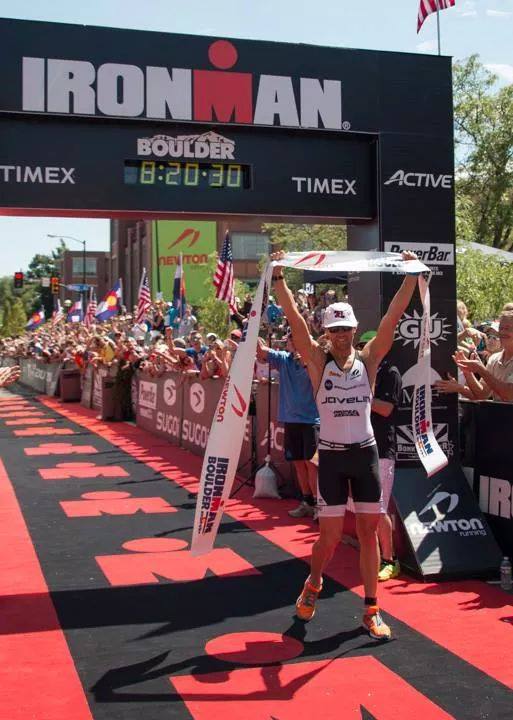
820My buddy, Justin Daerr, won Ironman Boulder this month. Even bigger, the ladies at my health club have started chatting about him!

He’s truly made it.

Not many people make the transition from average to champion. I was along for the ride.

epic_konaIn October of 2004, Justin came out to Hawaii for a camp that we were hosting. He had a big week of training and finished third in his age group in Kona. I didn’t know it at the time but October 2004 marked the high-water mark of my athletic career.

hawaii_run18 months before that camp, Scott Molina asked me, “What if that’s it?” At the time, I replied, “There’s always more.” Scott was a little early with his question but it was a good one.

What’s next?

After Justin became really good, he put in another 10,000 hours to become great. It’s the profile of a clean athlete, many years of plugging away. No quantum leaps.

runI like to focus athletes on 1,000 days of effort. After 1,000 days, of racing pro Justin was going far faster but didn’t have a whole lot to show for his efforts. He was a long way off the top athletes and, like me, only competitive over long distances.

The link in the paragraph above shows J’s results. He was speedy for a long time. Thing is, everyone else at his level is speedy too! Eight years of consistent sub-9 Ironman times. That’s really fast, for a very long time.

How do I measure my return on investment?

…is a question we should ask

…especially about time we will spend

Absent conscious effort, we will default to the values of our community. My athletic community values vanity and victory. These values rule what I see around me and lead to athletic errors.

As a champion, expectations and self-image change. My champion pals, closer to my age, experience pain with the inevitable transitions that life brings. Whenever that transition happens, I hope Justin keeps what’s best from the last decade.

  • He was willing to inconvenience himself to do the right thing.
  • He persisted in the face of evidence that he might not make it – a good lesson for me to re-learn!
  • He never mentioned the slings and arrows that were tossed at him. Justin’s non-response made me a better person.

These are the good old days.

Remember to enjoy them!

Five True Friends

mooseThe Philosopher’s Mail is one of my favorite sites on the web. Happiness is a recurring theme in their writing, as is social connection. As your doctor can confirm, there is a link between social connection and health.

The good people at Philosopher’s Mail shared Epicurus’ recipe for a good life. The link is to a lovely article with snazzy pics of Paris Hilton. The article is worth your time – it describes an antidote if you find that external success fails to lead to lasting satisfaction.

The philosopher’s antidote

  • Five true friends, that reinforce inner values (not the external values of city living)
  • Self-determination by escaping the tyranny of corporate serfdom, regardless of financial cost
  • Daily time for quiet reflection, ideally with low-intensity exercise in nature

It’s an interesting list because most of us will lack one aspect of the troika. In my case, it takes effort to say “yes” to social interaction.

As well, we are usually attracted to people that have external traits that we wish to emulate. This can be a good thing…

  • A politically-connected friend making us feel gratitude that we don’t have the duties that come with being a very important person.
  • A healthy friend inspiring us to start a streak of daily activity.
  • A champion friend inspiring us to persist a little longer at a difficult task.

I have different pals with all of the above and, when I’m at my best, they reinforce good traits in me.

However… I’ve also noticed that my most human, and occasionally screwed up pals, can leave me feeling grateful, useful and valued – three traits that have a strong link to personal happiness.

So while the need for pals is well known, I can lead myself astray. So it’s worth using my daily time to quietly consider…

  • Do I have five people to whom I can speak plainly?
  • Separately, who are the five people with whom I spend the most time?
  • How do those people make me feel?

Once I have insight, it’s up to me to have the courage to change.

Be brave.

The Person You Will Become

IMG_2458The photos are from Bora Bora, an expensive vacation that Monsy and I took a few years ago.

The trip was worth the money. As “the Boulder couple,” my wife had me keeping her company as she ran around the island (20 miles), did her (five-mile) open water swim sessions and dragged a towel through the water (to build strength).

IMG_2451Another good memory is doing a sprint swim workout (while the Italians were sipping champagne) and Monica yelling at me to “swim straight.” I had trouble holding my line with the white sand bottom!

There were lots of honeymooners on the island. Comfortable in our own relationship, we wondered who “would make it.” Success being defined as sticking together as a couple.

One set of honeymooners was a high-profile couple. He was wealthy, she was stunning.

This week, I found out that things didn’t work out well for them. It was described to me as… he lost his hair, he lost his money, his wife started fooling around, he filed for divorce then he blew his brains out.

So sad for everyone involved.

For one moment, he lost all hope.

++

IMG_3636Collectively, we tend to view divorce as a failure and a bad thing. There are elements of truth in that view and… there are elements of truth in the opposite view.

Failure can be a powerful catalyst for positive change.

Some of my failures have turned out to be useful experiences.

The key is getting through the suck, the pain, the hurt and the misery.

The people that we’ve hurt, let down, disappointed… they might have good cause to never forgive us. That’s their journey.

What’s important to remember is that life is precious and our darkest moments can be the catalyst for the person we want to become.

IMG_3663At 45 years old, my family gets the benefit of my past screw ups and failures. My prior errors are invisible to the people in my current life.

Stay in the game to meet the person you will become.

They might be wonderful.