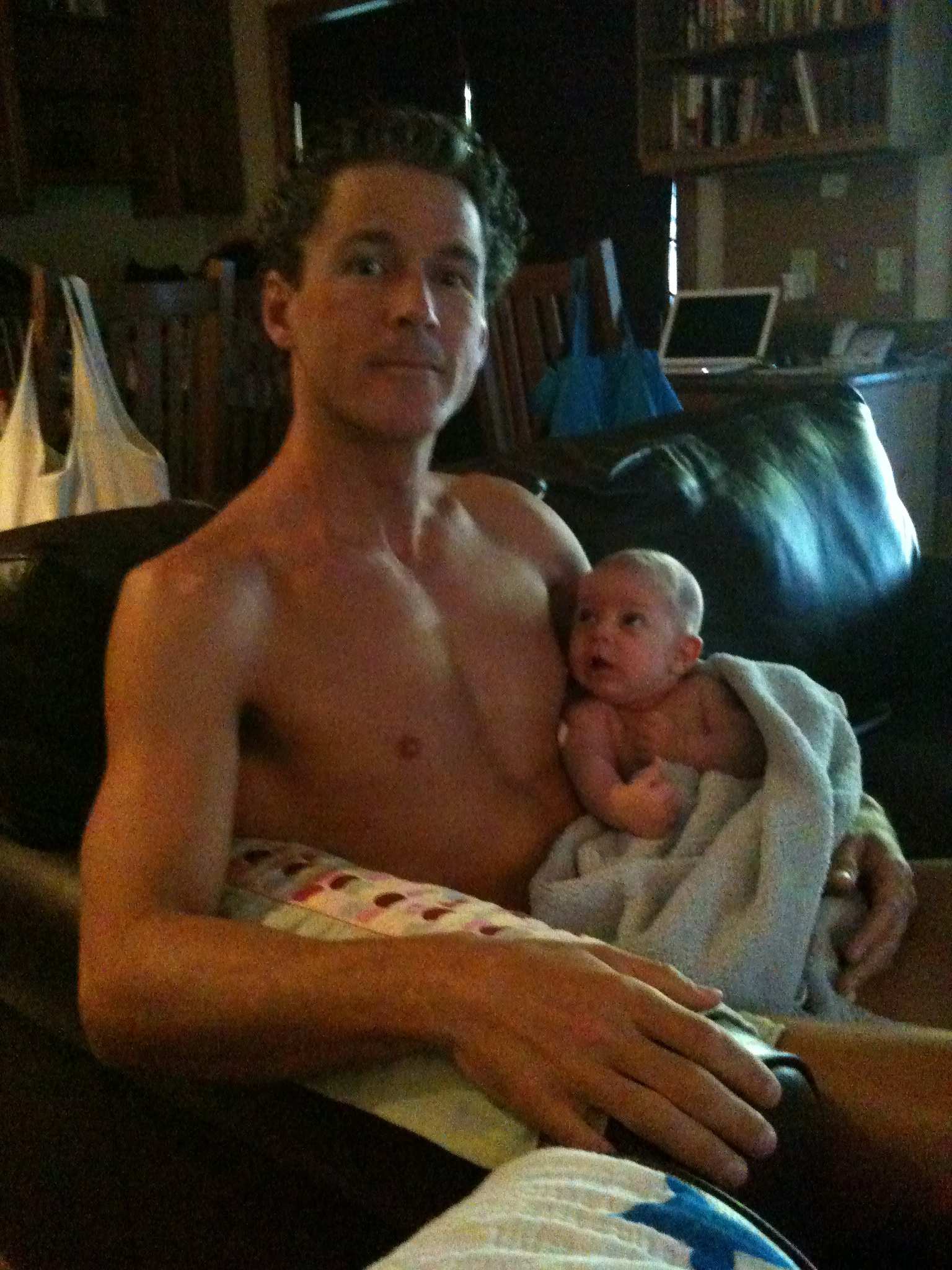
The Big Boys Can’t Do It

We didn’t have the purest of reasons for starting our daughter climbing:

  • Living with her was “rather unpleasant” when she didn’t exercise
  • The classes lasted 90 minutes
  • We didn’t have to stay in the building

There have been some favorable unintended consequences and all our kids will climb.

Upper body strength – Girls that do an upper body sport early get a lifelong athletic advantage in most areas. Climbing fits nicely into our swim family.

Clarity of thought – one of the few healthy ways I could clear my mind prior to my 40s was via exercise. The clarity that arrived through my climbing was addicting. I was fortunate to change sport before serious injury. An old guide introduced me to the progression of a world-class mountaineer (Good, Great, Dead).

But the best part was my daughter’s reaction after the climb in the video.

We were watching the video together. The boy that you can see in the foreground tried to follow the route. He came off on the overhang. Two of his buddies gave it a shot and they both came off.

She smiled, gave me a hug and said, “Look Daddy, the big boy’s can’t do it.”

A useful lesson for daughters, and sons.

What I Learned Last Year

biscottiTwo themes have dominated my goals for the last couple of years: my relationship with my eldest daughter and my finances.

++

Kids – my daughter worked herself out, no input from me. I didn’t change her nature, I accepted it, and we enjoyed the inevitable progression from preschooler to school-age girl.

For my pals with kids – avoid abandonment and retaliation – everything else is details.

++

Optimism is the only worldview borne out by the facts.

At the end of 2008, I wrote-off 65% of my family balance sheet, was unemployed, owned a loss-making business and was facing civil liability relating to large-scale fraud.

You may have forgotten but everything we were reading was doom and gloom. In reality, that was one of the most useful periods of my life because I was forced to face the gross inefficiency of my spending choices.

The changes that result from earlier setbacks lead to an appreciation of a more simple life and I’ve continued to strip away non-core activities.

My wife is stumped when asked, “What does Gordo do?”

I enjoy my life and serve my family

Act in the spirit of service to the people that love you.

Act as if things will work out.

Keep simplifying.

Free yourself to spend time on what matters.

For the pessimist in your head that likes to point out that we’re all dead in the long run… be wary of overstating your importance in the world.

My death will be a setback for a few people but it won’t change the positive trajectory of history. I will play my role then hand off to the younger generation.

There will be tears and that’s OK.

++

Human Capital & Family Finances

What can each of us bring to our families, and communities?

Strong relationships built on mutual respect and strengthened via self-improvement.

Six years ago, I was left with a home and cash assets. With interest rates moving towards 200-year lows, I realized that I had to be invested. I made an error by going all-in with real estate. Why an error?

  • I was geographically concentrated – the bulk of the portfolio was within two miles of each other.
  • I invested too much – I failed to understand the short-term cash needs of my young family, which arrived in 2008/2011/2012.
  • Each asset represented many years of living expenses – lumpy assets are inefficient when you’re moving towards retirement.
  • Real estate takes a long time to sell. With a traditional portfolio, a gradual sell down is easier to achieve.

My purchases had a margin of safety and I was able to trade my way out of the situation – 4 out of 8 addresses have been sold. Start to finish, it will take 8-10 years for me to change my asset allocation. Our family financial structure gave me time to make the change, we earned income, and we had exposure to asset appreciation.

Time worked things out – we did well but so did all others that were invested from 2009 to 2014.

++

The final lesson – I am greedy in irrational ways. I can soothe my ego by noting that my flaws are widely shared.

I am susceptible to the Endowment Effect. I overvalue what I have – my wife had to force me to sell our old house, I wanted to hold out.

I overvalue future desires. I’m constantly fooling myself that MORE will make a difference.

My antidote:

  • Write down my desires (steam shower, truck, boat, kitchen appliances, vacations, clothes, car, office, ski chalet) then wait and let desire pass
  • Make the wealth cost of “more” both painful and visible
  • Note the choices that create my best days (train AM/PM, help someone, learn, write, teach, spend time with my wife, under scheduled)
  • Spend money to create true luxuries (childcare, time to think, time to learn)
  • Schedule my happiness essentials (time in nature, time with my wife, quiet time to think)

Keep it simple:

  1. Notice the good in life
  2. Write good things down
  3. Do more good things

Kids and School

christmas_2014I was at a Hanukkah party and the hostess asked me how my daughter was doing at school.

My off-the-cuff answer made a lot of sense…

She’s having fun and is motivated to learn. So I’ve decided to let it roll for a few years and see how she sorts herself out.

Strictly speaking, that’s not 100% accurate.

We’ve hired a tutor to help her for a couple hours on Saturdays and, despite her objections, she learns Spanish twice a week after school.

However, I can’t muster much enthusiasm for worrying about the details.

I don’t believe they matter.

++

After a particularly tough Saturday morning, I was walking around in the forest, trying unsuccessfully to settle myself down.

When highly agitated, I deepen/slow my breathing and consider the big picture.

If my role isn’t to worry then what is it?

What lies at the root of parenting failure?

What actions clearly make things worse?

Abandonment and retaliation

It struck me that the opposite of these actions – resilience and persistence – make excellent partners with my daughter’s core traits (joy and motivation).

So rather than putting pressure on her to worry about the details. I should put pressure on myself to demonstrate resilience and persistence. These are the two traits that my mother-in-law personifies and her daughter turned out fantastic.

Drive insight inwards.

Be the brand.

Early Retirement – The ratio of spending to security

thanksJustin put me onto Mr Money Mustache’s blog (“MMM”). MMM makes a point that if you have a balance sheet that equals 25x your annual spending then you should be set for life.

What prevents us from getting to the magic ratio?

At my best, I see debt and spending as where to focus.

When I’m feeling sorry for myself, I might blame taxes, lack of income or the cruelty of fate.

Like Mr. MM, I retired early. In fact, I’ve had three retirements – two voluntary and one via the insolvency of my de facto employer.

When I was living first class in my late 20s, I realized that I could slash my spending by 90% and take a year long vacation. This change didn’t get me to the magical 25x ratio but it got me close. I worked part-time (as a coach) and knew that I could tighten my spending and get myself to 40x covered.

Somewhere around 2002, I got caught up in the bull market that ran through to 2008. My spending rose, and rose, and rose, and rose. I didn’t mind as I was making good money. If you’re in a high-paying profession then you’re prone to this risk. I’m not unique. Docs, dentists, lawyers and finance professions often extend their careers by 10-25 years by cranking expenditure and borrowing.

My life came to a head in 2008 when the economy went off a cliff, my income dropped 95% and I had grown accustomed to my spending.

Boy did it hurt to stop spending money.

It hurt because I didn’t see the link between spending and the anxiety that filled my life.

Inside my head, the battle raged…

  • I DESERVE…
  • I HAVE NEEDS…
  • IT”S NOT FAIR…

What I was really saying is, “it hurts so much to change. I just want to be happy, please leave me alone.”

I see plenty of conflict in relationships over money. Historically, much of my irritation over clutter stems from an underlying financial anxiety that I’m not addressing via my own habits.

Quite often the main breadwinner delegates the financial planning function, putting their spouse on an allowance and creating a external target for internal angst.

A couple years ago, I realized that I’d done this to my wife. I had to own my fears, change my spending and redirect our family.

+++

I had the courage to take my first retirement at 31 because I remembered the freedom that came from living like a student.

I forgot that lesson, increased my net worth by 500%, and felt completely insecure at 40.

Every $10,000 of expenditure requires $250,000 of assets to buy me financial peace of mind.

What’s the true cost of your spending?

What could you achieve if you removed unnecessary anxiety from your life?

+++

I have buddies that are planning to work an extra decade – to build assets sufficient to support a spending rate that doesn’t bring happiness and strains their home life. They tell me stories of their children begging them to work less.

The pain is real.

So are the benefits from incremental change.

Helping Kids Hear

Vail MountainI was back at preschool community night last week and we were chatting about the issues that face parents. A biggie…

How can I make my kids listen to me?

I can’t.

What I can do is create the conditions where my kids might hear me, and use behavioral psychology to increase compliance.

Key things that I’ve noticed:

Space to comply – when the kids are running around being kids, it can take a LONG time for me to understand what my wife is saying. In fact, it can take so long that she might get frustrated with me, even when I hear her. I’m guessing that a three-year old has a similar comprehension lag.

Solution – ALWAYS count to three in my head to give the kid time to hear, and time to comply

Don’t Scare My Children Witless – Am I creating an environment where my kids are able to understand me? Not always.

Never Repeat – the moms at the preschool meeting HATE repeating themselves. My solution is to observe how many times I repeat myself.

Why?

Because our kids don’t need to listen if we’re always repeating!

By the way, it’s difficult to ask the kids not to repeatedly ask me for stuff if I’m always doing the same to them. Be the change.

Talk To My Eyes – when my house is full, I spend most my time with sensory overload. I get so fried I can’t think, write or function. Once I’m fried, everyone needs to talk directly to my eyes. It takes a little extra effort but then they don’t have to repeat. 🙂

Finally, is it worth listening to what I have to say? Are my expectations reasonable? What’s my ratio of positive-to-negative interactions?

When I turn the issue on it’s head, I’ve found myself lacking in many relationships – not just with my kids.

ax

Money, Marriage, Kids, Family

Back in July, I caught myself fantasizing about my life in the year 2030, when my youngest graduates from high school.

Longing for a better life in the future is a sure sign that I need to make changes in the present!

My dream, of 2030, was an example of the main excuses that I give myself:

  1. Money – If only I had more…
  2. Marriage – I can’t do that, I’ll damage my…
  3. Kids – The trap of giving to the point of self-neglect and external resentment…

To the list above, I’ll add “Family” – I hear others say that they can’t do XYZ because of family considerations.

While it helps our own happiness to serve another, resentment happens when we feel bound to serve.

I know from my own experience that a resentful grandson, son, father or husband isn’t much help at all. I’m awful to live with when filled with resentment.

My antidote with relationships is straightforward.

  1. Empower each other to say “no”
  2. Always be part of the solution – much better than seeking to be THE solution!
  3. Respect other people and let them solve their own situations
  4. Consider every interaction a gift, rather than an obligation – point #1 is essential for this mindset

Now, with money, the antidote is more complicated. My best advice: start by ditching people, situations and things that makes you feel envy.

Envy distracts me from my true needs.

Recently, I spent six years working myself out of financial squeeze and wanted to share the process. When I’m not sure what to do, I start with a clean sheet of paper.

Blank Sheet Living…

Based on where I am today, where would I like to be in five years and what’s it going to take to get there?

Six years ago, I decided that it was important to reduce my family’s net cost of living. I looked at moving to where I could earn more money (Silicon Valley) and where I could live far more cheaply (Boulder County).

In the end, the US Federal Reserve drove mortgage rates to the point where I moved across town, downsized 50% and achieved my goal.

It took a surprisingly large amount of effort to take the path of least resistance!

So now I’m “there” – I achieved my plan and have the ability to reset my life again.

Additionally, I have a wonderful spouse that empowers me to do ANYTHING.

There is deep wisdom in empowering another to choose to love, and serve, us.

I’ve lost all my excuses.

It can be terrifying to lose my excuses!

+++

Goal: Strategy, Tactics

Serenity: Time Alone, Weekly overnights to the high country to explore in solitude

Connection: More Monsy, Share experiences with my spouse and strengthen my marriage, which is my best asset

Long-term Health: Use My Drive For Fitness, Exercise twice a day, watch the booze and carbs

+++

Serenity, Connection and Long-term Health => What’s Your List?

The Preschool Years


Lots of my pals have new arrivals so I thought I’d share from my years of living with preschoolers.

Three years ago, I can remember feeling overwhelmed. Our oldest was a terror, we had a new baby and I could see no end to the frantic energy and whining. Today, we’re up to three kids but I can see light at the end of the tunnel.

Where should a new parent focus?

Three things come to mind…

Marriage – it’s easy to lose each other in the craziness of a young family. Make time to be with each other. We try to spend 2-3 evenings with each other each week. Money spent here has the best return on my discretionary spending.


If you look closely, the baby is purple!

De-escalate – At my best, I have the skill to de-escalate my kids by relaxing myself.

How can you train yourself to not escalate when faced with a screaming child? Here’s my practical mindfulness program…

  • Courtesy to people with no recourse against me
  • Yield in traffic
  • Always polite to spouse
  • Pause when you feel anger
  • Train your relaxation reflex – perhaps by taking a big breath occasionally – here’s an app to help you learn to relax

None of the above has anything to do with kids – most of my parenting habits started far away from any toddlers!


Health – While you may, or may not, regret losing your spouse (or temper) through the preschool years, you will absolutely regret losing your health.

My trap is confusing athletic performance with health.

Other traps:

  • Confusing success with my bank balance
  • Measuring how effective I am by what I publish
  • Co-dependence, where I use serving another as an excuse to neglect myself

I share the above because our minds will convince us that there’s always a good short-term reason to ignore our long-term health. I don’t know your reasons but I know we are all prone to rationalizations.

All up, this phase of my life is going to last seven years.

1,000 days to go.

Soon they will be wiping themselves!

Five True Friends

mooseThe Philosopher’s Mail is one of my favorite sites on the web. Happiness is a recurring theme in their writing, as is social connection. As your doctor can confirm, there is a link between social connection and health.

The good people at Philosopher’s Mail shared Epicurus’ recipe for a good life. The link is to a lovely article with snazzy pics of Paris Hilton. The article is worth your time – it describes an antidote if you find that external success fails to lead to lasting satisfaction.

The philosopher’s antidote

  • Five true friends, that reinforce inner values (not the external values of city living)
  • Self-determination by escaping the tyranny of corporate serfdom, regardless of financial cost
  • Daily time for quiet reflection, ideally with low-intensity exercise in nature

It’s an interesting list because most of us will lack one aspect of the troika. In my case, it takes effort to say “yes” to social interaction.

As well, we are usually attracted to people that have external traits that we wish to emulate. This can be a good thing…

  • A politically-connected friend making us feel gratitude that we don’t have the duties that come with being a very important person.
  • A healthy friend inspiring us to start a streak of daily activity.
  • A champion friend inspiring us to persist a little longer at a difficult task.

I have different pals with all of the above and, when I’m at my best, they reinforce good traits in me.

However… I’ve also noticed that my most human, and occasionally screwed up pals, can leave me feeling grateful, useful and valued – three traits that have a strong link to personal happiness.

So while the need for pals is well known, I can lead myself astray. So it’s worth using my daily time to quietly consider…

  • Do I have five people to whom I can speak plainly?
  • Separately, who are the five people with whom I spend the most time?
  • How do those people make me feel?

Once I have insight, it’s up to me to have the courage to change.

Be brave.

Too Painful To Care

Monday I wrote about driving energy inwards to improve myself, my marriage, my family.

Related to this lesson, I’ve noticed a habit of avoiding knowledge that conflicts with my core beliefs. This isn’t anything new – human misjudgment is an ever present topic. However, spotting my own misjudgments can make me far more effective.

Being effective, and making better choices, is a more important to me than avoiding change.

A story.

The Tour de France just finished and I didn’t watch any of it. My lack of motivation was unusual and I wondered why.

The legacy of cheating has been to make it too painful to care. In my case, that manifests in a lack of interest in elite sport. In the case of the wider public, there is an element of truth-fatigue. It’s too painful to discover the reality that underlies an obsession with winning.

I’m using sport as an analogy – it’s an easy one for us to feel, and see in others. Choose your favorite sport and you’ll find a tendency to overlook it’s short-comings. If you can’t see it then ask a foreign friend their thoughts (or simply a pal that likes a rival franchise).

The lesson for daily living is deeper.

  • A friend with Alzheimer’s
  • An elder with dementia
  • A sexually abused child
  • A partner that defrauds the community

In these cases, we will feel a strong urge to “give the benefit of the doubt” to whatever causes the least pain. We will default towards inaction and strongly avoid information that compels us to face pain. I feel avoidance strongly in myself – it’s taken many setbacks for me to overcome.

One of the best lessons of hospice is that freedom lies on the other side of fear. Hospice lets me “be with” my fear of death/disease and feel grateful for today. Gratitude is powerful medicine to carry around inside.

Hospice is “easy” – it’s quiet and I’m not expected to solve anything. My home on the other hand… is often loud and I’m in charge. Maintaining serenity in my own house would be transformative for me, my wife and my kids.

So I look for small, daily, opportunities to practice equanimity:

  • Reading a conflicting viewpoint
  • Avoiding “justified” disappointment in a friend
  • Letting a commute unfold without battling my fellow drivers
  • Not playing into a negative emotional pattern with a spouse, child or myself (!)

Overcoming the smallest things, closest to us, can be powerful.

It takes courage to face pain.

Be brave.

Don’t Know, Don’t Care

Lexi's Pink BootsA story that runs far beyond your portfolio.

Like most of us, I tend to shun painful thoughts, people, experiences…

However, in reading a book on finance, Your Money & Your Brain, I discovered a better way to think, and live.

Don’t Know, Don’t Care

Rather than getting rid of whatever seems to be bothering me. Why don’t I move my life towards a position where I’m OK either way.

In the finance book, the author was making the case for passive investing.

  • What’s going to happen to… ?
  • Should I sell?
  • Should I buy?
  • Where will interest rates be next year?
  • Corporate profit margins, availability of bank credit, tax policy, insolvency risk, terrorism, politics….

There is no end of worries available to you.

If you’re following a passive strategy with a fixed monthly investment then none of the above matter.

Another benefit is I don’t have to follow the noise that’s constantly pouring out of the media.

Once I saw the logic of changing one area of my life, I started to consider the other areas where I trade happiness, for worry.

Step into the mind of young woman:

  • Will they like me?
  • What will they think about my shorts?
  • Do my shoes match my outfit?

Sweetie, I don’t know but I think you’re terrific.

The “don’t know” strategy doesn’t make me immune to the opinions of others, but it gives me a mantra to occupy my mind on something more useful than worry.

Life is none of my business.